by Neil Gaiman, Michael Zulli, Mike Allred, Gary Amaro, Mark Buckingham, ,

by Neil Gaiman, Michael Zulli, Mike Allred, Gary Amaro, Mark Buckingham, ,
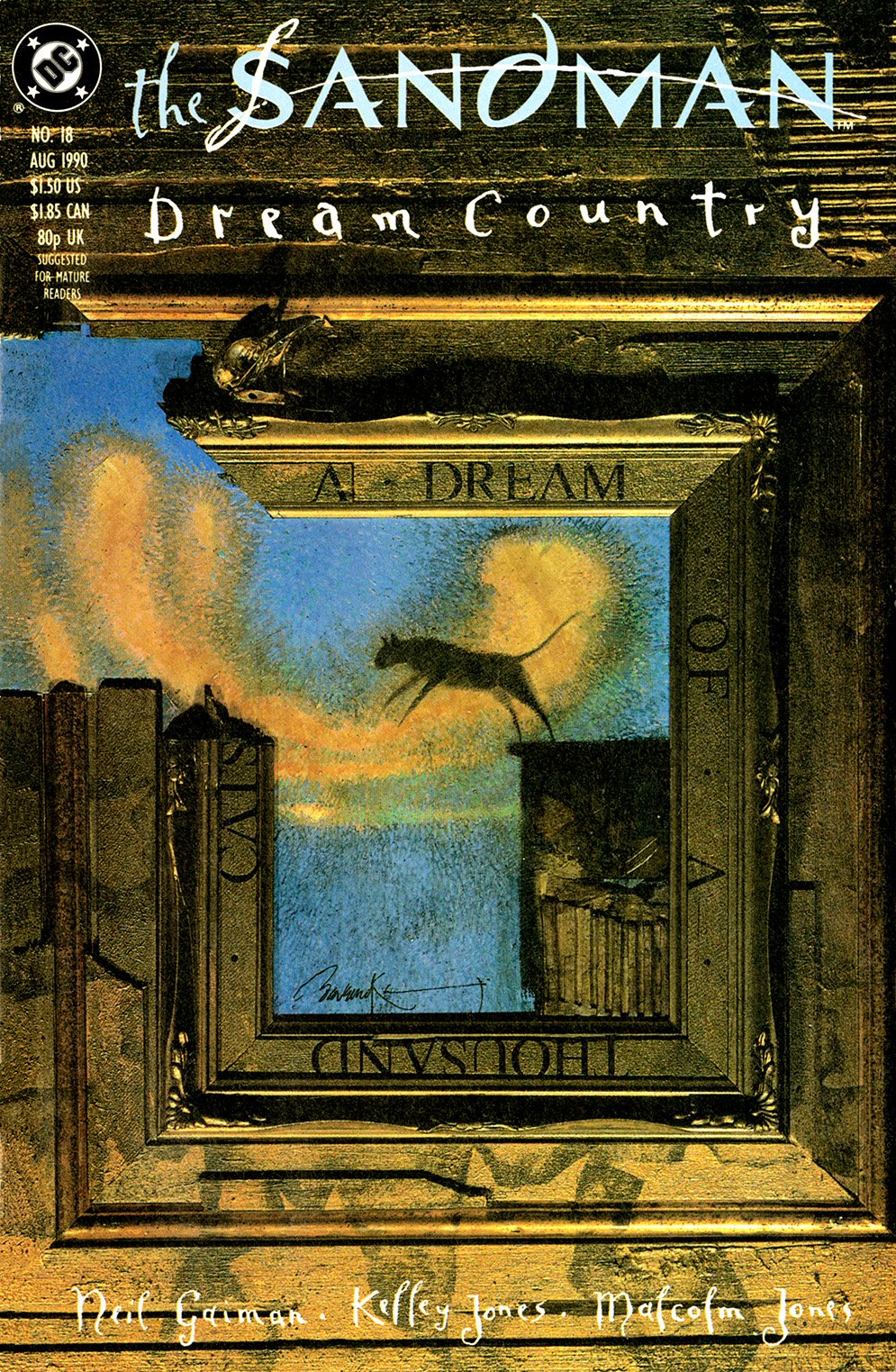
A metaphysical tempest known as a "reality storm" has begun to tear through the fabric of time and space, forcing travelers from disparate eras, dimensions, and myths to seek refuge in a mysterious tavern known as the Worlds' End. This "free house" exists in the interstices of reality, acting as a sanctuary where the laws of physics and linear history are suspended. As the storm rages outside—a chaotic byproduct of an event so massive it threatens the stability of the Dreaming itself—those trapped within the inn turn to the only currency they have left: stories.
This volume serves as a sophisticated framed narrative, echoing classical structures like The Canterbury Tales or The Decameron. While the overarching Sandman mythos looms in the distance, the immediate focus remains on the travelers and the echoes of the Lord of Dreams found within their personal legends. It is an exploration of how stories serve as a buffer against chaos and how the act of narrating one's experience can provide a sense of permanence in a universe that is fundamentally shifting.
The primary setting, the Worlds' End inn, operates under unique metaphysical rules. It is an "In-Between" space where a centaur can share a drink with a 1990s office worker, and a traveler from the city of Aurelian can debate philosophy with a sailor from the 1800s. The atmosphere is one of claustrophobic safety; while the storm outside represents an existential threat that distorts the very concept of "place," the interior of the inn remains a fixed point of warmth and tradition. This juxtaposition highlights the fragile nature of reality within the Gaiman mythos, suggesting that the "waking world" is far less stable than the structures we build with language and memory.
The character development in this volume is primarily focused on the shift from isolation to communal vulnerability. Brant and Charlene begin the journey as outsiders, terrified by the breakdown of their known world. Their arc in the first half of the book involves the slow erosion of their disbelief as they witness the sincerity of other storytellers. Meanwhile, the stories told by figures like Cluracan reveal a tension between duty and personal desire, illustrating how those who serve great powers (like the Endless or the Queen of Faerie) are often mere pawns in larger, incomprehensible cosmic games.
Gaiman utilizes the "Stuck in a Storm" trope not as a survival horror element, but as a catalyst for philosophical inquiry. By gathering a "motley crew" of characters, the book subverts the standard quest narrative; the characters are not moving toward a goal, but are instead forced into a state of stasis where reflection is the only path forward. Additionally, the book plays with the "City as a Character" trope, particularly in the early segments regarding a city that dreams, suggesting that urban environments possess a collective consciousness that can exist independently of the people living within them. This subverts the traditional fantasy trope of the "Chosen One," replacing it with the idea of the "Witness"—where the importance of a character is defined by their ability to observe and recount the truth.
A metaphysical tempest known as a "reality storm" has begun to tear through the fabric of time and space, forcing travelers from disparate eras, dimensions, and myths to seek refuge in a mysterious tavern known as the Worlds' End. This "free house" exists in the interstices of reality, acting as a sanctuary where the laws of physics and linear history are suspended. As the storm rages outside—a chaotic byproduct of an event so massive it threatens the stability of the Dreaming itself—those trapped within the inn turn to the only currency they have left: stories.
This volume serves as a sophisticated framed narrative, echoing classical structures like The Canterbury Tales or The Decameron. While the overarching Sandman mythos looms in the distance, the immediate focus remains on the travelers and the echoes of the Lord of Dreams found within their personal legends. It is an exploration of how stories serve as a buffer against chaos and how the act of narrating one's experience can provide a sense of permanence in a universe that is fundamentally shifting.
The primary setting, the Worlds' End inn, operates under unique metaphysical rules. It is an "In-Between" space where a centaur can share a drink with a 1990s office worker, and a traveler from the city of Aurelian can debate philosophy with a sailor from the 1800s. The atmosphere is one of claustrophobic safety; while the storm outside represents an existential threat that distorts the very concept of "place," the interior of the inn remains a fixed point of warmth and tradition. This juxtaposition highlights the fragile nature of reality within the Gaiman mythos, suggesting that the "waking world" is far less stable than the structures we build with language and memory.
The character development in this volume is primarily focused on the shift from isolation to communal vulnerability. Brant and Charlene begin the journey as outsiders, terrified by the breakdown of their known world. Their arc in the first half of the book involves the slow erosion of their disbelief as they witness the sincerity of other storytellers. Meanwhile, the stories told by figures like Cluracan reveal a tension between duty and personal desire, illustrating how those who serve great powers (like the Endless or the Queen of Faerie) are often mere pawns in larger, incomprehensible cosmic games.
Gaiman utilizes the "Stuck in a Storm" trope not as a survival horror element, but as a catalyst for philosophical inquiry. By gathering a "motley crew" of characters, the book subverts the standard quest narrative; the characters are not moving toward a goal, but are instead forced into a state of stasis where reflection is the only path forward. Additionally, the book plays with the "City as a Character" trope, particularly in the early segments regarding a city that dreams, suggesting that urban environments possess a collective consciousness that can exist independently of the people living within them. This subverts the traditional fantasy trope of the "Chosen One," replacing it with the idea of the "Witness"—where the importance of a character is defined by their ability to observe and recount the truth.
Add to your library to track progress and write reviews
The Sandman
The Sandman

44 books in catalog
Groundbreaking dark fantasy comic books and dark, whimsical prose fiction have reshaped speculative literature, most famously through the comic book series The Sandman. English author Neil Gaiman, born Neil Richard Gaiman on 10 November 1960, created this influential series before publishing widely acclaimed fantasy novels including Stardust, American Gods, Coraline, and The Graveyard Book.
Born Neil Richard Gaiman in Portchester, Hampshire, UK, he spent much of his childhood reading in public libraries, where he discovered the works of C.S. Lewis, J.R.R. Tolkien, Edgar Allan Poe, Ursula K. LeGuin, and G.K. Chesterton. He began his professional career in journalism before transitioning into comic book writing in the late 1980s, gaining prominence with Black Orchid in 1988 and launching The Sandman series for DC Comics' Vertigo imprint in 1989. Over the subsequent decades, he expanded into writing novels, short fiction, audio theatre, screenplays, and films, eventually taking up residence in the United States near Minneapolis.
His fiction has earned widespread critical recognition, receiving Hugo, Nebula, and Bram Stoker awards. In 2008, he published The Graveyard Book, becoming the first author to win both the American Newbery Medal and the British Carnegie Medal for the same work. In 2013, his novel The Ocean at the End of the Lane was voted Book of the Year in the British National Book Awards. His extensive bibliography and media adaptations continued to draw major critical attention through 2017 and beyond.
Gaiman's literary work is noted for combining imaginative fantasy with a darkly humorous tone, fusing modern settings with classical mythology, folklore, and fairy tale motifs. His stories frequently explore themes of memory, childhood innocence, ancient gods navigating contemporary society, and the fundamental power of stories. Across all age categories, his narratives balance gothic atmosphere with warm human empathy and sharp observational wit.

44 books in catalog
Groundbreaking dark fantasy comic books and dark, whimsical prose fiction have reshaped speculative literature, most famously through the comic book series The Sandman. English author Neil Gaiman, born Neil Richard Gaiman on 10 November 1960, created this influential series before publishing widely acclaimed fantasy novels including Stardust, American Gods, Coraline, and The Graveyard Book.
Born Neil Richard Gaiman in Portchester, Hampshire, UK, he spent much of his childhood reading in public libraries, where he discovered the works of C.S. Lewis, J.R.R. Tolkien, Edgar Allan Poe, Ursula K. LeGuin, and G.K. Chesterton. He began his professional career in journalism before transitioning into comic book writing in the late 1980s, gaining prominence with Black Orchid in 1988 and launching The Sandman series for DC Comics' Vertigo imprint in 1989. Over the subsequent decades, he expanded into writing novels, short fiction, audio theatre, screenplays, and films, eventually taking up residence in the United States near Minneapolis.
His fiction has earned widespread critical recognition, receiving Hugo, Nebula, and Bram Stoker awards. In 2008, he published The Graveyard Book, becoming the first author to win both the American Newbery Medal and the British Carnegie Medal for the same work. In 2013, his novel The Ocean at the End of the Lane was voted Book of the Year in the British National Book Awards. His extensive bibliography and media adaptations continued to draw major critical attention through 2017 and beyond.
Gaiman's literary work is noted for combining imaginative fantasy with a darkly humorous tone, fusing modern settings with classical mythology, folklore, and fairy tale motifs. His stories frequently explore themes of memory, childhood innocence, ancient gods navigating contemporary society, and the fundamental power of stories. Across all age categories, his narratives balance gothic atmosphere with warm human empathy and sharp observational wit.