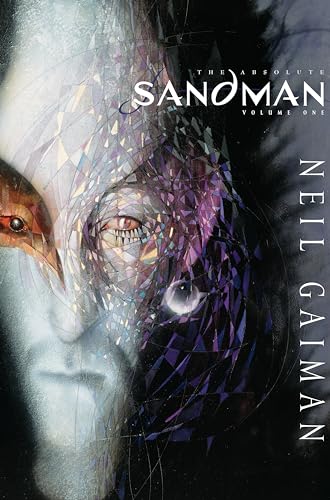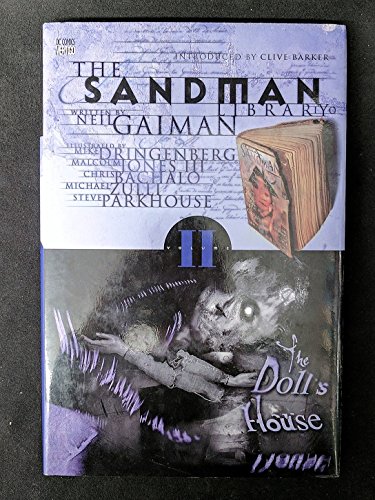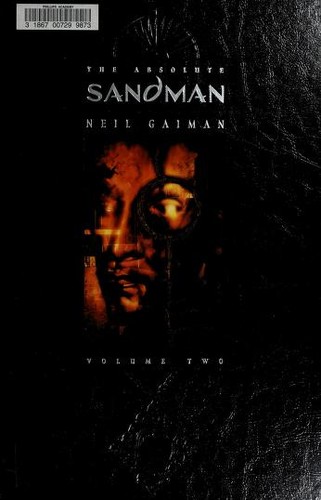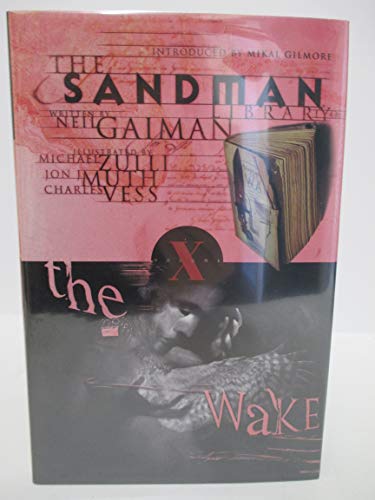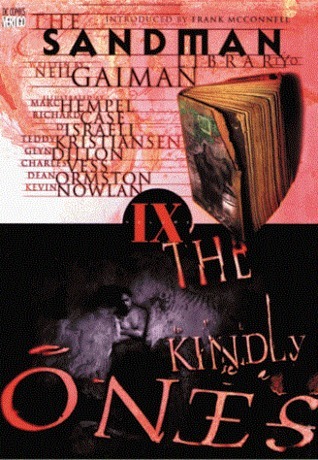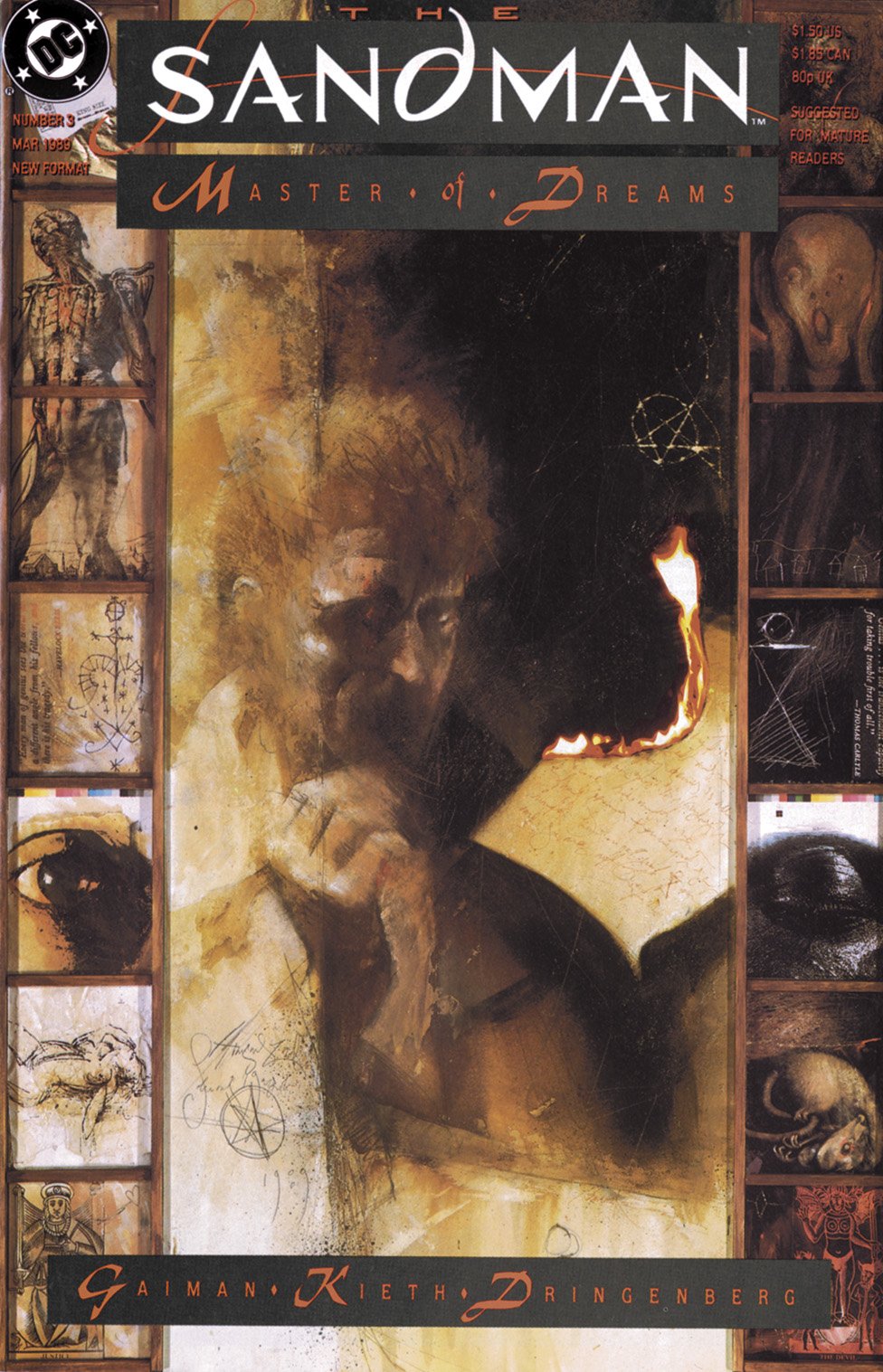

Morpheus, the King of Dreams, has returned to a world that moved on without him during his seventy-year imprisonment. Weakened and stripped of the regalia that defines his office—his helm, his ruby, and his pouch of sand—he must traverse the waking world to reclaim his stolen essence. In the rain-slicked streets of London, the ethereal lord finds an unlikely ally in the cynical occultist John Constantine, as they track a relic that was never meant for mortal hands.
The recovery of the sand pouch is more than a simple errand; it is a harrowing look at what happens when the raw material of dreams is introduced to the fragility of human addiction. For a mortal, the Sandman’s dust is not a gift of sleep, but a reality-warping narcotic that consumes the user's environment and sanity alike. Morpheus must navigate the debris of human lives destroyed by his own lost property, confronting the unintended consequences of his long absence from the Dreaming.
The narrative operates within a dual reality: the gritty, mundane atmosphere of 1980s London and the surreal, shifting landscape of the Dreaming that begins to bleed into the physical world. Gaiman establishes that the tools of the Endless are not merely aesthetic; they are functional manifestations of universal concepts. When these tools are misplaced, the "rules" of reality begin to soften, allowing dreams to manifest as physical, often horrific, parasites on the living. The atmosphere is one of urban noir infused with high-concept mythology, where a dive bar can be as significant as a throne room.
In this early stage of the series, the focus is on Morpheus’s vulnerability and his burgeoning realization of his responsibilities. Having been a captive for decades, he is no longer the omnipotent figure he once was; he is a king in exile, learning to negotiate and even ask for help—a significant shift for a being of his stature. His dynamic with Constantine serves as a catalyst for this growth, forcing a creature of pure metaphor to interact with the messy, moral compromises of human existence.
The story utilizes the "Found Footage" or "Detective Noir" trope, where a protagonist must track a dangerous object through a trail of victims. However, Gaiman subverts the typical "magical artifact" trope by framing the sand not as a treasure to be used, but as a pollutant. Instead of granting wishes, the dream-stuff acts as a biological and psychological horror, highlighting the theme that the divine and the mortal cannot occupy the same space without something breaking. The "Odd Couple" dynamic between the regal Morpheus and the irreverent Constantine further grounds the high-concept fantasy in a relatable, character-driven procedural.
Morpheus, the King of Dreams, has returned to a world that moved on without him during his seventy-year imprisonment. Weakened and stripped of the regalia that defines his office—his helm, his ruby, and his pouch of sand—he must traverse the waking world to reclaim his stolen essence. In the rain-slicked streets of London, the ethereal lord finds an unlikely ally in the cynical occultist John Constantine, as they track a relic that was never meant for mortal hands.
The recovery of the sand pouch is more than a simple errand; it is a harrowing look at what happens when the raw material of dreams is introduced to the fragility of human addiction. For a mortal, the Sandman’s dust is not a gift of sleep, but a reality-warping narcotic that consumes the user's environment and sanity alike. Morpheus must navigate the debris of human lives destroyed by his own lost property, confronting the unintended consequences of his long absence from the Dreaming.
The narrative operates within a dual reality: the gritty, mundane atmosphere of 1980s London and the surreal, shifting landscape of the Dreaming that begins to bleed into the physical world. Gaiman establishes that the tools of the Endless are not merely aesthetic; they are functional manifestations of universal concepts. When these tools are misplaced, the "rules" of reality begin to soften, allowing dreams to manifest as physical, often horrific, parasites on the living. The atmosphere is one of urban noir infused with high-concept mythology, where a dive bar can be as significant as a throne room.
In this early stage of the series, the focus is on Morpheus’s vulnerability and his burgeoning realization of his responsibilities. Having been a captive for decades, he is no longer the omnipotent figure he once was; he is a king in exile, learning to negotiate and even ask for help—a significant shift for a being of his stature. His dynamic with Constantine serves as a catalyst for this growth, forcing a creature of pure metaphor to interact with the messy, moral compromises of human existence.
The story utilizes the "Found Footage" or "Detective Noir" trope, where a protagonist must track a dangerous object through a trail of victims. However, Gaiman subverts the typical "magical artifact" trope by framing the sand not as a treasure to be used, but as a pollutant. Instead of granting wishes, the dream-stuff acts as a biological and psychological horror, highlighting the theme that the divine and the mortal cannot occupy the same space without something breaking. The "Odd Couple" dynamic between the regal Morpheus and the irreverent Constantine further grounds the high-concept fantasy in a relatable, character-driven procedural.
Add to your library to track progress and write reviews
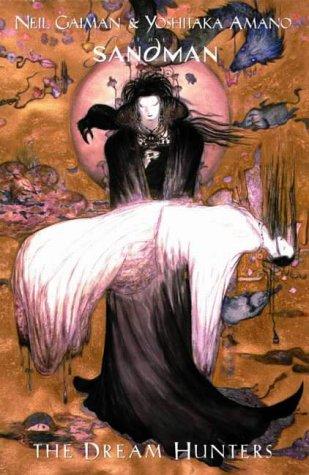
Find The Sandman #3: Dream a Little Dream of Me Neil Gaiman in PDF, EPUB, ebook, audiobook, print, or library editions.
The Sandman
The Sandman

44 books in catalog
Groundbreaking dark fantasy comic books and dark, whimsical prose fiction have reshaped speculative literature, most famously through the comic book series The Sandman. English author Neil Gaiman, born Neil Richard Gaiman on 10 November 1960, created this influential series before publishing widely acclaimed fantasy novels including Stardust, American Gods, Coraline, and The Graveyard Book.
Born Neil Richard Gaiman in Portchester, Hampshire, UK, he spent much of his childhood reading in public libraries, where he discovered the works of C.S. Lewis, J.R.R. Tolkien, Edgar Allan Poe, Ursula K. LeGuin, and G.K. Chesterton. He began his professional career in journalism before transitioning into comic book writing in the late 1980s, gaining prominence with Black Orchid in 1988 and launching The Sandman series for DC Comics' Vertigo imprint in 1989. Over the subsequent decades, he expanded into writing novels, short fiction, audio theatre, screenplays, and films, eventually taking up residence in the United States near Minneapolis.
His fiction has earned widespread critical recognition, receiving Hugo, Nebula, and Bram Stoker awards. In 2008, he published The Graveyard Book, becoming the first author to win both the American Newbery Medal and the British Carnegie Medal for the same work. In 2013, his novel The Ocean at the End of the Lane was voted Book of the Year in the British National Book Awards. His extensive bibliography and media adaptations continued to draw major critical attention through 2017 and beyond.
Gaiman's literary work is noted for combining imaginative fantasy with a darkly humorous tone, fusing modern settings with classical mythology, folklore, and fairy tale motifs. His stories frequently explore themes of memory, childhood innocence, ancient gods navigating contemporary society, and the fundamental power of stories. Across all age categories, his narratives balance gothic atmosphere with warm human empathy and sharp observational wit.

44 books in catalog
Groundbreaking dark fantasy comic books and dark, whimsical prose fiction have reshaped speculative literature, most famously through the comic book series The Sandman. English author Neil Gaiman, born Neil Richard Gaiman on 10 November 1960, created this influential series before publishing widely acclaimed fantasy novels including Stardust, American Gods, Coraline, and The Graveyard Book.
Born Neil Richard Gaiman in Portchester, Hampshire, UK, he spent much of his childhood reading in public libraries, where he discovered the works of C.S. Lewis, J.R.R. Tolkien, Edgar Allan Poe, Ursula K. LeGuin, and G.K. Chesterton. He began his professional career in journalism before transitioning into comic book writing in the late 1980s, gaining prominence with Black Orchid in 1988 and launching The Sandman series for DC Comics' Vertigo imprint in 1989. Over the subsequent decades, he expanded into writing novels, short fiction, audio theatre, screenplays, and films, eventually taking up residence in the United States near Minneapolis.
His fiction has earned widespread critical recognition, receiving Hugo, Nebula, and Bram Stoker awards. In 2008, he published The Graveyard Book, becoming the first author to win both the American Newbery Medal and the British Carnegie Medal for the same work. In 2013, his novel The Ocean at the End of the Lane was voted Book of the Year in the British National Book Awards. His extensive bibliography and media adaptations continued to draw major critical attention through 2017 and beyond.
Gaiman's literary work is noted for combining imaginative fantasy with a darkly humorous tone, fusing modern settings with classical mythology, folklore, and fairy tale motifs. His stories frequently explore themes of memory, childhood innocence, ancient gods navigating contemporary society, and the fundamental power of stories. Across all age categories, his narratives balance gothic atmosphere with warm human empathy and sharp observational wit.