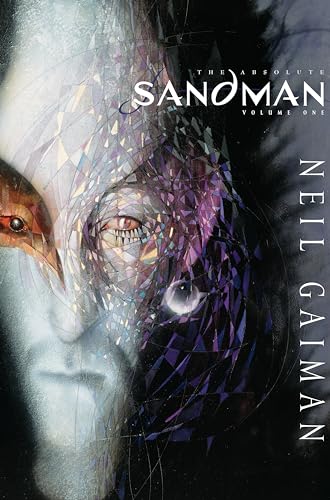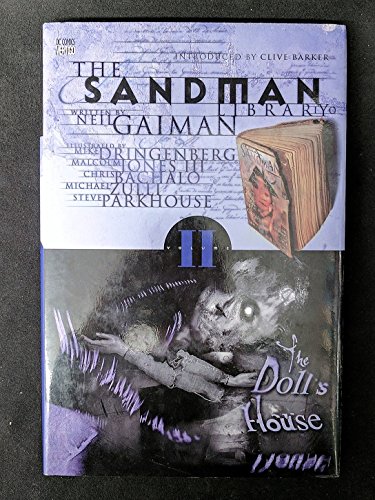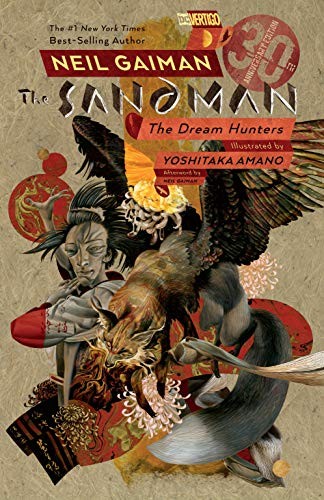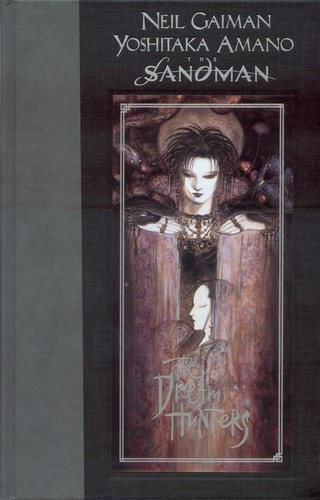

In the quiet, misty mountains of ancient Japan, a humble Buddhist monk tends to his remote temple, seeking only the path to enlightenment. His solitude is interrupted by a wager between two supernatural entities—a badger and a fox—who compete to see which can trick the monk and drive him from his home. While the badger relies on crude deception, the fox spirit adopts a more subtle approach, observing the monk's daily rituals and his unwavering commitment to his faith.
As the fox lingers near the temple, her predatory intent shifts into a complex form of devotion. This transition from trickster to protector becomes the catalyst for the narrative when she discovers a malevolent plot orchestrated by an ambitious occultist in Kyoto. To save the monk from a curse intended to trap him in an eternal, agonizing sleep, the fox must navigate the perilous boundaries between the mortal world and the realm of the King of All Night’s Dreaming.
The narrative functions as a bridge between traditional Japanese folklore and the established mythos of the Sandman. It operates on the logic of fables, where spirits (yokai) and humans coexist within a rigid social and spiritual hierarchy. The atmosphere is heavily dictated by the concept of "onmyōdō"—the traditional Japanese esoteric cosmology—where the balance of power depends on ancient rituals and the manipulation of dreams. Unlike the urban gothic setting of other Sandman installments, this world is defined by the natural landscape, where every forest and stream holds a potential gateway to the Dreaming, viewed here through a distinct cultural lens.
The core of the story lies in the evolving relationship between the Fox and the Monk, which subverts the traditional "temptress" role often assigned to kitsune in folklore. Rather than attempting to lead the monk astray, the Fox finds herself influenced by his asceticism, leading to an internal conflict between her wild, mercurial nature and her newfound sense of responsibility. Meanwhile, the Monk remains largely unaware of the supernatural battle being fought on his behalf, representing a grounded, stoic contrast to the Fox’s frantic attempts to intervene with the gods. Their connection is defined not by dialogue, but by a series of silent observations and the mounting weight of a debt that must be repaid.
Gaiman utilizes the "Impossible Quest" trope, forcing a minor spirit to seek an audience with a cosmic entity to resolve a mortal grievance. The story also explores the "Deal with a Higher Power" mechanic, emphasizing that in the world of the Endless, help is rarely a gift and more often a transaction with lasting consequences. By framing the story as a rediscovered legend, the book subverts the typical hero’s journey; the protagonist’s strength is found in their vulnerability and their willingness to petition the "Lord of Dreams" for a mercy that the laws of the universe rarely allow.
In the quiet, misty mountains of ancient Japan, a humble Buddhist monk tends to his remote temple, seeking only the path to enlightenment. His solitude is interrupted by a wager between two supernatural entities—a badger and a fox—who compete to see which can trick the monk and drive him from his home. While the badger relies on crude deception, the fox spirit adopts a more subtle approach, observing the monk's daily rituals and his unwavering commitment to his faith.
As the fox lingers near the temple, her predatory intent shifts into a complex form of devotion. This transition from trickster to protector becomes the catalyst for the narrative when she discovers a malevolent plot orchestrated by an ambitious occultist in Kyoto. To save the monk from a curse intended to trap him in an eternal, agonizing sleep, the fox must navigate the perilous boundaries between the mortal world and the realm of the King of All Night’s Dreaming.
The narrative functions as a bridge between traditional Japanese folklore and the established mythos of the Sandman. It operates on the logic of fables, where spirits (yokai) and humans coexist within a rigid social and spiritual hierarchy. The atmosphere is heavily dictated by the concept of "onmyōdō"—the traditional Japanese esoteric cosmology—where the balance of power depends on ancient rituals and the manipulation of dreams. Unlike the urban gothic setting of other Sandman installments, this world is defined by the natural landscape, where every forest and stream holds a potential gateway to the Dreaming, viewed here through a distinct cultural lens.
The core of the story lies in the evolving relationship between the Fox and the Monk, which subverts the traditional "temptress" role often assigned to kitsune in folklore. Rather than attempting to lead the monk astray, the Fox finds herself influenced by his asceticism, leading to an internal conflict between her wild, mercurial nature and her newfound sense of responsibility. Meanwhile, the Monk remains largely unaware of the supernatural battle being fought on his behalf, representing a grounded, stoic contrast to the Fox’s frantic attempts to intervene with the gods. Their connection is defined not by dialogue, but by a series of silent observations and the mounting weight of a debt that must be repaid.
Gaiman utilizes the "Impossible Quest" trope, forcing a minor spirit to seek an audience with a cosmic entity to resolve a mortal grievance. The story also explores the "Deal with a Higher Power" mechanic, emphasizing that in the world of the Endless, help is rarely a gift and more often a transaction with lasting consequences. By framing the story as a rediscovered legend, the book subverts the typical hero’s journey; the protagonist’s strength is found in their vulnerability and their willingness to petition the "Lord of Dreams" for a mercy that the laws of the universe rarely allow.
Add to your library to track progress and write reviews
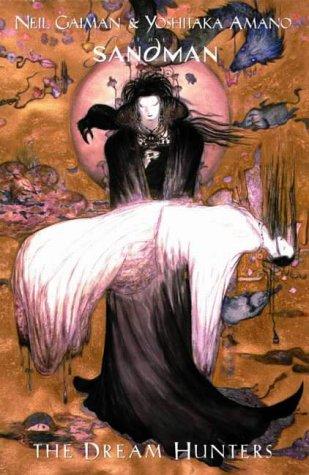
Find The Sandman Neil Gaiman in PDF, EPUB, ebook, audiobook, print, or library editions.

44 books in catalog
Groundbreaking dark fantasy comic books and dark, whimsical prose fiction have reshaped speculative literature, most famously through the comic book series The Sandman. English author Neil Gaiman, born Neil Richard Gaiman on 10 November 1960, created this influential series before publishing widely acclaimed fantasy novels including Stardust, American Gods, Coraline, and The Graveyard Book.
Born Neil Richard Gaiman in Portchester, Hampshire, UK, he spent much of his childhood reading in public libraries, where he discovered the works of C.S. Lewis, J.R.R. Tolkien, Edgar Allan Poe, Ursula K. LeGuin, and G.K. Chesterton. He began his professional career in journalism before transitioning into comic book writing in the late 1980s, gaining prominence with Black Orchid in 1988 and launching The Sandman series for DC Comics' Vertigo imprint in 1989. Over the subsequent decades, he expanded into writing novels, short fiction, audio theatre, screenplays, and films, eventually taking up residence in the United States near Minneapolis.
His fiction has earned widespread critical recognition, receiving Hugo, Nebula, and Bram Stoker awards. In 2008, he published The Graveyard Book, becoming the first author to win both the American Newbery Medal and the British Carnegie Medal for the same work. In 2013, his novel The Ocean at the End of the Lane was voted Book of the Year in the British National Book Awards. His extensive bibliography and media adaptations continued to draw major critical attention through 2017 and beyond.
Gaiman's literary work is noted for combining imaginative fantasy with a darkly humorous tone, fusing modern settings with classical mythology, folklore, and fairy tale motifs. His stories frequently explore themes of memory, childhood innocence, ancient gods navigating contemporary society, and the fundamental power of stories. Across all age categories, his narratives balance gothic atmosphere with warm human empathy and sharp observational wit.

44 books in catalog
Groundbreaking dark fantasy comic books and dark, whimsical prose fiction have reshaped speculative literature, most famously through the comic book series The Sandman. English author Neil Gaiman, born Neil Richard Gaiman on 10 November 1960, created this influential series before publishing widely acclaimed fantasy novels including Stardust, American Gods, Coraline, and The Graveyard Book.
Born Neil Richard Gaiman in Portchester, Hampshire, UK, he spent much of his childhood reading in public libraries, where he discovered the works of C.S. Lewis, J.R.R. Tolkien, Edgar Allan Poe, Ursula K. LeGuin, and G.K. Chesterton. He began his professional career in journalism before transitioning into comic book writing in the late 1980s, gaining prominence with Black Orchid in 1988 and launching The Sandman series for DC Comics' Vertigo imprint in 1989. Over the subsequent decades, he expanded into writing novels, short fiction, audio theatre, screenplays, and films, eventually taking up residence in the United States near Minneapolis.
His fiction has earned widespread critical recognition, receiving Hugo, Nebula, and Bram Stoker awards. In 2008, he published The Graveyard Book, becoming the first author to win both the American Newbery Medal and the British Carnegie Medal for the same work. In 2013, his novel The Ocean at the End of the Lane was voted Book of the Year in the British National Book Awards. His extensive bibliography and media adaptations continued to draw major critical attention through 2017 and beyond.
Gaiman's literary work is noted for combining imaginative fantasy with a darkly humorous tone, fusing modern settings with classical mythology, folklore, and fairy tale motifs. His stories frequently explore themes of memory, childhood innocence, ancient gods navigating contemporary society, and the fundamental power of stories. Across all age categories, his narratives balance gothic atmosphere with warm human empathy and sharp observational wit.
The Sandman
The Sandman