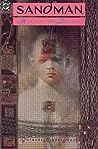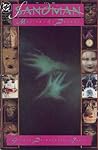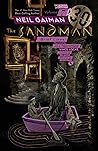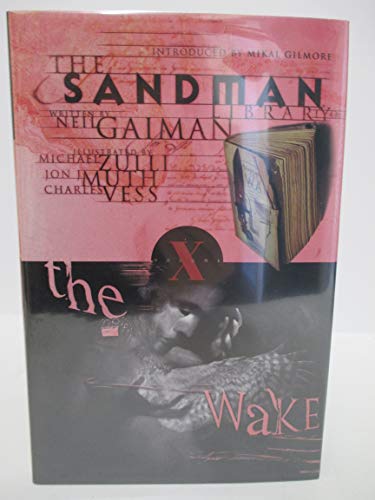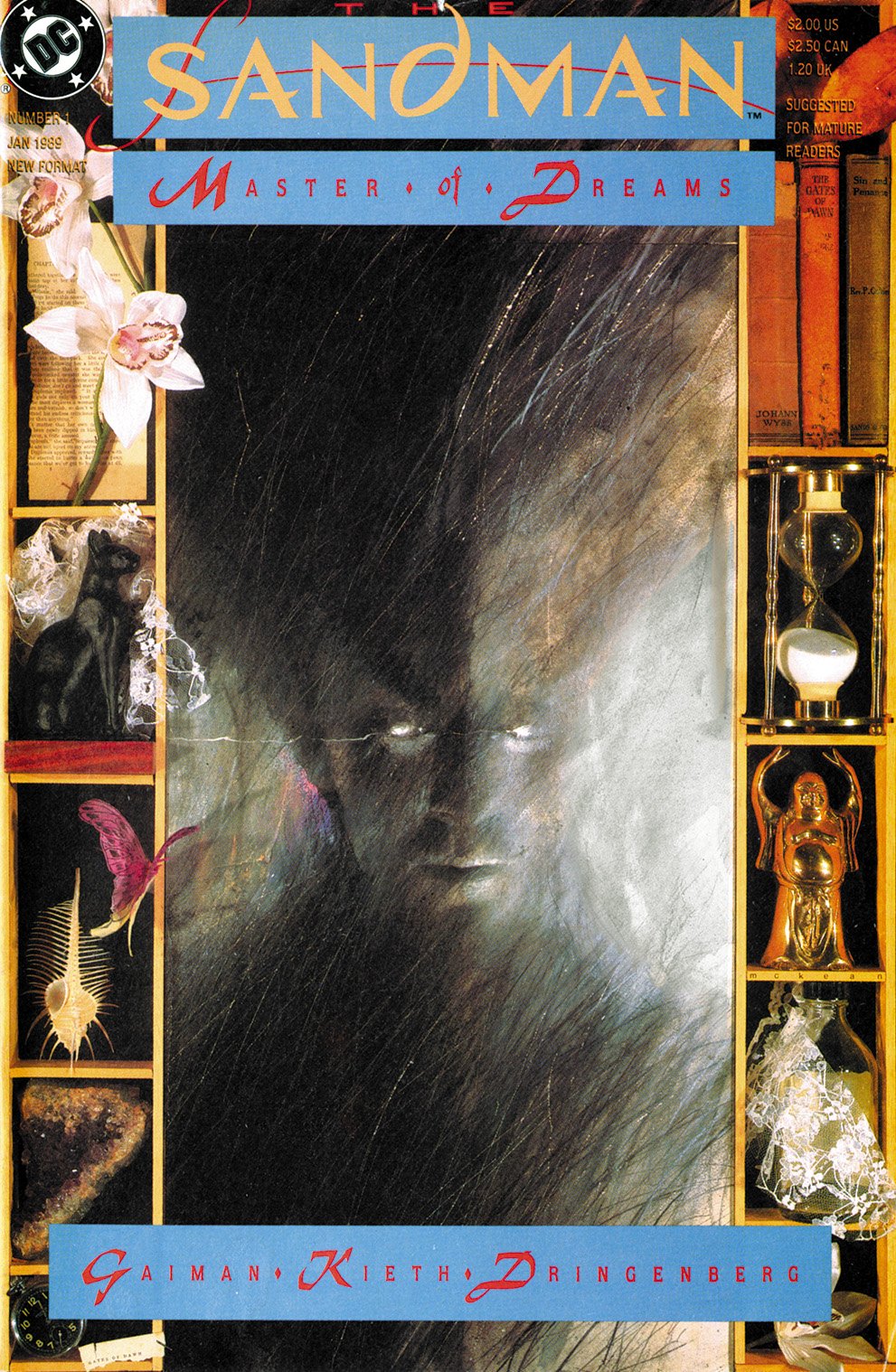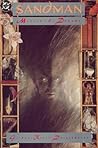

In 1916, a hubristic occultist seeking to cheat death performs a ritual that inadvertently unravels the fabric of human consciousness. By attempting to bind the personification of Death, Roderick Burgess instead ensnares her younger brother, Morpheus—the King of Dreams. Stripped of his vestments of office and confined within a glass sphere, the Lord of the Dreaming is forced into a decades-long silence, while the world above falls into a waking nightmare of neurological disorders and lost sleep.
The narrative of "Sleep of the Just" functions as a chilling meditation on the intersection of human greed and cosmic inevitability. It is not merely a tale of a prisoner and his jailers; it is an examination of how the absence of an essential force—the ability to process reality through myth and metaphor—slowly erodes the collective sanity of a generation. As years turn into decades, the power dynamic shifts from the visceral horror of captivity to a psychological war of attrition between a silent, patient immortal and a lineage of mortals crumbling under the weight of their own stolen power.
Gaiman establishes a universe where abstract concepts like Dreaming and Death are not merely events, but anthropomorphic entities known as the Endless. The setting bridges the gap between the mundane grit of the early 20th century and the ethereal, shifting geography of the Dreaming. The rules of this world are governed by ancient protocols and symbols of office; when Morpheus is separated from his tools—his helm, his pouch of sand, and his ruby—the boundary between reality and the subconscious begins to blur. This results in a global "sleeping sickness," anchoring the supernatural conflict in a terrifying historical consequence that affects thousands of ordinary lives.
The initial character arc focuses on the psychological toll of prolonged isolation and the stagnation of duty. Morpheus begins the story as a figure of absolute, terrifying authority, yet he is quickly reduced to a static observer, forced to witness the passage of human lifetimes without agency. This vulnerability provides an immediate, grounding entry point into his character. Conversely, the Burgess family undergoes a slow descent from the arrogance of the conqueror to the desperate, defensive posture of those who realize they have trapped something they can neither control nor appease. The dynamic is one of mutual haunting, where the captors are just as trapped by the presence of their prisoner as the prisoner is by his cage.
The story masterfully subverts the "Deal with the Devil" trope by having the human antagonist fail to even summon the correct entity, highlighting the clumsy and dangerous nature of mortal occultism compared to the vastness of the cosmos. It utilizes elements of "Gothic Horror"—complete with ancient manors and dark rituals—but infuses them with a metaphysical depth that treats myths as biological necessities. Rather than a traditional battle of good versus evil, the conflict is rooted in the "Cosmic Horror" of a functional universe suddenly missing one of its vital organs, shifting the stakes from individual survival to the restoration of natural order.
In 1916, a hubristic occultist seeking to cheat death performs a ritual that inadvertently unravels the fabric of human consciousness. By attempting to bind the personification of Death, Roderick Burgess instead ensnares her younger brother, Morpheus—the King of Dreams. Stripped of his vestments of office and confined within a glass sphere, the Lord of the Dreaming is forced into a decades-long silence, while the world above falls into a waking nightmare of neurological disorders and lost sleep.
The narrative of "Sleep of the Just" functions as a chilling meditation on the intersection of human greed and cosmic inevitability. It is not merely a tale of a prisoner and his jailers; it is an examination of how the absence of an essential force—the ability to process reality through myth and metaphor—slowly erodes the collective sanity of a generation. As years turn into decades, the power dynamic shifts from the visceral horror of captivity to a psychological war of attrition between a silent, patient immortal and a lineage of mortals crumbling under the weight of their own stolen power.
Gaiman establishes a universe where abstract concepts like Dreaming and Death are not merely events, but anthropomorphic entities known as the Endless. The setting bridges the gap between the mundane grit of the early 20th century and the ethereal, shifting geography of the Dreaming. The rules of this world are governed by ancient protocols and symbols of office; when Morpheus is separated from his tools—his helm, his pouch of sand, and his ruby—the boundary between reality and the subconscious begins to blur. This results in a global "sleeping sickness," anchoring the supernatural conflict in a terrifying historical consequence that affects thousands of ordinary lives.
The initial character arc focuses on the psychological toll of prolonged isolation and the stagnation of duty. Morpheus begins the story as a figure of absolute, terrifying authority, yet he is quickly reduced to a static observer, forced to witness the passage of human lifetimes without agency. This vulnerability provides an immediate, grounding entry point into his character. Conversely, the Burgess family undergoes a slow descent from the arrogance of the conqueror to the desperate, defensive posture of those who realize they have trapped something they can neither control nor appease. The dynamic is one of mutual haunting, where the captors are just as trapped by the presence of their prisoner as the prisoner is by his cage.
The story masterfully subverts the "Deal with the Devil" trope by having the human antagonist fail to even summon the correct entity, highlighting the clumsy and dangerous nature of mortal occultism compared to the vastness of the cosmos. It utilizes elements of "Gothic Horror"—complete with ancient manors and dark rituals—but infuses them with a metaphysical depth that treats myths as biological necessities. Rather than a traditional battle of good versus evil, the conflict is rooted in the "Cosmic Horror" of a functional universe suddenly missing one of its vital organs, shifting the stakes from individual survival to the restoration of natural order.
Add to your library to track progress and write reviews
Find The Sandman #1 : Sleep of the Just Neil Gaiman in PDF, EPUB, ebook, audiobook, print, or library editions.

44 books in catalog
Groundbreaking dark fantasy comic books and dark, whimsical prose fiction have reshaped speculative literature, most famously through the comic book series The Sandman. English author Neil Gaiman, born Neil Richard Gaiman on 10 November 1960, created this influential series before publishing widely acclaimed fantasy novels including Stardust, American Gods, Coraline, and The Graveyard Book.
Born Neil Richard Gaiman in Portchester, Hampshire, UK, he spent much of his childhood reading in public libraries, where he discovered the works of C.S. Lewis, J.R.R. Tolkien, Edgar Allan Poe, Ursula K. LeGuin, and G.K. Chesterton. He began his professional career in journalism before transitioning into comic book writing in the late 1980s, gaining prominence with Black Orchid in 1988 and launching The Sandman series for DC Comics' Vertigo imprint in 1989. Over the subsequent decades, he expanded into writing novels, short fiction, audio theatre, screenplays, and films, eventually taking up residence in the United States near Minneapolis.
His fiction has earned widespread critical recognition, receiving Hugo, Nebula, and Bram Stoker awards. In 2008, he published The Graveyard Book, becoming the first author to win both the American Newbery Medal and the British Carnegie Medal for the same work. In 2013, his novel The Ocean at the End of the Lane was voted Book of the Year in the British National Book Awards. His extensive bibliography and media adaptations continued to draw major critical attention through 2017 and beyond.
Gaiman's literary work is noted for combining imaginative fantasy with a darkly humorous tone, fusing modern settings with classical mythology, folklore, and fairy tale motifs. His stories frequently explore themes of memory, childhood innocence, ancient gods navigating contemporary society, and the fundamental power of stories. Across all age categories, his narratives balance gothic atmosphere with warm human empathy and sharp observational wit.

44 books in catalog
Groundbreaking dark fantasy comic books and dark, whimsical prose fiction have reshaped speculative literature, most famously through the comic book series The Sandman. English author Neil Gaiman, born Neil Richard Gaiman on 10 November 1960, created this influential series before publishing widely acclaimed fantasy novels including Stardust, American Gods, Coraline, and The Graveyard Book.
Born Neil Richard Gaiman in Portchester, Hampshire, UK, he spent much of his childhood reading in public libraries, where he discovered the works of C.S. Lewis, J.R.R. Tolkien, Edgar Allan Poe, Ursula K. LeGuin, and G.K. Chesterton. He began his professional career in journalism before transitioning into comic book writing in the late 1980s, gaining prominence with Black Orchid in 1988 and launching The Sandman series for DC Comics' Vertigo imprint in 1989. Over the subsequent decades, he expanded into writing novels, short fiction, audio theatre, screenplays, and films, eventually taking up residence in the United States near Minneapolis.
His fiction has earned widespread critical recognition, receiving Hugo, Nebula, and Bram Stoker awards. In 2008, he published The Graveyard Book, becoming the first author to win both the American Newbery Medal and the British Carnegie Medal for the same work. In 2013, his novel The Ocean at the End of the Lane was voted Book of the Year in the British National Book Awards. His extensive bibliography and media adaptations continued to draw major critical attention through 2017 and beyond.
Gaiman's literary work is noted for combining imaginative fantasy with a darkly humorous tone, fusing modern settings with classical mythology, folklore, and fairy tale motifs. His stories frequently explore themes of memory, childhood innocence, ancient gods navigating contemporary society, and the fundamental power of stories. Across all age categories, his narratives balance gothic atmosphere with warm human empathy and sharp observational wit.
The Sandman
The Sandman