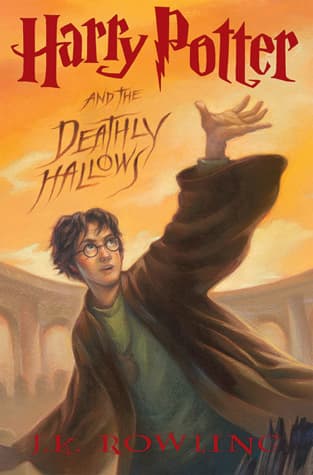
The finality of adulthood arrives not with a graduation, but with the total collapse of the institutions that once provided safety. As Harry Potter prepares to leave Privet Drive for the last time, the protective enchantments that have defined his existence since infancy dissolve, signaling the end of his status as a protected minor and the beginning of a total war. The narrative shifts the series away from the structured, academic environment of Hogwarts and into a survivalist odyssey, where the protagonist is no longer a student following a curriculum, but a fugitive navigating a society that has institutionalized the very darkness he is tasked to destroy.
The psychological weight of the story rests on a mission inherited from a deceased mentor, Albus Dumbledore. Stripped of guidance and sanctuary, Harry, Ron, and Hermione must operate as an isolated underground resistance cell. Their struggle is defined by a slow, grueling search for the Horcruxes—fragments of Lord Voldemort’s soul—while simultaneously grappling with a growing obsession over a legendary set of magical artifacts known as the Deathly Hallows. These objects promise a seductive power over mortality that threatens to distract Harry from his immediate moral obligations, creating a tension between the necessity of sacrifice and the temptation of absolute mastery.
Rowling transforms the wizarding world from a place of whimsical discovery into a landscape of institutionalized terror. With the Ministry of Magic falling under the clandestine control of the Death Eaters, the setting becomes a study in how a society’s infrastructure can be turned against its own citizens. The "Potterverse" world-building here focuses on the atmosphere of a police state: the use of propaganda, the registration of "Muggle-borns," and the breakdown of public trust. Magic is no longer merely a tool for education or convenience but a medium for surveillance and enforcement, forcing the protagonists to live in the "in-between" spaces of the Muggle and magical worlds.
Character development in this final installment focuses on the strain of isolation and the burden of incomplete information. Unlike previous years where Harry could rely on the wisdom of elders, he is now forced into a leadership role for which he feels fundamentally unprepared. The relationship dynamic between the central trio is tested by the physical and emotional toll of their mission. Harry’s initial arc is defined by a burgeoning resentment toward Dumbledore; he must reconcile his idealized image of his mentor with the messy, human reality of the man’s past. This internal conflict mirrors the external struggle, as Harry moves from a reactive hero to one who must make agonizing choices regarding loyalty and priority.
The book utilizes and subverts the "Chosen One" and "Holy Grail" tropes by grounding them in the reality of sustained labor rather than showy acts of heroism. While the search for the Hallows mimics a traditional folkloric quest, it is framed as a dangerous distraction from the more grounded, difficult work of dismantling Voldemort's immortality. Rowling replaces the traditional coming-of-age milestones with the grim realities of guerrilla warfare—staying mobile, managing scarce resources, and the protection of information. The moral dilemma centers on the "Greater Good," a theme that challenges the reader to distinguish between the pursuit of power and the pursuit of justice.
Without a school year to give it shape, the pacing is the whole argument. The book opens fast and ends fast, but a long central stretch leaves the three leads stuck in a tent, bickering and waiting with little momentum. That's where opinion splits hardest. One blogger's reread found it punishing; defenders say the stall mirrors the characters' own confusion and isolation. Nobody has won that one.
Underneath the plot, Rowling has said death is the series' central theme, and study guides read the book's two competing pursuits as a choice between accepting mortality and grasping at mastery over it. She's also explained that she wrote the epilogue to show that life goes on for an orphaned child. Some readers find that reassuring, others too tidy.
Add to your library to track progress and write reviews
Michiko Kakutani's New York Times review called the finale satisfying and emotionally releasing while faulting lumpy exposition. Opinion on structure split: one critic argued it crams a trilogy's worth of resolution into one volume, and Christopher Hitchens's negative New York Times review reportedly objected to repeated last-minute rescues. It still landed on the Times's list of 100 Notable Books of 2007 and sold 8.3 million US copies in its first 24 hours, a Guinness World Record.
Find Harry Potter and the Deathly Hallows J.K. Rowling in PDF, EPUB, ebook, audiobook, print, or library editions.

9 books in catalog
The fantasy genre underwent a significant transformation through the introduction of a narrative centered on a young wizard, a concept that first took shape during a delayed train journey from Manchester to London in 1990. This creative development occurred during a period of profound personal adversity for the author, J.K. Rowling, who navigated the loss of her mother to multiple sclerosis while living as a single parent in Edinburgh. It was in local cafes that she completed the initial manuscript for her debut novel, a work that would eventually bridge the gap between juvenile and adult readerships by grounding its magical elements in relatable coming-of-age struggles and complex moral philosophy. The transition from a struggling writer to a critically recognized novelist underscores a career marked by narrative versatility, spanning from high-concept children's literature to gritty social realism and contemporary detective fiction. By exploring the complexities of loss and the weight of personal choice, her bibliography has become a significant component of contemporary English literature.
Born in 1965 in Yate, England, Joanne Rowling’s path to publication was defined by academic focus and professional shifts. After studying French and Classics at the University of Exeter—an education that would later inform the Latinate spells and mythological structures of her fiction—she moved to Portugal to teach English. It was following her return to the United Kingdom, specifically to Scotland, that she faced the most challenging years of her career. Living on a low income, she completed the manuscript for Harry Potter and the Philosopher’s Stone (1997). The book was famously rejected by twelve publishing houses before being accepted by Bloomsbury. This debut sparked a major shift in the industry, leading to seven core novels that have been translated into over 80 languages. Following the conclusion of her primary fantasy series, she expanded her repertoire into adult fiction with the 2012 release of The Casual Vacancy, a novel focused on the social politics of a small English town.
Her writing is characterized by intricate plotting, a penchant for mystery-style clues hidden in plain sight, and a satirical lens often aimed at bureaucracy and social hierarchy. Influenced by the works of Jane Austen and E. Nesbit, she employs a third-person limited perspective that allows for deep emotional resonance while maintaining a vast, interconnected world-building style. Thematic consistency remains a hallmark of her work. Death is a central, recurring motif, influenced largely by her mother’s passing; her stories often examine the redemptive capacity of love and the moral necessity of facing mortality. Furthermore, her narratives frequently tackle the abuse of power and the persistence of bigotry. Whether in a magical school or a contemporary village, she emphasizes that good and evil are not inherent traits but are defined by the choices an individual makes when confronted with fear or ambition.
The Harry Potter series is a seven-book sequence that follows the education of a young wizard. The series is credited with reviving the middle-grade and young adult market, blending elements of the British boarding school story with epic fantasy and mystery. The Cormoran Strike series, written under the pseudonym Robert Galbraith, is a collection of hardboiled detective novels following a private investigator and his assistant, Robin Ellacott. This series allows for a more granular exploration of contemporary London and the technicalities of forensic and psychological investigation. The Casual Vacancy serves as her first foray into adult social realism, examining themes of class warfare, addiction, and the systemic failures of local government. More recent ventures, such as The Ickabog and The Christmas Pig, return to a more whimsical, fable-like tone while maintaining her signature focus on morality and courage.
Harry Potter