SSansFiction
The libraryCollectionsJournalStatsFor authors
Sign inJoin now
Sansfiction,

A digital library for books. Made by readers, for readers.

v 2.0 · 2026
The library
  • Discover
  • Collections
  • Book tracker
  • Journal
  • Stats
For authors
  • SF Links
  • Analytics
  • How it works
  • FAQ
Elsewhere
  • X / @sansfiction
  • Privacy
  • Terms
  • Contact
© 2026 SansFiction · Digital · GlobalA quiet room for your reading life.
The libraryCollectionsJournalStatsFor authors
Sign inJoin now →
Navigation
Library
Bookshelf
Journal
Discover
Collections
Tierlists
Stats
Profile
Author Page
Link Builder
Account
Sign in
S
G
BooksfantasyThe Return of the King
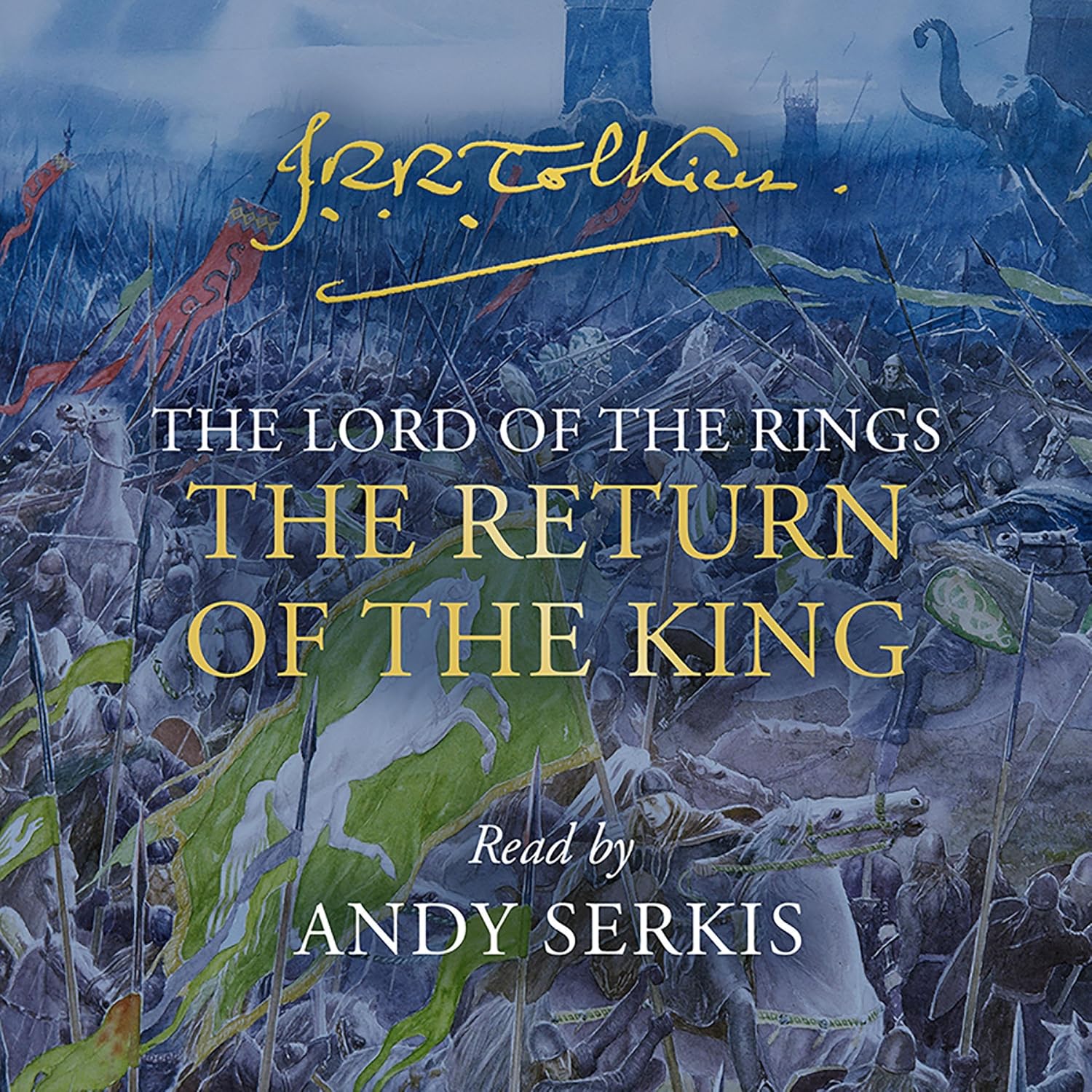
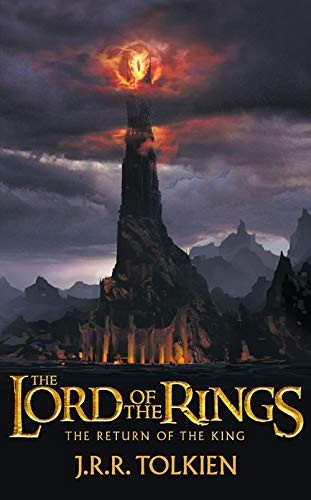
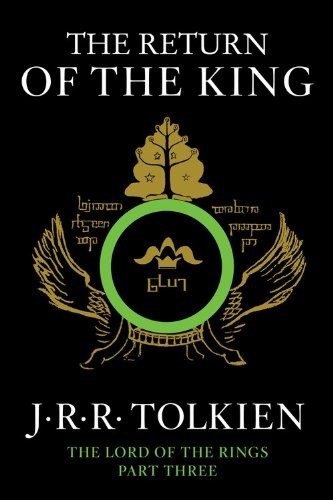
Cover of The Return of the King by J.R.R. Tolkien
№ 3 · The Lord of the Rings

The Return of the King,

by J.R.R. Tolkien

Ask AI
Rating4.6/ 5
Ratings1,321
Pages406
Reading Hours8h
Published1950
LanguageEnglish

§Synopsis

01

The final movement of the War of the Ring begins not with a triumphant charge, but with a cold, desperate ride into the heart of a kingdom in decline. As the shadow of Sauron stretches across the Pelennor Fields, the fracture lines of Middle-earth’s defense become painfully visible. The struggle is no longer just a series of skirmishes in the wilderness; it has become a total war for the survival of Gondor, a civilization that has spent centuries under the stewardship of men who are increasingly weary of the long watch against the East.

While the armies of the West gather their remaining strength, the true fate of the world hangs on a much smaller, more fragile thread. On the very threshold of Mordor, the quest to destroy the One Ring enters its most grueling phase. The narrative balances the grand-scale geopolitics of a city preparing for a massive siege with the suffocating, intimate struggle of two hobbits navigating a landscape designed to break the spirit. This is a story about the endurance of hope when all logistical and military logic suggests that hope is already lost.

The Last Bastion of Men

Tolkien’s world-building in this volume focuses heavily on the city of Minas Tirith, a multi-tiered stone fortress that serves as the cultural and military anchor for the free peoples. The atmosphere is one of "arrested decay"—a place of ancient beauty and high tradition that is slowly being choked by fear and the literal darkness of the "Dawnless Day." Beyond the city lies the geography of Mordor’s borders, characterized by the jagged, poisonous terrain of the Ephel Dúath. The rules of this world are governed by a sense of deep history; every ruin and mountain pass carries the weight of thousands of years of lore, making the current conflict feel like the culmination of an age-old cycle.

Main Characters

  • Aragorn: The long-hidden heir to the throne who must now decide if he is ready to embrace a destiny that requires him to walk the terrifying Paths of the Dead.
  • Frodo Baggins: The Ring-bearer who, weakened by the psychological weight of his burden, finds himself at the mercy of the enemy's border patrols.
  • Denethor II: The formidable but embittered Steward of Gondor whose reliance on ancient knowledge has led him toward a cold, analytical despair.
  • Samwise Gamgee: A hobbit whose simple loyalty is tested to the breaking point as he attempts a daring rescue in the heart of enemy territory.
  • Peregrin (Pippin) Took: A young hobbit who enters the service of the Steward, offering a grounded perspective on the rigid, high-stakes court of Minas Tirith.

The Burden of Heritage and Duty

A central arc in the first half of the book is the tension between duty and personal desire. Aragorn’s development is centered on his transition from a ranger of the wild to a leader of nations, a shift that requires him to navigate the complex loyalties of the Men of the West. Conversely, the hobbits undergo a "coming of age" through service; Pippin and Merry are no longer mere travelers but are sworn to the service of ancient powers, learning that courage is often found in the quiet fulfillment of an oath rather than in grand gestures. The relationship between Frodo and Sam also deepens into a grueling partnership where the roles of master and servant blur under the pressure of survival.

Subverting the High Fantasy Epic

Tolkien utilizes and subverts the "Great Man" theory of history common in epic tropes. While the book features legendary figures and ancient bloodlines, the primary engine of the plot remains the "small" characters—the hobbits—who operate outside the traditional power structures of the world. This creates a dual-track narrative: one that follows the "King" trope of reclaiming a lost heritage, and another that emphasizes the "Commoner" trope, where the most significant actions are taken by those who have no desire for power or glory. The book also explores the trope of the "Siege Perilous," focusing on the psychological toll of waiting for an inevitable attack rather than just the mechanics of the battle itself.

§Our take

This is the volume where Tolkien stops writing an adventure and starts writing about aftermath. The battles are here, and they're the goriest of the three, but the real argument is that victory doesn't undo damage: the book keeps going long after the climax, through a coda scholars treat as essential and some readers as an anticlimax. The Scouring of the Shire is the case in point. Critics read it as serious political satire, occupiers imposing rules and internment on a beaten people; the filmmakers judged it anticlimactic and cut it entirely, so readers arriving from the films will meet a whole final act they've never seen. The other split is older: Auden called the trilogy a masterpiece, Edwin Muir dismissed this volume as a boy's adventure story, and the literary establishment has been arguing with popular readers ever since. The prose can be overlong, and the payoff is real.

§Themes

Hope against the math
Every military and logistical argument says the West has already lost; the book is about enduring anyway.
The small people win it
Tolkien undercuts the Great Man epic: the decisive acts belong to hobbits who never wanted power or glory.
Duty as coming of age
Pippin and Merry grow up through sworn service, learning courage is quiet oath-keeping, not grand gestures.
A city in arrested decay
Minas Tirith is ancient beauty choked by fear, a civilization weary of the long watch.

§How it was received

The knives came out early. Auden called the trilogy a masterpiece and Michael Straight called it a work of genius; Muir dismissed this volume as a boy's adventure story, and Edmund Wilson piled on with his own famous dismissal. Seventy years on, the sneerers lost. Anthony Boucher admired the narration but found the prose overlong, a complaint that has never really gone away.

§Read it if

  • You've read the first two volumes and want the ending, including the parts the film left out
  • You like your epics to keep thinking after the battle is won
  • You want the appendices: annals, timelines, family trees and languages that reward the obsessive

§Skip it if

  • You need a story to stop when the climax stops. The long coda after the Ring quest tests some readers.
  • Density puts you off. Friendly critics found the prose overlong in places.

§Before you start

Reading experience
Assumes you've read the first two volumes, runs through a long coda after the climax, and ends with appendices and an index that vary by edition.
Reading order
Volume 3 of 3, after The Fellowship of the Ring and The Two Towers, both 1954. Read them first; this is the end of the story. The Hobbit came first in publication, but you don't need it to follow a word of this.
Content notes
The most violent and saddest of the three volumes: severed heads catapulted over city walls, a beast tearing a horse apart, a bitten-off finger, battlefield deaths; Pipe-weed smoking and talk of beer; very little romance; essentially no strong language; Common Sense Media recommends 12+ and suggests reading and discussing with younger readers.

§Common questions

Do I need to read The Hobbit first?
No. The Lord of the Rings began as a sequel to it, but this volume assumes you've read Fellowship and The Two Towers, not The Hobbit.
What is the Scouring of the Shire and why isn't it in the movie?
A long final chapter after the climax that scholars treat as perhaps the most important in the book. The screenwriters considered it anticlimactic and cut it from the 2003 film.
Is it suitable for kids?
Common Sense Media recommends 12+, calls it very much an adult tale, and warns it's the most violent and saddest of the three. Kids reviewing it put it at 11+.

§If you liked this

  • The Two Towers by J.R.R. Tolkien — The preceding volume, and this one exists to resolve its threads. Start there, not here.
Sources
  • Wikipedia
  • Wikipedia (whole-work article)
  • Common Sense Media
  • Mythlore (Jerome Donnelly, 'Nazis in the Shire: Tolkien and Satire', vol. 37 no. 1, 2018)
  • Goodreads author blog (Brian G. Mattson, 23 Dec 2016)
  • Wikipedia (film article)
  • Academy of Motion Picture Arts and Sciences

Track this book

Add to your library to track progress and write reviews

§Genres
fantasy2adventure1children's poetry1classics1english1fiction1middle earth (imaginary place).1
§Content Warnings
§Moods
adventurous2challenging1emotional1funny1hopeful1inspiring1reflective1
§Tags
#diverse characters1#loveable characters1#not diverse characters1#plot driven1

§About the Author

J.R.R. Tolkien
J.R.R. Tolkien

7 books in catalog

Deep in the mud of the Somme in 1916, a young officer of the Lancashire Fusiliers began scribbling a mythology that would eventually redefine the boundaries of fantasy literature. While his contemporaries focused on the stark realism of the First World War, this Oxford-educated philologist sought to fill a perceived void in English culture by constructing a vast, interconnected legendarium rooted in the ancient structures of language itself. What began as an academic's private obsession with Old Norse and Anglo-Saxon dialects evolved into an influential fantasy phenomenon, with The Lord of the Rings selling over 150 million copies and being translated into more than 40 languages.

Beyond its commercial scale, the epic mythos created by J.R.R. Tolkien earned honors as the 'Greatest Book of the 20th Century' in polls conducted by Amazon and Waterstones, inspired a multi-billion dollar film franchise, and established the foundational blueprint for high fantasy world-building across modern publishing.

Career & Background

Born in Bloemfontein, South Africa, on January 3, 1892, to English parents, John Ronald Reuel Tolkien moved to England at age three and was brought up in and around Birmingham before studying at Exeter College, Oxford. Before becoming a household name, J.R.R. Tolkien was a formidable scholar of early Germanic languages and English literature. He served as an officer during the First World War in 1916, experiencing heavy combat at the Battle of the Somme. Following his military service, he devoted his professional life to academia, serving as the Rawlinson and Bosworth Professor of Anglo-Saxon at the University of Oxford from 1925 to 1945, and subsequently as the Merton Professor of English Language and Literature from 1945 until his retirement in 1959. His academic commentary on Beowulf remains a foundational work in medieval literary criticism.

His transition to fiction was accidental, famously beginning with a spontaneous sentence scrawled on a blank exam paper: 'In a hole in the ground there lived a hobbit.' This spark led to the publication of The Hobbit (also published as The Hobbit, or There and Back Again) in 1937. The success of the children's book prompted his publishers to request a sequel, which took twelve years to complete and expanded into the far more complex epic The Lord of the Rings. Throughout his time in Oxford, he was a key figure in 'The Inklings,' an informal literary discussion group that included his close friend C.S. Lewis. Tolkien lived until 1973, leaving behind an extensive archive of mythic writings.

Writing Style & Themes

Tolkien's prose is characterized by its commitment to 'sub-creation'—the secondary invention of a fictional world that possesses the inner consistency of reality. Unlike many fantasy writers who employ magic merely as a plot device, Tolkien's world-building was fundamentally a philological exercise. He famously maintained that his stories were written primarily to provide a home for his invented languages, including Quenya and Sindarin, rather than constructing languages to serve a pre-existing narrative.

Thematically, his work explores the tension between the organic natural world and the destructive forces of industrialization, reflecting his personal opposition to the rapid mechanization of the English countryside. Recurring motifs include the 'ennoblement of the humble,' where the smallest and least assertive individuals alter the trajectory of history, as well as the corruptive influence of absolute power. His writing is also deeply elegiac, frequently emphasizing the 'long defeat'—the tragic perspective that even in great victories, ancient beauty and wisdom are inevitably lost over time.

Major Works

  • The Hobbit, or There and Back Again — First published in 1937, The Hobbit introduces readers to Bilbo Baggins and the subterranean fantasy world of Middle-earth, establishing the narrative groundwork for Tolkien's larger mythological universe.
  • The Lord of the Rings — Conceived as a single continuous work and published across three volumes between 1954 and 1955, The Lord of the Rings serves as the centerpiece of Tolkien's legendarium, depicting the high-stakes quest to destroy the One Ring.
  • The Fellowship of the Ring — The first volume of The Lord of the Rings, detailing the formation of the Fellowship in Rivendell and Frodo Baggins's initial journey into danger.
  • The Two Towers — The second volume of The Lord of the Rings, following the broken Fellowship across the kingdom of Rohan and charting Frodo and Sam's arduous path toward Mordor.
  • The Return of the King — The final volume of The Lord of the Rings, detailing the grand battle for Minas Tirith, the destruction of the Ring, and the end of the Third Age.
  • The Silmarillion — Published posthumously in 1977 after decades of compilation by his son Christopher Tolkien, The Silmarillion provides the mythic and cosmological history of Middle-earth during the First and Second Ages.
  • Unfinished Tales of Númenor and Middle-Earth — A posthumous collection of narrative essays and incomplete stories edited by Christopher Tolkien, expanding on the lore of Númenor, the Wizards, and the history of Middle-earth.
  • History of Middle-earth — A 12-volume posthumous series detailing the complex textual evolution of Tolkien's mythic universe through draft manuscripts, poems, and notes compiled over fifty years.

§Featured Series

The Lord of the Rings

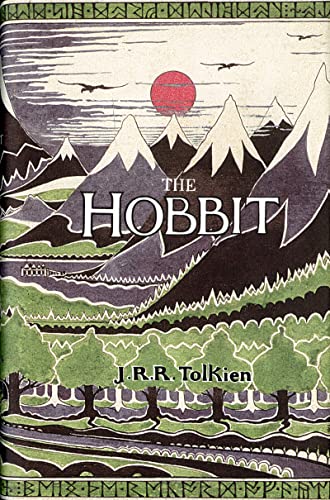
Cover of The Hobbit, or There and Back Again by J.R.R. Tolkien

The Hobbit, or There and Back Again

J.R.R. Tolkien, 1937
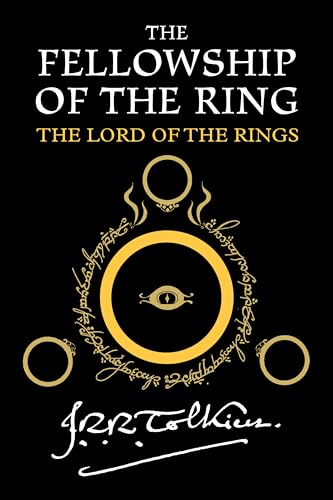
Cover of The Fellowship of the Ring by J.R.R. Tolkien

The Fellowship of the Ring

J.R.R. Tolkien, 1954
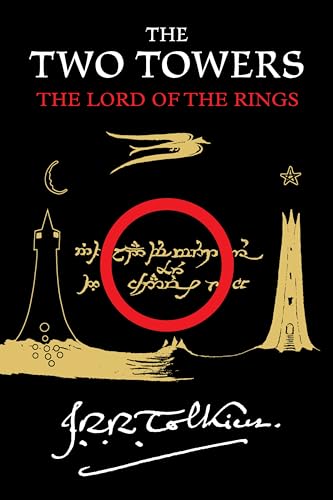
Cover of The Two Towers by J.R.R. Tolkien

The Two Towers

J.R.R. Tolkien, 1954
Cover of The Return of the King by J.R.R. Tolkien

The Return of the King

J.R.R. Tolkien, 1950

§Also part of

Middle Earth

§Editions

Showing 3 of 241 editions
Cover of The Return of the King

The Return of the King

engPaperbackReissue
Mariner Books20129780547928197
Amazon
Cover of The Return of the King

The Return of the King

engAudible
HarperCollins Publishers20219780008487294
Amazon
Cover of The Return of the King

The Return of the King

engPaperbackFilm Tie-In Edition (UK/CAN)
HarperCollins Publishers20129780007488346
§Genres
fantasy2adventure1children's poetry1classics1english1fiction1middle earth (imaginary place).1
§Content Warnings
§Moods
adventurous2challenging1emotional1funny1hopeful1inspiring1reflective1
§Tags
#diverse characters1#loveable characters1#not diverse characters1#plot driven1

Metadata

ISBN-139780547928197
ISBN-10054792819X
ASIN054792819X

Editions and availability

Find The Return of the King J.R.R. Tolkien in PDF, EPUB, ebook, audiobook, print, or library editions.

View on Amazon
Bookshop.orgGoogle Play BooksBarnes & NobleOpen Library

Featured In Lists

Book cover from this collectionBook cover from this collectionBook cover from this collectionBook cover from this collection
Book cover from this collection

The 100 Best Fantasy Books of All Time by Time Magazine

93 books
Book cover from this collectionBook cover from this collectionBook cover from this collectionBook cover from this collection
Book cover from this collection

Gilmore Girls Reading List 🍂

407 books