№ 5 · Harry Potter
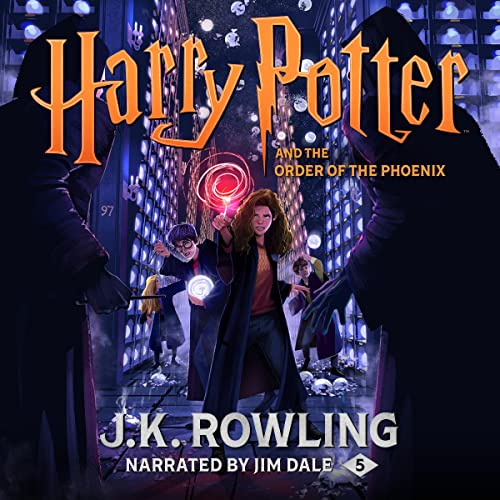
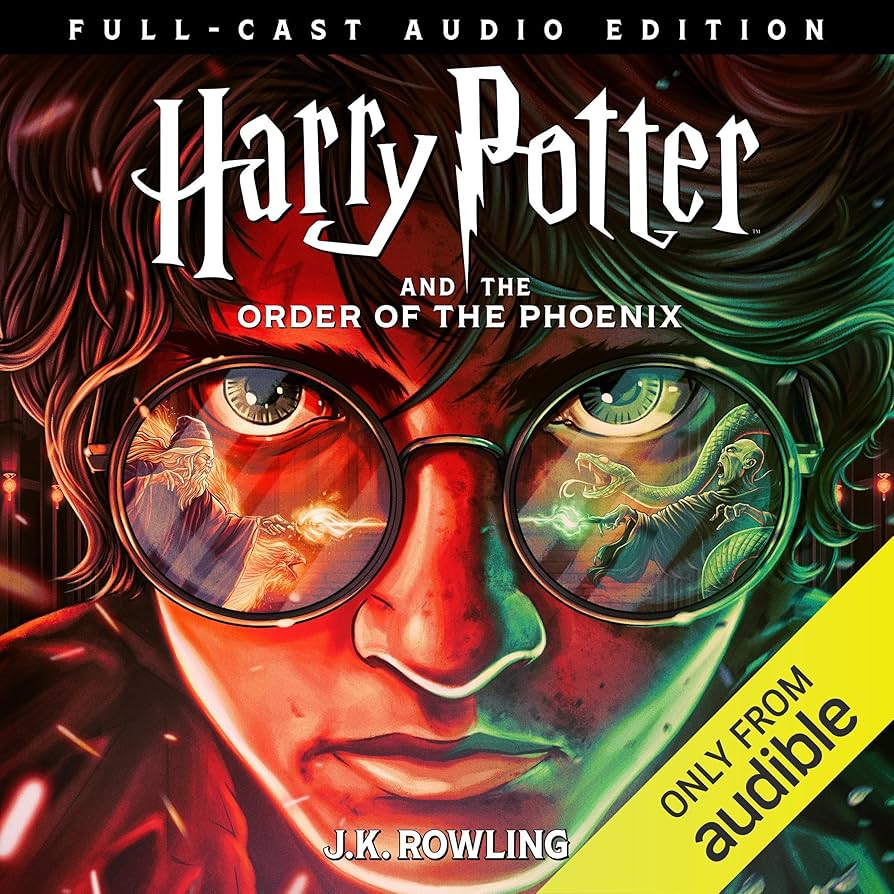
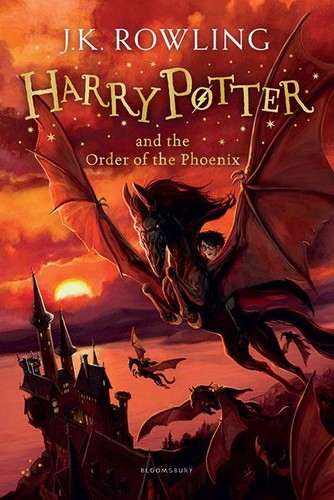
Harry Potter and the Order of the Phoenix,
§Synopsis
01The fifth installment of J.K. Rowling’s series marks a definitive departure from the wonder-filled discovery of Harry Potter’s early years, pivoting instead into a claustrophobic psychological thriller centered on institutional corruption and the weight of trauma. Following the harrowing return of Lord Voldemort, Harry finds himself not hailed as a hero or a witness, but as a pariah. Isolated at Privet Drive and then sequestered within a decaying, ancestral London townhouse, he must grapple with the realization that the wizarding world’s greatest threat is not just an external villain, but a government determined to maintain a veneer of peace through the systematic silencing of the truth.
As the narrative shifts to Hogwarts, the atmosphere is no longer one of sanctuary. The introduction of Dolores Umbridge, a Ministry-appointed official, transforms the school into a microcosm of authoritarian control. The central conflict is no longer a simple matter of wand-work or house points; it is a battle for the narrative itself. While the Ministry of Magic uses the press to discredit Harry and Dumbledore, Harry must navigate the volatile emotions of adolescence—heightened by the literal and figurative scars of his past—while realizing that the adults he once trusted are keeping him at arm's length for reasons he cannot yet fathom.
The Bureaucracy of Suppression
Rowling expands her world-building by pivoting from the whimsical corridors of Hogwarts to the sterile, subterranean halls of the Ministry of Magic. The setting reflects a shift in the series' "rules": magic is no longer just a tool for exploration, but a regulated commodity subject to political oversight. Through the issuance of "Educational Decrees," the atmosphere at Hogwarts becomes one of surveillance and censorship. This institutional takeover explores the terrifying efficiency of a "banality of evil," where the most dangerous antagonist is not a hooded dark wizard, but a bureaucrat in a pink cardigan who uses ink and parchment to strip away student rights and historical truth.
The Psychology of the Isolated Hero
Character development in this volume focuses heavily on Harry’s internal landscape, specifically his struggle with what many critics identify as Post-Traumatic Stress Disorder. Unlike the classic "plucky hero," Harry is frequently angry, resentful, and prone to outbursts—a realistic portrayal of a teenager burdened by a reality the rest of the world refuses to acknowledge. This emotional volatility is mirrored in his relationship with his godfather, Sirius Black. Both characters are trapped—Harry within the expectations of his peers and Sirius within the walls of a house he loathes—creating a poignant, mirrors-edge dynamic of two people bonded by their shared exclusion from the world they are trying to save.
Deconstructing the School Story
The novel masterfully subverts the "Boarding School" trope that defined the earlier books. Typically, the school story involves a safe environment where students learn from wise mentors to overcome challenges. Here, the mentors are sidelined or silenced, and the education itself becomes a weapon of the state. The refusal to teach practical Defense Against the Dark Arts forces the students to move from passive learners to active insurgents. By stripping away the traditional safety net of the academy, the story explores the trope of "The Chosen One" from a new angle: what happens when the hero is chosen not just for a prophecy, but to be the scapegoat for a society in denial?
The Morality of Rebellion
A central thematic pillar of the first half of the book is the dilemma of "order" versus "justice." The Ministry of Magic represents order at the cost of truth, while the titular Order of the Phoenix represents a clandestine resistance that operates outside the law to preserve it. This creates a complex moral landscape for Harry and his friends. They are forced to decide if loyalty to a corrupt system is a virtue or a failing. The stakes are raised from mere survival to the preservation of integrity, as the characters learn that in times of institutional gaslighting, the most radical act one can perform is simply telling the truth.
§Our take
The first half runs on denial. The Ministry refuses to accept Voldemort's return, Harry gets smeared in the press, and the adults he trusts keep their distance. EBSCO reads that as denial versus testimony. At school, Dolores Umbridge enforces compliance through Educational Decrees and a defense class with no actual defense in it; LitCharts frames it as education repurposed for control. A 2003 Reason essay reads her authority as the banality of evil, harm kept going by rule-following and willing cooperation rather than open cruelty. Readers split sharply. The Stanford Daily calls it the series' most divisive entry, with the shift from central mystery to emotional stakes at the heart of the argument. Reactor commentary describes disagreement over whether Harry's anger is realistic growing up or a trial for the reader, and others flag the length and school routine as padding.
§Themes
- Nobody believes you
- The Ministry rejects Harry's account of Voldemort's return, and disbelief becomes an active pressure.
- Education as control
- Umbridge's decrees and neutered Defense class enforce obedience until students organize their own lessons.
- Bureaucratic cruelty
- Umbridge and the Ministry work through self-righteous rule-following and institutional compliance.
- Silence and trauma
- Harry can't make the wizarding world listen, and his isolation drives the emotional focus.
§How it was received
At release, a Dragonpage review praised the suspense and new characters including Luna Lovegood and Ginny's bigger role, and the American Library Association named it a Best Book for Young Adults and Notable Children's Book in 2004. The Stanford Daily later called it the series' most divisive entry. Reactor commentary describes disagreement over whether Harry's anger reads as realistic maturing or a trial for the reader; other critics and readers flag the length and school routine as padding.
§Read it if
- You want fantasy where the hero's truth is dismissed by institutions and the media
- You like a school story that turns into a study of bureaucratic control and student resistance
- You can enjoy a long slow-burn middle book that trades a central mystery for emotional stakes
§Skip it if
- You prefer a tightly plotted mystery with steady forward momentum
- A protagonist who snaps at allies and a lot of school routine will test your patience.
§Before you start
- Reading experience
- slow pace. moderate difficulty. The longest of the series. Slow-burn, school-routine heavy, with the payoff late.
- Reading order
- Fifth of seven Harry Potter novels, after Goblet of Fire and before Half-Blood Prince. The series is meant to be read in order and gets steadily darker.
- Content notes
- Violence including torture curses causing severe pain, student injuries, and detention punishment that scars hands; Dementors attempt to drain a soul; characters discuss torture and deaths from the first war with Voldemort; Mild language and light romance, including kissing, dating talk, and one innuendo joke.
§Common questions
- What age is it for?
- Common Sense Media recommends 10 and up and notes that parents praise the intensity while flagging length and mature themes.
- Is it the longest book in the series?
- Yes, the longest of the seven main novels, though page counts vary by edition.
- Who narrates the audiobook?
- Jim Dale narrates the US audiobook, which the American Library Association named a Selected Audiobook for Young Adults in 2004. Stephen Fry does the UK edition.
§If you liked this
- The Hunger Games by Suzanne Collins — A teen protagonist resists an authoritarian system that controls information and education.
- Uglies by Scott Westerfeld — Institutional control over young people's minds, and the resistance that follows.
- Divergent by Veronica Roth — Teens organize against a system that sorts and controls them through institutional authority.
Track this book
Add to your library to track progress and write reviews