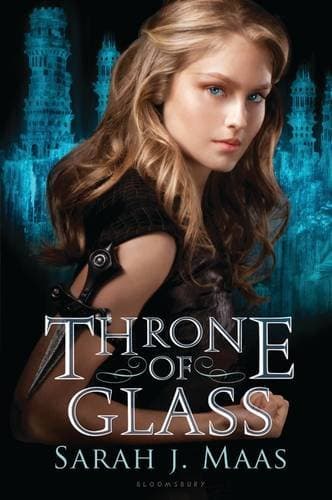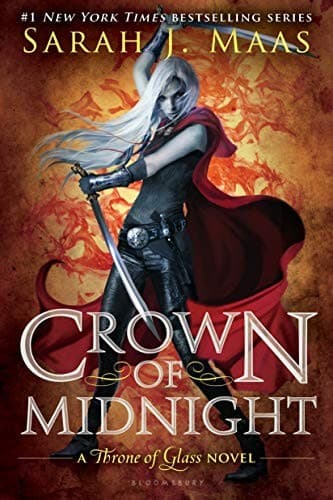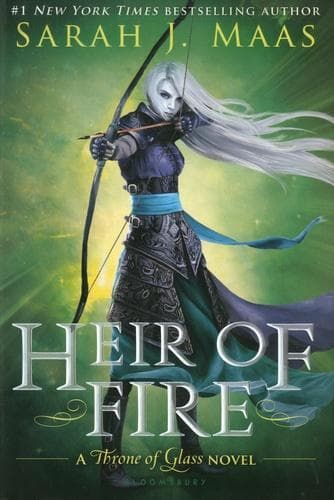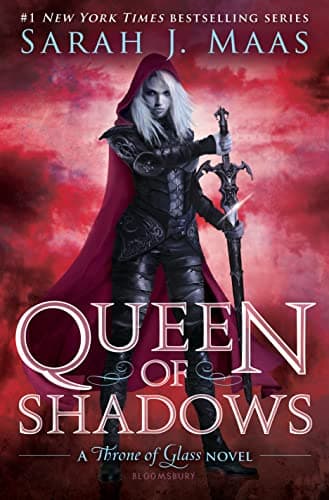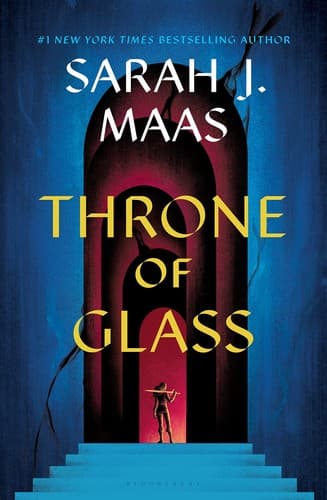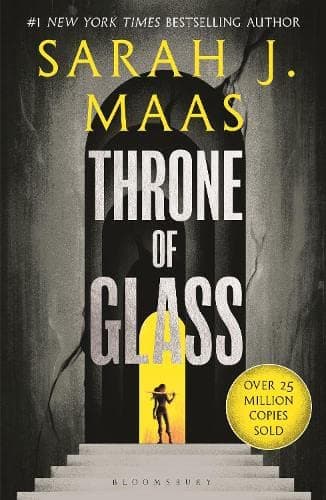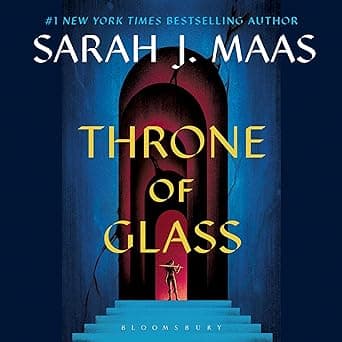

In the kingdom of Adarlan, freedom is not earned; it is brokered through blood and compliance. Celaena Sardothien, a notorious eighteen-year-old assassin, is plucked from the lethal salt mines of Endovier and offered a singular, desperate bargain: serve as the Crown Prince’s champion in a cutthroat tournament to become the King’s personal executioner. If she defeats twenty-three soldiers, thieves, and killers, she earns her liberty after four years of service. If she fails, she returns to the mines to die.
The stakes, however, extend far beyond the arena's floor. The setting is a palace of glass that functions as a monument to erasure, where magic has been outlawed for a decade and history is being systematically rewritten by a totalitarian regime. As competitors begin to surface as mutilated corpses, the narrative shifts from a standard survival game into a claustrophobic mystery. Success requires Celaena to navigate a court where every kindness is a potential trap and every shadow holds the residue of a forgotten, forbidden power.
Adarlan’s capital, Rifthold, is built on the remains of a world that was once teeming with magic and diverse cultures. The current regime maintains power through three distinct pillars: the total prohibition of supernatural forces, the destruction of ancient texts, and a surveillance state disguised as a lavish court. This world-building creates a palpable sense of "negative space," where what the characters cannot say reveals more about the world’s true history than the official records. The palace itself is a chessboard of mirrored hallways and hidden passages, ensuring that no conversation is ever truly private and no alliance is ever safe.
While the world remembers Celaena as a ghost story, her initial arc focuses on the grueling reality of recovery. Maas emphasizes the protagonist's humanity—from the shock of her physical senses returning after a year in the dark to the return of her monthly cycle—stripping away the "invincible warrior" trope to show a character who is biologically and emotionally vulnerable. Her development is defined by a precarious balancing act: she must prove she is dangerous enough to win the King’s favor while hiding enough of her true self to avoid becoming his permanent puppet.
By the book's midpoint, the central conflict is less about who will win the title of Champion and more about what that title costs. Celaena is forced to decide if she can truly serve the man responsible for her kingdom's ruin in exchange for her own skin. The narrative operates as a slow-burn investigation into the mechanics of power, asking whether it is possible to maintain one's soul while acting as the blade of a tyrant. This tension between personal survival and moral integrity drives the pacing, making the early chapters feel like a quiet, high-stakes heist of one's own identity.
In the kingdom of Adarlan, freedom is not earned; it is brokered through blood and compliance. Celaena Sardothien, a notorious eighteen-year-old assassin, is plucked from the lethal salt mines of Endovier and offered a singular, desperate bargain: serve as the Crown Prince’s champion in a cutthroat tournament to become the King’s personal executioner. If she defeats twenty-three soldiers, thieves, and killers, she earns her liberty after four years of service. If she fails, she returns to the mines to die.
The stakes, however, extend far beyond the arena's floor. The setting is a palace of glass that functions as a monument to erasure, where magic has been outlawed for a decade and history is being systematically rewritten by a totalitarian regime. As competitors begin to surface as mutilated corpses, the narrative shifts from a standard survival game into a claustrophobic mystery. Success requires Celaena to navigate a court where every kindness is a potential trap and every shadow holds the residue of a forgotten, forbidden power.
Adarlan’s capital, Rifthold, is built on the remains of a world that was once teeming with magic and diverse cultures. The current regime maintains power through three distinct pillars: the total prohibition of supernatural forces, the destruction of ancient texts, and a surveillance state disguised as a lavish court. This world-building creates a palpable sense of "negative space," where what the characters cannot say reveals more about the world’s true history than the official records. The palace itself is a chessboard of mirrored hallways and hidden passages, ensuring that no conversation is ever truly private and no alliance is ever safe.
While the world remembers Celaena as a ghost story, her initial arc focuses on the grueling reality of recovery. Maas emphasizes the protagonist's humanity—from the shock of her physical senses returning after a year in the dark to the return of her monthly cycle—stripping away the "invincible warrior" trope to show a character who is biologically and emotionally vulnerable. Her development is defined by a precarious balancing act: she must prove she is dangerous enough to win the King’s favor while hiding enough of her true self to avoid becoming his permanent puppet.
By the book's midpoint, the central conflict is less about who will win the title of Champion and more about what that title costs. Celaena is forced to decide if she can truly serve the man responsible for her kingdom's ruin in exchange for her own skin. The narrative operates as a slow-burn investigation into the mechanics of power, asking whether it is possible to maintain one's soul while acting as the blade of a tyrant. This tension between personal survival and moral integrity drives the pacing, making the early chapters feel like a quiet, high-stakes heist of one's own identity.
Add to your library to track progress and write reviews
Find Throne of Glass Sarah J. Maas in PDF, EPUB, ebook, audiobook, print, or library editions.
Throne of Glass
Throne of Glass
24 books in catalog
The blending of high-stakes political intrigue, expansive world-building, and deep romantic storylines has reshaped modern fantasy publishing across both young adult and adult categories. Sarah J. Maas has established a central presence in epic fantasy literature through multi-book sagas that have sold over 75 million copies globally in forty languages. Beginning as an online serial written during her teenage years, her body of work has cultivated a massive international audience and helped bring romantic fantasy into the forefront of contemporary commercial fiction.
Born in New York City in 1986, Sarah J. Maas began her writing career at age sixteen by posting Queen of Glass, a fantasy reimagining of Cinderella, on the creative writing community FictionPress. The digital serial gained a large internet following prior to its acquisition for traditional publishing. Maas attended Hamilton College in Clinton, New York, where she majored in creative writing and minored in religious studies, graduating Magna Cum Laude in 2008. Her academic focus on mythology, theology, and ancient narrative traditions provided the foundation for the elaborate world-building and pantheons featured throughout her fantasy realms. Her debut novel, Throne of Glass, was published in 2012 by Bloomsbury, expanding her early draft into an eight-volume high fantasy epic centered on the assassin Celaena Sardothien.
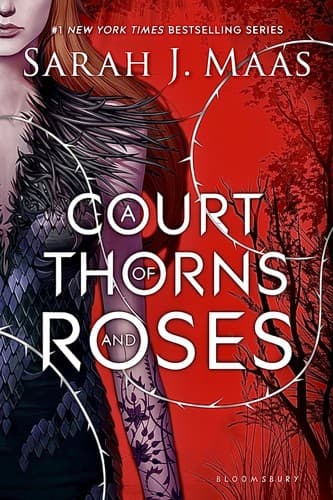
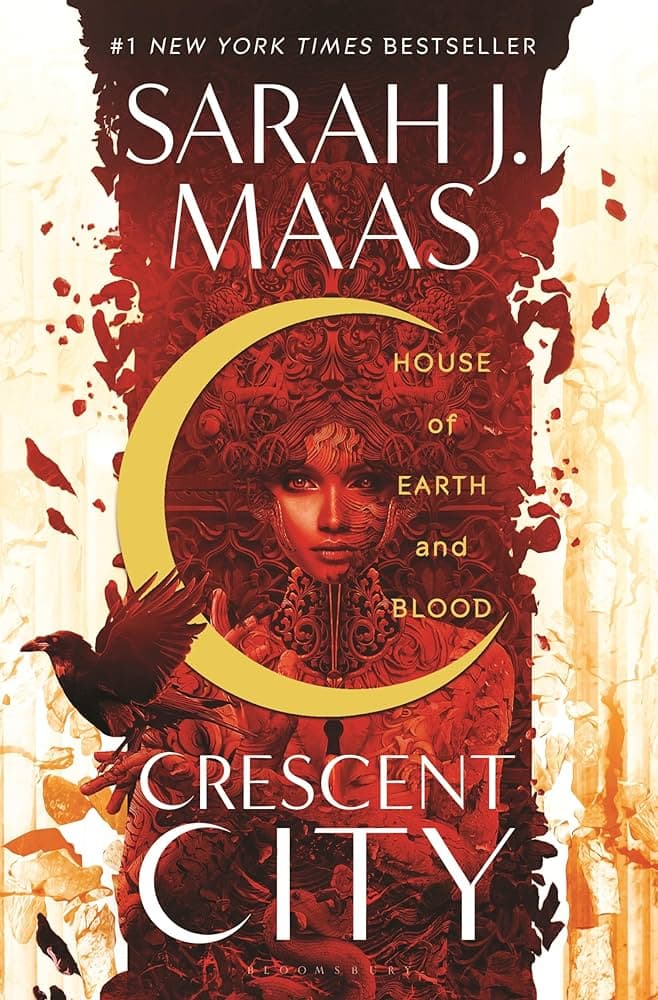
Following the publication of Throne of Glass, Maas expanded her bibliographies with A Court of Thorns and Roses, which debuted in 2015 as a narrative inspired by Beauty and the Beast before growing into a multi-realm Fae saga. Her career subsequently marked a formal transition into the adult fantasy market with House of Earth and Blood, the first installment in her Crescent City series. By bridging young adult, new adult, and adult literature, her published works illustrate how grassroots digital writing can evolve into major global publishing successes while broadening the scope of character-driven epic fantasy.
The writing style of Sarah J. Maas relies heavily on the subversion of classical folklore, developing early inspirations like Cinderella and Beauty and the Beast into extensive, original mythologies. Her prose emphasizes character-driven development, utilizing high-concept magic systems as the background for personal psychological journeys. Rather than prioritizing only external military conflicts, her narrative arcs highlight the emotional weight of war, political upheaval, trauma, and sacrifice, grounding epic plot points in relatable human experiences.
Prominent thematic elements across her books include the reclamation of identity and autonomy after severe trauma, the importance of complex female friendships, and the formation of resilient 'found family' bonds. Her protagonists regularly navigate moral dilemmas, balancing personal desires against the burdens of leadership, power, and survival. Through intricate plot architecture that connects individual stories across sprawling series, her storytelling emphasizes female agency, psychological recovery, and self-actualization within high-stakes fantasy settings.
24 books in catalog
The blending of high-stakes political intrigue, expansive world-building, and deep romantic storylines has reshaped modern fantasy publishing across both young adult and adult categories. Sarah J. Maas has established a central presence in epic fantasy literature through multi-book sagas that have sold over 75 million copies globally in forty languages. Beginning as an online serial written during her teenage years, her body of work has cultivated a massive international audience and helped bring romantic fantasy into the forefront of contemporary commercial fiction.
Born in New York City in 1986, Sarah J. Maas began her writing career at age sixteen by posting Queen of Glass, a fantasy reimagining of Cinderella, on the creative writing community FictionPress. The digital serial gained a large internet following prior to its acquisition for traditional publishing. Maas attended Hamilton College in Clinton, New York, where she majored in creative writing and minored in religious studies, graduating Magna Cum Laude in 2008. Her academic focus on mythology, theology, and ancient narrative traditions provided the foundation for the elaborate world-building and pantheons featured throughout her fantasy realms. Her debut novel, Throne of Glass, was published in 2012 by Bloomsbury, expanding her early draft into an eight-volume high fantasy epic centered on the assassin Celaena Sardothien.
Following the publication of Throne of Glass, Maas expanded her bibliographies with A Court of Thorns and Roses, which debuted in 2015 as a narrative inspired by Beauty and the Beast before growing into a multi-realm Fae saga. Her career subsequently marked a formal transition into the adult fantasy market with House of Earth and Blood, the first installment in her Crescent City series. By bridging young adult, new adult, and adult literature, her published works illustrate how grassroots digital writing can evolve into major global publishing successes while broadening the scope of character-driven epic fantasy.
The writing style of Sarah J. Maas relies heavily on the subversion of classical folklore, developing early inspirations like Cinderella and Beauty and the Beast into extensive, original mythologies. Her prose emphasizes character-driven development, utilizing high-concept magic systems as the background for personal psychological journeys. Rather than prioritizing only external military conflicts, her narrative arcs highlight the emotional weight of war, political upheaval, trauma, and sacrifice, grounding epic plot points in relatable human experiences.
Prominent thematic elements across her books include the reclamation of identity and autonomy after severe trauma, the importance of complex female friendships, and the formation of resilient 'found family' bonds. Her protagonists regularly navigate moral dilemmas, balancing personal desires against the burdens of leadership, power, and survival. Through intricate plot architecture that connects individual stories across sprawling series, her storytelling emphasizes female agency, psychological recovery, and self-actualization within high-stakes fantasy settings.