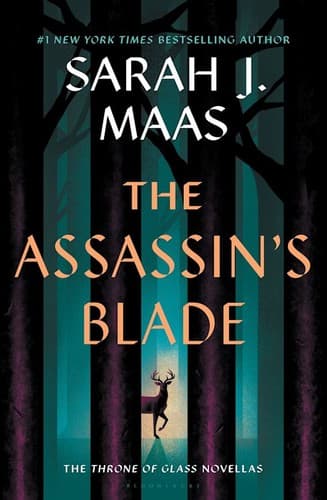

Celaena Sardothien is the most efficient weapon in the Assassin’s Guild, yet her brilliance serves as a golden cage maintained by her master, Arobynn Hamel. While her reputation as Adarlan’s most feared killer precedes her, she exists as a high-value asset whose every move is calculated to settle a debt that never seems to diminish. Her life is a series of high-stakes contracts that take her from the pirate-infested waters of Skull’s Bay to the silent, sun-scorched sands of the Red Desert, each mission testing the limits of her obedience and her endurance.
The narrative functions as a study of agency within a system designed to strip it away. As Celaena navigates the political machinations of various micro-empires, she begins to weigh the cost of her loyalty against her burgeoning sense of morality. The central conflict is not merely surviving her assignments, but determining whether she is a person with her own will or simply the sharpest tool in a merchant-prince’s belt.
The world is presented as a collection of competing power structures rather than a monolith. In Rifthold, the capital of Adarlan, the Assassin’s Guild operates with a degree of shadow-governance, balancing illegal activity with high-society influence. Beyond the capital, the setting shifts to autonomous zones like the Pirate Lord’s stronghold, where profit dictates law, and the Red Desert, where the Silent Assassins follow a code of discipline and restraint that contrasts sharply with the Guild's greed. These locations are not mere backdrops; they represent different philosophies of power that Celaena must decode to survive.
The protagonist’s initial arc is defined by the transition from a specialized tool to an independent actor. At the start of the collection, Celaena defines herself through her proximity to Arobynn Hamel and her status as the Guild’s best killer. However, as she moves through different territories, her relationship with Sam Cortland shifts from competitive hostility to a tentative partnership built on shared vulnerability. This development focuses on the realization that her "debts" are a calculated fabrication designed to keep her subservient, forcing her to decide if she is willing to risk her life for a cause that offers no financial return.
The book utilizes the "teen prodigy" trope but grounds it in the harsh realities of economic and physical consequence. Unlike many fantasy narratives where an assassin's skills provide ultimate freedom, here, those skills make Celaena more valuable as property, increasing the difficulty of her escape. The "enemies-to-lovers" dynamic between Celaena and Sam is handled through the lens of professional competition and shared trauma, avoiding sudden shifts in favor of a slow, friction-filled alignment. Furthermore, the "mentor" figure is stripped of the typical wisdom-teaching role, instead being presented as a predatory figure whose primary interest is the retention of his most profitable student.
The thematic heart of the stories lies in the "ledger" of an assassin’s life. Every action Celaena takes has a corresponding price—not just in gold, but in the psychological weight of her choices. The narrative explores the moral dilemma of an individual who is paid to be a monster but possesses the aesthetic and emotional sensibilities of a person who loves music, books, and luxury. This tension creates a constant friction that drives the plot forward, as she attempts to reconcile her role as a killer for hire with her refusal to participate in the more systemic cruelties of the world around her.
Celaena Sardothien is the most efficient weapon in the Assassin’s Guild, yet her brilliance serves as a golden cage maintained by her master, Arobynn Hamel. While her reputation as Adarlan’s most feared killer precedes her, she exists as a high-value asset whose every move is calculated to settle a debt that never seems to diminish. Her life is a series of high-stakes contracts that take her from the pirate-infested waters of Skull’s Bay to the silent, sun-scorched sands of the Red Desert, each mission testing the limits of her obedience and her endurance.
The narrative functions as a study of agency within a system designed to strip it away. As Celaena navigates the political machinations of various micro-empires, she begins to weigh the cost of her loyalty against her burgeoning sense of morality. The central conflict is not merely surviving her assignments, but determining whether she is a person with her own will or simply the sharpest tool in a merchant-prince’s belt.
The world is presented as a collection of competing power structures rather than a monolith. In Rifthold, the capital of Adarlan, the Assassin’s Guild operates with a degree of shadow-governance, balancing illegal activity with high-society influence. Beyond the capital, the setting shifts to autonomous zones like the Pirate Lord’s stronghold, where profit dictates law, and the Red Desert, where the Silent Assassins follow a code of discipline and restraint that contrasts sharply with the Guild's greed. These locations are not mere backdrops; they represent different philosophies of power that Celaena must decode to survive.
The protagonist’s initial arc is defined by the transition from a specialized tool to an independent actor. At the start of the collection, Celaena defines herself through her proximity to Arobynn Hamel and her status as the Guild’s best killer. However, as she moves through different territories, her relationship with Sam Cortland shifts from competitive hostility to a tentative partnership built on shared vulnerability. This development focuses on the realization that her "debts" are a calculated fabrication designed to keep her subservient, forcing her to decide if she is willing to risk her life for a cause that offers no financial return.
The book utilizes the "teen prodigy" trope but grounds it in the harsh realities of economic and physical consequence. Unlike many fantasy narratives where an assassin's skills provide ultimate freedom, here, those skills make Celaena more valuable as property, increasing the difficulty of her escape. The "enemies-to-lovers" dynamic between Celaena and Sam is handled through the lens of professional competition and shared trauma, avoiding sudden shifts in favor of a slow, friction-filled alignment. Furthermore, the "mentor" figure is stripped of the typical wisdom-teaching role, instead being presented as a predatory figure whose primary interest is the retention of his most profitable student.
The thematic heart of the stories lies in the "ledger" of an assassin’s life. Every action Celaena takes has a corresponding price—not just in gold, but in the psychological weight of her choices. The narrative explores the moral dilemma of an individual who is paid to be a monster but possesses the aesthetic and emotional sensibilities of a person who loves music, books, and luxury. This tension creates a constant friction that drives the plot forward, as she attempts to reconcile her role as a killer for hire with her refusal to participate in the more systemic cruelties of the world around her.
Add to your library to track progress and write reviews
Throne of Glass
Throne of Glass
24 books in catalog
The blending of high-stakes political intrigue, expansive world-building, and deep romantic storylines has reshaped modern fantasy publishing across both young adult and adult categories. Sarah J. Maas has established a central presence in epic fantasy literature through multi-book sagas that have sold over 75 million copies globally in forty languages. Beginning as an online serial written during her teenage years, her body of work has cultivated a massive international audience and helped bring romantic fantasy into the forefront of contemporary commercial fiction.
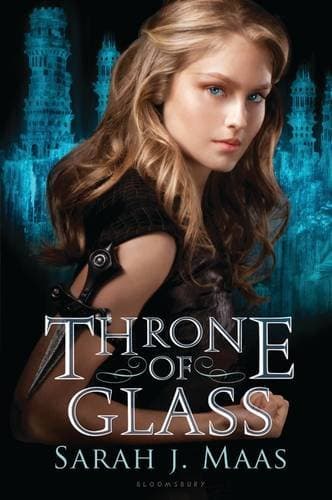
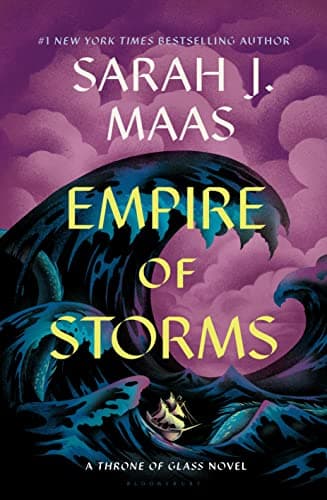
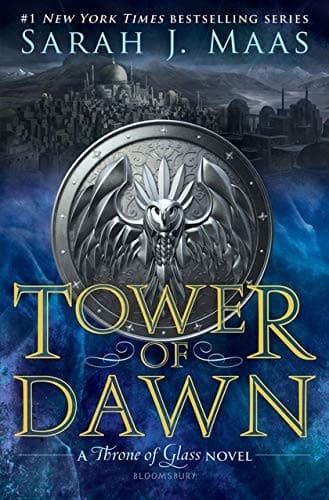
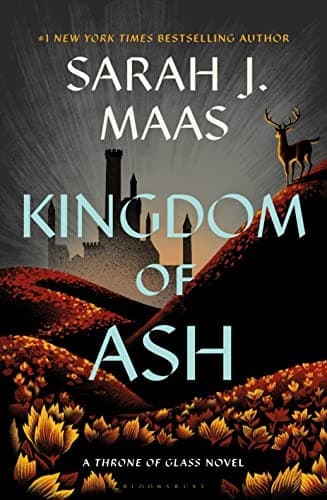
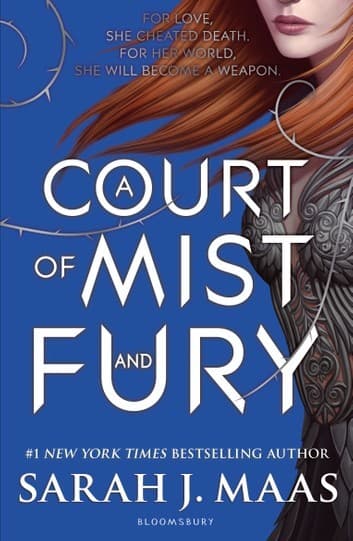
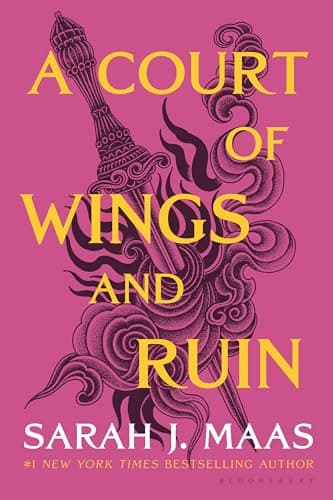
Born in New York City in 1986, Sarah J. Maas began her writing career at age sixteen by posting Queen of Glass, a fantasy reimagining of Cinderella, on the creative writing community FictionPress. The digital serial gained a large internet following prior to its acquisition for traditional publishing. Maas attended Hamilton College in Clinton, New York, where she majored in creative writing and minored in religious studies, graduating Magna Cum Laude in 2008. Her academic focus on mythology, theology, and ancient narrative traditions provided the foundation for the elaborate world-building and pantheons featured throughout her fantasy realms. Her debut novel, Throne of Glass, was published in 2012 by Bloomsbury, expanding her early draft into an eight-volume high fantasy epic centered on the assassin Celaena Sardothien.
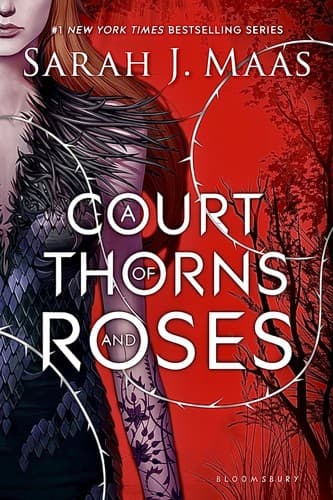
Following the publication of Throne of Glass, Maas expanded her bibliographies with A Court of Thorns and Roses, which debuted in 2015 as a narrative inspired by Beauty and the Beast before growing into a multi-realm Fae saga. Her career subsequently marked a formal transition into the adult fantasy market with House of Earth and Blood, the first installment in her Crescent City series. By bridging young adult, new adult, and adult literature, her published works illustrate how grassroots digital writing can evolve into major global publishing successes while broadening the scope of character-driven epic fantasy.
The writing style of Sarah J. Maas relies heavily on the subversion of classical folklore, developing early inspirations like Cinderella and Beauty and the Beast into extensive, original mythologies. Her prose emphasizes character-driven development, utilizing high-concept magic systems as the background for personal psychological journeys. Rather than prioritizing only external military conflicts, her narrative arcs highlight the emotional weight of war, political upheaval, trauma, and sacrifice, grounding epic plot points in relatable human experiences.
Prominent thematic elements across her books include the reclamation of identity and autonomy after severe trauma, the importance of complex female friendships, and the formation of resilient 'found family' bonds. Her protagonists regularly navigate moral dilemmas, balancing personal desires against the burdens of leadership, power, and survival. Through intricate plot architecture that connects individual stories across sprawling series, her storytelling emphasizes female agency, psychological recovery, and self-actualization within high-stakes fantasy settings.
24 books in catalog
The blending of high-stakes political intrigue, expansive world-building, and deep romantic storylines has reshaped modern fantasy publishing across both young adult and adult categories. Sarah J. Maas has established a central presence in epic fantasy literature through multi-book sagas that have sold over 75 million copies globally in forty languages. Beginning as an online serial written during her teenage years, her body of work has cultivated a massive international audience and helped bring romantic fantasy into the forefront of contemporary commercial fiction.
Born in New York City in 1986, Sarah J. Maas began her writing career at age sixteen by posting Queen of Glass, a fantasy reimagining of Cinderella, on the creative writing community FictionPress. The digital serial gained a large internet following prior to its acquisition for traditional publishing. Maas attended Hamilton College in Clinton, New York, where she majored in creative writing and minored in religious studies, graduating Magna Cum Laude in 2008. Her academic focus on mythology, theology, and ancient narrative traditions provided the foundation for the elaborate world-building and pantheons featured throughout her fantasy realms. Her debut novel, Throne of Glass, was published in 2012 by Bloomsbury, expanding her early draft into an eight-volume high fantasy epic centered on the assassin Celaena Sardothien.
Following the publication of Throne of Glass, Maas expanded her bibliographies with A Court of Thorns and Roses, which debuted in 2015 as a narrative inspired by Beauty and the Beast before growing into a multi-realm Fae saga. Her career subsequently marked a formal transition into the adult fantasy market with House of Earth and Blood, the first installment in her Crescent City series. By bridging young adult, new adult, and adult literature, her published works illustrate how grassroots digital writing can evolve into major global publishing successes while broadening the scope of character-driven epic fantasy.
The writing style of Sarah J. Maas relies heavily on the subversion of classical folklore, developing early inspirations like Cinderella and Beauty and the Beast into extensive, original mythologies. Her prose emphasizes character-driven development, utilizing high-concept magic systems as the background for personal psychological journeys. Rather than prioritizing only external military conflicts, her narrative arcs highlight the emotional weight of war, political upheaval, trauma, and sacrifice, grounding epic plot points in relatable human experiences.
Prominent thematic elements across her books include the reclamation of identity and autonomy after severe trauma, the importance of complex female friendships, and the formation of resilient 'found family' bonds. Her protagonists regularly navigate moral dilemmas, balancing personal desires against the burdens of leadership, power, and survival. Through intricate plot architecture that connects individual stories across sprawling series, her storytelling emphasizes female agency, psychological recovery, and self-actualization within high-stakes fantasy settings.