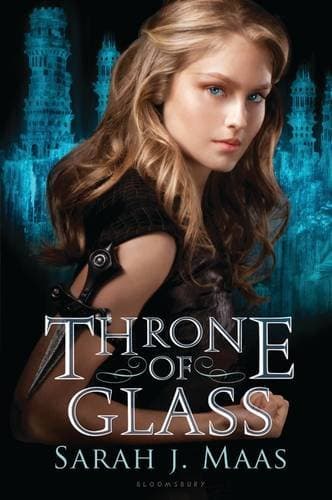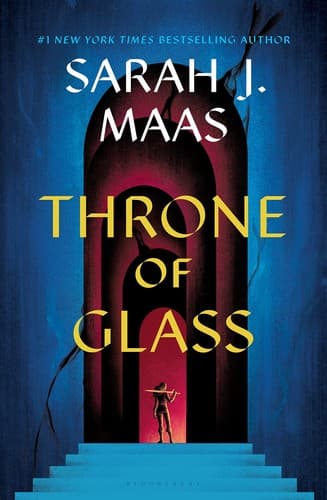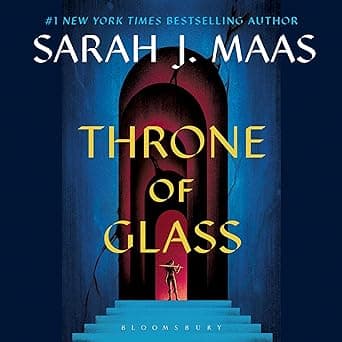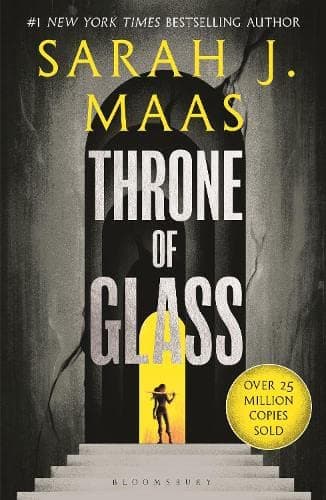
In the kingdom of Adarlan, freedom is not earned; it is brokered through blood and compliance. Celaena Sardothien, a notorious eighteen-year-old assassin, is plucked from the lethal salt mines of Endovier and offered a singular, desperate bargain: serve as the Crown Prince’s champion in a cutthroat tournament to become the King’s personal executioner. If she defeats twenty-three soldiers, thieves, and killers, she earns her liberty after four years of service. If she fails, she returns to the mines to die.
The stakes, however, extend far beyond the arena's floor. The setting is a palace of glass that functions as a monument to erasure, where magic has been outlawed for a decade and history is being systematically rewritten by a totalitarian regime. As competitors begin to surface as mutilated corpses, the narrative shifts from a standard survival game into a claustrophobic mystery. Success requires Celaena to navigate a court where every kindness is a potential trap and every shadow holds the residue of a forgotten, forbidden power.
Adarlan’s capital, Rifthold, is built on the remains of a world that was once teeming with magic and diverse cultures. The current regime maintains power through three distinct pillars: the total prohibition of supernatural forces, the destruction of ancient texts, and a surveillance state disguised as a lavish court. This world-building creates a palpable sense of "negative space," where what the characters cannot say reveals more about the world’s true history than the official records. The palace itself is a chessboard of mirrored hallways and hidden passages, ensuring that no conversation is ever truly private and no alliance is ever safe.
While the world remembers Celaena as a ghost story, her initial arc focuses on the grueling reality of recovery. Maas emphasizes the protagonist's humanity—from the shock of her physical senses returning after a year in the dark to the return of her monthly cycle—stripping away the "invincible warrior" trope to show a character who is biologically and emotionally vulnerable. Her development is defined by a precarious balancing act: she must prove she is dangerous enough to win the King’s favor while hiding enough of her true self to avoid becoming his permanent puppet.
By the book's midpoint, the central conflict is less about who will win the title of Champion and more about what that title costs. Celaena is forced to decide if she can truly serve the man responsible for her kingdom's ruin in exchange for her own skin. The narrative operates as a slow-burn investigation into the mechanics of power, asking whether it is possible to maintain one's soul while acting as the blade of a tyrant. This tension between personal survival and moral integrity drives the pacing, making the early chapters feel like a quiet, high-stakes heist of one's own identity.
Add to your library to track progress and write reviews
Find Throne of Glass Sarah J. Maas in PDF, EPUB, ebook, audiobook, print, or library editions.

24 books in catalog
Sarah J. Maas is the prolific, #1 New York Times and internationally bestselling author of the Throne of Glass, A Court of Thorns and Roses and Crescent City series, which have sold more than 70 million copies in English worldwide and are published in thirty-eight languages. Maas is one of the most successful authors of the modern era, generating a far-reaching and ever-growing fanbase of readers, as well as a TikTok phenomenon, with the hashtag for her A Court of Thorns and Roses series having several billion views.
She has two children, Taran and Sloan, with her husband. They currently reside in Los Angeles, CA and have a home in NYC, NY.
(Website: sarahjmaas.com)
Throne of Glass