§Synopsis
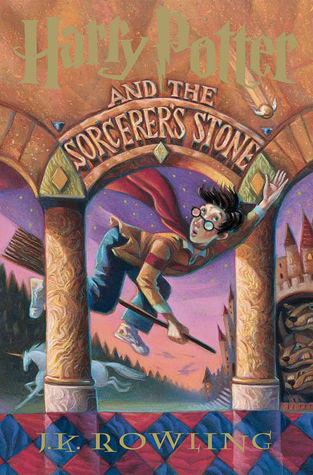
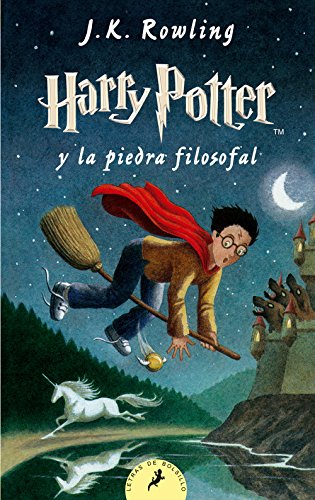
01Harry Potter’s existence is defined by a profound absence—of family, of history, and of any sense of belonging. Confined to a cupboard beneath the stairs of his aunt and uncle’s home, his life is an exercise in invisibility, dictated by the mundane and often cruel whims of the Dursley family. This status quo is shattered not by a sudden realization of his own power, but by a relentless influx of letters that refuse to be ignored, signaling the existence of a hidden society that has been waiting for him since the day he was born.
As Harry enters the secret corridors of the wizarding world, he must navigate the jarring transition from being a nameless nobody to a living legend. The central conflict lies in his attempt to reconcile the "Boy Who Lived"—a hero defined by a tragedy he cannot remember—with the lonely eleven-year-old he actually is. His arrival at Hogwarts School of Witchcraft and Wizardry is less about mastering spells and more about discovering whether his character can withstand the weight of a legacy he never asked for and a world where danger is as present as the magic itself.
The Duality of the Mundane and the Magical
Rowling constructs a reality where the extraordinary exists within the "cracks" of the ordinary. The wizarding world is not a distant realm but a parallel society tucked behind brick walls in London and accessible only through specific, often overlooked gateways. This world operates on a complex system of internal logic: magic is an academic discipline requiring specific tools—wands, incantations, and precise gestures—rather than an effortless or chaotic force. It is governed by its own bureaucracy, funded by a goblin-run bank, and steeped in a history that is as rigid as it is whimsical. The atmosphere shifts from the drab, oppressive normalcy of suburban Surrey to the sensory overload of Diagon Alley, establishing a setting where the greatest tension stems from the secrets maintained to keep the two worlds separate.
Found Family and the Dynamics of Identity
At the heart of the narrative is Harry’s development from a passive victim of circumstance to an active participant in his own life. This evolution is catalyzed by his first genuine social connections. Ron Weasley, burdened by the legacy of his many successful brothers, and Hermione Granger, whose intellectual rigidity masks a deep-seated need for acceptance, serve as the mirrors through which Harry understands himself. Their relationship is grounded in the shared experience of being outsiders. Harry’s arc is specifically tied to the virtue of humility; despite being famous for a past he didn't choose, his lack of ego becomes his defining strength as he faces a social hierarchy at Hogwarts that often values pure-blood lineage and inherited power over individual merit.
Subverting the Hero’s Journey and School Tropes
While the story utilizes the "Chosen One" and "Hidden Heritage" tropes, it grounds them in the "School Story" tradition. Harry is not an innate master of his craft; he is a novice who must study, fail, and struggle through the same lessons as his peers. The tropes are further subverted by the moral dilemmas presented early in his education. The conflict is not merely a battle against an external shadow, but an internal navigation of rules and rebellion. Harry, Ron, and Hermione frequently find that the rigid school regulations—house points, curfews, and restricted areas—must be weighed against the necessity of doing what is right. This creates a narrative where the protagonist’s growth is measured by his willingness to risk his new-found status for the sake of his friends and his developing moral compass.
§Our take
The ingredients are deliberately familiar: the British boarding-school story, the orphan hero, the wizard-school premise. Ursula K. Le Guin called the book competent children's fantasy but derivative, and Harold Bloom said in 2000 that the prose leans on clichés and asks little of the reader. A. S. Byatt's objection, that the world is assembled from borrowed pieces of earlier children's fantasy, was aimed at the series as a whole. The defense rests on execution. Publishers Weekly's 1998 review called it a delightful romp and placed Rowling in the line of P. L. Travers and Roald Dahl, and early UK reviews credited her wit and plotting. Small details planted early pay off later, which is why some readers treat it as a rereading book. Common Sense Media calls it the lightest in the series, even though it opens with a neglected orphan.
§Themes
- Found family
- Common Sense Media reads the moral as friendship and bravery counting for more than book learning or cleverness.
- Alchemy and change
- A 2020 essay collection's publisher description frames the series' alchemy as transformation through love. The US retitling dropped the link.
- Planted details
- Small early mentions matter later, the craft point defenders cite against the cliché charge.
- Home
- A neglected orphan finds his first real social connections once he reaches school.
§How it was received
Publishers Weekly's 1998 US review was enthusiastic, calling it a delightful romp and comparing Rowling to Dahl. Harold Bloom and Anthony Holden attacked it in 2000 as clichéd and undemanding, and Le Guin called it competent but derivative; Byatt's case about borrowed ingredients concerned the series as a whole. Admirers point to the comic craft, names and plotting, detractors to the familiar school-story and orphan-hero framework.
§Read it if
- You like British school stories and comic child-versus-awful-adults setups in the Dahl line
- You're introducing a reader aged 8 or up to longer books with logic-puzzle set pieces
- You enjoy books where early details turn out to matter on a reread
§Skip it if
- Simple prose and middle-grade pacing feel childish to you. Some adults say the first three books don't hold up on reread.
- You want a fast opening. Some young readers report the pre-Hogwarts set-up drags.
§Before you start
- Reading experience
- moderate pace. easy to read. Light, middle-grade pace. The lightest book in the series.
- Reading order
- Book 1 of 7 and the entry point. It works as a self-contained story, and the later books get darker.
- Content notes
- Common Sense Media flags moderate peril, including a three-headed dog, a troll attack and a life-size chess game, plus minor injuries such as a broken wrist; The hero's parents died when he was a baby and he was neglected by his relatives; may touch sensitive readers; Some bullying and fistfighting; Hagrid's heavy drinking is noted by Common Sense Media.
§Common questions
- Why Sorcerer's Stone in the US and Philosopher's Stone in the UK?
- Bloomsbury published it in 1997 as Philosopher's Stone. Scholastic retitled it for the 1998 US edition, fearing American readers wouldn't link 'philosopher' with magic. Rowling later said she regretted the change.
- What age is it for?
- Common Sense Media rates it 8+, Publishers Weekly's 1998 listing said ages 8 to 12, and it's described as the lightest book in the series.
- Can it be read on its own?
- Yes. It's book 1 of 7, but it works as a self-contained story, and the later books turn darker.
§If you liked this
- A Wizard of Earthsea by Ursula K. Le Guin — The wizard-school lineage Le Guin herself pointed to. The foil in the originality debate.
- Roald Dahl's children's novels by Roald Dahl — Early critics compared Rowling's comic tone and child-versus-awful-adults setup to Dahl.
- Mary Poppins by P.L. Travers — Publishers Weekly put Rowling in the line of Travers and Dahl for whimsical British fantasy.
Track this book
Add to your library to track progress and write reviews