№ 3 · Harry Potter
As Harry Potter enters his third year at Hogwarts, the boundaries between the safety of the wizarding school and the dangers of the outside world begin to dissolve. The narrative shifts from the whimsical discovery of magic toward a more grounded exploration of trauma, memory, and the consequences of adult secrets. While previous years focused on thwarting a distant dark lord, this chapter of Harry’s life is defined by a more intimate threat: the escape of Sirius Black, a notorious prisoner from the fortress of Azkaban who is believed to be hunting Harry to finish what his master started.
The atmosphere of the series matures significantly as the "Boy Who Lived" confronts the reality that justice in the magical world is often cold and unforgiving. The introduction of the Dementors—the soul-sucking guardians of Azkaban stationed at the school gates—serves as a physical manifestation of fear and depression. Harry finds himself struggling not just against an external assassin, but against his own visceral reactions to these creatures, which force him to relive his most painful memories. This struggle sets the stage for a story about finding the internal strength to repel darkness when the traditional adults in one’s life cannot provide a total shield.
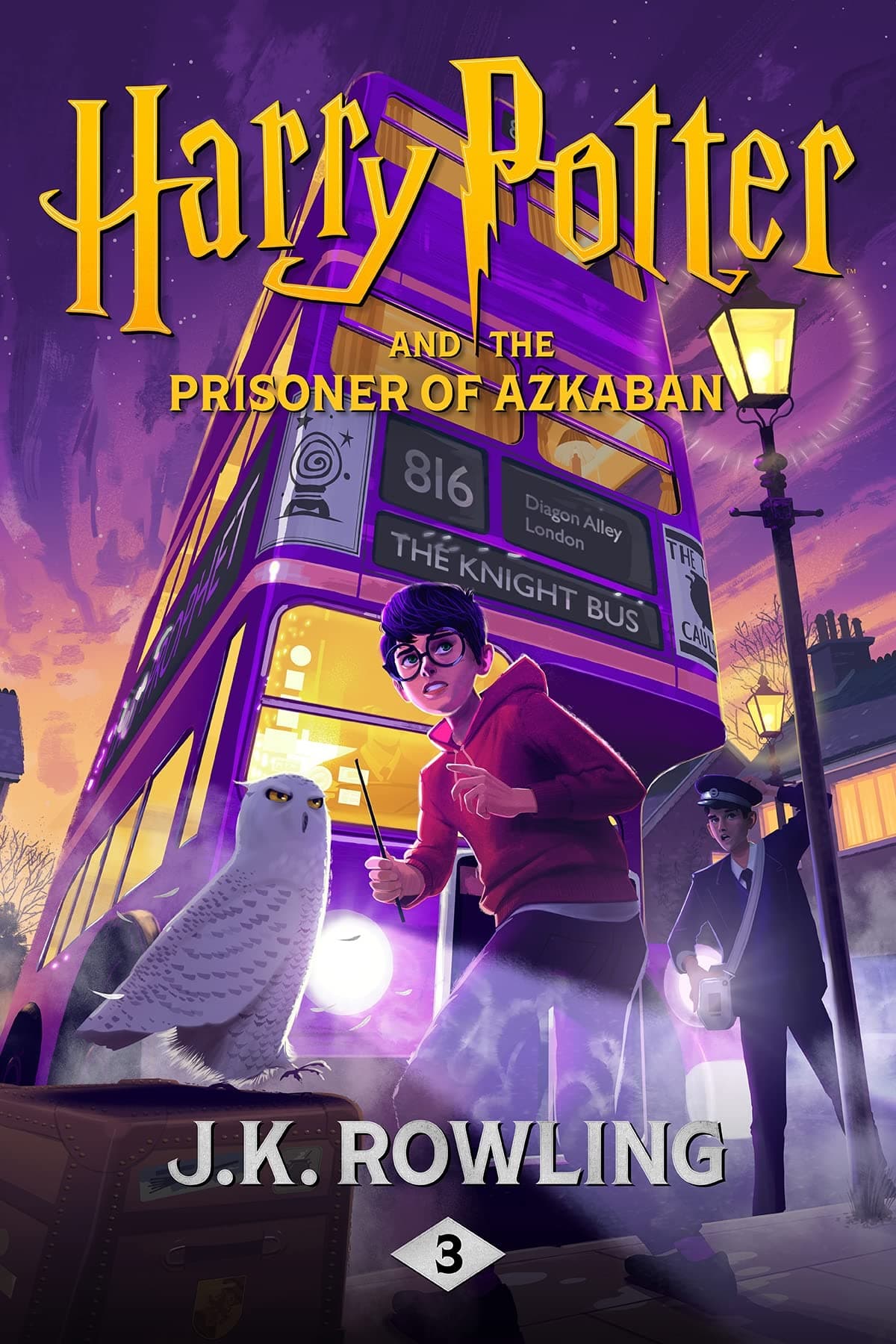
The world-building in this installment expands the wizarding society beyond the classroom, introducing the concept of a magical justice system and the terrifying infrastructure of Azkaban. We see the mechanics of the "Knight Bus," an emergency transport for stranded witches and wizards, and the cozy, yet high-stakes environment of Hogsmeade village. The setting is no longer just a backdrop for adventure; it is a place under martial law. The presence of the Dementors introduces a darker rule to the magic system—that some forces cannot be fought with simple hexes, but require a mastery of one's own happiest and most powerful memories.
Character development takes a turn toward the complexities of adolescence. Harry, Ron, and Hermione are no longer merely reacting to events; they are beginning to question the adults around them and the stories they have been told about the past. Harry’s relationship with the new Defense Against the Dark Arts teacher, Professor Lupin, provides a rare look at a mentor who treats him with intellectual honesty rather than protective silence. Meanwhile, Hermione’s mysterious academic schedule and Ron’s anxieties over his aging pet, Scabbers, signal a shift toward personal stakes and the tension that arises when friends begin to keep secrets from one another.
The book leans heavily into the tropes of the gothic thriller and the "man-on-the-run" mystery, but it subverts them by placing these elements within a school for children. By utilizing the trope of the "Omen"—specifically the Grim, a spectral dog supposedly signifying death—the narrative plays with the idea of fate versus perception. Rather than a straightforward quest, the plot functions as a psychological mystery where the primary antagonist is an unseen shadow, and the protagonist’s greatest challenge is overcoming a paralyzing fear of fear itself. This focus on the internal psyche of the hero marks a departure from the more traditional "hero's journey" found in the earlier volumes.
Rowling told The Times in 2000 that the Dementors were a deliberate image of depression, drawn from her own experience: not sadness, but the loss of any belief that cheer could return. It shows on the page, in creatures whose deepest horror is psychological (they make Harry relive his mother's death) and in a defense that has to come from inside Harry rather than from a stronger spell. Opinion splits hardest over the ending's time-travel logic. Publishers Weekly noted in 1999 that the finale doesn't entirely hold up, and readers still argue over whether the climax earns itself or leans on a device the story never fully justifies.
Add to your library to track progress and write reviews
Kirkus praised the vividly imagined Dementors and a plot that keeps gaining momentum, and the Christian Science Monitor's 1999 review called it an improvement on the first two. It won the 1999 Whitbread Children's Book Award and was a 2000 Hugo Best Novel finalist, but lost the overall Whitbread Book of the Year to Seamus Heaney's Beowulf by five votes to four at the February 2000 ceremony, a result judge Anthony Holden had publicly argued for. Publishers Weekly liked how details from earlier books pay off while noting the finale's logic isn't entirely watertight.
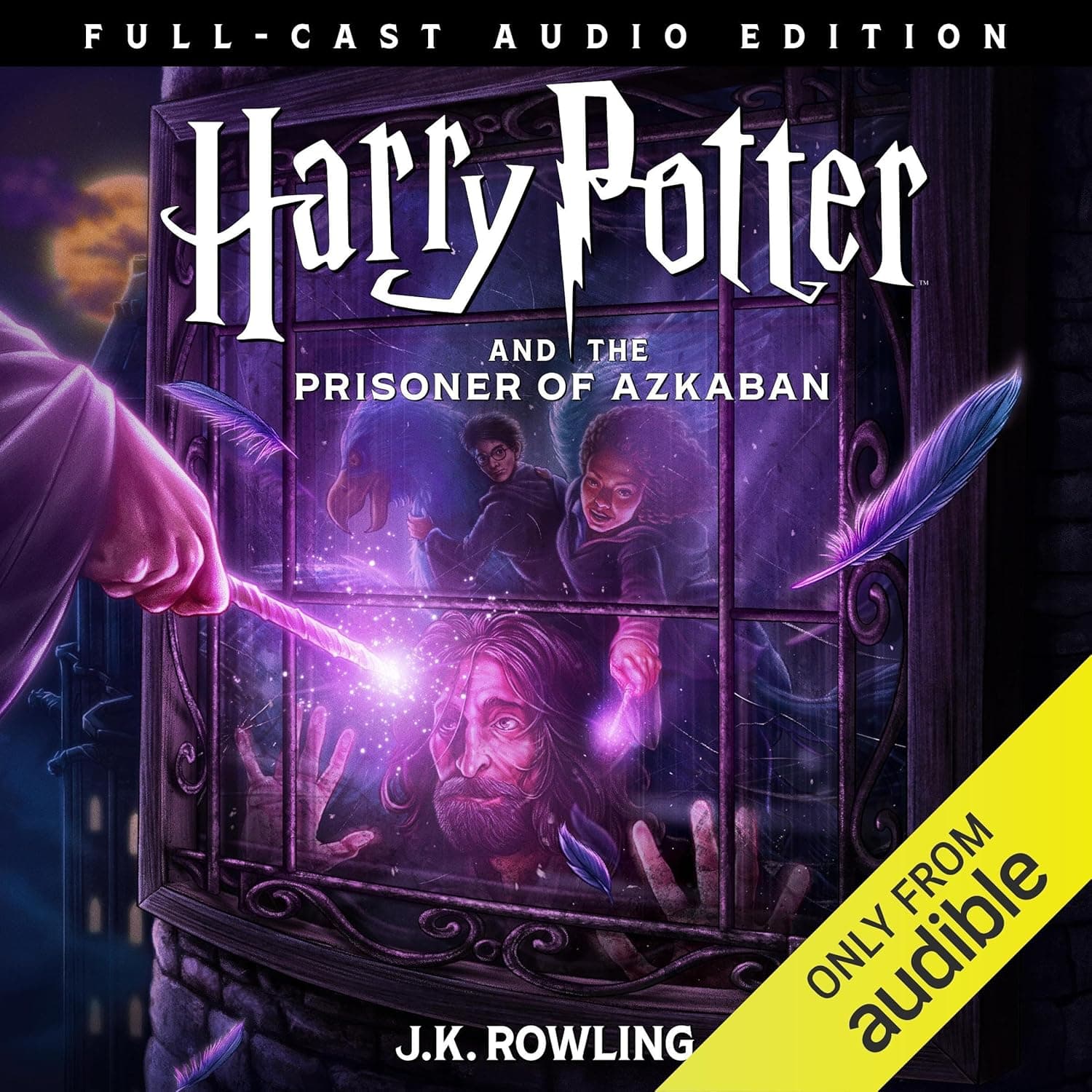
Find Harry Potter and the Prisoner of Azkaban (Full-Cast Edition) J.K. Rowling in PDF, EPUB, ebook, audiobook, print, or library editions.

9 books in catalog
The fantasy genre underwent a significant transformation through the introduction of a narrative centered on a young wizard, a concept that first took shape during a delayed train journey from Manchester to London in 1990. This creative development occurred during a period of profound personal adversity for the author, J.K. Rowling, who navigated the loss of her mother to multiple sclerosis while living as a single parent in Edinburgh. It was in local cafes that she completed the initial manuscript for her debut novel, a work that would eventually bridge the gap between juvenile and adult readerships by grounding its magical elements in relatable coming-of-age struggles and complex moral philosophy. The transition from a struggling writer to a critically recognized novelist underscores a career marked by narrative versatility, spanning from high-concept children's literature to gritty social realism and contemporary detective fiction. By exploring the complexities of loss and the weight of personal choice, her bibliography has become a significant component of contemporary English literature.
Born in 1965 in Yate, England, Joanne Rowling’s path to publication was defined by academic focus and professional shifts. After studying French and Classics at the University of Exeter—an education that would later inform the Latinate spells and mythological structures of her fiction—she moved to Portugal to teach English. It was following her return to the United Kingdom, specifically to Scotland, that she faced the most challenging years of her career. Living on a low income, she completed the manuscript for Harry Potter and the Philosopher’s Stone (1997). The book was famously rejected by twelve publishing houses before being accepted by Bloomsbury. This debut sparked a major shift in the industry, leading to seven core novels that have been translated into over 80 languages. Following the conclusion of her primary fantasy series, she expanded her repertoire into adult fiction with the 2012 release of The Casual Vacancy, a novel focused on the social politics of a small English town.
Her writing is characterized by intricate plotting, a penchant for mystery-style clues hidden in plain sight, and a satirical lens often aimed at bureaucracy and social hierarchy. Influenced by the works of Jane Austen and E. Nesbit, she employs a third-person limited perspective that allows for deep emotional resonance while maintaining a vast, interconnected world-building style. Thematic consistency remains a hallmark of her work. Death is a central, recurring motif, influenced largely by her mother’s passing; her stories often examine the redemptive capacity of love and the moral necessity of facing mortality. Furthermore, her narratives frequently tackle the abuse of power and the persistence of bigotry. Whether in a magical school or a contemporary village, she emphasizes that good and evil are not inherent traits but are defined by the choices an individual makes when confronted with fear or ambition.
The Harry Potter series is a seven-book sequence that follows the education of a young wizard. The series is credited with reviving the middle-grade and young adult market, blending elements of the British boarding school story with epic fantasy and mystery. The Cormoran Strike series, written under the pseudonym Robert Galbraith, is a collection of hardboiled detective novels following a private investigator and his assistant, Robin Ellacott. This series allows for a more granular exploration of contemporary London and the technicalities of forensic and psychological investigation. The Casual Vacancy serves as her first foray into adult social realism, examining themes of class warfare, addiction, and the systemic failures of local government. More recent ventures, such as The Ickabog and The Christmas Pig, return to a more whimsical, fable-like tone while maintaining her signature focus on morality and courage.
Harry Potter