№ 4 · Harry Potter
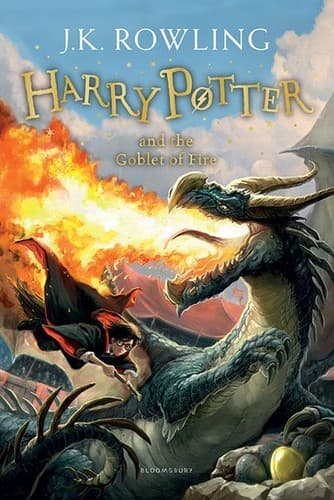
The fourth installment of the Harry Potter series marks a decisive shift from the whimsical discoveries of childhood to the starker, more complex realities of adulthood. As Harry enters his fourth year at Hogwarts, the narrative lens expands beyond the familiar corridors of the school to reveal a wizarding world that is both geographically vast and socially stratified. The introduction of the Triwizard Tournament serves as a catalyst for exploring the friction between international cooperation and deep-seated institutional prejudices, moving the story into the realm of political and social intrigue.
At its core, this chapter of Harry’s journey focuses on the psychological burden of a forced destiny. When the Goblet of Fire—an impartial magical arbiter—unexpectedly selects Harry as a fourth champion, he is thrust into a high-stakes competition he did not seek and is legally bound to complete. This selection creates an immediate and painful isolation; Harry finds himself alienated from his peers and, most devastatingly, from his closest support system. The central conflict is not merely the survival of physical trials, but the navigation of a public identity that is increasingly manipulated by the media and misunderstood by those he loves.
While previous volumes focused on the internal culture of Hogwarts, this narrative introduces the concept of a global magical community through the Quidditch World Cup and the arrival of delegates from foreign schools, Beauxbatons and Durmstrang. J.K. Rowling uses this expansion to establish the "rules" of international magical law and the bureaucracy of the Ministry of Magic. Furthermore, the world-building takes a darker, more investigative turn as the story explores the invisible labor within the wizarding world. Through the introduction of house-elves in a domestic setting, the text challenges the protagonist—and the reader—to look past the "magic" of Hogwarts to see the uncomfortable social structures that uphold it.
Character development in this phase is defined by the fracture of the central trio’s dynamic. Ron Weasley’s struggle with being the "sidekick" reaches a breaking point, manifesting as a bitter jealousy that strips Harry of his primary emotional anchor. Simultaneously, Hermione Granger undergoes a significant intellectual awakening. No longer content to simply master the curriculum, she begins to critically analyze the history books she once held as absolute truth, leading her to become a lone voice for social activism. Harry himself must transition from a boy who reacts to danger into a young man who must proactively prepare for it, all while navigating the awkward, burgeoning pressures of teenage social hierarchies and the Triwizard Yule Ball.
The story utilizes the "Tournament" trope—a classic literary device used to prove worthiness—but subverts it by framing the competition as a source of dread rather than honor. Traditionally, such contests are meant to bring glory to the victor; however, here the tournament functions as a predatory mechanism. The "Chosen One" motif is also challenged; Harry is not chosen by a mentor or by merit, but by an external, malicious interference that utilizes the school’s own traditions against him. This creates a persistent atmosphere of "hidden-in-plain-sight" danger, where the structures designed to protect the students are the very things placing them in mortal peril.
Book four is nearly twice the length of the first three, and whether that extra weight earns its keep is still the liveliest question about it. Contemporary reviews split: some found the wider range engaging, others thought the pace slow and the prose loose. Readers likewise praise the tournament tasks but grumble about the World Cup opening and the Harry-Ron falling-out.
The front-loaded mystery may explain the patience tax. Rowling has said she struggled with the early chapters while working out how to hide clues in plain sight, which sits awkwardly next to recurring complaints about how long the opening takes.
Add to your library to track progress and write reviews
Contemporary reviews showed broad enthusiasm alongside objections about slower pacing, diffuse plotting and teenage bickering, and the Christian Science Monitor's Yvonne Zipp found the book better than she expected despite the hype. The 2001 Hugo win set off the opposite debate: some science-fiction circles questioned a children's fantasy beating the other finalists, while supporters called it overdue.
Find Harry Potter and the Goblet of Fire J.K. Rowling in PDF, EPUB, ebook, audiobook, print, or library editions.

9 books in catalog
The fantasy genre underwent a significant transformation through the introduction of a narrative centered on a young wizard, a concept that first took shape during a delayed train journey from Manchester to London in 1990. This creative development occurred during a period of profound personal adversity for the author, J.K. Rowling, who navigated the loss of her mother to multiple sclerosis while living as a single parent in Edinburgh. It was in local cafes that she completed the initial manuscript for her debut novel, a work that would eventually bridge the gap between juvenile and adult readerships by grounding its magical elements in relatable coming-of-age struggles and complex moral philosophy. The transition from a struggling writer to a critically recognized novelist underscores a career marked by narrative versatility, spanning from high-concept children's literature to gritty social realism and contemporary detective fiction. By exploring the complexities of loss and the weight of personal choice, her bibliography has become a significant component of contemporary English literature.
Born in 1965 in Yate, England, Joanne Rowling’s path to publication was defined by academic focus and professional shifts. After studying French and Classics at the University of Exeter—an education that would later inform the Latinate spells and mythological structures of her fiction—she moved to Portugal to teach English. It was following her return to the United Kingdom, specifically to Scotland, that she faced the most challenging years of her career. Living on a low income, she completed the manuscript for Harry Potter and the Philosopher’s Stone (1997). The book was famously rejected by twelve publishing houses before being accepted by Bloomsbury. This debut sparked a major shift in the industry, leading to seven core novels that have been translated into over 80 languages. Following the conclusion of her primary fantasy series, she expanded her repertoire into adult fiction with the 2012 release of The Casual Vacancy, a novel focused on the social politics of a small English town.
Her writing is characterized by intricate plotting, a penchant for mystery-style clues hidden in plain sight, and a satirical lens often aimed at bureaucracy and social hierarchy. Influenced by the works of Jane Austen and E. Nesbit, she employs a third-person limited perspective that allows for deep emotional resonance while maintaining a vast, interconnected world-building style. Thematic consistency remains a hallmark of her work. Death is a central, recurring motif, influenced largely by her mother’s passing; her stories often examine the redemptive capacity of love and the moral necessity of facing mortality. Furthermore, her narratives frequently tackle the abuse of power and the persistence of bigotry. Whether in a magical school or a contemporary village, she emphasizes that good and evil are not inherent traits but are defined by the choices an individual makes when confronted with fear or ambition.
The Harry Potter series is a seven-book sequence that follows the education of a young wizard. The series is credited with reviving the middle-grade and young adult market, blending elements of the British boarding school story with epic fantasy and mystery. The Cormoran Strike series, written under the pseudonym Robert Galbraith, is a collection of hardboiled detective novels following a private investigator and his assistant, Robin Ellacott. This series allows for a more granular exploration of contemporary London and the technicalities of forensic and psychological investigation. The Casual Vacancy serves as her first foray into adult social realism, examining themes of class warfare, addiction, and the systemic failures of local government. More recent ventures, such as The Ickabog and The Christmas Pig, return to a more whimsical, fable-like tone while maintaining her signature focus on morality and courage.
Harry Potter