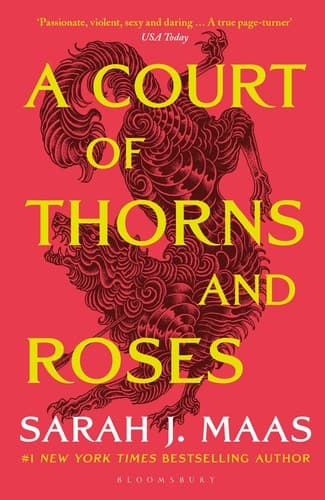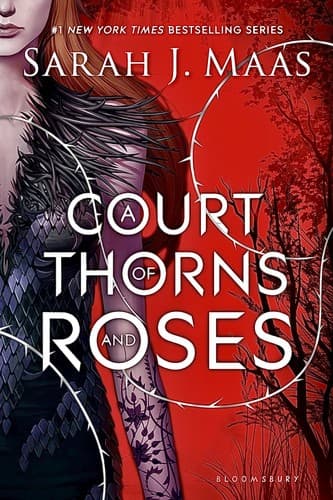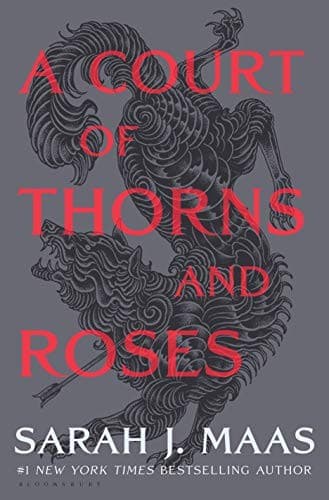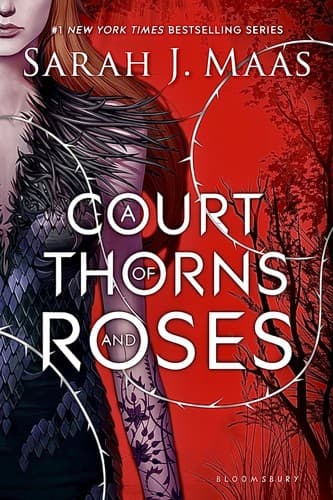

In a world divided by an ancient, invisible wall, nineteen-year-old Feyre Archeron exists in the brutal gap between starvation and survival. As the sole provider for her displaced family, her life is defined by the weight of a vow made to her dying mother and the cold reality of a bow and arrow. When she kills a massive wolf in the woods to secure a pelt for trade, she unknowingly violates a centuries-old treaty between the mortal realm and the immortal lands of Prythian. The retribution is swift: a monstrous, golden-eyed beast arrives at her door, demanding her life in exchange for the one she took.
Feyre is spirited away to the Spring Court, a lush, magical estate that contradicts every horrific legend she has ever heard about the High Fae. Rather than meeting an immediate end, she finds herself a permanent guest of her captor, who is revealed to be a High Lord of the Fae. As she navigates the opulence of his manor, she must reconcile her deep-seated hatred for the immortals who once enslaved humanity with the unsettling realization that the Fae world is crumbling under the weight of a mysterious, creeping blight that threatens both their realms.
The setting is defined by a hard geopolitical border known as The Wall, which separates the resource-scarce human lands from the elemental territories of the Fae. Prythian is organized into seven distinct courts, each governed by a High Lord and characterized by specific seasonal or temporal magic. A central mystery of the setting is a mandatory masquerade; every inhabitant of the Spring Court is magically bound to wear a mask, a physical manifestation of a curse that has plagued the land for nearly fifty years. This atmosphere of forced artifice creates a tension between the court’s natural beauty and an underlying sense of decay and political stagnation.
Feyre’s initial arc is centered on the transition from a state of constant "survival mode" to one of self-actualization. In the human realm, her identity is entirely subsumed by her utility as a provider. Upon entering the Spring Court, the removal of immediate physical threats forces her to confront her own intellectual and emotional voids, including her illiteracy and her grief. Her relationship with Tamlin begins as a hostage-captor dynamic fueled by mutual resentment but evolves through shared moments of vulnerability and the slow dismantling of the prejudices Feyre has held against his kind.
The narrative functions as a sophisticated "Beauty and the Beast" retelling, utilizing the foundational elements of a bargain and a cursed castle to explore deeper themes of agency and class. It subverts the "Mortal in a Fairyland" trope by stripping away the whimsy often associated with the Fae, replacing it with a rigid, often violent social hierarchy and a looming external threat that feels grounded in political consequence. The "Enemies to Lovers" progression is handled as a slow burn, prioritizing the breakdown of cultural barriers and the establishment of trust over immediate romance.
In a world divided by an ancient, invisible wall, nineteen-year-old Feyre Archeron exists in the brutal gap between starvation and survival. As the sole provider for her displaced family, her life is defined by the weight of a vow made to her dying mother and the cold reality of a bow and arrow. When she kills a massive wolf in the woods to secure a pelt for trade, she unknowingly violates a centuries-old treaty between the mortal realm and the immortal lands of Prythian. The retribution is swift: a monstrous, golden-eyed beast arrives at her door, demanding her life in exchange for the one she took.
Feyre is spirited away to the Spring Court, a lush, magical estate that contradicts every horrific legend she has ever heard about the High Fae. Rather than meeting an immediate end, she finds herself a permanent guest of her captor, who is revealed to be a High Lord of the Fae. As she navigates the opulence of his manor, she must reconcile her deep-seated hatred for the immortals who once enslaved humanity with the unsettling realization that the Fae world is crumbling under the weight of a mysterious, creeping blight that threatens both their realms.
The setting is defined by a hard geopolitical border known as The Wall, which separates the resource-scarce human lands from the elemental territories of the Fae. Prythian is organized into seven distinct courts, each governed by a High Lord and characterized by specific seasonal or temporal magic. A central mystery of the setting is a mandatory masquerade; every inhabitant of the Spring Court is magically bound to wear a mask, a physical manifestation of a curse that has plagued the land for nearly fifty years. This atmosphere of forced artifice creates a tension between the court’s natural beauty and an underlying sense of decay and political stagnation.
Feyre’s initial arc is centered on the transition from a state of constant "survival mode" to one of self-actualization. In the human realm, her identity is entirely subsumed by her utility as a provider. Upon entering the Spring Court, the removal of immediate physical threats forces her to confront her own intellectual and emotional voids, including her illiteracy and her grief. Her relationship with Tamlin begins as a hostage-captor dynamic fueled by mutual resentment but evolves through shared moments of vulnerability and the slow dismantling of the prejudices Feyre has held against his kind.
The narrative functions as a sophisticated "Beauty and the Beast" retelling, utilizing the foundational elements of a bargain and a cursed castle to explore deeper themes of agency and class. It subverts the "Mortal in a Fairyland" trope by stripping away the whimsy often associated with the Fae, replacing it with a rigid, often violent social hierarchy and a looming external threat that feels grounded in political consequence. The "Enemies to Lovers" progression is handled as a slow burn, prioritizing the breakdown of cultural barriers and the establishment of trust over immediate romance.
Add to your library to track progress and write reviews
Find A Court of Thorns and Roses Sarah J. Maas in PDF, EPUB, ebook, audiobook, print, or library editions.

A Court of Thorns and Roses
24 books in catalog
The blending of high-stakes political intrigue, expansive world-building, and deep romantic storylines has reshaped modern fantasy publishing across both young adult and adult categories. Sarah J. Maas has established a central presence in epic fantasy literature through multi-book sagas that have sold over 75 million copies globally in forty languages. Beginning as an online serial written during her teenage years, her body of work has cultivated a massive international audience and helped bring romantic fantasy into the forefront of contemporary commercial fiction.
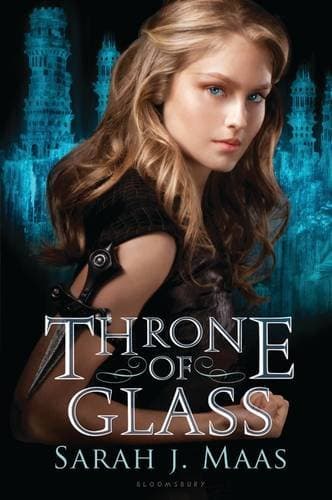
Born in New York City in 1986, Sarah J. Maas began her writing career at age sixteen by posting Queen of Glass, a fantasy reimagining of Cinderella, on the creative writing community FictionPress. The digital serial gained a large internet following prior to its acquisition for traditional publishing. Maas attended Hamilton College in Clinton, New York, where she majored in creative writing and minored in religious studies, graduating Magna Cum Laude in 2008. Her academic focus on mythology, theology, and ancient narrative traditions provided the foundation for the elaborate world-building and pantheons featured throughout her fantasy realms. Her debut novel, Throne of Glass, was published in 2012 by Bloomsbury, expanding her early draft into an eight-volume high fantasy epic centered on the assassin Celaena Sardothien.
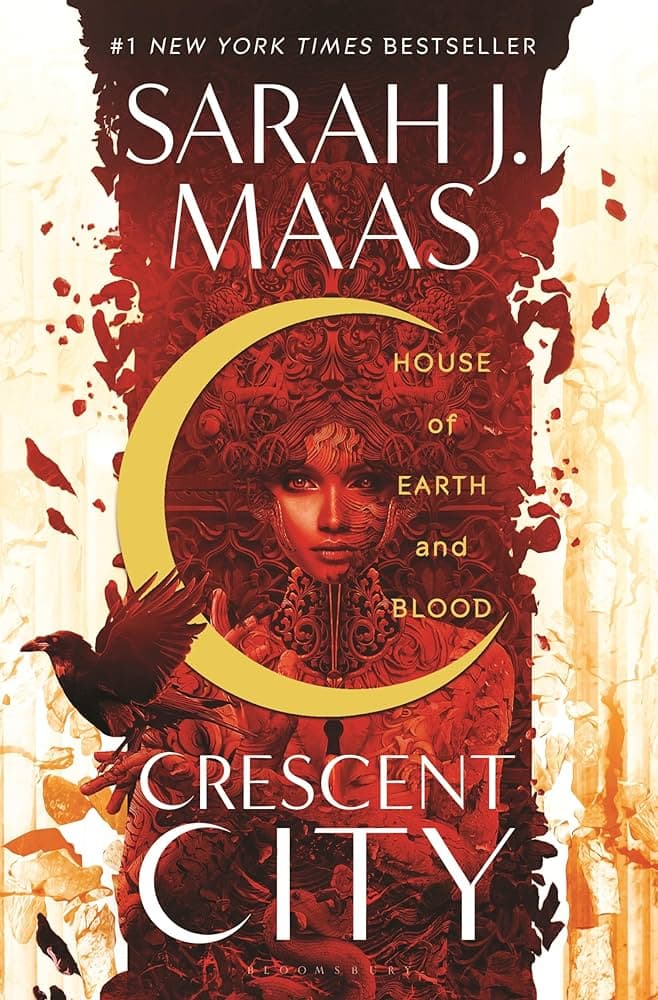
Following the publication of Throne of Glass, Maas expanded her bibliographies with A Court of Thorns and Roses, which debuted in 2015 as a narrative inspired by Beauty and the Beast before growing into a multi-realm Fae saga. Her career subsequently marked a formal transition into the adult fantasy market with House of Earth and Blood, the first installment in her Crescent City series. By bridging young adult, new adult, and adult literature, her published works illustrate how grassroots digital writing can evolve into major global publishing successes while broadening the scope of character-driven epic fantasy.
The writing style of Sarah J. Maas relies heavily on the subversion of classical folklore, developing early inspirations like Cinderella and Beauty and the Beast into extensive, original mythologies. Her prose emphasizes character-driven development, utilizing high-concept magic systems as the background for personal psychological journeys. Rather than prioritizing only external military conflicts, her narrative arcs highlight the emotional weight of war, political upheaval, trauma, and sacrifice, grounding epic plot points in relatable human experiences.


Prominent thematic elements across her books include the reclamation of identity and autonomy after severe trauma, the importance of complex female friendships, and the formation of resilient 'found family' bonds. Her protagonists regularly navigate moral dilemmas, balancing personal desires against the burdens of leadership, power, and survival. Through intricate plot architecture that connects individual stories across sprawling series, her storytelling emphasizes female agency, psychological recovery, and self-actualization within high-stakes fantasy settings.
24 books in catalog
The blending of high-stakes political intrigue, expansive world-building, and deep romantic storylines has reshaped modern fantasy publishing across both young adult and adult categories. Sarah J. Maas has established a central presence in epic fantasy literature through multi-book sagas that have sold over 75 million copies globally in forty languages. Beginning as an online serial written during her teenage years, her body of work has cultivated a massive international audience and helped bring romantic fantasy into the forefront of contemporary commercial fiction.
Born in New York City in 1986, Sarah J. Maas began her writing career at age sixteen by posting Queen of Glass, a fantasy reimagining of Cinderella, on the creative writing community FictionPress. The digital serial gained a large internet following prior to its acquisition for traditional publishing. Maas attended Hamilton College in Clinton, New York, where she majored in creative writing and minored in religious studies, graduating Magna Cum Laude in 2008. Her academic focus on mythology, theology, and ancient narrative traditions provided the foundation for the elaborate world-building and pantheons featured throughout her fantasy realms. Her debut novel, Throne of Glass, was published in 2012 by Bloomsbury, expanding her early draft into an eight-volume high fantasy epic centered on the assassin Celaena Sardothien.
Following the publication of Throne of Glass, Maas expanded her bibliographies with A Court of Thorns and Roses, which debuted in 2015 as a narrative inspired by Beauty and the Beast before growing into a multi-realm Fae saga. Her career subsequently marked a formal transition into the adult fantasy market with House of Earth and Blood, the first installment in her Crescent City series. By bridging young adult, new adult, and adult literature, her published works illustrate how grassroots digital writing can evolve into major global publishing successes while broadening the scope of character-driven epic fantasy.
The writing style of Sarah J. Maas relies heavily on the subversion of classical folklore, developing early inspirations like Cinderella and Beauty and the Beast into extensive, original mythologies. Her prose emphasizes character-driven development, utilizing high-concept magic systems as the background for personal psychological journeys. Rather than prioritizing only external military conflicts, her narrative arcs highlight the emotional weight of war, political upheaval, trauma, and sacrifice, grounding epic plot points in relatable human experiences.
Prominent thematic elements across her books include the reclamation of identity and autonomy after severe trauma, the importance of complex female friendships, and the formation of resilient 'found family' bonds. Her protagonists regularly navigate moral dilemmas, balancing personal desires against the burdens of leadership, power, and survival. Through intricate plot architecture that connects individual stories across sprawling series, her storytelling emphasizes female agency, psychological recovery, and self-actualization within high-stakes fantasy settings.