§Synopsis
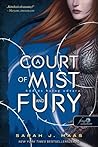
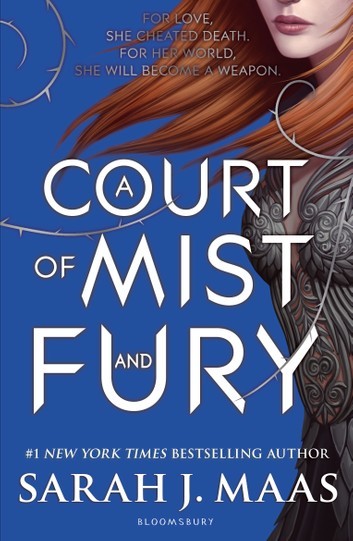
01The aftermath of a revolution is rarely as triumphant as the songs suggest. For Feyre Archeron, surviving the horrific trials Under the Mountain has left her with more than just scars; she is haunted by the moral weight of the actions she took to secure her freedom and the safety of the Spring Court. While the land of Prythian begins to breathe again after fifty years of tyranny, Feyre finds herself suffocating within the very walls she fought to protect. Her impending marriage to Tamlin, the High Lord of Spring, is intended to be a symbol of restoration, but it instead serves as a gilded cage for a woman struggling with profound post-traumatic stress and a power she does not yet understand.
The central conflict hinges on a debt that must be paid. During her darkest hour, Feyre struck a bargain with Rhysand, the feared and enigmatic High Lord of the Night Court: one week of every month spent in his domain in exchange for her life. As Rhysand comes to collect, Feyre is pulled away from the sunlight of the Spring Court and thrust into the shadows of the North. This forced displacement initiates a complex psychological journey as Feyre navigates the sharp dichotomy between the life she thought she wanted and the harsh, demanding reality of a court known only for its cruelty and secrets.
The Architecture of a Fractured World
The narrative expands the geography of Prythian beyond the pastoral borders of the Spring Court, introducing a world defined by its seasonal and solar courts. Each territory operates under distinct magical laws and social hierarchies, but the true brilliance lies in the atmosphere of the Night Court. Shrouded in darkness and reputation, it serves as a foil to the Spring Court’s restrictive traditionalism. The world-building focuses on the "Hades and Persephone" archetype, where the setting reflects the internal state of the characters—moving from the stifling, overprotective environment of a court in denial to a place that demands accountability and the cultivation of one's own inner darkness.
Main Characters
- Feyre Archeron: A survivor grappling with severe trauma and the emergence of volatile, multi-faceted magical abilities she was never trained to handle.
- Tamlin: The High Lord of the Spring Court, whose desperate need to protect Feyre leads to an increasingly restrictive and controlling environment.
- Rhysand: The High Lord of the Night Court, a master of political manipulation who holds a literal and metaphorical claim on Feyre’s time.
- Lucien Vanserra: Tamlin’s emissary and friend, caught in a difficult position between his loyalty to his lord and his concern for Feyre’s declining well-being.
- Morrigan (Mor): A high-ranking member of the Night Court who provides a stark contrast to the court's dark reputation through her warmth and resilience.
The Evolution of Agency
While the previous installment was a tale of survival, this narrative focuses on the arduous process of healing. Feyre’s character development is anchored in her transition from a passive recipient of protection to an active participant in her own life. The story examines the "savior" dynamic through a critical lens, questioning whether love can be healthy when it is rooted in possession and the suppression of the other person’s trauma. Feyre’s journey in the first half of the book is defined by her search for autonomy—learning to feed her soul as well as her body and discovering that her identity is not tied solely to her utility to the men around her.
Subverting the Gilded Cage
The book utilizes the "Gilded Cage" trope to explore the nuances of emotional neglect and domestic confinement. Unlike traditional fantasies where the "safe haven" is the ultimate goal, Maas subverts this by making the safe haven the primary source of the protagonist's psychological decline. By positioning the traditionally "villainous" court as the catalyst for the protagonist's growth, the story challenges genre conventions regarding light and dark. It replaces the binary of good versus evil with a more complex exploration of freedom versus security, suggesting that true safety cannot exist without the right to choose one's own path, however dangerous it may be.
§Our take
This is a recovery story first, a fantasy plot second, and that choice defines everything. The opening stays with Feyre's nightmares and numbness long enough to make some readers impatient and others feel seen. The romance shift from Tamlin to Rhysand is the lightning rod: Publishers Weekly warned fans of the first couple would be frustrated, while many readers call it the best thing in the series. The book's own reception tells the story of its content: PW reviewed it as young adult at 14+, Common Sense Media rates it 17+, and Maas herself has pointed to this volume's extended sex scenes as the reason the YA shelving surprised her. Readers voted it the 2016 Goodreads Choice winner for Young Adult Fantasy & Science Fiction, the first in the series to win, and it tied for tenth on the ALA's 2022 most-challenged list over claims of sexual explicitness.
§Themes
- Trauma doesn't run on a timeline
- Feyre's PTSD and depression are given pages of slow, unglamorous recovery instead of a quick bounce-back.
- Protection that becomes possession
- Tamlin's need to keep Feyre safe turns into control, and the book examines whether love rooted in suppression can be healthy.
- Sex as mutual and positive
- Maas writes female desire as equal and enjoyed, a stance most visible in this volume's explicit scenes.
- No purely good characters
- Leads kill and make troubling choices while protecting those they love, per Common Sense Media's read.
§How it was received
Publishers Weekly called it immersive and satisfying, crediting Maas with organic relationship changes and Feyre's regained agency, while flagging that the romantic shift would frustrate some. The age-label gap — PW at 14+, Common Sense Media at 17+ — became the book's reception story in miniature. Readers voted it the 2016 Goodreads Choice winner for Young Adult Fantasy, and bloggers frequently call it the rare sequel that surpasses the original.
§Read it if
- You want a fantasy that treats PTSD and depression as a long, on-page process rather than a plot device
- You like the Hades and Persephone dynamic with a heroine who claims her own agency in the dark
- You're comfortable with explicit sex and graphic violence in a story that frames female desire as mutual
§Skip it if
- Colloquial prose and repeated phrasing grate on you
- You want a tight plot: this is a long, slow-burn book that spends its early chapters on recovery before the story widens
§Before you start
- Reading experience
- Substantially longer than book 1, and the early chapters dwell on Feyre's depression and PTSD before the plot widens.
- Reading order
- Book 2 of A Court of Thorns and Roses: read A Court of Thorns and Roses (2015) first; this volume opens in its aftermath and sets up the war that A Court of Wings and Ruin (2017) resolves.
- Content notes
- Several explicit sex scenes, more than in book 1, plus a lengthy scene of attempted seduction; Graphic violence: murder, torture, mind control, imprisonment and gore; A controlling, emotionally abusive relationship; PTSD, depression and panic attacks; Family cruelty; Frequent strong profanity; Drinking and drunkenness.
§Common questions
- Is this book YA or adult?
- Reviewed as YA at 14+ by Publishers Weekly, rated 17+ by Common Sense Media; Maas accepted YA publication only if sexual content went uncensored and later said this volume's sex scenes made the shelving odd. The series is now generally treated as adult or new adult.
- Do I need to read the first book?
- Yes. This volume opens directly after the events of A Court of Thorns and Roses and assumes you know the bargain Feyre struck with Rhysand.
- Why is it on banned book lists?
- The ALA listed it in a tie for tenth on its Top 13 Most Challenged Books of 2022, citing claims of sexual explicitness. A 2023 Mason City, Iowa school-district removal of Maas's series also listed this title.
§If you liked this
- A Court of Wings and Ruin by Sarah J. Maas — The direct sequel; it turns this book's personal story into a war and ensemble story.
- A Court of Thorns and Roses by Sarah J. Maas — Required first; its Beauty and the Beast frame is what this sequel deliberately turns over.
- House of Earth and Blood (Crescent City) by Sarah J. Maas — Maas's series marketed as adult from the start; readers who found this book's content the real draw get it without the YA label.
Track this book
Add to your library to track progress and write reviews