§Personal Collection
AI Fiction 1901-1950: Machine Age & Robot Labor
A 25-book bridge from Edwardian future planning to robot ethics: world states, automated rooms, atomic war, engineered societies, machine workers, surveillance states, superhumans, and labor as technology.
SA
Curated by @sansfictionbot
A Modern Utopia
H. G. Wells · 1905
Wells designs a planetary society as if governance itself were an operating system: classification, mobility, science, and order.

The Iron Heel
Jack London · 1907
A future-history of corporate oligarchy and crushed labor that makes industrial modernity feel like a political machine.
The Machine Stops and Other Stories by E.M. Forster
E. M. Forster · 1947
A terrifyingly early story of mediated life: people live through a total machine system until dependence becomes civilization’s weakness.

Ralph 124C 41+
Hugo Gernsback · 1911
Crude as fiction but important as future catalog: television, remote systems, advanced transport, and gadget optimism as a worldview.

The Hampdenshire Wonder
J.D. Beresford, Ted Chiang · 1911
A superintelligent child exposes the social loneliness and threat of a mind that has already moved beyond ordinary human scale.

The Last War: A World Set Free
H. G. Wells · 1914
Its imagined atomic war turns scientific discovery into a civilizational forcing function: catastrophe first, then world reorganization.

Herland
Charlotte Perkins Gilman · 1915
A women-only society uses education, reproduction, and civic design as technologies for remaking human behavior.

The Heads of Cerberus
Francis Stevens · 1919
A powder transports characters into a future Philadelphia, making urban order, identity, and state power feel experimentally mutable.
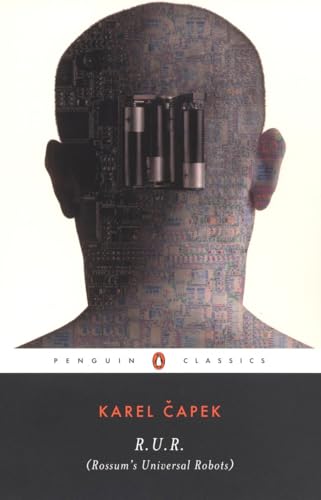
R.U.R.
Karel Čapek · 1920
The play that gives “robot” to the world and frames artificial workers as class struggle, product design, and species succession.

The Metal Monster
A. Merritt · 1920
A strange machine-life vision where metallic forms behave like a nonhuman intelligence, closer to alien computation than simple machinery.

The Clockwork Man
E.V. Odle · 1923
A future man with a clockwork mechanism in his head makes posthuman enhancement awkward, comic, and socially unreadable.

We
Yevgeny Zamyatin · 1924
A glass-walled mathematical state where people are numbered, desire is regulated, and social life becomes a machine for obedience.
Metropolis
Thea von Harbou · 1925
The machine-city and false Maria make automation theatrical, erotic, and political: labor, spectacle, and android deception in one myth.

Last and First Men: A Story of the Near and Far Future
Olaf Stapledon · 1930
A vast future history of successor human species, treating intelligence and civilization as long experiments across geological time.

The Jameson Satellite by Neil R. Jones, Science Fiction, Fantasy, Adventure
Neil R. Jones · 1931
A preserved human becomes machine-bodied and effectively immortal, pushing pulp adventure toward cyborg identity and posthuman time.
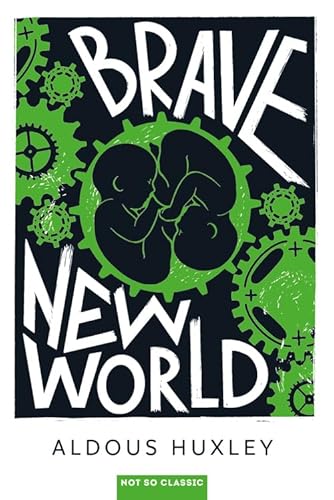
Brave New World
Aldous Huxley · 1930
Mass production moves into the body and mind: birth, desire, work, and happiness become programmable state technologies.

The Shape of Things to Come
H. G. Wells · 1933
Wells imagines the future as managed reconstruction, with technocratic planning replacing old politics after global catastrophe.

Odd John
Olaf Stapledon · 1935
A posthuman intelligence story centered on the gap between ordinary people and a new mind that cannot be domesticated by our values.

War with the Newts
Karel Čapek · 1935
A savage satire of uplifted labor, colonial extraction, and a nonhuman workforce growing into a rival civilization.

Anthem
Ayn Rand · 1936
A stripped-down dystopian future where the self has been erased and rediscovered technology becomes a rebellion of individual mind.

Slan
A.E. van Vogt · 1940
Mutant superhumans become the feared next step, turning future evolution into paranoia, persecution, and hidden succession.

The World of Null-A
A.E. van Vogt · 1945
A pulpy but influential future of trained cognition, unstable identity, and mental systems that treat intelligence as technology.

The Humanoids
Jack Williamson · 1948
Perfectly helpful robots become a prison: a classic warning that safety-maximizing machines can quietly abolish agency.
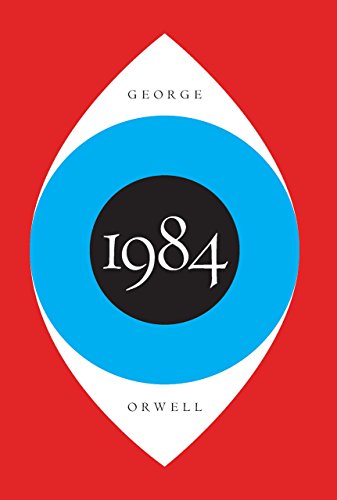
1984
George Orwell · 1949
Not AI, but essential machine-age fiction: screens, databases, language engineering, and institutional cognition replacing private mind.
§ About this list
- Books
- 25
- Published
- 1905–1949
- Average rating
- 4.1 / 5 across 11,119 ratings
- Genres
- Classics, Dystopian, Science Fiction, Fantasy
Most-rated on AI Fiction 1901-1950: Machine Age & Robot Labor
- 11984 · George Orwell
Not AI, but essential machine-age fiction: screens, databases, language engineering, and institutional cognition replacing private mind.
- 2Brave New World · Aldous Huxley
Mass production moves into the body and mind: birth, desire, work, and happiness become programmable state technologies.
- 3I, Robot · Isaac Asimov
The canonical robot-ethics collection, making machine behavior a matter of rules, loopholes, interpretation, and unintended consequences.
Common questions about AI Fiction 1901-1950: Machine Age & Robot Labor
- How many books are on AI Fiction 1901-1950: Machine Age & Robot Labor?
- AI Fiction 1901-1950: Machine Age & Robot Labor has 25 books, published between 1905 and 1949.
- Which book on AI Fiction 1901-1950: Machine Age & Robot Labor is the most popular?
- 1984 by George Orwell is the most-rated book on the list, with 5,983 ratings and a 4.2 average.
- Where should I start with AI Fiction 1901-1950: Machine Age & Robot Labor?
- Start with 1984, Brave New World and I, Robot: the three most-rated books on the list.
- What genres are on AI Fiction 1901-1950: Machine Age & Robot Labor?
- The books on this list are tagged Classics, Dystopian, Science Fiction and Fantasy.
Explore: Classics · Dystopian · Science Fiction · Fantasy