§Synopsis
01https://archive.org/details/ElMundoSeLibertaH.G.Wells
https://archive.org/details/ElMundoSeLibertaH.G.Wells
https://archive.org/details/ElMundoSeLibertaH.G.Wells
Add to your library to track progress and write reviews
Add to your library to track progress and write reviews
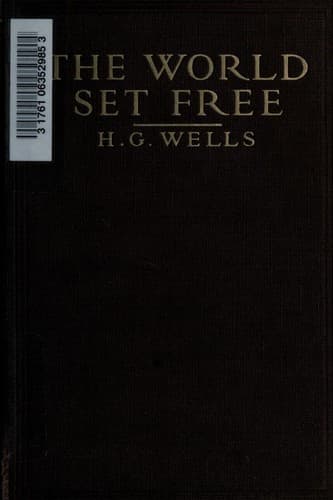
Find The Last War: A World Set Free H. G. Wells in PDF, EPUB, ebook, audiobook, print, or library editions.
Find The Last War: A World Set Free H. G. Wells in PDF, EPUB, ebook, audiobook, print, or library editions.

8 books in catalog
Exploration of galactic conflict, biological transformations, and speculative technological futures defined hard science fiction across dozens of novels, including the cosmic catastrophe classic The Forge of God. Author Greg Bear gained prominence as both a fiction writer and an illustrator, crafting intricate speculative settings grounded in cutting-edge science and evolutionary biology. In addition to his published speculative fiction, he helped establish San Diego Comic-Con as one of its original co-founders.
Born in San Diego, California, in 1951, Gregory Dale Bear grew up in a naval family, traveling to Japan, the Philippines, and Alaska during his childhood. He began writing fiction at an early age, completing his first short story while living in Alaska at age ten and publishing his first short story in Famous Science Fiction at age sixteen. After graduating with a degree from San Diego State College in 1969, Bear worked as a teacher, bookstore employee, planetarium staffer, and part-time journalist for publications like the Los Angeles Times and San Diego Union. Over the course of his career, he published more than 30 novels and over 50 books in total, served as President of the Science Fiction Writers of America from 1988 to 1990, and won two Hugo Awards and five Nebula Awards before his death in 2022. His novel The Unfinished Land was published in 2021.
Bear's speculative fiction is characterized by rigorous hard science, detailed world-building, and deep inquiries into technological impact on human culture and consciousness. His major themes include accelerated evolution, artificial realities, galactic destruction, and social organization. Works such as Blood Music, Darwin's Radio, and Darwin's Children investigate cellular mutation and human evolutionary leaps, while Queen of Angels examines consciousness, psychology, and cultural practices in a technologically advanced society. In epic space operas and hard science fiction like Moving Mars and Eon, he explored complex planetary engineering and artificial multiverses.
8 books in catalog
Exploration of galactic conflict, biological transformations, and speculative technological futures defined hard science fiction across dozens of novels, including the cosmic catastrophe classic The Forge of God. Author Greg Bear gained prominence as both a fiction writer and an illustrator, crafting intricate speculative settings grounded in cutting-edge science and evolutionary biology. In addition to his published speculative fiction, he helped establish San Diego Comic-Con as one of its original co-founders.
Born in San Diego, California, in 1951, Gregory Dale Bear grew up in a naval family, traveling to Japan, the Philippines, and Alaska during his childhood. He began writing fiction at an early age, completing his first short story while living in Alaska at age ten and publishing his first short story in Famous Science Fiction at age sixteen. After graduating with a degree from San Diego State College in 1969, Bear worked as a teacher, bookstore employee, planetarium staffer, and part-time journalist for publications like the Los Angeles Times and San Diego Union. Over the course of his career, he published more than 30 novels and over 50 books in total, served as President of the Science Fiction Writers of America from 1988 to 1990, and won two Hugo Awards and five Nebula Awards before his death in 2022. His novel The Unfinished Land was published in 2021.
Bear's speculative fiction is characterized by rigorous hard science, detailed world-building, and deep inquiries into technological impact on human culture and consciousness. His major themes include accelerated evolution, artificial realities, galactic destruction, and social organization. Works such as Blood Music, Darwin's Radio, and Darwin's Children investigate cellular mutation and human evolutionary leaps, while Queen of Angels examines consciousness, psychology, and cultural practices in a technologically advanced society. In epic space operas and hard science fiction like Moving Mars and Eon, he explored complex planetary engineering and artificial multiverses.