Add to your library to track progress and write reviews
2 books in catalog
Speculative science fiction and interactive digital storytelling frequently converge in narratives that examine gender, power, and religious identity. Naomi Alderman gained widespread international recognition for her award-winning 2016 dystopian novel The Power, which imagines a global matriarchal transformation when women acquire physical electrical capabilities. Her creative output spans award-winning fiction, digital interactive games, radio broadcasts, and television production.
Born in London in 1974, Alderman has built a career bridging traditional novelistic storytelling with emerging media technologies. Her major fiction, including her debut novel Disobedience and speculative works like The Power, regularly explores social structures, religious orthodoxy, and human behavior under political or bodily shifts.
Naomi Alderman was educated at South Hampstead High School and Lincoln College, Oxford, where she read Philosophy, Politics and Economics (PPE) before continuing her studies in Classics. She went on to study creative writing at the University of East Anglia before becoming a novelist and game writer. Her father is Geoffrey Alderman, an academic specializing in Anglo-Jewish history; she and her father were interviewed together in The Sunday Times "Relative Values" feature on 11 February 2007.
From 2004 through June 2007, Alderman served as the lead writer for Perplex City, an alternate reality game developed by Mind Candy. She later co-created the fitness game and audio adventure Zombies, Run! in 2012, served as lead writer for the smartphone app The Walk, and wrote the 2011 Doctor Who novel Borrowed Time. Her literary debut came in 2006 with Disobedience, a novel about a rabbi's daughter from North London who becomes a lesbian, winning the 2006 Orange Award for New Writers. Since its UK publication, Disobedience has been published in the USA, Germany, Israel, Holland, Poland, France, Italy, Hungary, and Croatia.
In 2007, Alderman was named the Sunday Times Young Writer of the Year and one of Waterstones' 25 Writers for the Future. She wrote the narrative for The Winter House, an online interactive short story visualized by Jey Biddulph, commissioned by Booktrust as part of the Story campaign supported by Arts Council England. Her prize-winning short fiction has appeared in Prospect, on BBC Radio 4, and was shortlisted for the BBC National Short Story Award in 2009.
Alderman's work consistently investigates how power, belief systems, and social structures shape individual identity and communal ethics. Her narrative technique often weaves together rigorous thematic research with multi-perspective structures, whether examining orthodox religious communities, Oxford academic settings, or speculative futures.
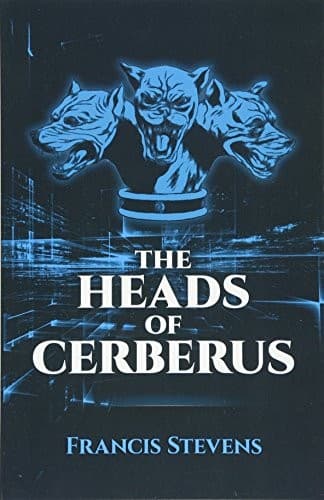
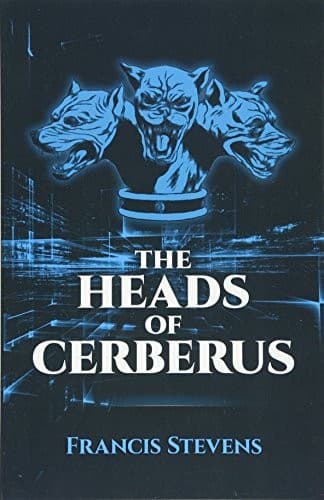
In dystopian science fiction literature, her work can be studied alongside early genre landmarks like Gertrude Barrows Bennett's classic dystopian work The Heads of Cerberus, with both using speculative premises to question established political order, authority, and human social arrangements.