§Synopsis
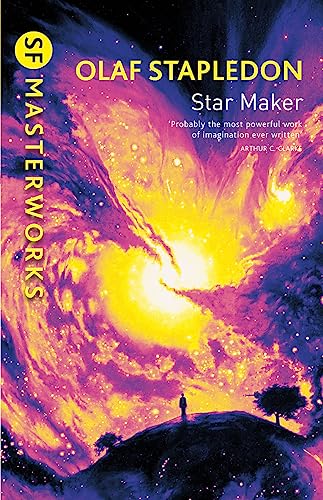
01One of the most succinct and accurate renderings of mankind's present state of mind and future progression. It documents the future of man from the start of WW2 and continues until the Sun engulfs the earth, and beyond. Considering this book was first published in 1931, it is remarkable, both in its honesty as regards human nature, and in its phenomenal span. By the time we reach chapter 3 of the 16 in this book, it is already 2300 AD and you feel like you have had the viewpoint of a God. So intense is the writing, that a few pages can take you hours to read and weeks to think about. What a writer, what a visionary. Of particular interest to me was the laconic way he can sum up an entire country's culture and people, and the accuracy of prediction in the first part of the book.
Points to note :-
All budding politicians should be forced to read this book. It should be part of any politics curriculum. Strikingly accurate and plausible portent of homo sapiens future. Read in the context of 2002, it is easy to see mankind's current folly and the extrapolation of current scientific endeavours. For example, we may achieve global peace ("An Americanised Planet"") for a few millennia, but at the cost of spiritual and intellectual freedom and development. When the "Fall of the First Men" happened, recovery took a very long time :-
"Later, when the epidemic was spent, even though civilisation was already in ruins, a concerted effort of devotion might yet have rebuilt it on a more modest plan. But among the First Men, only a minority had ever been capable of wholehearted devotion. The great majority were by nature too much obsessed by private impulses."
Sounds like the malaise of current homo sapiens.
The theme of continual physical exertion and constant movement of attention as an underpinning for the lifestyles of all successful social inhabitants was beautifully described. This is so true of today's and future societies. No pause for reflection or contemplation. The abandonment of philosophy as a science in the future. The pig-headed clinging to pagan artefact or idol worship, rather than logic.
The brilliant description of the "Second Men", with his finer array of senses, and his natural propensity for altruism.
The plausible evolution of intelligent life on Mars in 10 million years time, with the subsequent misunderstanding of what is intelligent between Earth and Mars.
Man's creation of more evolved forms of man meshes brilliantly with current genetic research.
"Time travel" achieved by mental regression into past minds. The future remains unknown.
Conclusions :-
Apply common sense to the situation as it is now, to work out the best course of action. Never invoke traditions or old beliefs as these threaten your survival in an ever-changing environment.
Within the same species, organisms are equally complex biochemically. Therefore, any social structure that imposes arbitrary division within the species, is intrinsically flawed. This is true of current homo sapiens organisation, where certain people are far more highly regarded than others for stupid reasons, and divisions between cliques of people usually erupt in violence, rather than heated debate.
Just because someone cannot be convinced of your way of seeing things, doesn't mean that physical coercion becomes necessary.
"Live and let live" doesn't mean live it up and let the rest live in squalor.
Nothing should be regarded as taboo, save that which is unnatural.
There are absolutely no restrictions on what anyone can think.
If you can have it, then anyone can have it.
Track this book
Add to your library to track progress and write reviews