Middle-earth Legendarium
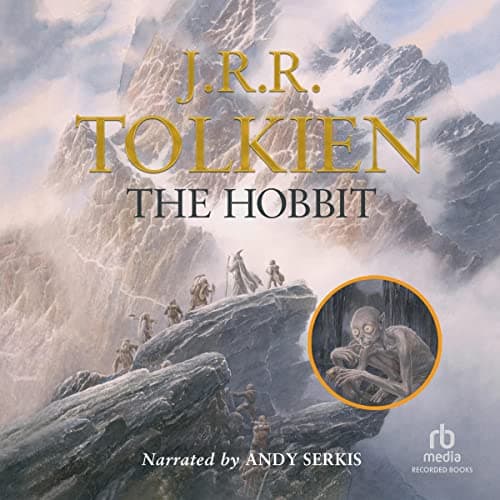
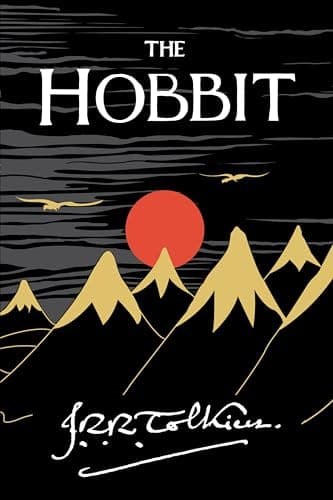
At the heart of J.R.R. Tolkien’s seminal work lies the fundamental tension between the safety of the hearth and the perilous call of the unknown. Bilbo Baggins is a creature of habit, defined by his appreciation for internal comforts and the predictable boundaries of the Shire. His life is one of profound stability until the arrival of a wandering wizard and a company of displaced dwarves forces a collision between his quiet, pastoral existence and a world governed by ancient contracts, dragon-fire, and forgotten lineages.
The narrative functions as a literary bridge between the familiar and the mythic, exploring the moral weight of duty versus personal comfort. As Bilbo is thrust into the role of a "burglar" for a quest to reclaim a lost mountain kingdom, the story delves into the psychological friction of an ordinary protagonist navigating environments that are fundamentally hostile to his peaceful nature. It is a study of how smallness and humility operate within a landscape dominated by grand, often greedy, powers.
Tolkien constructs Middle-earth not merely as a backdrop, but as a secondary reality governed by its own internal logic and deep history. The setting moves from the "Primary World" sensibilities of the Shire—reminiscent of rural England—into a wilderness that feels ancient and sentient. This world-building employs a sense of animism, where mountains have personalities and forests hold lingering memories of past ages. The atmosphere shifts from the light-hearted camaraderie of a tea party to the claustrophobic darkness of goblin-tunnels and the misty, ethereal sanctuary of Rivendell, establishing a world where the environment itself dictates the stakes of the journey.
The protagonist's development is rooted in the conflict between his "Baggins" side—his desire for domesticity and safety—and his "Took" side—an untapped reservoir of curiosity and resilience. Bilbo does not begin as a warrior; his growth is measured by his transition from a liability who pines for his pocket-handkerchiefs to a resourceful thinker who must rely on wit over strength. His dynamic with the dwarves is initially one of mutual skepticism, as they view him as a burden while he views them as a disruption to his peace. This relationship serves as the crucible for his burgeoning self-reliance and the discovery of his own hidden capabilities.
While The Hobbit utilizes the traditional "Quest" trope, it subverts the expectations of the epic genre by placing a decidedly non-heroic figure at the center of the action. Unlike the legendary figures of Anglo-Saxon or Scandinavian myth who seek glory through combat, Bilbo’s primary tools are luck, riddles, and professional "burglary." The book also examines the trope of the "Dragon’s Hoard," framing treasure not just as a reward, but as a source of potential corruption and greed that can blind even the most noble of intentions. Through this lens, the story explores whether the preservation of one’s moral character is more difficult than the physical journey itself.
The Hobbit's best argument is the revision Tolkien failed to finish. In 1960 he started rewriting the 1937 book: no chatty narrator, no whimsy, a more commanding Gandalf. He quit after about three chapters when a friend told him it was no longer The Hobbit. That draft was later published in John D. Rateliff's History of The Hobbit, and it's worth knowing about, because the voice he wanted to cut is the thing readers fight over.
Some love the jokes and asides. Others, coming from the darker sequel, find it too childish, and Tolkien eventually saw that quality as part of what dated the book. Tom Shippey reads it as deliberate: Bag End is a Victorian home of clocks and umbrellas, a door for modern readers into an ancient heroic world. That's the reading to trust.
Add to your library to track progress and write reviews
C.S. Lewis, reviewing it in the Times Literary Supplement in 1937, put it beside Alice and The Wind in the Willows as a book that opens a world of its own, and guessed it might become a classic. Kirkus in 1938 called it a book to share with children rather than hand to them. Once The Lord of the Rings arrived, The Hobbit stopped looking merely charming and started looking like one of modern fantasy's load-bearing books.
Middle-earth Legendarium

7 books in catalog
Deep in the mud of the Somme in 1916, a young officer of the Lancashire Fusiliers began scribbling a mythology that would eventually redefine the boundaries of fantasy literature. While his contemporaries focused on the stark realism of the First World War, this Oxford-educated philologist sought to fill a perceived void in English culture by constructing a vast, interconnected legendarium rooted in the ancient structures of language itself. What began as an academic's private obsession with Old Norse and Anglo-Saxon dialects evolved into an influential fantasy phenomenon, with The Lord of the Rings selling over 150 million copies and being translated into more than 40 languages.
Beyond its commercial scale, the epic mythos created by J.R.R. Tolkien earned honors as the 'Greatest Book of the 20th Century' in polls conducted by Amazon and Waterstones, inspired a multi-billion dollar film franchise, and established the foundational blueprint for high fantasy world-building across modern publishing.
Born in Bloemfontein, South Africa, on January 3, 1892, to English parents, John Ronald Reuel Tolkien moved to England at age three and was brought up in and around Birmingham before studying at Exeter College, Oxford. Before becoming a household name, J.R.R. Tolkien was a formidable scholar of early Germanic languages and English literature. He served as an officer during the First World War in 1916, experiencing heavy combat at the Battle of the Somme. Following his military service, he devoted his professional life to academia, serving as the Rawlinson and Bosworth Professor of Anglo-Saxon at the University of Oxford from 1925 to 1945, and subsequently as the Merton Professor of English Language and Literature from 1945 until his retirement in 1959. His academic commentary on Beowulf remains a foundational work in medieval literary criticism.
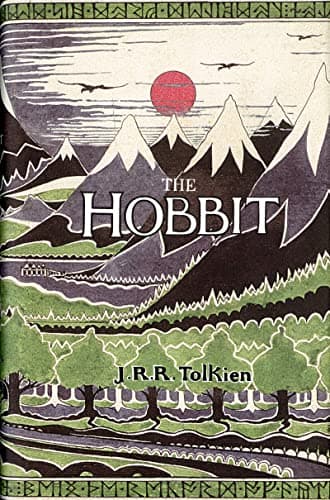
His transition to fiction was accidental, famously beginning with a spontaneous sentence scrawled on a blank exam paper: 'In a hole in the ground there lived a hobbit.' This spark led to the publication of The Hobbit (also published as The Hobbit, or There and Back Again) in 1937. The success of the children's book prompted his publishers to request a sequel, which took twelve years to complete and expanded into the far more complex epic The Lord of the Rings. Throughout his time in Oxford, he was a key figure in 'The Inklings,' an informal literary discussion group that included his close friend C.S. Lewis. Tolkien lived until 1973, leaving behind an extensive archive of mythic writings.
Tolkien's prose is characterized by its commitment to 'sub-creation'—the secondary invention of a fictional world that possesses the inner consistency of reality. Unlike many fantasy writers who employ magic merely as a plot device, Tolkien's world-building was fundamentally a philological exercise. He famously maintained that his stories were written primarily to provide a home for his invented languages, including Quenya and Sindarin, rather than constructing languages to serve a pre-existing narrative.
Thematically, his work explores the tension between the organic natural world and the destructive forces of industrialization, reflecting his personal opposition to the rapid mechanization of the English countryside. Recurring motifs include the 'ennoblement of the humble,' where the smallest and least assertive individuals alter the trajectory of history, as well as the corruptive influence of absolute power. His writing is also deeply elegiac, frequently emphasizing the 'long defeat'—the tragic perspective that even in great victories, ancient beauty and wisdom are inevitably lost over time.
Find The Hobbit, or There and Back Again J.R.R. Tolkien in PDF, EPUB, ebook, audiobook, print, or library editions.