SSansFiction
The libraryCollectionsJournalStatsFor authors
Sign inJoin now
Sansfiction,

A digital library for books. Made by readers, for readers.

v 2.0 · 2026
The library
  • Discover
  • Collections
  • Book tracker
  • Journal
  • Stats
For authors
  • SF Links
  • Analytics
  • How it works
  • FAQ
Elsewhere
  • X / @sansfiction
  • Privacy
  • Terms
  • Contact
© 2026 SansFiction · Digital · GlobalA quiet room for your reading life.
The libraryCollectionsJournalStatsFor authors
Sign inJoin now →
Navigation
Library
Bookshelf
Journal
Discover
Collections
Tierlists
Stats
Profile
Author Page
Link Builder
Account
Sign in
S
G
BooksfantasyThe Hobbit
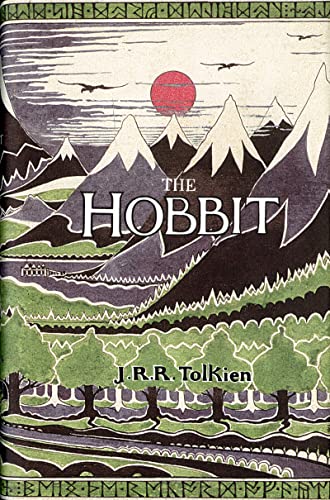
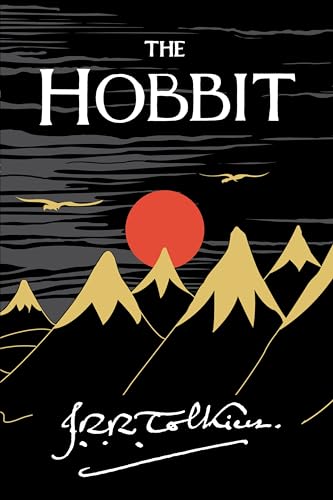
Cover of The Hobbit by J.R.R. Tolkien
Middle-earth Legendarium

The Hobbit,

by J.R.R. Tolkien, Christopher Tolkien

Ask AI
Rating4.3/ 5
Ratings5,035
Pages300
Reading Hours6h
Published2012
LanguageEnglish

§Synopsis

01

At the heart of J.R.R. Tolkien’s seminal work lies the fundamental tension between the safety of the hearth and the perilous call of the unknown. Bilbo Baggins is a creature of habit, defined by his appreciation for internal comforts and the predictable boundaries of the Shire. His life is one of profound stability until the arrival of a wandering wizard and a company of displaced dwarves forces a collision between his quiet, pastoral existence and a world governed by ancient contracts, dragon-fire, and forgotten lineages.

The narrative functions as a literary bridge between the familiar and the mythic, exploring the moral weight of duty versus personal comfort. As Bilbo is thrust into the role of a "burglar" for a quest to reclaim a lost mountain kingdom, the story delves into the psychological friction of an ordinary protagonist navigating environments that are fundamentally hostile to his peaceful nature. It is a study of how smallness and humility operate within a landscape dominated by grand, often greedy, powers.

The Geography of a Living World

Tolkien constructs Middle-earth not merely as a backdrop, but as a secondary reality governed by its own internal logic and deep history. The setting moves from the "Primary World" sensibilities of the Shire—reminiscent of rural England—into a wilderness that feels ancient and sentient. This world-building employs a sense of animism, where mountains have personalities and forests hold lingering memories of past ages. The atmosphere shifts from the light-hearted camaraderie of a tea party to the claustrophobic darkness of goblin-tunnels and the misty, ethereal sanctuary of Rivendell, establishing a world where the environment itself dictates the stakes of the journey.

Main Characters

  • Bilbo Baggins: A respectable, comfort-loving hobbit whose hidden "Tookish" ancestry is activated by the sudden demand for adventure.
  • Gandalf the Grey: An enigmatic and authoritative wizard who serves as the catalyst for the journey and a mentor with an inscrutable agenda.
  • Thorin Oakenshield: The proud and stern leader of the dwarves, driven by a hereditary claim to lost treasure and a deep-seated desire for restoration.
  • Gollum: A wretched, subterranean creature Bilbo encounters in the dark, whose existence is defined by his obsession with a "precious" lost object.
  • Elrond: The wise and noble master of the Last Homely House, who provides essential lore and linguistic translations for the travelers.

The Internal Arc of the Reluctant Hero

The protagonist's development is rooted in the conflict between his "Baggins" side—his desire for domesticity and safety—and his "Took" side—an untapped reservoir of curiosity and resilience. Bilbo does not begin as a warrior; his growth is measured by his transition from a liability who pines for his pocket-handkerchiefs to a resourceful thinker who must rely on wit over strength. His dynamic with the dwarves is initially one of mutual skepticism, as they view him as a burden while he views them as a disruption to his peace. This relationship serves as the crucible for his burgeoning self-reliance and the discovery of his own hidden capabilities.

Subverting the Heroic Quest

While The Hobbit utilizes the traditional "Quest" trope, it subverts the expectations of the epic genre by placing a decidedly non-heroic figure at the center of the action. Unlike the legendary figures of Anglo-Saxon or Scandinavian myth who seek glory through combat, Bilbo’s primary tools are luck, riddles, and professional "burglary." The book also examines the trope of the "Dragon’s Hoard," framing treasure not just as a reward, but as a source of potential corruption and greed that can blind even the most noble of intentions. Through this lens, the story explores whether the preservation of one’s moral character is more difficult than the physical journey itself.

§Our take

The Hobbit's best argument is the revision Tolkien failed to finish. In 1960 he started rewriting the 1937 book: no chatty narrator, no whimsy, a more commanding Gandalf. He quit after about three chapters when a friend told him it was no longer The Hobbit. That draft was later published in John D. Rateliff's History of The Hobbit, and it's worth knowing about, because the voice he wanted to cut is the thing readers fight over.

Some love the jokes and asides. Others, coming from the darker sequel, find it too childish, and Tolkien eventually saw that quality as part of what dated the book. Tom Shippey reads it as deliberate: Bag End is a Victorian home of clocks and umbrellas, a door for modern readers into an ancient heroic world. That's the reading to trust.

§Themes

Two kinds of heroism
Shippey contrasts Thorin's saga-style glory with Bilbo's private courage, often shown alone and in the dark.
Greed and the hoard
Treasure warps judgement, and the dragon's lair echoes Beowulf.
The chatty narrator
The storyteller jokes, jumps ahead and summarises. That's music to some readers, and a dated flaw in Tolkien's own eyes.
Hobbits as a bridge
Shippey and Fimi read hobbit domesticity as a deliberate anachronism that lets modern readers walk into a mythic world.

§How it was received

C.S. Lewis, reviewing it in the Times Literary Supplement in 1937, put it beside Alice and The Wind in the Willows as a book that opens a world of its own, and guessed it might become a classic. Kirkus in 1938 called it a book to share with children rather than hand to them. Once The Lord of the Rings arrived, The Hobbit stopped looking merely charming and started looking like one of modern fantasy's load-bearing books.

§Read it if

  • You like episodic adventure built as a chain of encounters rather than one sustained plot
  • You enjoy a warm, joking narrator who talks straight to the reader
  • You're reading aloud to a family and want something that works across ages

§Skip it if

  • You want a tightly dramatised climax. Some readers find the back third rushed and recapped rather than shown.
  • Digressions and a Gandalf who wanders in and out will wear on you.

§Before you start

Reading experience
fast pace. moderate difficulty. It's short and episodic, and readers coming from Peter Jackson's three films often find the original startlingly fast and fond of summary. Younger children may struggle with the vocabulary and the scarier scenes.
Reading order
Start here: published in 1937 and set earlier than The Lord of the Rings, it stands alone and is the usual way into Tolkien. He revised it in 1951 so it fits the darker sequel.
Content notes
Fantasy violence: fights with trolls, goblins, wolves, giant spiders and a dragon, plus capture, threats of being eaten, and a large battle in which characters die; The Gollum encounter and pitch-dark cave sequences are the most frightening for sensitive children; Characters smoke pipes and drink alcohol; language is very mild; no sexual content.

§Common questions

Should I read The Hobbit before The Lord of the Rings?
Yes, start here. It came first, takes place earlier, and stands happily on its own. Tolkien revised it in 1951 to fit the darker sequel.
Is The Hobbit suitable for children?
Common Sense Media recommends it for ages 9 and up, and as a read-aloud from about 8. The Gollum encounter and the dark caves are the scariest parts for sensitive children.
Why is The Hobbit different from the movies?
Peter Jackson stretched a short, brisk book into three films (2012 to 2014). Critics said the added material weakened it. Jackson pointed out that the book squeezes major events into a page or two.

§If you liked this

  • Alice's Adventures in Wonderland by Lewis Carroll — C.S. Lewis put The Hobbit alongside it in his 1937 review, as a book that opens a world of its own.
  • The Wind in the Willows by Kenneth Grahame — Lewis cited this one too: a cosy, homebound hero pulled into adventure, told in a warm storyteller's voice.
  • Beowulf by Anonymous — The Old English poem is the book's major influence, and scholars hear its echoes in the dragon episode.
  • The Book of Three by Lloyd Alexander — Librarians put it on read-alike lists for classic quest fantasy with humour and a young hero.
Sources
  • johnbyronkuhner.substack.com
  • en.wikipedia.org
  • en.wikipedia.org
  • en.wikipedia.org
  • thetolkienist.com
  • commonsensemedia.org
  • openculture.com
  • kirkusreviews.com
  • 1stedition.net
  • goodreads.com
  • en.wikipedia.org

Track this book

Add to your library to track progress and write reviews

§Genres
fantasy2adventure1classics1fairy tales1fiction1general1science fiction1
§Content Warnings
§Moods
adventurous1challenging1emotional1funny1hopeful1inspiring1lighthearted1
§Tags
#ab1#diverse characters1#fire/fire injury1#grief1#loveable characters1#not diverse characters1

§About the Author

J.R.R. Tolkien
J.R.R. Tolkien

7 books in catalog

Deep in the mud of the Somme in 1916, a young officer of the Lancashire Fusiliers began scribbling a mythology that would eventually redefine the boundaries of fantasy literature. While his contemporaries focused on the stark realism of the First World War, this Oxford-educated philologist sought to fill a perceived void in English culture by constructing a vast, interconnected legendarium rooted in the ancient structures of language itself. What began as an academic's private obsession with Old Norse and Anglo-Saxon dialects evolved into an influential fantasy phenomenon, with The Lord of the Rings selling over 150 million copies and being translated into more than 40 languages.

Beyond its commercial scale, the epic mythos created by J.R.R. Tolkien earned honors as the 'Greatest Book of the 20th Century' in polls conducted by Amazon and Waterstones, inspired a multi-billion dollar film franchise, and established the foundational blueprint for high fantasy world-building across modern publishing.

Career & Background

Born in Bloemfontein, South Africa, on January 3, 1892, to English parents, John Ronald Reuel Tolkien moved to England at age three and was brought up in and around Birmingham before studying at Exeter College, Oxford. Before becoming a household name, J.R.R. Tolkien was a formidable scholar of early Germanic languages and English literature. He served as an officer during the First World War in 1916, experiencing heavy combat at the Battle of the Somme. Following his military service, he devoted his professional life to academia, serving as the Rawlinson and Bosworth Professor of Anglo-Saxon at the University of Oxford from 1925 to 1945, and subsequently as the Merton Professor of English Language and Literature from 1945 until his retirement in 1959. His academic commentary on Beowulf remains a foundational work in medieval literary criticism.

His transition to fiction was accidental, famously beginning with a spontaneous sentence scrawled on a blank exam paper: 'In a hole in the ground there lived a hobbit.' This spark led to the publication of The Hobbit (also published as The Hobbit, or There and Back Again) in 1937. The success of the children's book prompted his publishers to request a sequel, which took twelve years to complete and expanded into the far more complex epic The Lord of the Rings. Throughout his time in Oxford, he was a key figure in 'The Inklings,' an informal literary discussion group that included his close friend C.S. Lewis. Tolkien lived until 1973, leaving behind an extensive archive of mythic writings.

Writing Style & Themes

Tolkien's prose is characterized by its commitment to 'sub-creation'—the secondary invention of a fictional world that possesses the inner consistency of reality. Unlike many fantasy writers who employ magic merely as a plot device, Tolkien's world-building was fundamentally a philological exercise. He famously maintained that his stories were written primarily to provide a home for his invented languages, including Quenya and Sindarin, rather than constructing languages to serve a pre-existing narrative.

Thematically, his work explores the tension between the organic natural world and the destructive forces of industrialization, reflecting his personal opposition to the rapid mechanization of the English countryside. Recurring motifs include the 'ennoblement of the humble,' where the smallest and least assertive individuals alter the trajectory of history, as well as the corruptive influence of absolute power. His writing is also deeply elegiac, frequently emphasizing the 'long defeat'—the tragic perspective that even in great victories, ancient beauty and wisdom are inevitably lost over time.

Major Works

  • The Hobbit, or There and Back Again — First published in 1937, The Hobbit introduces readers to Bilbo Baggins and the subterranean fantasy world of Middle-earth, establishing the narrative groundwork for Tolkien's larger mythological universe.
  • The Lord of the Rings — Conceived as a single continuous work and published across three volumes between 1954 and 1955, The Lord of the Rings serves as the centerpiece of Tolkien's legendarium, depicting the high-stakes quest to destroy the One Ring.
  • The Fellowship of the Ring — The first volume of The Lord of the Rings, detailing the formation of the Fellowship in Rivendell and Frodo Baggins's initial journey into danger.
  • The Two Towers — The second volume of The Lord of the Rings, following the broken Fellowship across the kingdom of Rohan and charting Frodo and Sam's arduous path toward Mordor.
  • The Return of the King — The final volume of The Lord of the Rings, detailing the grand battle for Minas Tirith, the destruction of the Ring, and the end of the Third Age.
  • The Silmarillion — Published posthumously in 1977 after decades of compilation by his son Christopher Tolkien, The Silmarillion provides the mythic and cosmological history of Middle-earth during the First and Second Ages.
  • Unfinished Tales of Númenor and Middle-Earth — A posthumous collection of narrative essays and incomplete stories edited by Christopher Tolkien, expanding on the lore of Númenor, the Wizards, and the history of Middle-earth.
  • History of Middle-earth — A 12-volume posthumous series detailing the complex textual evolution of Tolkien's mythic universe through draft manuscripts, poems, and notes compiled over fifty years.

§Featured Series

Middle-earth Legendarium

Cover of The Hobbit, or There and Back Again by J.R.R. Tolkien

The Hobbit, or There and Back Again

J.R.R. Tolkien, 1937

§Also part of

The Lord of the Rings

§Other Editions

Showing 2 of 261 editions
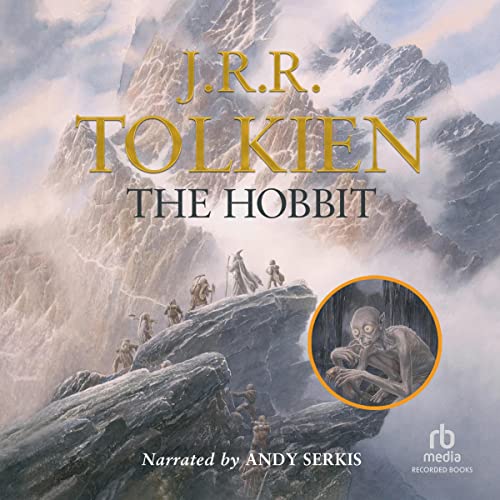
Cover of The Hobbit

The Hobbit

engAudiobookNarrated by Andy Serkis
Recorded Books, Inc.20209781705009048
Amazon
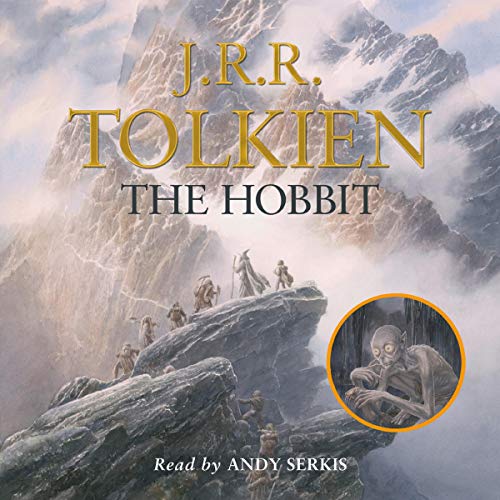
Cover of The Hobbit

The Hobbit

engeAudiobookUnabridged
HarperCollins Publishers20209780008433840
Amazon
§Genres
fantasy2adventure1classics1fairy tales1fiction1general1science fiction1
§Content Warnings
§Moods
adventurous1challenging1emotional1funny1hopeful1inspiring1lighthearted1
§Tags
#ab1#diverse characters1#fire/fire injury1#grief1#loveable characters1#not diverse characters1

Metadata

ISBN-139780547928227
ISBN-10054792822X
ASIN054792822X

Editions and availability

Find The Hobbit J.R.R. Tolkien in PDF, EPUB, ebook, audiobook, print, or library editions.

View on Amazon
Bookshop.orgGoogle Play BooksBarnes & NobleOpen Library

Featured In Lists

Book cover from this collectionBook cover from this collectionBook cover from this collectionBook cover from this collection
Book cover from this collection

Sword And Laser

134 books
Book cover from this collectionBook cover from this collectionBook cover from this collectionBook cover from this collection
Book cover from this collection

List 1001 Books Boxall

1000 books
Book cover from this collectionBook cover from this collectionBook cover from this collectionBook cover from this collection
Book cover from this collection

4lit

96 books