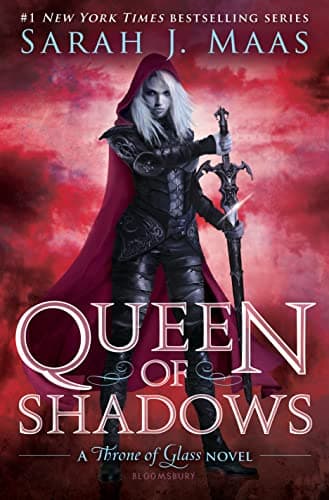
Aelin Galathynius re-enters the capital the way a knife re-enters an old wound—quietly, purposefully, and only after calculating every drop of blood that might follow. The city that once trained her to kill now braces for a phantom queen who keeps two sets of ledgers: one for the lives she will save, and one for the lives she will spend. In Rifthold, freedom is not a single act of rebellion but a currency that compounds nightly; every ally printed on forged permits, every whispered true name, and every birth-ribbon traded on the Shadow Market raises the interest rate on tomorrow’s reprisals.
The arithmetic of vengeance is hers alone, and the cost is already climbing before the first dawn. Aelin's return is not merely a homecoming but a systematic dismantling of the facades she once wore. To reclaim her kingdom, she must first navigate a city strangled by the King of Adarlan’s new, darker enforcements—where the air smells of cold iron and the shadows themselves seem to have teeth. The struggle is no longer just about survival; it is about the moral weight of a crown that requires its wearer to be more than an assassin.
Rifthold under the King’s expanded reign operates on layers of surveillance and magical suppression. The city is architecturally designed to isolate: the glass palace looms as a symbol of fragility and absolute power, while the slums beneath are a labyrinth of desperate resistance. The atmosphere is defined by the absence of magic, creating a grounded, gritty tension where steel and wit are the only reliable tools. Beyond the city walls, the fortress of Morath serves as a silent, terrifying source of industrial-scale cruelty, where the rules of nature are being rewritten to serve the king’s growing shadow-army.
The protagonist’s initial arc is defined by the friction between her past as Celaena Sardothien and her future as Aelin Galathynius. This transition is not seamless; it is a violent collision of roles. Her relationship with Chaol Westfall has shifted from one of romantic potential to ideological warfare, as both struggle with how much of their humanity they are willing to sacrifice for the "greater good." Meanwhile, her dynamic with Rowan Whitethorn provides a stabilizer—a partnership built on mutual recognition of past trauma, focusing on the discipline needed to withstand the coming conflict.
The novel utilizes the "Hero’s Return" trope but strips it of its typical glory, replacing it with the grim reality of urban guerrilla warfare. Rather than a grand entrance, the return is a series of clandestine meetings and tactical compromises. It also subverts the "Found Family" trope by introducing internal rot; the allies Aelin finds are often motivated by conflicting agendas or deep-seated resentment, making every alliance feel like a temporary truce. The concept of the "Chosen One" is grounded by the fact that Aelin’s power is currently inaccessible, forcing the narrative to rely on heist-style planning and political maneuvering rather than magical solutions.
The early stakes are centered on a series of high-risk extractions. Each potential rescue—whether it be her cousin Aedion from the executioner’s block or the search for a way to reach the possessed Prince Dorian—is framed as a logistical nightmare. These are not simple missions of mercy; they are gambles that risk exposing the entire resistance. The moral dilemma rests on the "Inverted Rescue": the realization that saving one individual might require the sacrifice of the city’s strategic advantage, forcing the characters to choose between their personal hearts and their political duties.
This is the comeback volume. Many readers call it the book where the series finds its legs, and it reads like one: Aelin heads back to the capital, the storylines start converging, and the plot runs. Kirkus found it hard to put down and said fans won't mind the length.
The surprise is who steals it. Manon and the Ironteeth witch storyline are what reviewers name most often as the highlight, a darker second arc about the cost of the witches' war experiments. The real argument is about Aelin herself. Is dropping Celaena empowerment or erasure? Kirkus saw maturity; another reviewer thought the book treated her old self too dismissively. Either way, this is a mid-series crossroads, not a place to start.
Add to your library to track progress and write reviews
Kirkus admired the character work and relationships, even while raising an eyebrow at a few credibility problems in the action. Reader-bloggers mostly treat it as a rebound after the previous volume. Critical readers push back on the love-triangle writing, the protective-male tropes and Chaol's arc.
Find Queen of Shadows Sarah J. Maas in PDF, EPUB, ebook, audiobook, print, or library editions.

24 books in catalog
Sarah J. Maas is the prolific, #1 New York Times and internationally bestselling author of the Throne of Glass, A Court of Thorns and Roses and Crescent City series, which have sold more than 70 million copies in English worldwide and are published in thirty-eight languages. Maas is one of the most successful authors of the modern era, generating a far-reaching and ever-growing fanbase of readers, as well as a TikTok phenomenon, with the hashtag for her A Court of Thorns and Roses series having several billion views.
She has two children, Taran and Sloan, with her husband. They currently reside in Los Angeles, CA and have a home in NYC, NY.
(Website: sarahjmaas.com)
Throne of Glass