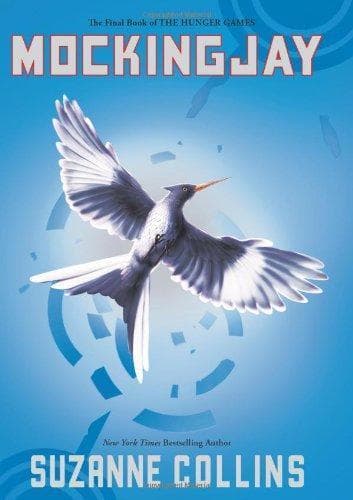
After the harrowing destruction of the Quarter Quell, the Hunger Games have evolved from a televised spectacle into a total war that threatens to consume the remnants of Panem. Katniss Everdeen has been extracted from the arena, but she finds herself in a world that is just as cold and calculated as the one she left behind. In the subterranean depths of the long-lost District 13, the survival of the individual has been traded for the rigid efficiency of a military machine.
While the Capitol continues to broadcast its reach and power, the burgeoning rebellion realizes that winning the war requires more than just soldiers; it requires a symbol. Katniss is no longer a tribute fighting for her own life, but she is once again being asked to perform. As she grapples with the psychological scars of her two previous trips to the arena and the agonizing capture of Peeta Mellark, she must decide if she can become the Mockingjay—the icon of the revolution—without becoming a mere pawn for a new set of masters.
The setting shifts from the lush, terrifying arenas of the previous installments to the utilitarian, underground fortress of District 13. This society operates on a strict military schedule, where every citizen is assigned a role and every resource is rationed with mathematical precision. The atmosphere is one of claustrophobia and discipline, providing a stark contrast to the decadence of the Capitol. Here, the rules of engagement are defined by "propos"—propaganda shorts filmed in combat zones to incite the other districts. The world-building focuses on the mechanics of a hidden civilization that has spent seventy-five years preparing for a single moment of insurrection.
Character development in the first half of the novel focuses on the internal fragmentation of Katniss Everdeen. Unlike the earlier books where her goals were immediate survival and the protection of her family, she is now forced to confront the burden of leadership. Her relationship with Gale Hawthorne shifts from one of shared survival to one of ideological conflict, as Gale’s willingness to embrace the cruelties of war challenges Katniss’s fundamental morality. The narrative explores the "aftermath" of the hero's journey, focusing on the difficulty of being a symbol when the person behind the mask is broken by the weight of their own experiences.
Suzanne Collins utilizes the "Chosen One" trope only to systematically deconstruct it. Katniss does not naturally rise to lead the people; she is recruited and coached by older, more powerful figures who recognize her marketability. The book subverts the typical revolutionary narrative by highlighting the manipulation inherent in any political movement, even one fighting for a just cause. By focusing on the "propaganda war" and the manufacturing of a hero, the story examines the thin line between a liberator and a tool of statecraft, grounding the YA dystopian genre in the gritty, morally grey realities of modern warfare.
Katniss spends much of the first half in bunkers and on film sets, reacting to events that reach her through broadcasts while rebel handlers stage her as the Mockingjay. Charlie Jane Anders at io9 read her as most convincing when spontaneous and least so when performing, a tension she treats as central to the novel. Collins has said the trilogy's core point is that violence is cyclical, with the rebellion in effect rebuilding the arena it fought against. Readers split on the result: on Goodreads some defend Katniss's breakdown as a realistic portrait of trauma, while others complain she's sidelined and used instead of driving events.
Add to your library to track progress and write reviews
Launch reviews were strongly positive. Publishers Weekly ranked it above the first two books and praised its cliffhanger chapters and take on propaganda, while Kirkus called it a satisfying finish. Other launch reviews were mostly favourable, with one reviewer finding the suspense had dropped from the previous book. Some readers react far more coolly.
Find Mockingjay Suzanne Collins in PDF, EPUB, ebook, audiobook, print, or library editions.

5 books in catalog
Dystopian fiction and young adult literature were transformed by the publication of The Hunger Games, a narrative exploring systemic authoritarianism, state-sanctioned violence, and the media spectacle of combat. Suzanne Collins introduced readers to the nation of Panem, where coerced youth fight to the death in televised survival competitions. Her work grounded speculative world-building in classical mythology, military history, and philosophical theories of war, examining the human cost of conflict and the mechanics of political control. The original trilogy and its subsequent expansions have sold over 100 million copies worldwide, been translated into 55 languages, and spawned a major feature film franchise grossing upwards of $3.3 billion globally.
Before achieving widespread recognition for her speculative worlds, Collins spent over a decade writing for acclaimed children's television programs before transitioning to long-form prose. Her bibliography spans middle-grade urban fantasy in the Underland Chronicles, autobiographical picture books, and high-stakes speculative fiction. Recognized on the TIME 100 list and honored with the Authors Guild Award for Distinguished Service to the Literary Community, her writing avoids sanitized heroic tropes, focusing instead on the psychological trauma, propaganda, and moral compromises inherent to surviving war.
Born on August 10, 1962, in Hartford, Connecticut, Suzanne Marie Collins grew up in a military family as the daughter of a career United States Air Force officer. Her father's service, which included a deployment during the Vietnam War, profoundly shaped her childhood and instilled a lifelong interest in military history, political science, and the ethical dilemmas of armed conflict. This personal family experience later provided the foundation for her autobiographical picture book, Year of the Jungle. Collins pursued her formal education in the dramatic arts, graduating from Indiana University Bloomington with a double major in Drama and Telecommunications before earning an M.F.A. in Dramatic Writing from New York University's Tisch School of the Arts.
In 1991, Collins launched her professional writing career in television, joining the writers' rooms for prominent children's networks. She earned credits on influential programs for Nickelodeon, including the Emmy-nominated series Clarissa Explains It All and The Mystery Files of Shelby Woo. For preschool audiences, she wrote episodes for the Emmy-nominated series Little Bear and Oswald. She also co-wrote the animated holiday special Santa, Baby! with Peter Bakalian, earning a Writers Guild of America Award nomination in Animation. Her television career continued as Head Writer for Scholastic Entertainment's Clifford's Puppy Days and as a freelance writer on Wow! Wow! Wubbzy!.
While working on the Kids' WB animated series Generation O!, Collins met author and illustrator James Proimos, who encouraged her to apply her storytelling talents to prose fiction. Recognizing that novel writing offered greater narrative freedom for complex world-building, she reinterpreted the classic 'rabbit hole' fantasy trope for an urban setting, resulting in her debut novel, Gregor the Overlander, published in 2003. This novel launched the five-book middle-grade series the Underland Chronicles, establishing her distinct narrative style that blends accessible, fast-paced action with serious themes of warfare, political diplomacy, and biological conflict.
The core of Collins's literary work is an uncompromising examination of the causes, execution, and lingering trauma of violence. Rather than presenting sanitized heroics or romanticized battles, her narratives explore 'just war' theory, probing the ethical boundaries of when conflict is justified and how moral corruption affects both aggressors and resistance movements. Her inspiration for The Hunger Games famously emerged while channel surfing late at night, when real-time footage of the Iraq War merged unsettlingly with competitive reality television programming, highlighting the dangerous blurring of human tragedy and public entertainment.
A central thematic pillar across her novels is the weaponization of media, propaganda, and societal control. In Panem, cameras function as tools of oppression and rebellion alike, demonstrating how authoritarian regimes manipulate narratives to maintain power through fear, poverty, and enforced hunger. In discussing her novel Sunrise on the Reaping, Collins cited philosopher David Hume's observations on implicit submission and 'the easiness with which the many are governed by the few,' emphasizing how state propaganda and narrative control secure public compliance. Questions of media manipulation, public spectacle, and 'Real or not real?' serve as persistent thematic anchors throughout her fiction.
Stylistically, Collins utilizes sparse, immediate, and visceral prose that prioritizes internal psychological realism over ornate description. Her first-person, present-tense narration in The Hunger Games trilogy immerses readers directly into the survival instincts, hypervigilance, and moral crises of her characters. Her stories pay rigorous attention to the psychological toll of violence, portraying post-traumatic stress disorder (PTSD), grief, guilt, and the loss of innocence among child soldiers and survivors with unyielding honesty. By anchoring dystopian and fantasy frameworks in historical realities, her work challenges readers to critically analyze power structures, historical memory, and civic responsibility.
The Hunger Games