SSansFiction
The libraryCollectionsJournalStatsFor authors
Sign inJoin now
Sansfiction,

A digital library for books. Made by readers, for readers.

v 2.0 · 2026
The library
  • Discover
  • Collections
  • Book tracker
  • Journal
  • Stats
For authors
  • SF Links
  • Analytics
  • How it works
  • FAQ
Elsewhere
  • X / @sansfiction
  • Privacy
  • Terms
  • Contact
© 2026 SansFiction · Digital · GlobalA quiet room for your reading life.
The libraryCollectionsJournalStatsFor authors
Sign inJoin now →
Navigation
Library
Bookshelf
Journal
Discover
Collections
Tierlists
Stats
Profile
Author Page
Link Builder
Account
Sign in
S
G
BooksadventureSunrise on the Reaping
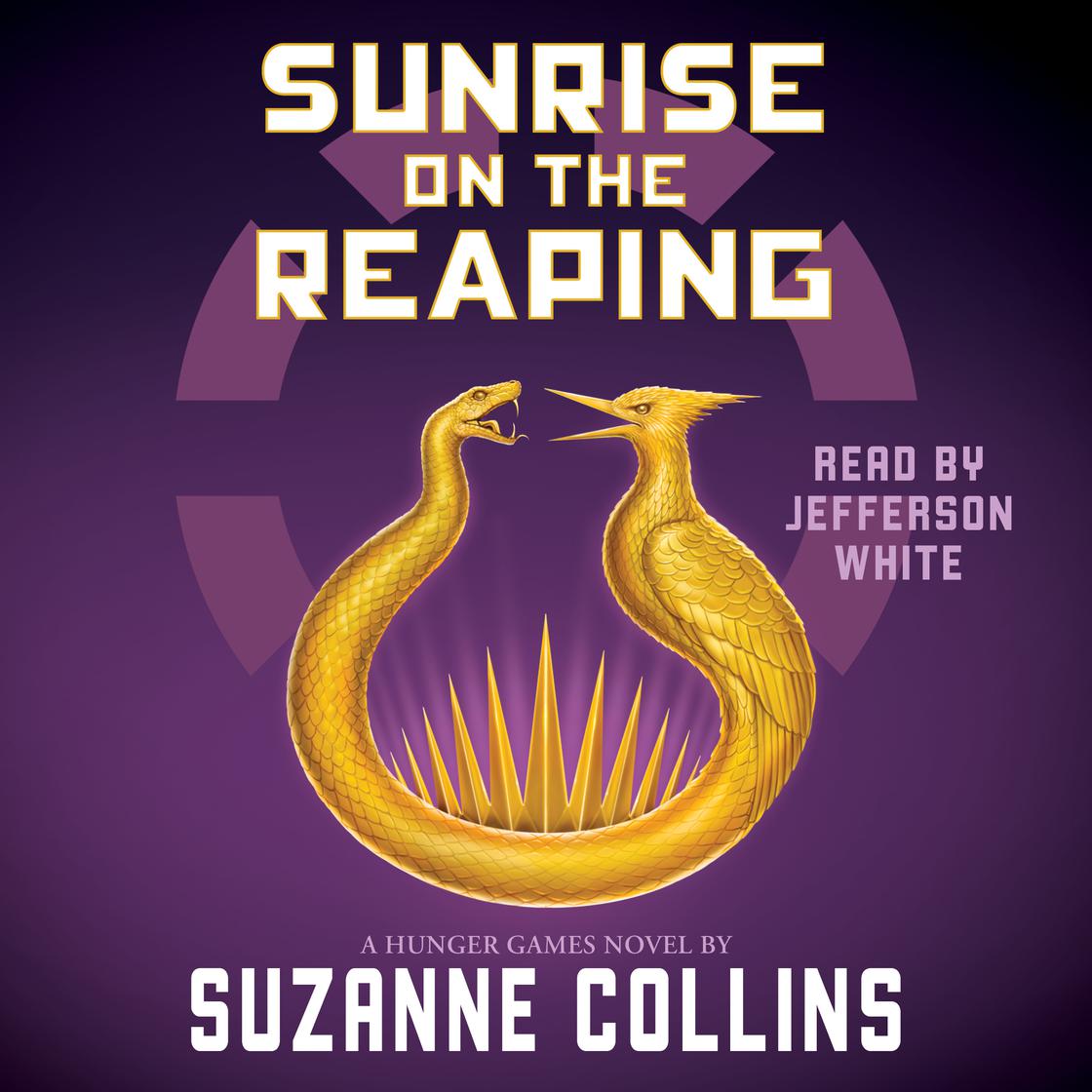
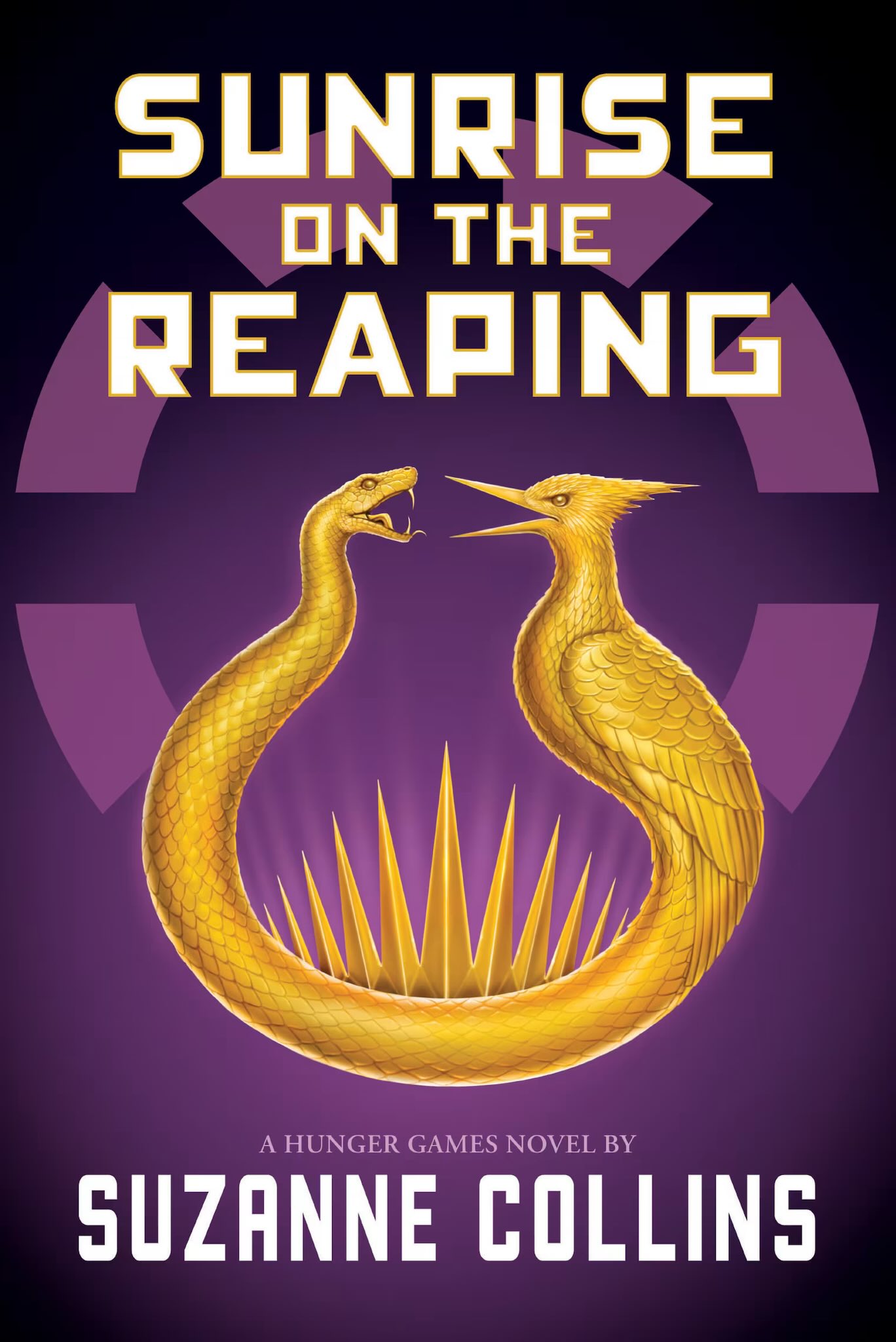
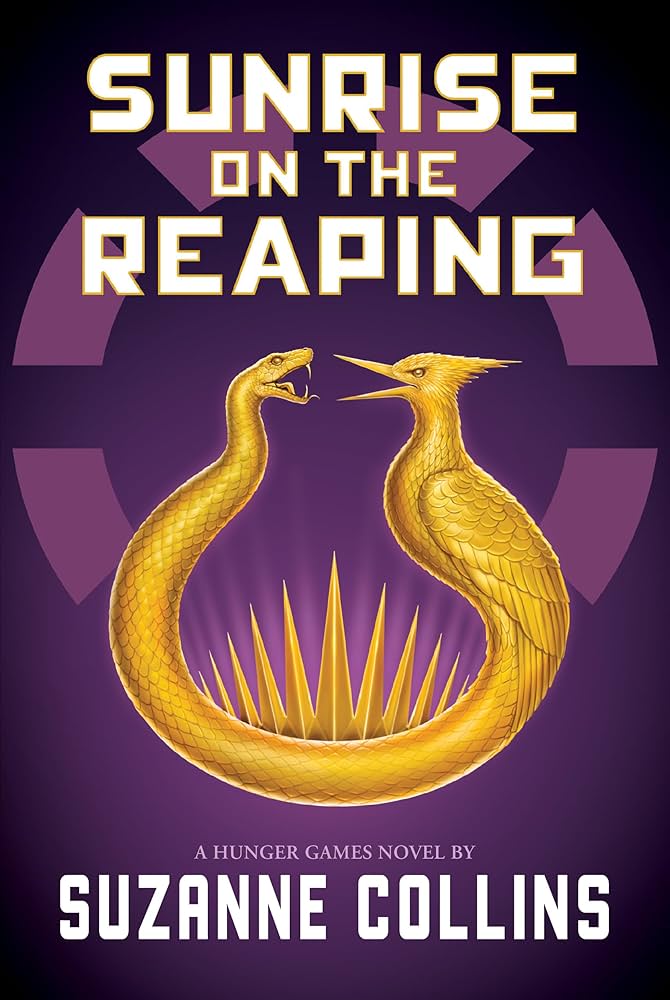
Cover of Sunrise on the Reaping by Suzanne Collins
№ 0.5 · The Hunger Games

Sunrise on the Reaping,

by Suzanne Collins

Ask AI
Rating4.3/ 5
Ratings751
Pages382
Reading Hours8h
Published2025
LanguageEnglish

§Synopsis

01

The sun rises on the fiftieth year of the Hunger Games, a milestone the Capitol celebrates as the Second Quarter Quell. In a calculated display of absolute power, the rules of the reaping are subverted: this year, forty-eight children will be sent to the arena instead of the usual twenty-four. For the citizens of Panem, it is a reminder that the government’s grip is not just firm, but infinitely flexible, capable of doubling the tragedy of any district at a whim. The atmosphere is one of implicit submission, where the many are governed by the few through a combination of scarcity, surveillance, and the repurposing of terror into entertainment.

At the center of this escalated conflict is sixteen-year-old Haymitch Abernathy. Forced into a spotlight he never sought on his own birthday, Haymitch must navigate a landscape where the primary weapon is not the blade, but the narrative itself. As he is uprooted from the familiar woods and hushed whispers of District 12 and thrust into the Capitol’s garish theater, the story examines how propaganda is used to maintain a fragile, bloody status quo. The stakes extend beyond mere survival; they involve the fight to retain one's humanity while being treated as a pawn in a televised ritual of state control.

The Mechanics of Control and World Building

Set twenty-four years before the events of the original trilogy, the world of the Second Quarter Quell is defined by a Capitol still refining its methods of psychological warfare. The setting shifts from the bleak, pine-scented austerity of a depressed mining village to the high-tech, sensory-overload environment of the Capitol. Here, arena technology is eerily integrated into "harmless" everyday life, and the history of the districts is being actively rewritten by those in power. The world-building focuses on the logistical cruelty of the Quell—the sheer mathematical impossibility of the odds and the way the Capitol uses "the spectacle" to distract from the systemic rot of Panem.

Main Characters

  • Haymitch Abernathy: A pragmatic and observant sixteen-year-old from District 12 whose quick wit and cynical perspective serve as his primary defense against the Capitol’s manipulations.
  • Maysilee Donner: A fellow tribute from the merchant section of District 12 who enters the Games with a hidden resourcefulness and a complicated connection to Haymitch’s social circle.
  • Drusilla Sickle: A representative of the Capitol’s governing class who embodies the grotesque theatricality and detached cruelty required to manage the Hunger Games.
  • Lenore Dove: A grounding figure in Haymitch’s life whose questions about a future without the reaping provide the moral framework for his internal struggle.
  • The Second Quell Tributes: A massive cohort of forty-eight individuals whose sheer numbers create a chaotic, predatory environment where traditional alliances are nearly impossible to maintain.

Early Character Dynamics and Development

The narrative focuses on Haymitch’s initial arc from a boy who simply wants to protect his loved ones to a strategist who recognizes the Games as a battle of wills. His relationship with his fellow District 12 tributes is strained by the reality that the Capitol has designed the Quell to maximize internal district conflict. Rather than a traditional "hero's journey," Haymitch’s development is rooted in the "No Status Change" reality of a tribute: he is a victim of the state attempting to find a crack in the narrative. The dynamic between the tributes is not just one of physical competition, but a psychological struggle to remain "real" in a world of manufactured truths.

Subverting Dystopian Tropes

  • The Locus Amoenus: Collins utilizes the trope of the "pleasant place" that becomes a site of violence, subverting the natural beauty of the arena into a weaponized landscape.
  • The Panopticon: The book leans into the trope of total surveillance, where the characters' every move is a piece of propaganda, making the "private self" the ultimate form of rebellion.
  • The "Chosen One" Subversion: By doubling the number of tributes, the narrative rejects the idea of a singular destiny. Haymitch is not a "chosen" hero but one of many children caught in a meat-grinder, highlighting the "easiness with which the many are governed" when they are forced to compete against one another.
  • The Prequel Trap: Instead of focusing solely on "how" Haymitch wins, the story explores the philosophical "why" behind the Capitol's evolution, focusing on the mechanics of governance and the fragility of collective memory.

§Our take

The prequel's real subject is Haymitch under pressure, not the mystery of whether he survives. Series readers already know the shape of his future, so the suspense shifts to method and cost: a devoted son and brother learns to read propaganda, perform for the Capitol and turn survival into resistance. Kirkus praises the blend of personal stakes, worldbuilding and danger, while the Harvard Crimson calls it "good but not necessary" and the Johns Hopkins News-Letter finds the climax rushed and the propaganda treatment thin.

The disagreement is the point. Some Hunger Games novels sharpen a familiar world; this one often revisits it. Readers drawn to Haymitch will find the early portrait and the songs that carry political memory especially rewarding, but the case for it depends on wanting the backstory rather than another surprise.

§Themes

Spectacle as domination
The Capitol turns terror into entertainment and uses the doubled tribute count to display its power before the districts.
Memory as resistance
Covey songs and an enclosure poem pass political meaning between generations, giving rebellion a quieter register than the arena.
The many weaponized
Forty-eight tributes turn the arena into a district-on-district fight designed to break solidarity.
A private self under watch
Surveillance makes every gesture usable propaganda, so Haymitch's warmth, humor and care become quiet resistance.
An institution can end
Lenore's claim that the Games are only fifty years old turns rebellion into an argument about possibility.

§How it was received

Kirkus gave it a starred review, praising the way it gathers the series' personal stakes, worldbuilding and danger into an intense, grim story. The Harvard Crimson liked the pacing but called it "good but not necessary"; the Johns Hopkins News-Letter found the climax rushed, the propaganda treatment thin and the familiar-character cameos like fan service. Publishers Weekly reported it as the second best-selling title of the first half of 2025.

§Read it if

  • You want to see Haymitch as a warm, funny, protective teenager before the Capitol hardens him
  • You enjoy propaganda as a subject and notice when music and poetry carry the political argument
  • You can handle a crowded, brutal arena and a prequel whose outcome is already familiar

§Skip it if

  • You want a wholly new take on Panem. The Harvard Crimson and Johns Hopkins News-Letter see familiar themes repeated.
  • You want every supporting character fully drawn and a climax with room to breathe. Many tributes are thin, and the Johns Hopkins News-Letter found the climax rushed.

§Before you start

Reading experience
The roughly 400-page book has a measured pre-Games build, strong chapter-level momentum and a rushed climax; readers tracking 48 tributes will need patience, especially during the crowded arena section.
Reading order
Kirkus's publication-order count makes it the fifth Hunger Games book: The Hunger Games, Catching Fire, Mockingjay, The Ballad of Songbirds and Snakes, then Sunrise on the Reaping. Chronologically, it is set 24 years before The Hunger Games, during the 50th Games. It can be read alone, though trilogy readers get more from the callbacks and context.
Content notes
Graphic violence and deaths involving child tributes, some as young as 12; Government violence, including shooting, torture and punishment; Vehicle crashes and fire; Alcohol and drug use; Minimal romance, limited to kissing; Grief and loss; Depictions of poisoning.

§Common questions

Do I need to read The Hunger Games trilogy first?
No. It stands on its own, though the callbacks and context make it richer for trilogy readers.
When is Sunrise on the Reaping set?
Twenty-four years before The Hunger Games, during the 50th Hunger Games, also called the Second Quarter Quell.
How violent is it?
Very. Forty-eight child tributes, some as young as 12, fight to the death, with graphic injuries, poisoning, government torture and other state violence.

§If you liked this

  • The Ballad of Songbirds and Snakes by Suzanne Collins — The direct predecessor prequel, and the natural comparison for Haymitch's warmer voice against Coriolanus Snow's colder one.
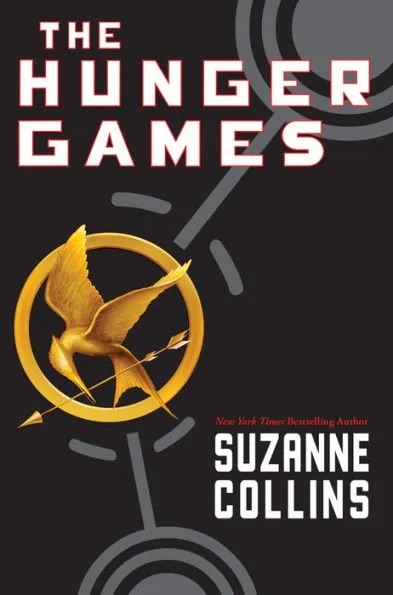
  • The Hunger Games by Suzanne Collins — The Katniss-era trilogy opener; this prequel supplies the context behind the mentor readers meet later.
Sources
  • Wikipedia
  • Kirkus Reviews
  • The Harvard Crimson
  • The Johns Hopkins News-Letter
  • The Cornell Daily Sun
  • Pikes Peak Library District
  • Common Sense Media
  • Scholastic
  • Publishers Weekly

Track this book

Add to your library to track progress and write reviews

§Genres
adventure1dystopian1fantasy1fiction1hunger games1juvenile fiction1science fiction1
§Content Warnings
§Moods
adventurous1challenging1emotional1hopeful1inspiring1mysterious1reflective1
§Tags
#alcoholism1#diverse characters1#fire/fire injury1

§About the Author

Suzanne Collins
Suzanne Collins

5 books in catalog

Dystopian fiction and young adult literature were transformed by the publication of The Hunger Games, a narrative exploring systemic authoritarianism, state-sanctioned violence, and the media spectacle of combat. Suzanne Collins introduced readers to the nation of Panem, where coerced youth fight to the death in televised survival competitions. Her work grounded speculative world-building in classical mythology, military history, and philosophical theories of war, examining the human cost of conflict and the mechanics of political control. The original trilogy and its subsequent expansions have sold over 100 million copies worldwide, been translated into 55 languages, and spawned a major feature film franchise grossing upwards of $3.3 billion globally.

Before achieving widespread recognition for her speculative worlds, Collins spent over a decade writing for acclaimed children's television programs before transitioning to long-form prose. Her bibliography spans middle-grade urban fantasy in the Underland Chronicles, autobiographical picture books, and high-stakes speculative fiction. Recognized on the TIME 100 list and honored with the Authors Guild Award for Distinguished Service to the Literary Community, her writing avoids sanitized heroic tropes, focusing instead on the psychological trauma, propaganda, and moral compromises inherent to surviving war.

Career & Background

Born on August 10, 1962, in Hartford, Connecticut, Suzanne Marie Collins grew up in a military family as the daughter of a career United States Air Force officer. Her father's service, which included a deployment during the Vietnam War, profoundly shaped her childhood and instilled a lifelong interest in military history, political science, and the ethical dilemmas of armed conflict. This personal family experience later provided the foundation for her autobiographical picture book, Year of the Jungle. Collins pursued her formal education in the dramatic arts, graduating from Indiana University Bloomington with a double major in Drama and Telecommunications before earning an M.F.A. in Dramatic Writing from New York University's Tisch School of the Arts.

In 1991, Collins launched her professional writing career in television, joining the writers' rooms for prominent children's networks. She earned credits on influential programs for Nickelodeon, including the Emmy-nominated series Clarissa Explains It All and The Mystery Files of Shelby Woo. For preschool audiences, she wrote episodes for the Emmy-nominated series Little Bear and Oswald. She also co-wrote the animated holiday special Santa, Baby! with Peter Bakalian, earning a Writers Guild of America Award nomination in Animation. Her television career continued as Head Writer for Scholastic Entertainment's Clifford's Puppy Days and as a freelance writer on Wow! Wow! Wubbzy!.

While working on the Kids' WB animated series Generation O!, Collins met author and illustrator James Proimos, who encouraged her to apply her storytelling talents to prose fiction. Recognizing that novel writing offered greater narrative freedom for complex world-building, she reinterpreted the classic 'rabbit hole' fantasy trope for an urban setting, resulting in her debut novel, Gregor the Overlander, published in 2003. This novel launched the five-book middle-grade series the Underland Chronicles, establishing her distinct narrative style that blends accessible, fast-paced action with serious themes of warfare, political diplomacy, and biological conflict.

Writing Style & Themes

The core of Collins's literary work is an uncompromising examination of the causes, execution, and lingering trauma of violence. Rather than presenting sanitized heroics or romanticized battles, her narratives explore 'just war' theory, probing the ethical boundaries of when conflict is justified and how moral corruption affects both aggressors and resistance movements. Her inspiration for The Hunger Games famously emerged while channel surfing late at night, when real-time footage of the Iraq War merged unsettlingly with competitive reality television programming, highlighting the dangerous blurring of human tragedy and public entertainment.

A central thematic pillar across her novels is the weaponization of media, propaganda, and societal control. In Panem, cameras function as tools of oppression and rebellion alike, demonstrating how authoritarian regimes manipulate narratives to maintain power through fear, poverty, and enforced hunger. In discussing her novel Sunrise on the Reaping, Collins cited philosopher David Hume's observations on implicit submission and 'the easiness with which the many are governed by the few,' emphasizing how state propaganda and narrative control secure public compliance. Questions of media manipulation, public spectacle, and 'Real or not real?' serve as persistent thematic anchors throughout her fiction.

Stylistically, Collins utilizes sparse, immediate, and visceral prose that prioritizes internal psychological realism over ornate description. Her first-person, present-tense narration in The Hunger Games trilogy immerses readers directly into the survival instincts, hypervigilance, and moral crises of her characters. Her stories pay rigorous attention to the psychological toll of violence, portraying post-traumatic stress disorder (PTSD), grief, guilt, and the loss of innocence among child soldiers and survivors with unyielding honesty. By anchoring dystopian and fantasy frameworks in historical realities, her work challenges readers to critically analyze power structures, historical memory, and civic responsibility.

Major Works

  • The Hunger Games — Published in 2008, The Hunger Games launched the dystopian trilogy set in the post-apocalyptic nation of Panem. The novel introduces Katniss Everdeen, a sixteen-year-old girl who volunteers to replace her younger sister in the annual Hunger Games, a televised death match forced upon twelve subjugated districts by the Capitol. The book explores themes of poverty, survival, government oppression, and resistance.
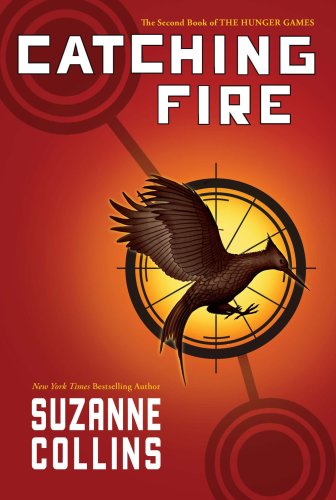
  • Catching Fire — The second novel in the trilogy, Catching Fire, published in 2009, continues Katniss Everdeen's story following her defiance of the Capitol in the 74th Hunger Games. As unrest spreads across the districts, Katniss and her fellow tribute Peeta Mellark are forced back into the arena for the 75th Hunger Games, known as the Quarter Quell, escalating the conflict between the oppressed citizens and President Snow's totalitarian regime.
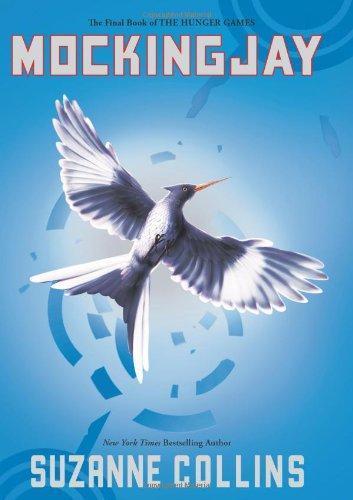
  • Mockingjay — Concluding the original trilogy, Mockingjay (2010) chronicles the full-scale rebellion against the Capitol. Katniss becomes the reluctant symbol of the revolution while navigating intense military strategy, propaganda campaigns, severe personal trauma, and the complex ethical choices required to overthrow an authoritarian power without replacing it with a new tyranny.
  • The Ballad of Songbirds and Snakes — Published in 2020, The Ballad of Songbirds and Snakes serves as a prequel to the original trilogy, focusing on eighteen-year-old Coriolanus Snow during the 10th annual Hunger Games. The novel provides critical historical context regarding the early development of the Hunger Games, exploring themes of human nature, political power, and the philosophical foundations of Capitol control.
  • Sunrise on the Reaping — Scheduled for publication in 2025, Sunrise on the Reaping returns to the world of Panem during the 50th annual Hunger Games, the Second Quarter Quell won by Haymitch Abernathy. The narrative draws inspiration from philosopher David Hume's theories on implicit submission, narrative control, and propaganda, exploring how authoritarian power is maintained through psychological and political manipulation.
  • Underland Chronicles — Beginning in 2003 with Gregor the Overlander, this five-book middle-grade series follows a young boy named Gregor who falls through a grate in his laundry room into the subterranean world of the Underland beneath New York City. Across five novels, the series addresses heavy topics including war, biological weapons, genocide, prophecy, and political diplomacy for a younger readership.
  • Year of the Jungle — An autobiographical picture book published in 2013, Year of the Jungle draws upon the author's childhood experience during her father's deployment in the Vietnam War. Illustrated by James Proimos, the story makes complex feelings of fear, uncertainty, and familial separation accessible to young children.

§Featured Series

The Hunger Games

Cover of The Ballad of Songbirds and Snakes by Suzanne Collins

The Ballad of Songbirds and Snakes

Suzanne Collins, 2010
Cover of Sunrise on the Reaping by Suzanne Collins

Sunrise on the Reaping

Suzanne Collins, 2025
Cover of The Hunger Games by Suzanne Collins

The Hunger Games

Suzanne Collins, 2008
Cover of Catching Fire by Suzanne Collins

Catching Fire

Suzanne Collins, 2009
Cover of Mockingjay by Suzanne Collins

Mockingjay

Suzanne Collins, 2010

§Editions

Showing 3 of 29 editions
Cover of Sunrise on the Reaping

Sunrise on the Reaping

engAudiobook
Scholastic Audiobooks20259781546171492
Amazon
Cover of Sunrise on the Reaping

Sunrise on the Reaping

eng
Scholastic Press20259781546171478
Amazon
Cover of Sunrise on the Reaping

Sunrise on the Reaping

engKindle Edition
Scholastic UK20259780702340581
§Genres
adventure1dystopian1fantasy1fiction1hunger games1juvenile fiction1science fiction1
§Content Warnings
§Moods
adventurous1challenging1emotional1hopeful1inspiring1mysterious1reflective1
§Tags
#alcoholism1#diverse characters1#fire/fire injury1

Metadata

ISBN-139781546171492
ISBN-101546171495
ASINB0D6P455PH

Editions and availability

Find Sunrise on the Reaping Suzanne Collins in PDF, EPUB, ebook, audiobook, print, or library editions.

View on Amazon
Bookshop.orgGoogle Play BooksBarnes & NobleOpen Library

Featured In Lists

Book cover from this collectionBook cover from this collectionBook cover from this collectionBook cover from this collection
Book cover from this collection

The Hardcover 2024 Year in Books

248 books
Book cover from this collectionBook cover from this collectionBook cover from this collectionBook cover from this collection
Book cover from this collection

NPR Staff Picks of 2025 (so far) - Fiction

39 books
Book cover from this collectionBook cover from this collectionBook cover from this collectionBook cover from this collection
Book cover from this collection

Owned

12 books
Book cover from this collectionBook cover from this collectionBook cover from this collectionBook cover from this collection
Book cover from this collection

Bookshop.org’s 100 Bestselling Books of 2025 (so far)

100 books