SSansFiction
The libraryCollectionsJournalStatsFor authors
Sign inJoin now
Sansfiction,

A digital library for books. Made by readers, for readers.

v 2.0 · 2026
The library
  • Discover
  • Collections
  • Book tracker
  • Journal
  • Stats
For authors
  • SF Links
  • Analytics
  • How it works
  • FAQ
Elsewhere
  • X / @sansfiction
  • Privacy
  • Terms
  • Contact
© 2026 SansFiction · Digital · GlobalA quiet room for your reading life.
The libraryCollectionsJournalStatsFor authors
Sign inJoin now →
Navigation
Library
Bookshelf
Journal
Discover
Collections
Tierlists
Stats
Profile
Author Page
Link Builder
Account
Sign in
S
G
BooksadventureThe Ballad of Songbirds and Snakes
Cover of The Ballad of Songbirds and Snakes by Suzanne Collins
The Hunger Games

The Ballad of Songbirds and Snakes,

by Suzanne Collins

Ask AI
Rating3.8/ 5
Ratings1,072
Pages541
Reading Hours11h
Published2010
LanguageEnglish

§Synopsis

01

Sixty-four years before the rise of Katniss Everdeen, the Capitol of Panem is a scarred landscape of reconstruction and lingering resentment. For eighteen-year-old Coriolanus Snow, the Tenth Annual Hunger Games represent the final opportunity to restore his family’s destitute house to its former glory. The Snow name carries prestige, but behind the doors of their crumbling penthouse, Coriolanus hides the reality of starvation and threadbare clothes. His survival depends entirely on his ability to outmaneuver his classmates for a university scholarship, a prize now tied to a new experimental role: acting as a mentor to the tributes in the arena.

The narrative functions as a philosophical inquiry into human nature and the necessity of state control during times of recovery. When Coriolanus is assigned the "humiliating" task of mentoring the female tribute from District 12, a charismatic performer named Lucy Gray Baird, he is forced to pivot from traditional strategy to a battle for public engagement. As he forms a precarious alliance with his tribute, he must balance his innate survival instincts against the rigid expectations of a society that demands order at any cost. The stakes extend beyond the arena floor; they involve the very definition of what it means to be civilized in a world governed by fear.

The Reconstruction of Panem

The setting of the Tenth Hunger Games is vastly different from the high-tech spectacle of the original trilogy. The Capitol is still recovering from the "Dark Days" of the rebellion, with rubble-strewn streets and a population traumatized by siege and hunger. The Games themselves are unpolished and viewed with distaste by many citizens; they take place in a decaying sports arena rather than a custom-built biome. This era introduces the "Citadel," a laboratory of biological horrors led by Dr. Volumnia Gaul, where the rules of the Games are being written in real-time. The atmosphere is one of post-war austerity and political paranoia, where the lines between the victors and the vanquished are still dangerously thin.

Main Characters

  • Coriolanus Snow: A high-achieving student masking his family's poverty while pursuing institutional power to secure his future.
  • Lucy Gray Baird: A charismatic musician from the traveling "Covey" group who uses her performance skills to manipulate Capitol sympathy.
  • Sejanus Plinth: A wealthy classmate born in the Districts whose moral objections to the Games put him at constant odds with Capitol ideology.
  • Dr. Volumnia Gaul: The eccentric and chilling Head Gamemaker who views the Games as a psychological experiment on the inherent cruelty of humanity.
  • Casca Highbottom: The Dean of the Academy and the bitter architect of the Hunger Games, who harbors a mysterious grudge against the Snow family.

The Evolution of Ambition

Coriolanus Snow begins the story not as a tyrant, but as a desperate young man navigating the social hierarchies of the Academy. His initial arc is defined by the tension between his genuine empathy for his peers and his ruthless need for self-preservation. His relationship with Lucy Gray Baird starts as a transactional necessity—he needs her to win so he can escape poverty—but it quickly evolves into a complex emotional entanglement. This dynamic forces him to choose between his burgeoning moral conscience and the seductive pull of authority. The book meticulously tracks how his interactions with the Capitol's elite begin to shape his view of the world as a zero-sum game where one must either be the hunter or the prey.

Subverting the Origin Story

The novel utilizes and subverts common Young Adult tropes, particularly the "star-crossed lovers" and "underdog mentor" archetypes. While it mirrors the structure of a survival thriller, it functions more accurately as a political thriller and a "nature versus nurture" character study. By placing the reader in the perspective of a character from the oppressor class, Collins subverts the traditional hero’s journey. Instead of a quest for liberation, the story depicts the intellectual and emotional steps toward justifying total control. The "mentor" trope is stripped of its usual wisdom-sharing role and recast as a desperate scramble for sponsorship and media optics, highlighting the birth of the Games as a televised psychological tool.

§Our take

Readers already suspect where Coriolanus Snow is headed, which makes the more interesting question how he rationalizes each step. Collins began from questions about human nature, then lets poverty, ambition and the Capitol’s hunger for spectacle harden his choices. The result is a political thriller with an early empathy that makes Snow harder to dismiss.

The real argument is over execution. Kirkus found the book tense and character-driven; Common Sense Media liked the first half more than the slower aftermath. Readers are more divided still: Lucy Gray draws frequent praise, but the romance, Snow’s likability and the open ending draw plenty of complaints. Fans of dystopian fiction who can tolerate being made to care about an architect of control will find the early stretch hard to put down.

§Themes

Poverty behind prestige
Coriolanus’s family is starving behind the Snow name, so his first bid for power looks like survival rather than simple greed.
Control as an experiment
Dr. Gaul treats the Games as a test of human cruelty while the Capitol turns fear and spectacle into policy.
Sympathy as leverage
Coriolanus needs Lucy Gray’s charisma to win public sympathy, and their alliance turns calculation into something messier.
How power rationalizes itself
Snow’s point of view lets readers watch fear, ambition and empathy harden into a workable case for control.

§How it was received

Reception was split. Kirkus called the novel tense and character-driven, while Common Sense Media liked the first half more than the slower post-Games section. NPR/WBUR ran a negative review under the headline “A Lackluster Prequel.”

§Read it if

  • You want to watch a future tyrant justify his choices rather than merely see whether he becomes one
  • You like dystopian politics grounded in poverty, war and state control, not just spectacle
  • You want the Games seen from the regime that built them, not only from the tributes fighting them

§Skip it if

  • You need a trustworthy protagonist. Snow is the future oppressor, and some readers never find him likable.
  • You prefer a tightly wound arena story. The post-Games stretch loses tension for several readers, and the ending can feel unresolved.

§Before you start

Reading experience
The long opening moves briskly through mentorship and the Games; the post-Games section slows, though the prose stays straightforward.
Reading order
Prequel to The Hunger Games trilogy, set 64 years before The Hunger Games. Publication order and story order differ: Sunrise on the Reaping falls between this book and The Hunger Games chronologically. Guides usually advise publication order: read The Hunger Games trilogy first, then this book, then Sunrise on the Reaping.
Content notes
Graphic violence and child deaths in the arena, including killings with axes and tridents, poison and snake venom; Bombings, shootings, public hangings and other violence outside the arena; Characters lose parts of their bodies; Heavy alcohol use, including moonshine and whiskey, plus a teacher’s drug addiction; Sexual innuendo involving trading sex for food, a mention of a past tryst, and mild profanity; Starvation, poverty and the trauma of war are central to the story; The entire story is narrated by a morally compromised protagonist who gradually rationalizes control.

§Common questions

Is The Ballad of Songbirds and Snakes a prequel?
Yes. It is set 64 years before The Hunger Games and follows Coriolanus Snow as an eighteen-year-old Academy student.
Do I need to read The Hunger Games first?
Not strictly, but Common Sense Media says reading the original first helps with context.
How violent is it?
Very. Common Sense Media rates the violence as “a lot”: children fight to death, and killings, mutilation, bombings, shootings and public hangings occur, much of it outside the arena.

§If you liked this

  • The Hunger Games by Suzanne Collins — Read it first for context, then compare the same institution through Snow’s eyes and Katniss’s.
  • Sunrise on the Reaping by Suzanne Collins — The next prequel in story order, set at the fiftieth Games, for readers who want more Panem before Katniss.
Sources
  • Scholastic (press release)
  • Wikipedia
  • Kirkus Reviews
  • Common Sense Media
  • NPR via WBUR
  • Pikes Peak Library District staff review
  • The Bookbag
  • Goodreads blog

Track this book

Add to your library to track progress and write reviews

§Genres
adventure1aventure1dystopian1fantasy1fiction1jeune adulte1romance1
§Content Warnings
§Moods
adventurous2challenging1dark1emotional1fast-paced1informative1mysterious1
§Tags
#blood1#classism1#diverse characters1

§About the Author

Suzanne Collins
Suzanne Collins

5 books in catalog

Dystopian fiction and young adult literature were transformed by the publication of The Hunger Games, a narrative exploring systemic authoritarianism, state-sanctioned violence, and the media spectacle of combat. Suzanne Collins introduced readers to the nation of Panem, where coerced youth fight to the death in televised survival competitions. Her work grounded speculative world-building in classical mythology, military history, and philosophical theories of war, examining the human cost of conflict and the mechanics of political control. The original trilogy and its subsequent expansions have sold over 100 million copies worldwide, been translated into 55 languages, and spawned a major feature film franchise grossing upwards of $3.3 billion globally.

Before achieving widespread recognition for her speculative worlds, Collins spent over a decade writing for acclaimed children's television programs before transitioning to long-form prose. Her bibliography spans middle-grade urban fantasy in the Underland Chronicles, autobiographical picture books, and high-stakes speculative fiction. Recognized on the TIME 100 list and honored with the Authors Guild Award for Distinguished Service to the Literary Community, her writing avoids sanitized heroic tropes, focusing instead on the psychological trauma, propaganda, and moral compromises inherent to surviving war.

Career & Background

Born on August 10, 1962, in Hartford, Connecticut, Suzanne Marie Collins grew up in a military family as the daughter of a career United States Air Force officer. Her father's service, which included a deployment during the Vietnam War, profoundly shaped her childhood and instilled a lifelong interest in military history, political science, and the ethical dilemmas of armed conflict. This personal family experience later provided the foundation for her autobiographical picture book, Year of the Jungle. Collins pursued her formal education in the dramatic arts, graduating from Indiana University Bloomington with a double major in Drama and Telecommunications before earning an M.F.A. in Dramatic Writing from New York University's Tisch School of the Arts.

In 1991, Collins launched her professional writing career in television, joining the writers' rooms for prominent children's networks. She earned credits on influential programs for Nickelodeon, including the Emmy-nominated series Clarissa Explains It All and The Mystery Files of Shelby Woo. For preschool audiences, she wrote episodes for the Emmy-nominated series Little Bear and Oswald. She also co-wrote the animated holiday special Santa, Baby! with Peter Bakalian, earning a Writers Guild of America Award nomination in Animation. Her television career continued as Head Writer for Scholastic Entertainment's Clifford's Puppy Days and as a freelance writer on Wow! Wow! Wubbzy!.

While working on the Kids' WB animated series Generation O!, Collins met author and illustrator James Proimos, who encouraged her to apply her storytelling talents to prose fiction. Recognizing that novel writing offered greater narrative freedom for complex world-building, she reinterpreted the classic 'rabbit hole' fantasy trope for an urban setting, resulting in her debut novel, Gregor the Overlander, published in 2003. This novel launched the five-book middle-grade series the Underland Chronicles, establishing her distinct narrative style that blends accessible, fast-paced action with serious themes of warfare, political diplomacy, and biological conflict.

Writing Style & Themes

The core of Collins's literary work is an uncompromising examination of the causes, execution, and lingering trauma of violence. Rather than presenting sanitized heroics or romanticized battles, her narratives explore 'just war' theory, probing the ethical boundaries of when conflict is justified and how moral corruption affects both aggressors and resistance movements. Her inspiration for The Hunger Games famously emerged while channel surfing late at night, when real-time footage of the Iraq War merged unsettlingly with competitive reality television programming, highlighting the dangerous blurring of human tragedy and public entertainment.

A central thematic pillar across her novels is the weaponization of media, propaganda, and societal control. In Panem, cameras function as tools of oppression and rebellion alike, demonstrating how authoritarian regimes manipulate narratives to maintain power through fear, poverty, and enforced hunger. In discussing her novel Sunrise on the Reaping, Collins cited philosopher David Hume's observations on implicit submission and 'the easiness with which the many are governed by the few,' emphasizing how state propaganda and narrative control secure public compliance. Questions of media manipulation, public spectacle, and 'Real or not real?' serve as persistent thematic anchors throughout her fiction.

Stylistically, Collins utilizes sparse, immediate, and visceral prose that prioritizes internal psychological realism over ornate description. Her first-person, present-tense narration in The Hunger Games trilogy immerses readers directly into the survival instincts, hypervigilance, and moral crises of her characters. Her stories pay rigorous attention to the psychological toll of violence, portraying post-traumatic stress disorder (PTSD), grief, guilt, and the loss of innocence among child soldiers and survivors with unyielding honesty. By anchoring dystopian and fantasy frameworks in historical realities, her work challenges readers to critically analyze power structures, historical memory, and civic responsibility.

Major Works

  • The Hunger Games — Published in 2008, The Hunger Games launched the dystopian trilogy set in the post-apocalyptic nation of Panem. The novel introduces Katniss Everdeen, a sixteen-year-old girl who volunteers to replace her younger sister in the annual Hunger Games, a televised death match forced upon twelve subjugated districts by the Capitol. The book explores themes of poverty, survival, government oppression, and resistance.
  • Catching Fire — The second novel in the trilogy, Catching Fire, published in 2009, continues Katniss Everdeen's story following her defiance of the Capitol in the 74th Hunger Games. As unrest spreads across the districts, Katniss and her fellow tribute Peeta Mellark are forced back into the arena for the 75th Hunger Games, known as the Quarter Quell, escalating the conflict between the oppressed citizens and President Snow's totalitarian regime.
  • Mockingjay — Concluding the original trilogy, Mockingjay (2010) chronicles the full-scale rebellion against the Capitol. Katniss becomes the reluctant symbol of the revolution while navigating intense military strategy, propaganda campaigns, severe personal trauma, and the complex ethical choices required to overthrow an authoritarian power without replacing it with a new tyranny.
  • The Ballad of Songbirds and Snakes — Published in 2020, The Ballad of Songbirds and Snakes serves as a prequel to the original trilogy, focusing on eighteen-year-old Coriolanus Snow during the 10th annual Hunger Games. The novel provides critical historical context regarding the early development of the Hunger Games, exploring themes of human nature, political power, and the philosophical foundations of Capitol control.
  • Sunrise on the Reaping — Scheduled for publication in 2025, Sunrise on the Reaping returns to the world of Panem during the 50th annual Hunger Games, the Second Quarter Quell won by Haymitch Abernathy. The narrative draws inspiration from philosopher David Hume's theories on implicit submission, narrative control, and propaganda, exploring how authoritarian power is maintained through psychological and political manipulation.
  • Underland Chronicles — Beginning in 2003 with Gregor the Overlander, this five-book middle-grade series follows a young boy named Gregor who falls through a grate in his laundry room into the subterranean world of the Underland beneath New York City. Across five novels, the series addresses heavy topics including war, biological weapons, genocide, prophecy, and political diplomacy for a younger readership.
  • Year of the Jungle — An autobiographical picture book published in 2013, Year of the Jungle draws upon the author's childhood experience during her father's deployment in the Vietnam War. Illustrated by James Proimos, the story makes complex feelings of fear, uncertainty, and familial separation accessible to young children.

§Featured Series

The Hunger Games

Cover of The Ballad of Songbirds and Snakes by Suzanne Collins

The Ballad of Songbirds and Snakes

Suzanne Collins, 2010
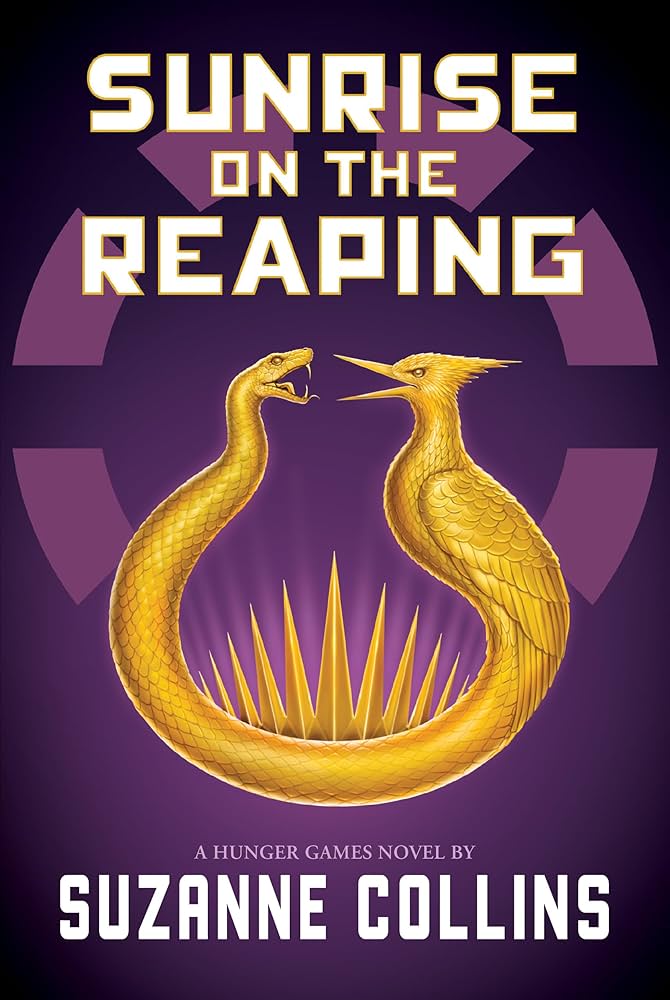
Cover of Sunrise on the Reaping by Suzanne Collins

Sunrise on the Reaping

Suzanne Collins, 2025
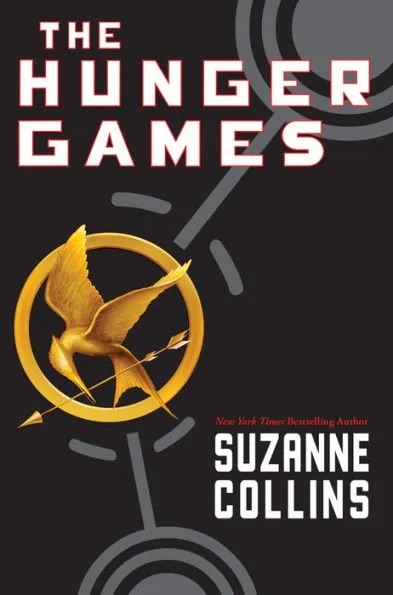
Cover of The Hunger Games by Suzanne Collins

The Hunger Games

Suzanne Collins, 2008
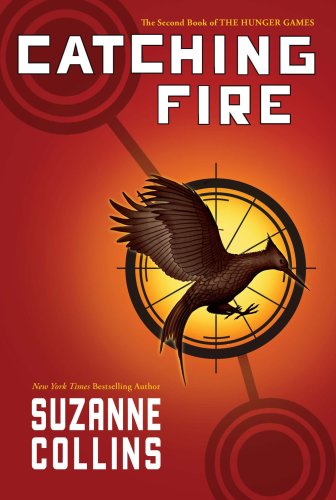
Cover of Catching Fire by Suzanne Collins

Catching Fire

Suzanne Collins, 2009
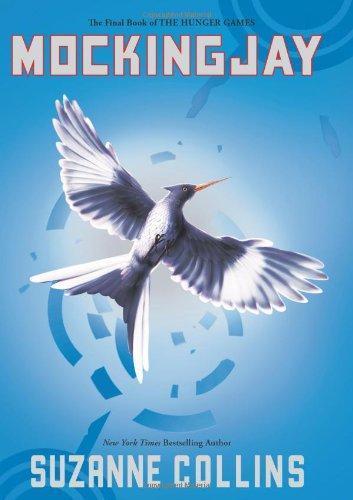
Cover of Mockingjay by Suzanne Collins

Mockingjay

Suzanne Collins, 2010

§Editions

Cover of The Ballad of Songbirds and Snakes

The Ballad of Songbirds and Snakes

eng541 pgs
Scholastic Press20209781338635188
Amazon
§Genres
adventure1aventure1dystopian1fantasy1fiction1jeune adulte1romance1
§Content Warnings
§Moods
adventurous2challenging1dark1emotional1fast-paced1informative1mysterious1
§Tags
#blood1#classism1#diverse characters1

Metadata

ISBN-139781338635188
ISBN-101338635182
ASINB07V5KKSZT

Editions and availability

Find The Ballad of Songbirds and Snakes Suzanne Collins in PDF, EPUB, ebook, audiobook, print, or library editions.

View on Amazon
Bookshop.orgGoogle Play BooksBarnes & NobleOpen Library

Featured In Lists

Book cover from this collectionBook cover from this collectionBook cover from this collectionBook cover from this collection
Book cover from this collection

2023 Year in Books

150 books