SSansFiction
The libraryCollectionsJournalStatsFor authors
Sign inJoin now
Sansfiction,

A digital library for books. Made by readers, for readers.

v 2.0 · 2026
The library
  • Discover
  • Collections
  • Book tracker
  • Journal
  • Stats
For authors
  • SF Links
  • Analytics
  • How it works
  • FAQ
Elsewhere
  • X / @sansfiction
  • Privacy
  • Terms
  • Contact
© 2026 SansFiction · Digital · GlobalA quiet room for your reading life.
The libraryCollectionsJournalStatsFor authors
Sign inJoin now →
Navigation
Library
Bookshelf
Journal
Discover
Collections
Tierlists
Stats
Profile
Author Page
Link Builder
Account
Sign in
S
G
BooksadventureA Storm of Swords
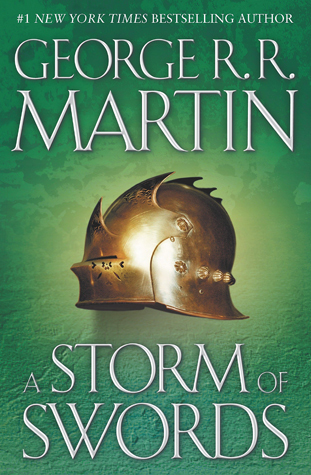
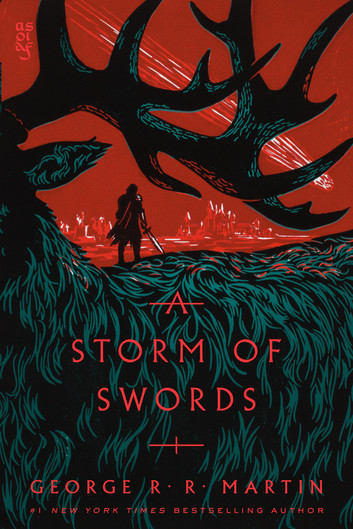
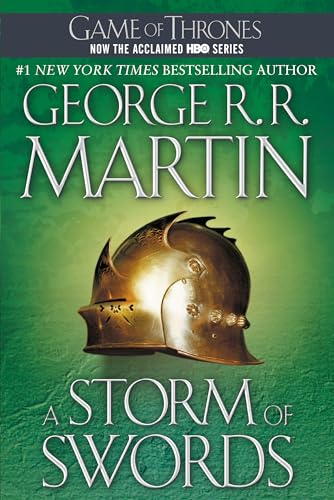
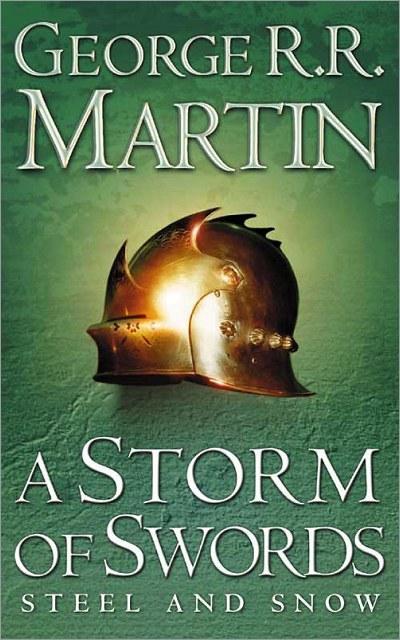
Cover of A Storm of Swords by George R.R. Martin
№ 3 · A Song of Ice and Fire

A Storm of Swords,

by George R.R. Martin

Ask AI
Rating4.5/ 5
Ratings2,096
Pages992
Reading Hours21h
Published2000
LanguageEnglish

§Synopsis

01

The War of the Five Kings reaches a grueling stalemate in the wake of the Battle of the Blackwater. While the Lannisters hold a tenuous grip on the Iron Throne, their victory is far from absolute. To the North, Robb Stark maintains his crown but finds his campaign hamstrung by internal dissent and the loss of his ancestral home. The conflict has moved beyond a simple clash of armies into a predatory landscape of broken alliances and scorched-earth desperation. This third installment of the series shifts its focus toward the psychological and political fallout of a continent at its breaking point, where the survival of a house often depends on a single, whispered betrayal rather than a thousand swords.

Beyond the immediate struggle for the crown, two existential threats gather strength on the periphery of the known world. In the frozen wastes beyond the Wall, the Night’s Watch is outmatched by a massive migration of wildlings fleeing a supernatural terror. Simultaneously, across the Narrow Sea, the last scion of the deposed Targaryen dynasty begins a transformative journey through the slave-trading cities of the East. As these disparate threads begin to tighten, the characters find that the traditional rules of honor and warfare no longer apply. The central conflict is no longer just about who sits on the throne, but whether the social order of the Seven Kingdoms can survive the internal and external pressures threatening to tear it apart.

The Geopolitics of a Fractured Realm

The world-building in this volume expands to highlight the vast cultural and logistical differences between the various theaters of war. In Westeros, the setting is defined by the "riverlands," a region devastated by constant raiding, illustrating the "smallfolk" perspective of a war they did not choose. To the far North, the atmosphere is one of claustrophobic dread, where the ancient, crumbling fortifications of the Wall represent the only barrier between civilization and an encroaching, primordial winter. Conversely, the Eastern continent of Essos introduces the high-stakes, affluent, and morally bankrupt cities of Slaver's Bay. These locations are governed by distinct laws and ancient traditions that contrast sharply with the feudal system of the Seven Kingdoms, emphasizing that the struggle for power is a global phenomenon.

Main Characters

  • Tyrion Lannister: Following his pivotal role in defending the capital, he finds himself sidelined by his own family and forced to navigate the lethal politics of his father’s court.
  • Jon Snow: Acting as a double agent within the wildling army, he must balance his sworn loyalty to the Night’s Watch against his growing understanding of the people he was born to fight.
  • Daenerys Targaryen: Seeking to transform from an exiled princess into a conqueror, she enters the city of Astapor to acquire an army of elite eunuch slave-soldiers known as the Unsullied.
  • Jaime Lannister: Stripped of his armor and status, the captive "Kingslayer" is forced into an uneasy trek across a war-torn landscape, beginning a journey that challenges his self-perception.
  • Arya Stark: Disguised and drifting through the chaos of the riverlands, she seeks a way back to her family while witnessing the unfiltered brutality of the war’s impact on the common people.

The Price of Honor and the Weight of Command

Character development in the first half of the novel focuses heavily on the theme of identity under duress. Characters who defined themselves by their martial prowess or their noble names find those attributes stripped away, forcing them to forge new, more pragmatic versions of themselves. For the leaders, such as Robb Stark and Daenerys Targaryen, the arc is defined by the heavy burden of command; they must decide if they are willing to compromise their personal moral codes for the sake of political stability or the liberation of others. Relationship dynamics also shift significantly, as enemies are forced into survival-based alliances, creating a "buddy-cop" subversion where mutual loathing eventually evolves into a complex, if begrudging, respect.

Deconstructing Epic Fantasy Tropes

The narrative utilizes and frequently subverts the standard tropes of the high fantasy genre. While the "Chosen One" and "Return of the King" archetypes are present, they are subjected to the harsh realities of medieval logistics and political cynicism. The trope of the "Noble Rebel" is complicated by the fact that the rebellion’s success depends on the cooperation of fickle, self-serving lords. Furthermore, the "Quest" narrative is grounded in gritty realism; characters traveling across the map do not encounter magical shortcuts, but rather the famine, disease, and banditry that follow in the wake of large-scale military movements. The book prioritizes the consequences of decisions over the spectacle of magic, suggesting that human greed and resentment are more dangerous than any dragon or shadow-assassin.

§Our take

The scale is A Storm of Swords' great achievement and its least forgiving demand. Martin follows a dozen narrators across a realm coming apart, from Tyrion's poisonous family politics to Jon Snow's work among the wildlings and Daenerys's turn toward power in Slaver's Bay. The writing registers heat, cold, sea air and the excess of feasts with physical force, though the rotating cast can also feel like a relay race with too many runners.

Jaime's chapters are the clearest proof of Martin's skill. They make an arrogant, cruel man understandable without laundering him, which is why readers still argue over whether he truly changes. Expect long stretches, sharp shocks and a book whose virtues and irritations share a cause: Martin wants every strand to carry weight.

§Themes

War at human scale
The riverlands reveal what a war for a throne does to smallfolk who never chose it.
Honor has a price
Oaths, alliances and sworn loyalty keep colliding with self-interest, and broken promises cost more than lost battles.
Identity under duress
Tyrion, Jaime and Daenerys must remake themselves as family, rank and exile strip away their old roles.
Sympathy is not absolution
Jaime becomes easier to understand without becoming innocent, which is why readers dispute whether his arc is redemption.
A realm coming apart
War, scarce food and broken alliances turn the old political order into a struggle over survival.

§How it was received

Publishers Weekly praised the sheer scale, sensory writing and layered characterization of Daenerys, Arya and Jaime, while doubting that the series escapes high fantasy as completely as some admirers claim. Grimdark Magazine calls it a high point of the series and notes that Daenerys gets more room than in the previous book. It was the first series volume to reach the Hugo ballot, and Harry Potter and the Goblet of Fire won in 2001.

§Read it if

  • You enjoy epic fantasy with a large, rotating cast and can keep many political threads straight
  • You want major characters to command sympathy without becoming innocent
  • You don't mind a roughly 1,000-page book with slower character strands before the pace gathers

§Skip it if

  • You need a single linear plot. The rotating narrators and uneven strands can feel crowded.
  • You want gentle fantasy. Expect graphic violence, frequent character deaths and sexual content, including sexual violence.

§Before you start

Reading experience
The pace turns relentless in the middle after slower Arya, Bran and Davos passages, though twelve narrators and roughly 1,000 pages make this a demanding book to track.
Reading order
Book 3 of A Song of Ice and Fire, following A Game of Thrones and A Clash of Kings. A Feast for Crows and A Dance with Dragons come next; they overlap in time and follow different characters and regions.
Content notes
Graphic violence and frequent character deaths; Sexual content, including sexual violence; Slavery and the buying and selling of people.

§Common questions

Do I need to read the first two books before A Storm of Swords?
Yes. It's Book 3 of A Song of Ice and Fire and assumes familiarity with the large cast from A Game of Thrones and A Clash of Kings.
Why is A Storm of Swords sometimes published as two books?
The story is the same. UK, Irish, Australian and some other paperbacks were split into Steel and Snow and Blood and Gold; the US hardcover was issued as one volume.
Did A Storm of Swords win the Hugo Award?
No. It was a 2001 finalist and lost to Harry Potter and the Goblet of Fire. It did win the 2001 Locus Award for fantasy novel.

§If you liked this

  • The Eye of the World by Robert Jordan — Publishers Weekly compared Martin's hold on the reader to Jordan's; like that series, which starts here, this is a long, multi-strand epic with a large cast.
  • The Lord of the Rings by J. R. R. Tolkien — Publishers Weekly placed Martin's character-driven sympathy alongside Tolkien's, though this book's moral world is much harsher and less tidy.
  • The First Law trilogy (begins with The Blade Itself) by Joe Abercrombie — Abercrombie has said Martin changed his sense of what epic fantasy could do; both suit readers who prefer bleak consequences and morally ambiguous company.
Sources
  • Wikipedia
  • Publishers Weekly
  • The Hugo Awards (official)
  • Science Fiction Awards Database (Locus-affiliated)
  • Wikipedia
  • Wikipedia
  • Grimdark Magazine
  • Goodreads
  • Goodreads discussion
  • Wikipedia
  • Wikipedia
  • The Encyclopedia of Science Fiction
  • Author website
  • Penguin Random House

Track this book

Add to your library to track progress and write reviews
§Genres
adventure1fantasy1fiction1juvenile fiction1juvenile nonfiction1magic1science fiction1
§Moods
adventurous1challenging1emotional1funny1mysterious1relaxing1
§Tags
#diverse characters1#epic fantasy1#fantezie1#high fantasy1#loveable characters1#not diverse characters1#strong character development1

§About the Author

George R.R. Martin

16 books in catalog

The stakes in epic fantasy reach their highest tension when key characters face genuine mortality rather than narrative immunity. Long-form epic fantasy redefined political realism and subverted classic genre tropes through A Song of Ice and Fire, a monumental fantasy saga launched with the 1996 novel A Game of Thrones. Written by George R.R. Martin, this body of work shifted modern fantasy from idealized moral duopolies into intricate, morally ambiguous power struggles grounded in medieval historicism and irreversible character consequences. With over 90 million copies of his books in print worldwide, his writing spans science fiction, horror, and epic fantasy, earning multiple Hugo, Nebula, and Emmy awards while inspiring major television adaptations.

Beyond his core fantasy novels, Martin's extensive bibliography encompasses rich science fiction like Dying of the Light and imaginary history chronicles such as Fire & Blood. Readers entering this expansive universe can explore standalone masterpieces or comprehensive multi-volume editions like A Game of Thrones 5-Book Bundle: A Song of Ice and Fire Series: A Game of Thrones, A Clash of Kings, A Storm of Swords, A Feast for Crows, and A Dance with Dragons, which trace the tragic downfall and intense rivalries of noble dynasties across Westeros and Essos.

Career & Background

Born on September 20, 1948, in Bayonne, New Jersey, George R.R. Martin was raised in a working-class family near the docks of the Kill van Kull. The son of longshoreman Raymond Collins Martin and Margaret Brady Martin, he grew up alongside two sisters, Darleen and Janet. He attended Mary Jane Donohoe School and Marist High School, developing an early passion for storytelling by writing monster stories and selling them to neighborhood children. During his teenage years, he became an avid reader and collector of comic books, contributing original fan fiction to various amateur comic fanzines. He pursued higher education in journalism at Northwestern University's Medill School of Journalism, graduating summa cum laude with a Bachelor's degree before completing his Master's degree in 1971. His first professional fiction sale occurred when his short story 'The Hero' was published in the February 1971 issue of Galaxy magazine.

Throughout the 1970s and early 1980s, Martin maintained a multifaceted career while establishing his literary reputation. He served as a VISTA volunteer from 1972 to 1974, directed chess tournaments for the Continental Chess Association, and taught journalism at Clarke College in Dubuque, Iowa, from 1976 to 1978. During this period, he produced celebrated short fiction and released his debut novel, Dying of the Light (1977), a science fiction tale set on the rogue planet Worlorn. He followed this success with Fevre Dream (1982), an acclaimed dark fantasy novel combining antebellum Mississippi riverboat navigation with a unique vampire mythos. However, after his 1983 horror novel The Armageddon Rag suffered severe commercial disappointment, Martin shifted his creative efforts toward Hollywood and television production.

In television, Martin served as a staff writer, story editor, and producer, contributing scripts to the mid-1980s revival of The Twilight Zone (1985) and the fantasy drama series Beauty and the Beast (1987). Although television production sharpened his craft regarding dramatic pacing, character interaction, and dialogue structure, he found the practical constraints of broadcast budgets and studio notes deeply limiting for the vast scale of world-building he wished to execute. Desiring complete creative control, Martin returned to full-time prose fiction in the early 1990s. This return culminated in 1996 with the publication of A Game of Thrones, the first volume of A Song of Ice and Fire, which transformed epic fantasy reading expectations globally.

Writing Style & Themes

Central to Martin's creative philosophy is William Faulkner's assertion that the human heart in conflict with itself is the primary subject worth writing about. Martin explicitly rejects absolute divisions of pure good and pure evil, constructing complex characters driven by competing motives, personal flaws, duty, honor, ambition, and survival instincts. He famously describes his storytelling process through the metaphor of a 'gardener'—planting narrative seeds and allowing characters and subplots to evolve organically within a structured world, rather than forcing them into a rigid, predetermined outline. This organic technique generates a dense, interconnected web of cause and effect where small individual choices precipitate far-reaching structural and political consequences.

Thematically, his works explore the corruptive nature of political power, the fragility of feudal systems, social rigidity, and the visceral realities of war. Rather than relying on romanticized medieval tropes, Martin incorporates realistic medieval economics, logistical constraints, social customs, heraldry, and dynastic politics. His signature narrative structure utilizes alternating third-person limited points of view across individual POV chapters. By forcing readers to view events through the eyes of opposing factional leaders and flawed protagonists, he creates empathetic understanding across adversarial lines. Furthermore, his willingness to kill prominent characters reinforces a pervasive atmosphere of genuine jeopardy, emphasizing that high political games carry lethal risks.

Major Works

  • A Song of Ice and Fire Series — Beginning in 1996 with A Game of Thrones, this multi-volume epic fantasy series reimagined the genre through realistic political intrigue, intricate character perspectives, and uncompromising narrative realism. The series inspired HBO's award-winning drama Game of Thrones and its prequel House of the Dragon. Readers can experience the saga through individual books such as A Clash of Kings, A Storm of Swords, A Feast for Crows, and A Dance with Dragons, or through comprehensive collections like A Game of Thrones 5-Book Bundle: A Song of Ice and Fire Series: A Game of Thrones, A Clash of Kings, A Storm of Swords, A Feast for Crows, and A Dance with Dragons.
  • Fire & Blood — Published in 2018, this monumental imaginary history chronicles the reign of House Targaryen in Westeros three centuries before the events of A Game of Thrones. Written from the perspective of an in-universe Archmaester, the chronicle provides the foundational lore behind the television adaptation House of the Dragon.
  • Dying of the Light — Released in 1977, Martin's debut novel is a melancholic science fiction story set on the rogue planet Worlorn. The novel established his early reputation in speculative fiction by blending tragic romance, dying-earth motifs, and complex cultural clashes.
  • Fevre Dream — Published in 1982, this historical dark fantasy novel combines 19th-century Mississippi River steamboat navigation with a unique, biological vampire mythology. It remains one of Martin's most celebrated standalone speculative works.
  • The Armageddon Rag — Released in 1983, this mystery-horror novel explores 1960s rock culture, idealism, and murder surrounding a legendary rock band. Though a commercial failure upon release that prompted Martin's move to television writing, it gained cult status among fans.
  • Wild Cards Series — Since 1987, Martin has served as the editor and a key contributor to this long-running mosaic novel shared-universe series. Set in an alternate post-WWII Earth where an alien virus grants superpowers or deformities, the series combines superhero tropes with gritty realism.
  • Television Writing: The Twilight Zone and Beauty and the Beast — During his television career in the late 1980s, Martin wrote and edited scripts for the revival of The Twilight Zone and the fantasy drama Beauty and the Beast, refining his dialogue and pacing before returning to epic prose.
  • Short Fiction and Anthologies — Martin began his professional career with 'The Hero' in Galaxy in 1971 and went on to win major Hugo and Nebula awards for landmark short works such as 'A Song for Lya' and 'Sandkings'.

§Featured Series

A Song of Ice and Fire

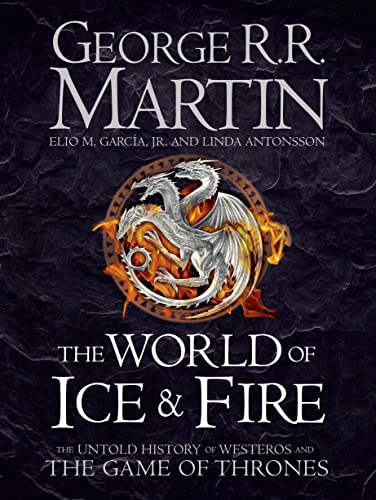
Cover of The World of Ice and Fire by George R.R. Martin, Linda Antonsson, Elio M. García Jr.

The World of Ice and Fire

George R.R. Martin, 2014
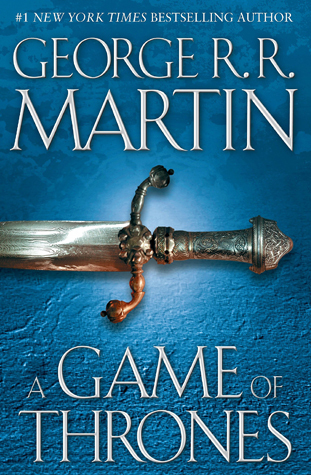
Cover of A Game of Thrones by George R.R. Martin

A Game of Thrones

George R.R. Martin, 1996
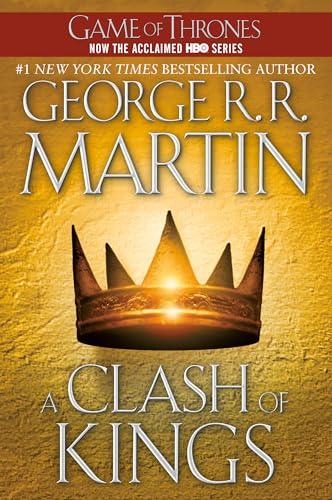
Cover of A Clash of Kings by George R.R. Martin

A Clash of Kings

George R.R. Martin, 1998
Cover of A Storm of Swords by George R.R. Martin

A Storm of Swords

George R.R. Martin, 2000
Cover of A Feast for Crows by George R.R. Martin

A Feast for Crows

George R.R. Martin, 2005
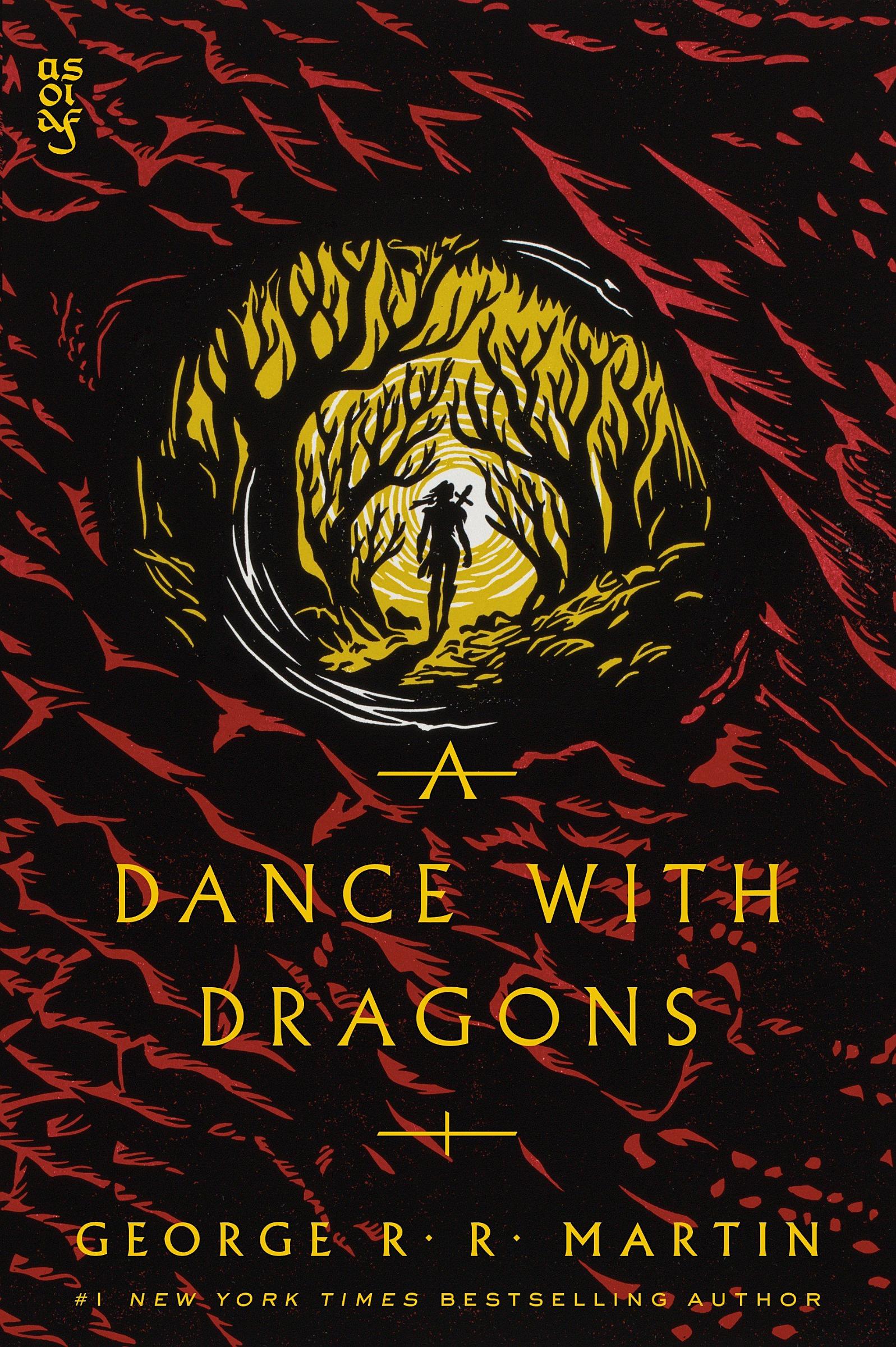
Cover of A Dance with Dragons by George R.R. Martin

A Dance with Dragons

George R.R. Martin, 2011
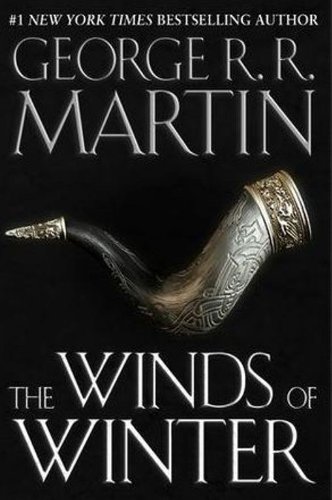
Cover of The Winds of Winter by George R.R. Martin

The Winds of Winter

George R.R. Martin, 2007

§Also part of

Enhanced Edition): Parts 1 & 2 (A Song of Ice and Fire,

§Editions

Showing 3 of 86 editions
Cover of A Storm of Swords

A Storm of Swords

engHardcoverReprint Edition
Bantam20009780553106633
Amazon
Cover of A Storm of Swords

A Storm of Swords

engEbook
Bantam20039780553897876
Cover of A Storm of Swords

A Storm of Swords

engPaperbackTrade paperback Reissue
Bantam20009780553381702
§Genres
adventure1fantasy1fiction1juvenile fiction1juvenile nonfiction1magic1science fiction1
§Moods
adventurous1challenging1emotional1funny1mysterious1relaxing1
§Tags
#diverse characters1#epic fantasy1#fantezie1#high fantasy1#loveable characters1#not diverse characters1#strong character development1

Metadata

ISBN-139780553106633
ISBN-100553106635
ASIN0553106635

Editions and availability

Find A Storm of Swords George R.R. Martin in PDF, EPUB, ebook, audiobook, print, or library editions.

View on Amazon
Bookshop.orgGoogle Play BooksBarnes & NobleOpen Library

Featured In Lists

Book cover from this collectionBook cover from this collectionBook cover from this collectionBook cover from this collection
Book cover from this collection

The 100 Best Fantasy Books of All Time by Time Magazine

93 books
Book cover from this collectionBook cover from this collectionBook cover from this collectionBook cover from this collection
Book cover from this collection

Hugo Award Best Novel Nominees and Winners ( 1953 - present )

348 books