SSansFiction
The libraryCollectionsJournalStatsFor authors
Sign inJoin now
Sansfiction,

A digital library for books. Made by readers, for readers.

v 2.0 · 2026
The library
  • Discover
  • Collections
  • Book tracker
  • Journal
  • Stats
For authors
  • SF Links
  • Analytics
  • How it works
  • FAQ
Elsewhere
  • X / @sansfiction
  • Privacy
  • Terms
  • Contact
© 2026 SansFiction · Digital · GlobalA quiet room for your reading life.
The libraryCollectionsJournalStatsFor authors
Sign inJoin now →
Navigation
Library
Bookshelf
Journal
Discover
Collections
Tierlists
Stats
Profile
Author Page
Link Builder
Account
Sign in
S
G
BooksadventureA Game of Thrones
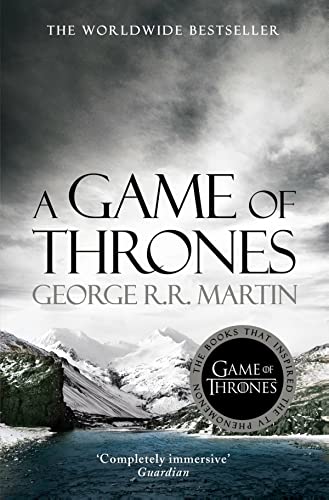
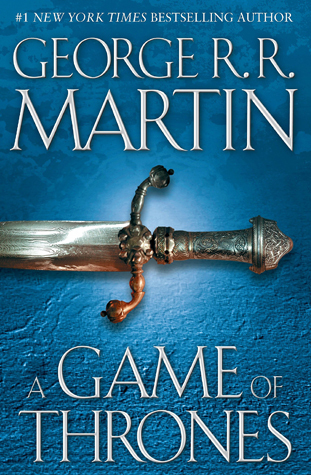
Cover of A Game of Thrones by George R.R. Martin
№ 1 · A Song of Ice and Fire

A Game of Thrones,

by George R.R. Martin

Ask AI
Rating4.4/ 5
Ratings3,846
Pages694
Reading Hours14h
Published1996
LanguageEnglish

§Synopsis

01

In the Seven Kingdoms of Westeros, a decade-long summer is drawing to a close, and the transition toward an uncertain winter brings with it a chilling shift in the political landscape. Lord Eddard Stark, the Warden of the North, finds his quiet life of duty interrupted when his old friend, King Robert Baratheon, travels to the ancestral seat of Winterfell with a request that carries the weight of a command. Eddard is asked to serve as the Hand of the King—the most powerful administrative position in the realm—following the suspicious death of the previous incumbent. This summons forces Eddard to leave his family and his stronghold to navigate the lethal courtly intrigues of the capital, King's Landing, where honor is often treated as a fatal flaw.

As the narrative unfolds, the stability of the realm is threatened from three distinct directions. In the South, the "game of thrones" begins in earnest as noble houses like the Lannisters maneuver for influence over a debt-ridden throne. To the North, an ancient, neglected wall of ice stands as the only barrier against a legendary threat that most modern lords have dismissed as myth. Meanwhile, across the sea, the last remnants of the deposed Targaryen dynasty seek to forge new alliances with nomadic warlords, intending to reclaim their ancestral right through fire and blood. The story is a grounded exploration of how personal loyalty, family bonds, and political ambition collide when the structures of power begin to fracture.

The Geography of Power and the Looming Winter

The world of Westeros is defined by its erratic seasons and a deep sense of historical weight. Unlike traditional high fantasy settings where magic is a common tool, this world treats the supernatural as a fading memory, replaced by the hard realities of feudal logistics and dynastic law. The setting is divided between the cold, stoic North and the humid, treacherous South, with the massive Wall in the far north serving as a physical manifestation of the realm's forgotten priorities. The atmosphere is one of "diminished glory," where the characters live in the shadow of ancient ruins and legendary dragons, struggling to maintain order in a world where the rules of engagement are being rewritten by those who value pragmatism over tradition.

Main Characters

  • Eddard "Ned" Stark: A man of rigid integrity and Warden of the North who is forced to act as the King's Hand in a den of political vipers.
  • Catelyn Stark: The resilient matriarch of House Stark, whose devotion to her children’s safety drives her to make high-stakes political gambles.
  • Jon Snow: Ned’s illegitimate son, who seeks identity and a sense of belonging by joining the Night’s Watch, an order guarding the northern border.
  • Daenerys Targaryen: An exiled princess living in the Free Cities, used as a political pawn by her brother to secure a military alliance with the Dothraki.
  • Tyrion Lannister: A highly intelligent and cynical nobleman who relies on his wit and family wealth to survive a society that scorns his physical stature.

The Evolution of Duty and Identity

The initial character arcs focus on the friction between private desires and public responsibilities. For the Stark children, the story represents a sudden and often violent loss of innocence; Bran’s world is shattered by a physical tragedy, while Sansa and Arya find their romanticized views of knighthood and courtly life challenged by the grim realities of the capital. Jon Snow’s journey provides a look at the "portal-quest" trope, though it is subverted by the realization that the noble brotherhood he sought is actually comprised of social outcasts and criminals. Each character must decide whether to adhere to their internal moral compass or adapt to the ruthless requirements of their environment.

Subverting the High Fantasy Tradition

While the novel utilizes the outward trappings of medieval fantasy—knights, lords, and ancient prophecies—it actively deconstructs the tropes popularized by the genre's predecessors. Rather than a clear-cut battle between good and evil, the conflict arises from the conflicting interests of "grey" characters who believe they are the heroes of their own stories. The "chosen one" narrative is absent; instead, influence is gained through marriage alliances, control of the treasury, and the strategic use of information. By focusing on the downstream consequences of every decision, the narrative shifts the focus from magical spectacle to the mechanics of governance and the heavy cost of maintaining honor in a corrupt system.

§Our take

Martin keeps the magic at a distance here. Dynastic politics, family feuds and war do the work. Paul Levinson's contemporary review liked the cast and the intrigue but found the dragons and the dead underdeveloped; later critics read that restraint as deliberate, the thing that gives the fantasy its historical, morally mixed feel. The eight rotating viewpoints leave every character blind to part of the picture, so the reader ends up assembling the story from scraps.

One correction while we're here. The novel won the 1997 Locus Award for Best Fantasy Novel and was nominated for the 1997 World Fantasy Award. The Hugo often credited to it belongs to "Blood of the Dragon," a Daenerys novella; the novel itself wasn't a 1997 Hugo finalist.

§Themes

Magic at arm's length
Sparse supernatural touches leave politics, scheming and war in the foreground.
Honor vs. what power demands
Loyalty, family duty and chivalric ideals collide with the methods winning requires.
Never the whole picture
Eight limited viewpoints each reveal a fragment and hide what that character can't see.
History in a fantasy coat
The Wars of the Roses, Hadrian's Wall and Maurice Druon's dynastic fiction all feed Westeros.

§How it was received

Kirkus praised the characters and the intricate plot but warned that it offers little resolution. Publishers Weekly warmed to the cast and the clash between chivalric ideals and deceptive power struggles. Levinson liked the politics and thought the fantasy thin, and a mixed Washington Post notice credited the scope but disliked the characters and imagery.

§Read it if

  • You like epic fantasy driven by court politics, family conflict and war
  • You enjoy piecing together a big cast's story from several limited viewpoints
  • You want history-minded fantasy with little conventional magic

§Skip it if

  • You need a self-contained book with a conclusive ending
  • You want to avoid sexual violence, including a coerced marriage involving a child

§Before you start

Reading experience
moderate pace. challenging read. Politics, travel and descriptive detail can feel deliberate, and the rotating cast and the pile of house names reward close attention.
Reading order
Start here, with the first volume of A Song of Ice and Fire, and read in publication order. The series is still unfinished.
Content notes
Sexual violence, including a forced or coerced marriage involving a 13-year-old character; Graphic violence and warfare, including deaths of major and young characters; Frequent sexual content that some readers describe as awkward or uncomfortable.

§Common questions

Did A Game of Thrones win a Hugo?
No. It wasn't among the 1997 Hugo Best Novel finalists. The related Daenerys novella "Blood of the Dragon" won Best Novella.
What awards did the novel win?
The 1997 Locus Award for Best Fantasy Novel, plus a nomination for the 1997 World Fantasy Award for Best Novel.
Does the TV show follow the book?
HBO's season one follows the novel closely. After that the show drifts from the books.

§If you liked this

  • The Accursed Kings by Maurice Druon — Martin calls this French dynastic series the original game of thrones. It shares the betrayals and succession fights.
  • The Lord of the Rings by J.R.R. Tolkien — A useful counterpoint: epic fantasy on a similar scale with a far heavier supernatural presence.
  • Ivanhoe by Walter Scott — A named influence. Its medieval romance and dynastic conflict are borrowed and complicated here.
Sources
  • en.wikipedia.org
  • en.wikipedia.org
  • thehugoawards.org
  • en.wikipedia.org
  • en.wikipedia.org
  • paullevinson.blogspot.com
  • goodreads.com
  • kirkusreviews.com
  • publishersweekly.com
  • bookmarks.reviews
  • en.wikipedia.org
  • en.wikipedia.org
  • winteriscoming.net

Track this book

Add to your library to track progress and write reviews
§Genres
adventure1american fiction1family1fantasy1fantasy - epic1fiction1magic1
§Content Warnings
§Moods
inspiring2adventurous1challenging1dark1emotional1funny1mysterious1
§Tags
#dragons2#a mix driven1#character driven1

§About the Author

George R.R. Martin

16 books in catalog

The stakes in epic fantasy reach their highest tension when key characters face genuine mortality rather than narrative immunity. Long-form epic fantasy redefined political realism and subverted classic genre tropes through A Song of Ice and Fire, a monumental fantasy saga launched with the 1996 novel A Game of Thrones. Written by George R.R. Martin, this body of work shifted modern fantasy from idealized moral duopolies into intricate, morally ambiguous power struggles grounded in medieval historicism and irreversible character consequences. With over 90 million copies of his books in print worldwide, his writing spans science fiction, horror, and epic fantasy, earning multiple Hugo, Nebula, and Emmy awards while inspiring major television adaptations.

Beyond his core fantasy novels, Martin's extensive bibliography encompasses rich science fiction like Dying of the Light and imaginary history chronicles such as Fire & Blood. Readers entering this expansive universe can explore standalone masterpieces or comprehensive multi-volume editions like A Game of Thrones 5-Book Bundle: A Song of Ice and Fire Series: A Game of Thrones, A Clash of Kings, A Storm of Swords, A Feast for Crows, and A Dance with Dragons, which trace the tragic downfall and intense rivalries of noble dynasties across Westeros and Essos.

Career & Background

Born on September 20, 1948, in Bayonne, New Jersey, George R.R. Martin was raised in a working-class family near the docks of the Kill van Kull. The son of longshoreman Raymond Collins Martin and Margaret Brady Martin, he grew up alongside two sisters, Darleen and Janet. He attended Mary Jane Donohoe School and Marist High School, developing an early passion for storytelling by writing monster stories and selling them to neighborhood children. During his teenage years, he became an avid reader and collector of comic books, contributing original fan fiction to various amateur comic fanzines. He pursued higher education in journalism at Northwestern University's Medill School of Journalism, graduating summa cum laude with a Bachelor's degree before completing his Master's degree in 1971. His first professional fiction sale occurred when his short story 'The Hero' was published in the February 1971 issue of Galaxy magazine.

Throughout the 1970s and early 1980s, Martin maintained a multifaceted career while establishing his literary reputation. He served as a VISTA volunteer from 1972 to 1974, directed chess tournaments for the Continental Chess Association, and taught journalism at Clarke College in Dubuque, Iowa, from 1976 to 1978. During this period, he produced celebrated short fiction and released his debut novel, Dying of the Light (1977), a science fiction tale set on the rogue planet Worlorn. He followed this success with Fevre Dream (1982), an acclaimed dark fantasy novel combining antebellum Mississippi riverboat navigation with a unique vampire mythos. However, after his 1983 horror novel The Armageddon Rag suffered severe commercial disappointment, Martin shifted his creative efforts toward Hollywood and television production.

In television, Martin served as a staff writer, story editor, and producer, contributing scripts to the mid-1980s revival of The Twilight Zone (1985) and the fantasy drama series Beauty and the Beast (1987). Although television production sharpened his craft regarding dramatic pacing, character interaction, and dialogue structure, he found the practical constraints of broadcast budgets and studio notes deeply limiting for the vast scale of world-building he wished to execute. Desiring complete creative control, Martin returned to full-time prose fiction in the early 1990s. This return culminated in 1996 with the publication of A Game of Thrones, the first volume of A Song of Ice and Fire, which transformed epic fantasy reading expectations globally.

Writing Style & Themes

Central to Martin's creative philosophy is William Faulkner's assertion that the human heart in conflict with itself is the primary subject worth writing about. Martin explicitly rejects absolute divisions of pure good and pure evil, constructing complex characters driven by competing motives, personal flaws, duty, honor, ambition, and survival instincts. He famously describes his storytelling process through the metaphor of a 'gardener'—planting narrative seeds and allowing characters and subplots to evolve organically within a structured world, rather than forcing them into a rigid, predetermined outline. This organic technique generates a dense, interconnected web of cause and effect where small individual choices precipitate far-reaching structural and political consequences.

Thematically, his works explore the corruptive nature of political power, the fragility of feudal systems, social rigidity, and the visceral realities of war. Rather than relying on romanticized medieval tropes, Martin incorporates realistic medieval economics, logistical constraints, social customs, heraldry, and dynastic politics. His signature narrative structure utilizes alternating third-person limited points of view across individual POV chapters. By forcing readers to view events through the eyes of opposing factional leaders and flawed protagonists, he creates empathetic understanding across adversarial lines. Furthermore, his willingness to kill prominent characters reinforces a pervasive atmosphere of genuine jeopardy, emphasizing that high political games carry lethal risks.

Major Works

  • A Song of Ice and Fire Series — Beginning in 1996 with A Game of Thrones, this multi-volume epic fantasy series reimagined the genre through realistic political intrigue, intricate character perspectives, and uncompromising narrative realism. The series inspired HBO's award-winning drama Game of Thrones and its prequel House of the Dragon. Readers can experience the saga through individual books such as A Clash of Kings, A Storm of Swords, A Feast for Crows, and A Dance with Dragons, or through comprehensive collections like A Game of Thrones 5-Book Bundle: A Song of Ice and Fire Series: A Game of Thrones, A Clash of Kings, A Storm of Swords, A Feast for Crows, and A Dance with Dragons.
  • Fire & Blood — Published in 2018, this monumental imaginary history chronicles the reign of House Targaryen in Westeros three centuries before the events of A Game of Thrones. Written from the perspective of an in-universe Archmaester, the chronicle provides the foundational lore behind the television adaptation House of the Dragon.
  • Dying of the Light — Released in 1977, Martin's debut novel is a melancholic science fiction story set on the rogue planet Worlorn. The novel established his early reputation in speculative fiction by blending tragic romance, dying-earth motifs, and complex cultural clashes.
  • Fevre Dream — Published in 1982, this historical dark fantasy novel combines 19th-century Mississippi River steamboat navigation with a unique, biological vampire mythology. It remains one of Martin's most celebrated standalone speculative works.
  • The Armageddon Rag — Released in 1983, this mystery-horror novel explores 1960s rock culture, idealism, and murder surrounding a legendary rock band. Though a commercial failure upon release that prompted Martin's move to television writing, it gained cult status among fans.
  • Wild Cards Series — Since 1987, Martin has served as the editor and a key contributor to this long-running mosaic novel shared-universe series. Set in an alternate post-WWII Earth where an alien virus grants superpowers or deformities, the series combines superhero tropes with gritty realism.
  • Television Writing: The Twilight Zone and Beauty and the Beast — During his television career in the late 1980s, Martin wrote and edited scripts for the revival of The Twilight Zone and the fantasy drama Beauty and the Beast, refining his dialogue and pacing before returning to epic prose.
  • Short Fiction and Anthologies — Martin began his professional career with 'The Hero' in Galaxy in 1971 and went on to win major Hugo and Nebula awards for landmark short works such as 'A Song for Lya' and 'Sandkings'.

§Featured Series

A Song of Ice and Fire

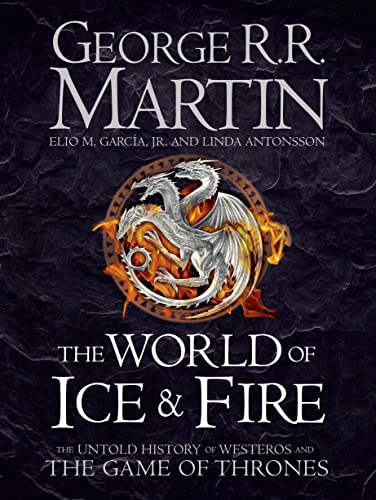
Cover of The World of Ice and Fire by George R.R. Martin, Linda Antonsson, Elio M. García Jr.

The World of Ice and Fire

George R.R. Martin, 2014
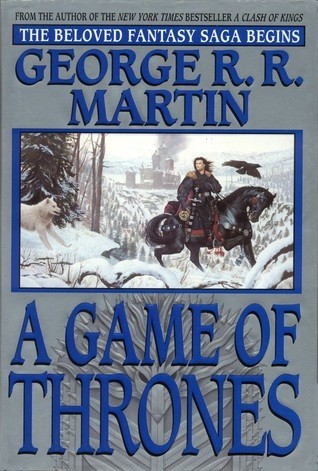
Cover of A Game of Thrones by George R.R. Martin

A Game of Thrones

George R.R. Martin, 1996
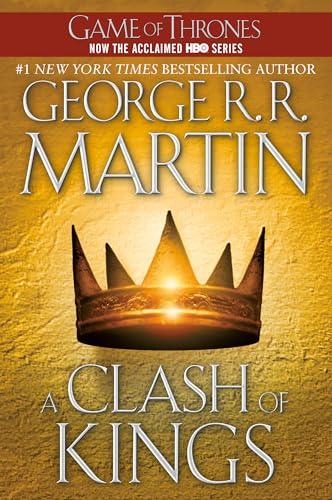
Cover of A Clash of Kings by George R.R. Martin

A Clash of Kings

George R.R. Martin, 1998
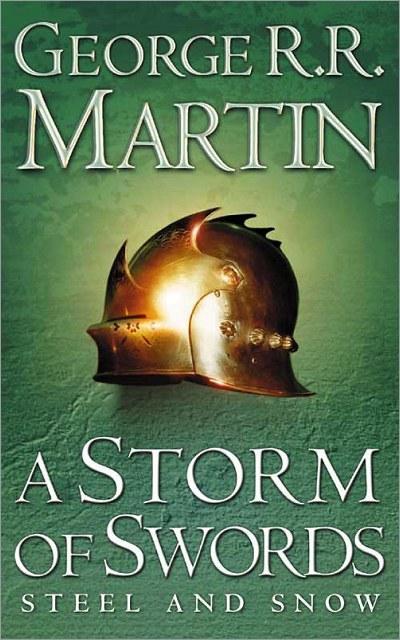
Cover of A Storm of Swords by George R.R. Martin

A Storm of Swords

George R.R. Martin, 2000
Cover of A Feast for Crows by George R.R. Martin

A Feast for Crows

George R.R. Martin, 2005
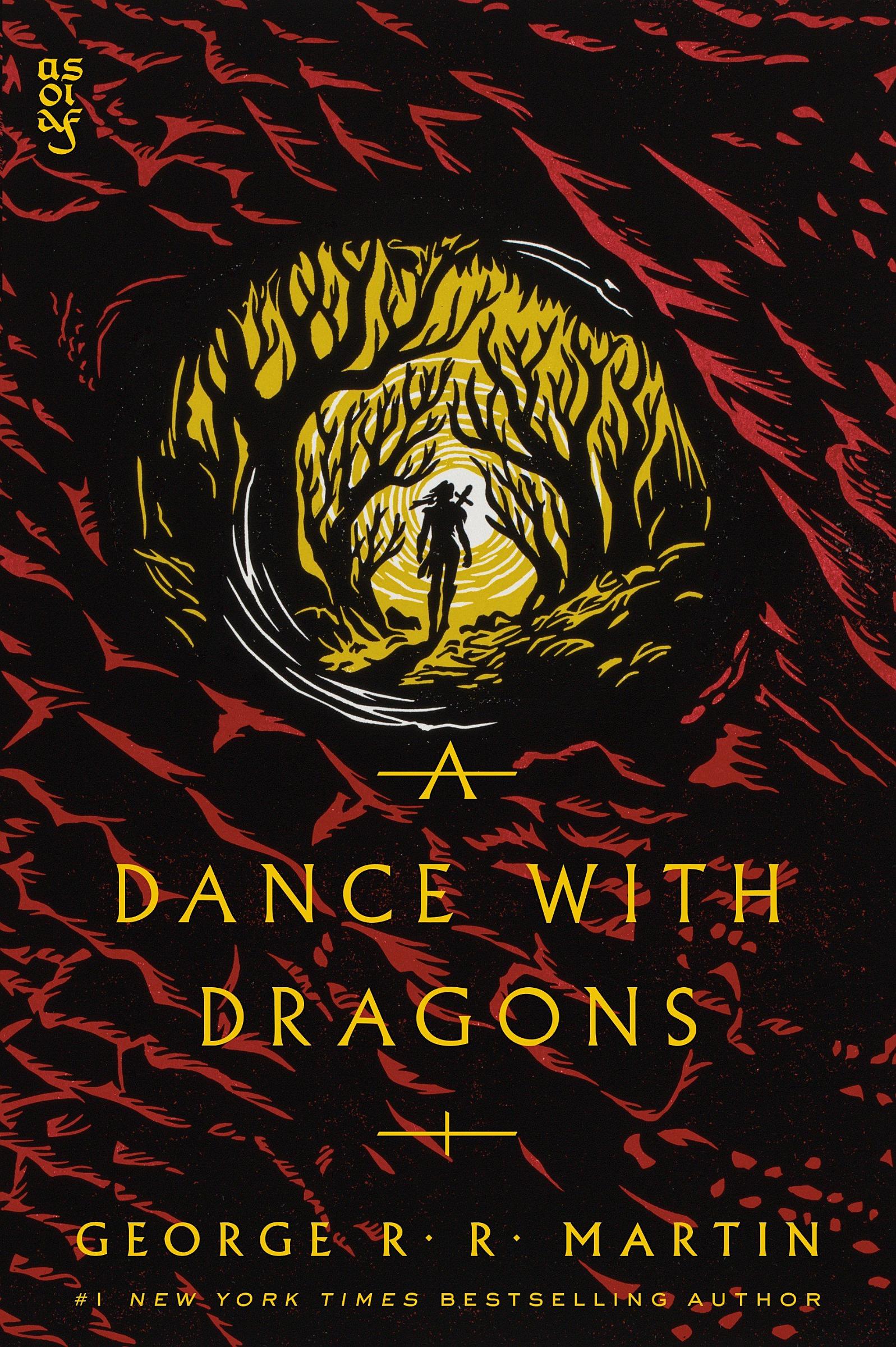
Cover of A Dance with Dragons by George R.R. Martin

A Dance with Dragons

George R.R. Martin, 2011
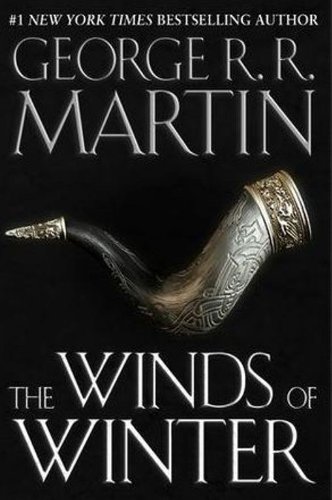
Cover of The Winds of Winter by George R.R. Martin

The Winds of Winter

George R.R. Martin, 2007

§Editions

Showing 3 of 128 editions
Cover of A Game of Thrones

A Game of Thrones

engebookEbook Edition April 2012
HarperCollins UK20109780007378425
Amazon
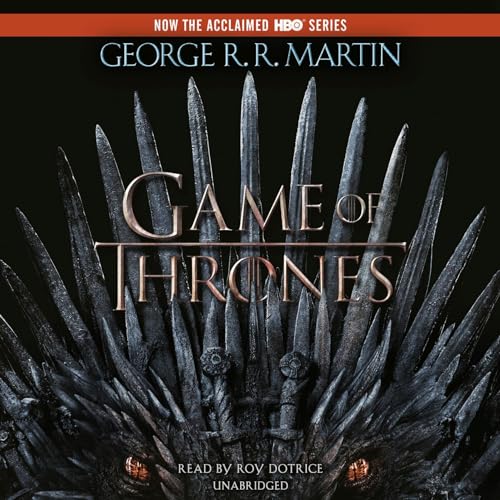
Cover of A Game of Thrones

A Game of Thrones

engDigital Audio
Random House Audio20039780739353370
Amazon
Cover of A Game of Thrones

A Game of Thrones

engebook
Bantam20039780553897845
Amazon
§Community Reviews1
Write a review
4.0Paul Moiseev
Jan 12, 2026
kinda funny but i like Dune · Frank Herbert, Brian Herbert · 1965 better
Read full review →
§Genres
adventure1american fiction1family1fantasy1fantasy - epic1fiction1magic1
§Content Warnings
§Moods
inspiring2adventurous1challenging1dark1emotional1funny1mysterious1
§Tags
#dragons2#a mix driven1#character driven1

Metadata

ISBN-139780007378425
ISBN-100007378424
ASINB004GJXQ20

Editions and availability

Find A Game of Thrones George R.R. Martin in PDF, EPUB, ebook, audiobook, print, or library editions.

View on Amazon
Bookshop.orgGoogle Play BooksBarnes & NobleOpen Library

Featured In Lists

Book cover from this collectionBook cover from this collectionBook cover from this collectionBook cover from this collection
Book cover from this collection

The 31 Best Fantasy Books Everyone Should Read

30 books
Book cover from this collectionBook cover from this collectionBook cover from this collectionBook cover from this collection
Book cover from this collection

NPRs Top 100 Science-Fiction and Fantasy Books of All Time

100 books
Book cover from this collectionBook cover from this collectionBook cover from this collectionBook cover from this collection
Book cover from this collection

Sword And Laser

134 books
Book cover from this collectionBook cover from this collectionBook cover from this collectionBook cover from this collection
Book cover from this collection

Gilmore Girls Reading List 🍂

407 books
Book cover from this collectionBook cover from this collectionBook cover from this collectionBook cover from this collection
Book cover from this collection

Banned in US Schools 2023-2024

100 books
Book cover from this collectionBook cover from this collectionBook cover from this collectionBook cover from this collection
Book cover from this collection

NPR Top 100 Science Fiction Fantasy

68 books