SSansFiction
The libraryCollectionsJournalStatsFor authors
Sign inJoin now
Sansfiction,

A digital library for books. Made by readers, for readers.

v 2.0 · 2026
The library
  • Discover
  • Collections
  • Book tracker
  • Journal
  • Stats
For authors
  • SF Links
  • Analytics
  • How it works
  • FAQ
Elsewhere
  • X / @sansfiction
  • Privacy
  • Terms
  • Contact
© 2026 SansFiction · Digital · GlobalA quiet room for your reading life.
The libraryCollectionsJournalStatsFor authors
Sign inJoin now →
Navigation
Library
Bookshelf
Journal
Discover
Collections
Tierlists
Stats
Profile
Author Page
Link Builder
Account
Sign in
S
G
BooksfantasyThe Lord of the Rings
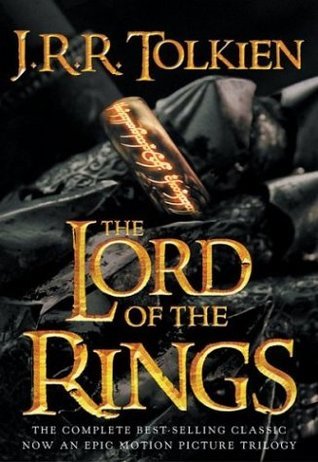
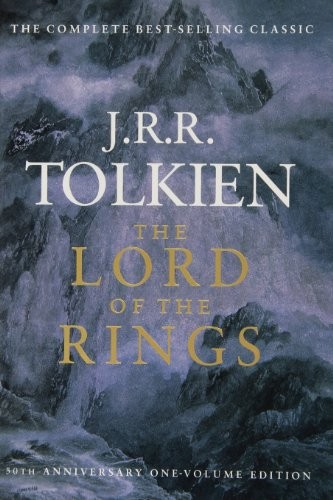
Cover of The Lord of the Rings by J.R.R. Tolkien
№ 1 · The Lord of the Rings

The Lord of the Rings,

by J.R.R. Tolkien

Ask AI
Rating4.6/ 5
Ratings1,406
Pages1178
Reading Hours25h
Published1954
LanguageEnglish

§Synopsis

01

In the quiet, rolling hills of the Shire, a simple gold ring serves as a bridge between a pastoral past and a terrifyingly ancient future. What begins as a modest inheritance for the hobbit Frodo Baggins is soon revealed to be the One Ring, a vessel of absolute power forged by the Dark Lord Sauron to enslave the free peoples of Middle-earth. As the shadow of the East stretches across the land, the realization dawns that this artifact cannot be used, hidden, or ignored; it must be unmade in the very fires where it was forged.

The narrative functions as a meditation on the corruptive nature of influence and the resilience of the common spirit. Unlike traditional epics that focus solely on the deeds of kings and warriors, this story centers on the "small" folk—those who have no desire for power yet find themselves the only ones capable of resisting its allure. The journey from the comfort of the Shire into the vast, treacherous landscapes of Middle-earth marks a transition from innocence to a harsh, necessary maturity, where the stakes are nothing less than the preservation of the world’s moral fabric.

The Geography of a Living Mythos

Middle-earth is not merely a backdrop for adventure but a character in its own right, constructed with the precision of a philologist. The world operates under a "secondary belief" system where every mountain range, ruined watchtower, and forest has a linguistic and historical lineage reaching back thousands of years. The atmosphere is defined by a sense of "the long defeat"—the feeling that the world is fading and that the current struggle is the final stand for a dwindling magic. This depth is achieved through the integration of distinct cultures, each with their own poetry, social structures, and attitudes toward the natural world versus industrial mechanization.

Main Characters

  • Frodo Baggins: A reluctant protagonist and Ring-bearer who must balance his inherent hobbit-sense with the encroaching psychological weight of the One Ring.
  • Samwise Gamgee: Frodo’s loyal gardener whose perspective grounded in simple, earthly virtues serves as the emotional heart of the company.
  • Gandalf the Grey: A wise but enigmatic wizard who provides the historical context and strategic guidance necessary to oppose Sauron’s return.
  • Aragorn (Strider): A weathered ranger of the wild whose mastery of woodcraft and hidden ancestry represent the potential for a forgotten heroism to return.

Development of the Fellowship

The initial arc centers on the formation of the "Fellowship of the Ring," a fragile alliance between disparate races—Hobbits, Humans, Elves, and Dwarves—who have historically viewed one another with suspicion. The character development is rooted in these shifting dynamics; for instance, the growing bond between the Hobbits and the mysterious ranger Strider illustrates a bridge between the mundane world and the high-stakes reality of the war. As the group moves further from the familiar borders of the Shire, the psychological pressure of the Ring begins to test the internal unity of the group, revealing how greed and fear can compromise even the noblest intentions.

Subverting the Heroic Quest

While the story established many of the conventions of modern fantasy, it frequently subverts the tropes it helped define. It utilizes the "Reversed Quest" trope: rather than seeking a powerful artifact to defeat a foe, the heroes must journey into the heart of the enemy's territory to dispose of a weapon they cannot afford to use. This flips the traditional power fantasy on its head, suggesting that the ultimate victory lies in renunciation rather than acquisition. Additionally, while the "Chosen One" trope is present, it is applied to the most unlikely candidates—creatures of no social standing or physical prowess—moving the locus of heroism from martial strength to moral endurance.

§Our take

This is the book every fantasy you've read is arguing with, and it still subverts the tropes it invented. The hero is a homebody with no social standing and no sword skill; the victory, when it comes, is about renunciation rather than conquest. Tolkien called it one work, not a trilogy, and the three-volume split was a publisher's financial hedge, not his design. The critics never settled down about it: Auden called it a masterpiece and diagnosed the hostility as prejudice against quests and invented worlds on principle, while Edmund Wilson dismissed it as juvenile. Readers still split, too. Tom Bombadil is either a cuttable detour or, by Tolkien's own account, a deliberate comment on power renounced, and the long return to the Shire after the climax moves some readers and strikes others as a stumble. Both camps are right, depending on your temperament.

§Themes

The danger of power
A quest to destroy a treasure rather than claim one, with the Ring's pull as the real antagonist.
Small folk, moral endurance
Heroism moves from martial strength to the endurance of people who never wanted power.
A fading world
The atmosphere of the long defeat: magic dwindling, the current struggle the last stand.
Friendship as the heart
Readers name Gandalf, Sam and the bond between Frodo and Sam more than anything else.
Machines versus trees
Each culture carries its own attitude toward the natural world and industrial mechanization.

§How it was received

The 1950s reviews were a fight. Auden called it a masterpiece and C. S. Lewis praised its vivid beauty, while Edmund Wilson dismissed it as juvenile and Edwin Muir faulted its uniformly good heroes and uniformly evil villains. The academy took its sweet time too — Shippey and Flieger finally got serious about Tolkien in the early '80s, and Curry later pointed out the sneering critics were mostly wrong on the facts.

§Read it if

  • You want invented depth that goes all the way down: languages, histories and names that interlock
  • You like a quest story that questions the quest, where winning means giving the power up
  • You want a lifelong re-read. Many readers call it exactly that

§Skip it if

  • Slow openings, lore digressions and embedded poems test your patience. The early chapters are the main hurdle, and the songs are love-it-or-skip-it
  • You need prominent women and psychological interiority. Critics and readers alike find the female cast thin, with Eowyn the frequently cited exception

§Before you start

Reading experience
Long and slow to start, with a detour in book one and a lengthy coda after the climax, and more than sixty poems and songs embedded along the way.
Reading order
One work published in three volumes: The Fellowship of the Ring (1954), The Two Towers (1954) and The Return of the King (1955). It's set after The Hobbit, which Tolkien wrote first, and The Silmarillion appeared only after his death. Read The Hobbit first if you like, but it isn't required.
Content notes
War and battle throughout, with deaths of major characters.

§Common questions

Is Lord of the Rings a trilogy?
No. Tolkien insisted it was a single work; the three-volume split was a publishing decision to reduce the financial risk of printing a huge book with modest expected sales.
Is it an allegory?
Tolkien rejected that reading explicitly in his Second Edition foreword, preferring what he called history, true or feigned. Critics still find political and moral parallels anyway.
Who is Tom Bombadil and why is he in the book?
A powerful being untouched by the war, kept in deliberately. Tolkien said he's a comment on power renounced; Peter Jackson cut him from the films, and readers still argue about whether he's a detour or an enigma.

§If you liked this

  • The Hobbit by J.R.R. Tolkien — The lighter, shorter book this began as a sequel to, and the easiest way in.
  • The Silmarillion by J.R.R. Tolkien — The deep mythology behind it all, published after Tolkien's death and considerably drier going.
  • The Faerie Queene by Edmund Spenser — The comparison Richard Hughes reached for on imaginative scope, which tells you the company it keeps.
Sources
  • Wikipedia
  • Wikipedia (reception article)
  • Biblioklept (summarising W.H. Auden's 1956 New York Times review)
  • University of North Texas (Eugene Hargrove, essay)
  • Goodreads

Track this book

Add to your library to track progress and write reviews

§Genres
fantasy2adventure1baggins1classics1epic1fiction1general1
§Content Warnings
§Moods
adventurous1challenging1emotional1funny1gripping1hopeful1inspiring1
§Tags
#adapted to film1#animal cruelty1#blood1#diverse characters1#grief1

§About the Author

J.R.R. Tolkien
J.R.R. Tolkien

7 books in catalog

Deep in the mud of the Somme in 1916, a young officer of the Lancashire Fusiliers began scribbling a mythology that would eventually redefine the boundaries of fantasy literature. While his contemporaries focused on the stark realism of the First World War, this Oxford-educated philologist sought to fill a perceived void in English culture by constructing a vast, interconnected legendarium rooted in the ancient structures of language itself. What began as an academic's private obsession with Old Norse and Anglo-Saxon dialects evolved into an influential fantasy phenomenon, with The Lord of the Rings selling over 150 million copies and being translated into more than 40 languages.

Beyond its commercial scale, the epic mythos created by J.R.R. Tolkien earned honors as the 'Greatest Book of the 20th Century' in polls conducted by Amazon and Waterstones, inspired a multi-billion dollar film franchise, and established the foundational blueprint for high fantasy world-building across modern publishing.

Career & Background

Born in Bloemfontein, South Africa, on January 3, 1892, to English parents, John Ronald Reuel Tolkien moved to England at age three and was brought up in and around Birmingham before studying at Exeter College, Oxford. Before becoming a household name, J.R.R. Tolkien was a formidable scholar of early Germanic languages and English literature. He served as an officer during the First World War in 1916, experiencing heavy combat at the Battle of the Somme. Following his military service, he devoted his professional life to academia, serving as the Rawlinson and Bosworth Professor of Anglo-Saxon at the University of Oxford from 1925 to 1945, and subsequently as the Merton Professor of English Language and Literature from 1945 until his retirement in 1959. His academic commentary on Beowulf remains a foundational work in medieval literary criticism.

His transition to fiction was accidental, famously beginning with a spontaneous sentence scrawled on a blank exam paper: 'In a hole in the ground there lived a hobbit.' This spark led to the publication of The Hobbit (also published as The Hobbit, or There and Back Again) in 1937. The success of the children's book prompted his publishers to request a sequel, which took twelve years to complete and expanded into the far more complex epic The Lord of the Rings. Throughout his time in Oxford, he was a key figure in 'The Inklings,' an informal literary discussion group that included his close friend C.S. Lewis. Tolkien lived until 1973, leaving behind an extensive archive of mythic writings.

Writing Style & Themes

Tolkien's prose is characterized by its commitment to 'sub-creation'—the secondary invention of a fictional world that possesses the inner consistency of reality. Unlike many fantasy writers who employ magic merely as a plot device, Tolkien's world-building was fundamentally a philological exercise. He famously maintained that his stories were written primarily to provide a home for his invented languages, including Quenya and Sindarin, rather than constructing languages to serve a pre-existing narrative.

Thematically, his work explores the tension between the organic natural world and the destructive forces of industrialization, reflecting his personal opposition to the rapid mechanization of the English countryside. Recurring motifs include the 'ennoblement of the humble,' where the smallest and least assertive individuals alter the trajectory of history, as well as the corruptive influence of absolute power. His writing is also deeply elegiac, frequently emphasizing the 'long defeat'—the tragic perspective that even in great victories, ancient beauty and wisdom are inevitably lost over time.

Major Works

  • The Hobbit, or There and Back Again — First published in 1937, The Hobbit introduces readers to Bilbo Baggins and the subterranean fantasy world of Middle-earth, establishing the narrative groundwork for Tolkien's larger mythological universe.
  • The Lord of the Rings — Conceived as a single continuous work and published across three volumes between 1954 and 1955, The Lord of the Rings serves as the centerpiece of Tolkien's legendarium, depicting the high-stakes quest to destroy the One Ring.
  • The Fellowship of the Ring — The first volume of The Lord of the Rings, detailing the formation of the Fellowship in Rivendell and Frodo Baggins's initial journey into danger.
  • The Two Towers — The second volume of The Lord of the Rings, following the broken Fellowship across the kingdom of Rohan and charting Frodo and Sam's arduous path toward Mordor.
  • The Return of the King — The final volume of The Lord of the Rings, detailing the grand battle for Minas Tirith, the destruction of the Ring, and the end of the Third Age.
  • The Silmarillion — Published posthumously in 1977 after decades of compilation by his son Christopher Tolkien, The Silmarillion provides the mythic and cosmological history of Middle-earth during the First and Second Ages.
  • Unfinished Tales of Númenor and Middle-Earth — A posthumous collection of narrative essays and incomplete stories edited by Christopher Tolkien, expanding on the lore of Númenor, the Wizards, and the history of Middle-earth.
  • History of Middle-earth — A 12-volume posthumous series detailing the complex textual evolution of Tolkien's mythic universe through draft manuscripts, poems, and notes compiled over fifty years.

§Featured Series

The Lord of the Rings

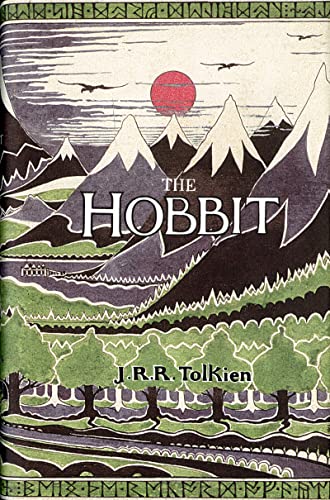
Cover of The Hobbit, or There and Back Again by J.R.R. Tolkien

The Hobbit, or There and Back Again

J.R.R. Tolkien, 1937
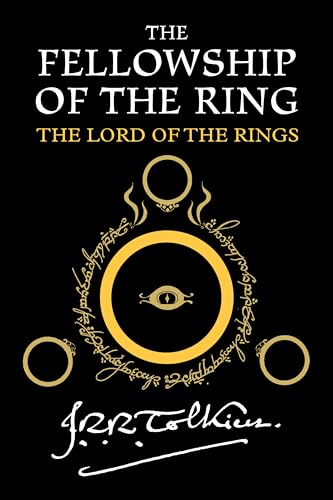
Cover of The Fellowship of the Ring by J.R.R. Tolkien

The Fellowship of the Ring

J.R.R. Tolkien, 1954
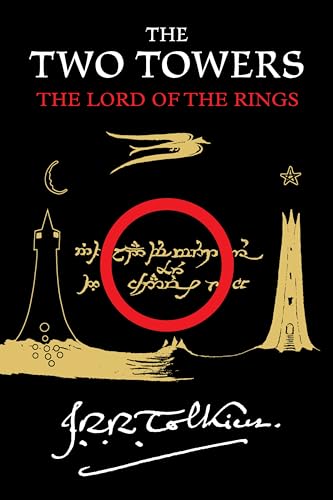
Cover of The Two Towers by J.R.R. Tolkien

The Two Towers

J.R.R. Tolkien, 1954
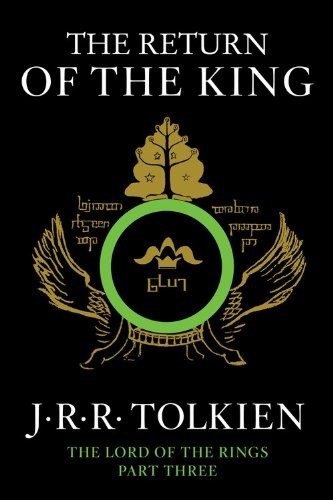
Cover of The Return of the King by J.R.R. Tolkien

The Return of the King

J.R.R. Tolkien, 1950

§Editions

Showing 3 of 204 editions
Cover of The Lord of the Rings

The Lord of the Rings

engPaperback
Mariner Books20039780618343997
Cover of The Lord of the Rings

The Lord of the Rings

engAudio CD(BBC Dramatization, Library Edition)
Listening Library20019780807286081
Cover of The Lord of the Rings

The Lord of the Rings

engAudio Cassette
Random House Audio19939780553472288
§Genres
fantasy2adventure1baggins1classics1epic1fiction1general1
§Content Warnings
§Moods
adventurous1challenging1emotional1funny1gripping1hopeful1inspiring1
§Tags
#adapted to film1#animal cruelty1#blood1#diverse characters1#grief1

Metadata

ISBN-139780618343997
ISBN-100618343997
ASINB0DN24ZP4F

Editions and availability

Find The Lord of the Rings J.R.R. Tolkien in PDF, EPUB, ebook, audiobook, print, or library editions.

View on Amazon
Bookshop.orgGoogle Play BooksBarnes & NobleOpen Library

Featured In Lists

Book cover from this collectionBook cover from this collectionBook cover from this collectionBook cover from this collection
Book cover from this collection

NPRs Top 100 Science-Fiction and Fantasy Books of All Time

100 books
Book cover from this collectionBook cover from this collectionBook cover from this collectionBook cover from this collection
Book cover from this collection

Books everyone should read

23 books
Book cover from this collectionBook cover from this collectionBook cover from this collectionBook cover from this collection
Book cover from this collection

100 Must Read Classics

99 books
Book cover from this collectionBook cover from this collectionBook cover from this collectionBook cover from this collection
Book cover from this collection

Gilmore Girls Reading List 🍂

407 books
Book cover from this collectionBook cover from this collectionBook cover from this collectionBook cover from this collection
Book cover from this collection

List 1001 Books Boxall

1000 books
Book cover from this collectionBook cover from this collectionBook cover from this collectionBook cover from this collection
Book cover from this collection

100 Greatest Books

98 books
Book cover from this collectionBook cover from this collectionBook cover from this collectionBook cover from this collection
Book cover from this collection

NPR Top 100 Science Fiction Fantasy

68 books