SSansFiction
The libraryCollectionsJournalStatsFor authors
Sign inJoin now
Sansfiction,

A digital library for books. Made by readers, for readers.

v 2.0 · 2026
The library
  • Discover
  • Collections
  • Book tracker
  • Journal
  • Stats
For authors
  • SF Links
  • Analytics
  • How it works
  • FAQ
Elsewhere
  • X / @sansfiction
  • Privacy
  • Terms
  • Contact
© 2026 SansFiction · Digital · GlobalA quiet room for your reading life.
The libraryCollectionsJournalStatsFor authors
Sign inJoin now →
Navigation
Library
Bookshelf
Journal
Discover
Collections
Tierlists
Stats
Profile
Author Page
Link Builder
Account
Sign in
S
G
BooksadventureA Clash of Kings
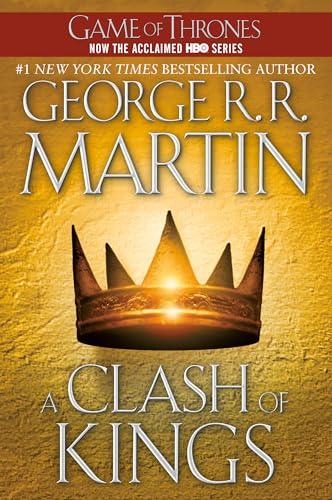
Cover of A Clash of Kings by George R.R. Martin
№ 2 · A Song of Ice and Fire

A Clash of Kings,

by George R.R. Martin

Ask AI
Rating4.3/ 5
Ratings2,137
Pages770
Reading Hours16h
Published1998
LanguageEnglish

§Synopsis

01

The red comet hangs like a bloody scar across the sky, a celestial omen that every faction in the Seven Kingdoms interprets as a divine mandate for their own cause. Following the death of King Robert Baratheon and the execution of Eddard Stark, the fragile unity of Westeros has shattered. What was once a political cold war has ignited into a multi-front civil conflict known as the War of the Five Kings. From the icy heights of the Wall to the desolate Red Waste across the sea, the pursuit of the Iron Throne has moved beyond the courts and into the mud and blood of the battlefield.

The narrative shifts from the centered perspective of the capital to a sprawling, decentralized landscape where power is a shadow on the wall. While young Joffrey Baratheon sits upon the throne in King's Landing, his legitimacy is challenged by his uncles, Stannis and Renly, who each command their own fleets and faiths. In the North, Robb Stark is proclaimed King in the North by his bannermen, seeking independence rather than a seat in the south. This is no longer a story of individuals, but of a continent grappling with the logistical and moral exhaustion of a total war where there are no clear heroes, only survivors and claimants.

The Landscape of a Fractured Realm

The world of Westeros expands significantly in this installment, moving away from the insular politics of the court to show the systemic impact of war on the peasantry and the land itself. The introduction of Dragonstone offers a glimpse into a darker, more ancient side of the Seven Kingdoms, where the influence of new, uncompromising religions begins to displace the old traditions. To the East, the setting shifts to the grueling environmental survival of the Red Waste, emphasizing the physical cost of exile. The atmosphere is one of mounting dread; the "long summer" is ending, and the rules of engagement are being rewritten by those willing to use alchemy, shadow-binding, and forbidden steel.

Main Characters

  • Tyrion Lannister: Arriving at King’s Landing as the Acting Hand of the King, he must navigate a "nest of vipers" to protect the city from external threats and his own family’s incompetence.
  • Arya Stark: Disguised as a common orphan named Arry, she travels north with a group of recruits for the Night’s Watch, forced to witness the brutal reality of the war-torn Riverlands.
  • Daenerys Targaryen: The exiled "Mother of Dragons" leads the starving remnants of her people through a wasteland, seeking sanctuary and allies while her three small hatchlings grow.
  • Jon Snow: A brother of the Night’s Watch, he ventures into the deep wilderness beyond the Wall as part of a "Great Ranging" to investigate the disappearance of rangers and the stirrings of a wildling army.
  • Theon Greyjoy: Caught between his upbringing with the Starks and his biological family on the Iron Islands, he is sent as an envoy to his father, Balon Greyjoy, to propose an alliance.

Evolution of Power and Identity

The core character development centers on the loss of innocence and the acquisition of hard-won pragmatism. The younger protagonists, specifically Arya and Sansa Stark, find their romanticized notions of knighthood and nobility replaced by the necessity of psychological endurance. Meanwhile, the adult characters are defined by their relationship to duty versus ambition. The dynamic between Tyrion Lannister and his sister Cersei becomes a focal point of the political narrative, representing a civil war within the ruling family that is just as dangerous as the armies marching on the city gates.

Subversion of High Fantasy Tropes

The novel meticulously deconstructs the "Chosen One" and "Rightful Heir" tropes. By presenting five different "rightful" kings, the narrative forces the reader to analyze the mechanics of governance—logistics, taxation, and troop morale—rather than destiny or prophecy. The "Quest" trope is similarly subverted; characters do not travel toward a clear goal but are often cast adrift by circumstance, forced to change their identities and morals to survive. Magic is not a tool for the hero to solve problems, but an unsettling, unpredictable force that enters the world at a high cost, often complicating the political landscape rather than simplifying it.

§Our take

In 1999, reviewers in US and Canadian papers said the second book held the standard of the first and avoided the usual middle-volume drift. Plenty of readers today disagree. They describe a slower, heavier book in which much of the war happens offstage and arrives as news. Everyone agrees on Tyrion: critics count him among the series' best creations, and readers point to his chapters here, where he survives on wit rather than strength. The rest of the cast is a harder sell. Theon's chapters strike some readers as complex and justified, others as unbearable; many find Bran tedious and Daenerys disconnected, with long gaps between her chapters. Kirkus warned in 1999 about the large cast, the lack of any recap beyond a long character list, and the storylines left hanging. Have book one fresh in your head.

§Themes

Who gets to be king
Rival claimants force the question: birth, force, belief or competence?
Magic on a leash
Martin wanted swordplay and intrigue, so sorcery stays modest and the book feels closer to a war chronicle than a quest.
Nine pairs of eyes
Each viewpoint character sees only part of events, so you have to judge who to trust.
Villains who grow on you
Antagonists turn sympathetic over time, and honorable characters make costly mistakes.

§How it was received

Publishers Weekly's 1999 review was strongly positive, praising the lived-in world and singling out Arya, Tyrion and Cersei, while noting that magic plays a modest role and calling the book a second course with no end in sight. Kirkus recommended it but flagged the confusing cast and the missing recap. Newspaper reviewers that year said it was as good as book one; many readers today call it slower.

§Read it if

  • You like political and war fiction more than wizardry. The magic is held back on purpose.
  • Tyrion's chapters sound like the part of the series you'd want more of
  • You've read A Game of Thrones and want the conflict opened up across a wider map

§Skip it if

  • You want a self-contained story. Several threads end suspended, and there's no recap beyond a character list.
  • Frequent sexual content bothers you. A recurring group of readers calls it gratuitous.

§Before you start

Reading experience
slow pace. challenging read. Slower and heavier than book one for many readers, with nine viewpoint characters and long stretches of exposition between set pieces, though Publishers Weekly and Kirkus both praised the world and plotting.
Reading order
Book 2 of A Song of Ice and Fire, and not a standalone. Kirkus warned in 1999 that it assumes you remember A Game of Thrones. Read that first.
Content notes
A 1999 reviewer cautioned that its mature themes aren't for young readers; there's no official age rating; Readers repeatedly flag frequent sexual content, some calling it gratuitous or uncomfortable; Graphic war violence, and a willingness to kill major characters, is part of Martin's stated approach.

§Common questions

Do I need to read A Game of Thrones first?
Yes. Kirkus warned in 1999 that this book isn't self-contained, assumes you remember the first novel, and gives no recap beyond a long character list.
Did A Clash of Kings win a Hugo or Nebula?
Neither. It was a 1999 Nebula nominee and won the 1999 Locus Award for Best Fantasy Novel, but it wasn't a Hugo finalist. The Hugo tied to this story went to the TV episode "Blackwater," which Martin wrote.
How does the HBO season compare?
Season 2 adapts this novel, but the producers pushed several characters to season three, merged some roles and changed some traits, so it doesn't follow the book exactly.

§If you liked this

  • A Game of Thrones by George R.R. Martin — The direct predecessor that sets up every faction and claimant. This one escalates it into open war.
  • The Accursed Kings by Maurice Druon — Dynastic intrigue in medieval France. Martin has named Druon's series an inspiration.
  • The Eye of the World by Robert Jordan — Publishers Weekly compared Martin to Jordan in 1999. Jordan's epic runs longer and leans much harder on magic.
Sources
  • en.wikipedia.org
  • goodreads.com
  • en.wikipedia.org
  • kirkusreviews.com
  • publishersweekly.com
  • en.wikipedia.org
  • openlibrary.org
  • en.wikipedia.org
  • en.wikipedia.org
  • en.wikipedia.org
  • en.wikipedia.org

Track this book

Add to your library to track progress and write reviews
§Genres
adventure1alchemy1comics1comics & graphic novels1fantasy1fiction1magic1
§Content Warnings
§Moods
adventurous1challenging1dark1emotional1funny1mysterious1reflective1
§Tags
#diverse characters1#loveable characters1#male author1#not diverse characters1#plot driven1#strong character development1

§About the Author

George R.R. Martin

16 books in catalog

The stakes in epic fantasy reach their highest tension when key characters face genuine mortality rather than narrative immunity. Long-form epic fantasy redefined political realism and subverted classic genre tropes through A Song of Ice and Fire, a monumental fantasy saga launched with the 1996 novel A Game of Thrones. Written by George R.R. Martin, this body of work shifted modern fantasy from idealized moral duopolies into intricate, morally ambiguous power struggles grounded in medieval historicism and irreversible character consequences. With over 90 million copies of his books in print worldwide, his writing spans science fiction, horror, and epic fantasy, earning multiple Hugo, Nebula, and Emmy awards while inspiring major television adaptations.

Beyond his core fantasy novels, Martin's extensive bibliography encompasses rich science fiction like Dying of the Light and imaginary history chronicles such as Fire & Blood. Readers entering this expansive universe can explore standalone masterpieces or comprehensive multi-volume editions like A Game of Thrones 5-Book Bundle: A Song of Ice and Fire Series: A Game of Thrones, A Clash of Kings, A Storm of Swords, A Feast for Crows, and A Dance with Dragons, which trace the tragic downfall and intense rivalries of noble dynasties across Westeros and Essos.

Career & Background

Born on September 20, 1948, in Bayonne, New Jersey, George R.R. Martin was raised in a working-class family near the docks of the Kill van Kull. The son of longshoreman Raymond Collins Martin and Margaret Brady Martin, he grew up alongside two sisters, Darleen and Janet. He attended Mary Jane Donohoe School and Marist High School, developing an early passion for storytelling by writing monster stories and selling them to neighborhood children. During his teenage years, he became an avid reader and collector of comic books, contributing original fan fiction to various amateur comic fanzines. He pursued higher education in journalism at Northwestern University's Medill School of Journalism, graduating summa cum laude with a Bachelor's degree before completing his Master's degree in 1971. His first professional fiction sale occurred when his short story 'The Hero' was published in the February 1971 issue of Galaxy magazine.

Throughout the 1970s and early 1980s, Martin maintained a multifaceted career while establishing his literary reputation. He served as a VISTA volunteer from 1972 to 1974, directed chess tournaments for the Continental Chess Association, and taught journalism at Clarke College in Dubuque, Iowa, from 1976 to 1978. During this period, he produced celebrated short fiction and released his debut novel, Dying of the Light (1977), a science fiction tale set on the rogue planet Worlorn. He followed this success with Fevre Dream (1982), an acclaimed dark fantasy novel combining antebellum Mississippi riverboat navigation with a unique vampire mythos. However, after his 1983 horror novel The Armageddon Rag suffered severe commercial disappointment, Martin shifted his creative efforts toward Hollywood and television production.

In television, Martin served as a staff writer, story editor, and producer, contributing scripts to the mid-1980s revival of The Twilight Zone (1985) and the fantasy drama series Beauty and the Beast (1987). Although television production sharpened his craft regarding dramatic pacing, character interaction, and dialogue structure, he found the practical constraints of broadcast budgets and studio notes deeply limiting for the vast scale of world-building he wished to execute. Desiring complete creative control, Martin returned to full-time prose fiction in the early 1990s. This return culminated in 1996 with the publication of A Game of Thrones, the first volume of A Song of Ice and Fire, which transformed epic fantasy reading expectations globally.

Writing Style & Themes

Central to Martin's creative philosophy is William Faulkner's assertion that the human heart in conflict with itself is the primary subject worth writing about. Martin explicitly rejects absolute divisions of pure good and pure evil, constructing complex characters driven by competing motives, personal flaws, duty, honor, ambition, and survival instincts. He famously describes his storytelling process through the metaphor of a 'gardener'—planting narrative seeds and allowing characters and subplots to evolve organically within a structured world, rather than forcing them into a rigid, predetermined outline. This organic technique generates a dense, interconnected web of cause and effect where small individual choices precipitate far-reaching structural and political consequences.

Thematically, his works explore the corruptive nature of political power, the fragility of feudal systems, social rigidity, and the visceral realities of war. Rather than relying on romanticized medieval tropes, Martin incorporates realistic medieval economics, logistical constraints, social customs, heraldry, and dynastic politics. His signature narrative structure utilizes alternating third-person limited points of view across individual POV chapters. By forcing readers to view events through the eyes of opposing factional leaders and flawed protagonists, he creates empathetic understanding across adversarial lines. Furthermore, his willingness to kill prominent characters reinforces a pervasive atmosphere of genuine jeopardy, emphasizing that high political games carry lethal risks.

Major Works

  • A Song of Ice and Fire Series — Beginning in 1996 with A Game of Thrones, this multi-volume epic fantasy series reimagined the genre through realistic political intrigue, intricate character perspectives, and uncompromising narrative realism. The series inspired HBO's award-winning drama Game of Thrones and its prequel House of the Dragon. Readers can experience the saga through individual books such as A Clash of Kings, A Storm of Swords, A Feast for Crows, and A Dance with Dragons, or through comprehensive collections like A Game of Thrones 5-Book Bundle: A Song of Ice and Fire Series: A Game of Thrones, A Clash of Kings, A Storm of Swords, A Feast for Crows, and A Dance with Dragons.
  • Fire & Blood — Published in 2018, this monumental imaginary history chronicles the reign of House Targaryen in Westeros three centuries before the events of A Game of Thrones. Written from the perspective of an in-universe Archmaester, the chronicle provides the foundational lore behind the television adaptation House of the Dragon.
  • Dying of the Light — Released in 1977, Martin's debut novel is a melancholic science fiction story set on the rogue planet Worlorn. The novel established his early reputation in speculative fiction by blending tragic romance, dying-earth motifs, and complex cultural clashes.
  • Fevre Dream — Published in 1982, this historical dark fantasy novel combines 19th-century Mississippi River steamboat navigation with a unique, biological vampire mythology. It remains one of Martin's most celebrated standalone speculative works.
  • The Armageddon Rag — Released in 1983, this mystery-horror novel explores 1960s rock culture, idealism, and murder surrounding a legendary rock band. Though a commercial failure upon release that prompted Martin's move to television writing, it gained cult status among fans.
  • Wild Cards Series — Since 1987, Martin has served as the editor and a key contributor to this long-running mosaic novel shared-universe series. Set in an alternate post-WWII Earth where an alien virus grants superpowers or deformities, the series combines superhero tropes with gritty realism.
  • Television Writing: The Twilight Zone and Beauty and the Beast — During his television career in the late 1980s, Martin wrote and edited scripts for the revival of The Twilight Zone and the fantasy drama Beauty and the Beast, refining his dialogue and pacing before returning to epic prose.
  • Short Fiction and Anthologies — Martin began his professional career with 'The Hero' in Galaxy in 1971 and went on to win major Hugo and Nebula awards for landmark short works such as 'A Song for Lya' and 'Sandkings'.

§Featured Series

A Song of Ice and Fire

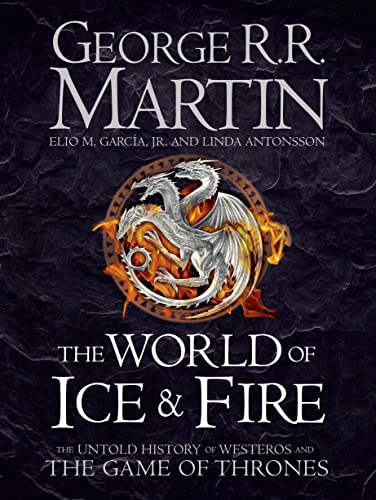
Cover of The World of Ice and Fire by George R.R. Martin, Linda Antonsson, Elio M. García Jr.

The World of Ice and Fire

George R.R. Martin, 2014
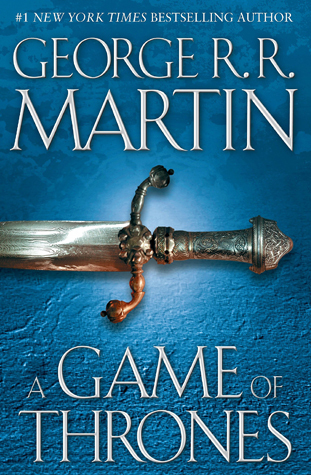
Cover of A Game of Thrones by George R.R. Martin

A Game of Thrones

George R.R. Martin, 1996
Cover of A Clash of Kings by George R.R. Martin

A Clash of Kings

George R.R. Martin, 1998
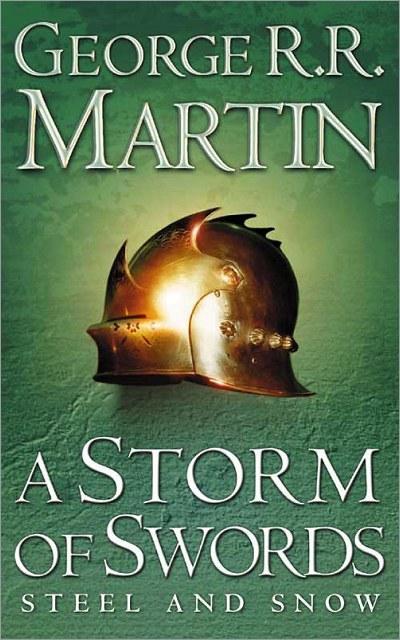
Cover of A Storm of Swords by George R.R. Martin

A Storm of Swords

George R.R. Martin, 2000
Cover of A Feast for Crows by George R.R. Martin

A Feast for Crows

George R.R. Martin, 2005
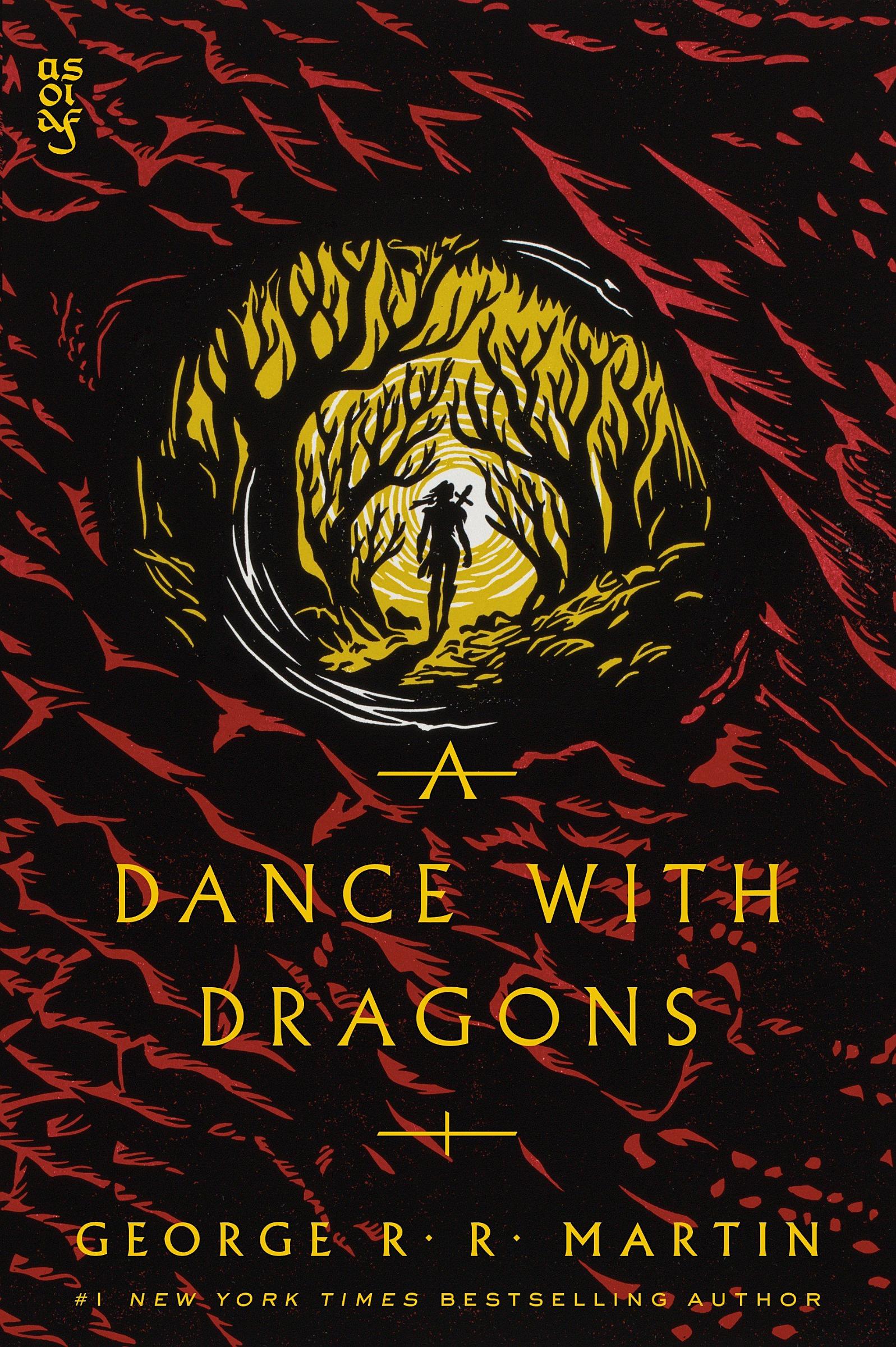
Cover of A Dance with Dragons by George R.R. Martin

A Dance with Dragons

George R.R. Martin, 2011
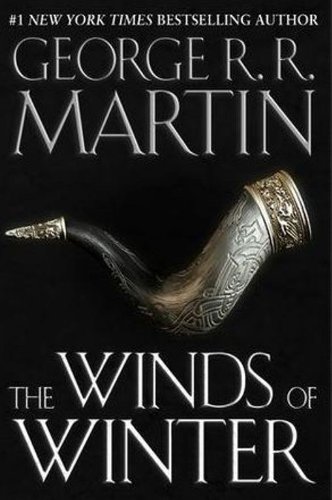
Cover of The Winds of Winter by George R.R. Martin

The Winds of Winter

George R.R. Martin, 2007

§Editions

Cover of A Clash of Kings

A Clash of Kings

engPaperback770 pgs
Bantam19989780553381696
§Genres
adventure1alchemy1comics1comics & graphic novels1fantasy1fiction1magic1
§Content Warnings
§Moods
adventurous1challenging1dark1emotional1funny1mysterious1reflective1
§Tags
#diverse characters1#loveable characters1#male author1#not diverse characters1#plot driven1#strong character development1

Metadata

ISBN-139780553381696
ISBN-100553381695

Editions and availability

Find A Clash of Kings George R.R. Martin in PDF, EPUB, ebook, audiobook, print, or library editions.

Bookshop.orgGoogle Play BooksBarnes & NobleOpen Library

Featured In Lists

Book cover from this collectionBook cover from this collectionBook cover from this collectionBook cover from this collection
Book cover from this collection

Banned in US Schools 2023-2024

100 books