
The Sandman
E.T.A. Hoffmann · 1815
Olympia is one of literature’s great uncanny artificial humans: a machine convincing enough to scramble desire, perception, and sanity.

Frankenstein
Mary Shelley · 1818
The template for created life as a moral problem: intelligence made by human hands, then abandoned by the maker who cannot control it.
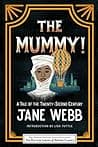
The Mummy! A Tale of the Twenty-Second Century
Jane C. Webb Loudon · 1827
A startling early future novel with advanced public systems and automata in law and medicine, decades before robots became a genre habit.

Rappaccini's Daughter
Nathaniel Hawthorne · 1844
A poisoned, cultivated human body turns botany into proto-biotech and asks what happens when a person is engineered into an experiment.

The Huge Hunter, Or, the Steam Man of the Prairies
Edward S. Ellis · 2007
A steam-powered artificial man gives the century a clanking mechanical body: not AI yet, but a clear leap toward robot adventure fiction.

The Brick Moon and Other Stories
Edward Everett Hale · 2020
Its artificial moon imagines engineered orbital infrastructure before spaceflight, turning the future into something humans can build.
The Coming Race
Edward Bulwer Lytton Lytton · 2022
A hidden super-scientific society built around vril power, social redesign, and the fear that humanity may be outclassed by its successors.

Erewhon
Samuel Butler · 1872
Butler’s “Book of the Machines” treats machine evolution as a civilizational threat decades before computers made the fear literal.

The Ablest Man in the World
Edward Page Mitchell · 1879
A clockwork brain inside a politician turns artificial intelligence into governance, ambition, and the horror of perfect calculation.

Across the Zodiac
Percy Greg · 1880
An early interplanetary voyage that treats technology as a vehicle for comparative social design and Martian political imagination.
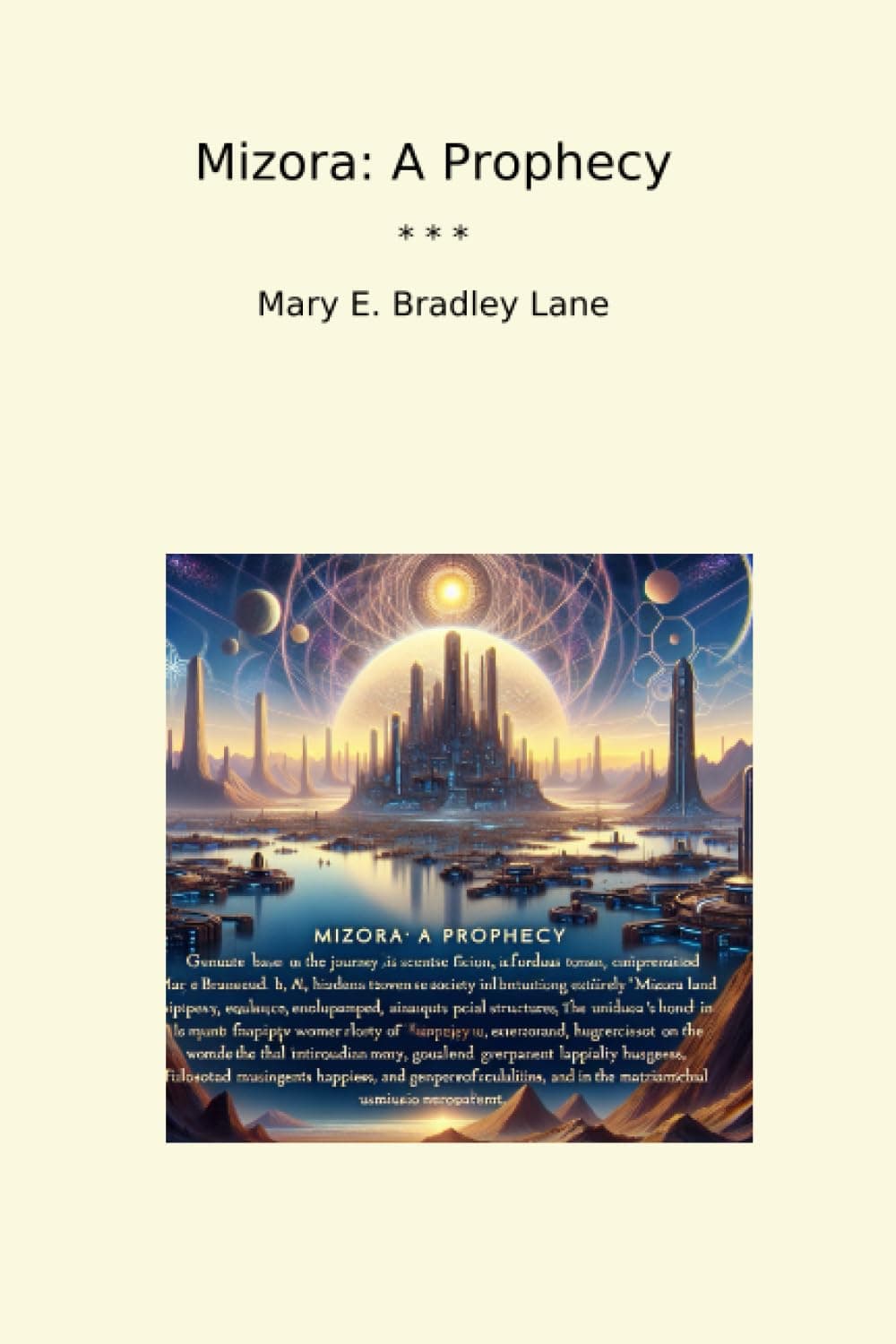
Mizora: A Prophecy
Mary E. Bradley Lane · 1890
A feminist scientific utopia where reproduction, education, food, and social design are technologically remade into a speculative future.
The Fixed Period
Anthony Trollope · 1882
A future colony rationalizes compulsory death at sixty-seven, making bureaucratic optimization feel colder than any machine.
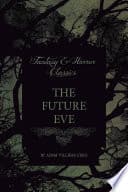
The Future Eve
Auguste Villiers de l'Isle-Adam · 1886
Hadaly is a landmark android: a manufactured companion whose beauty, voice, and simulated soul expose the era’s fantasies and misogyny.

A Crystal Age
William H. Hudson · 1887
A far-future pastoral society imagines progress as biological, social, and ecological redesign rather than more machinery.

Strange Manuscript Found in a Copper Cylinder
James De Mille · 2009
Its discovered-world structure uses an alien social order to ask how arbitrary human values would look from a future or elsewhere.
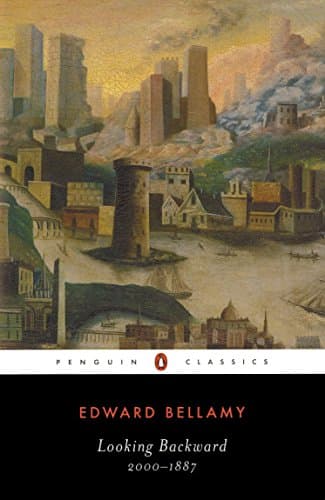
Looking backward, 2000-1887
Edward Bellamy · 1888
A sleeper wakes in the year 2000 to find society reorganized by industrial coordination, consumer systems, and future social engineering.
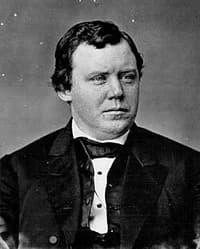
Caesar's Column: A Story of the Twentieth Century
Ignatius L. Donnelly · 1891
A violent class-war future where industrial capitalism, surveillance, and technological spectacle curdle into social collapse.

News from Nowhere
William Morris · 1890
A counter-future to industrial technocracy: still future fiction, but one imagining progress through transformed work, beauty, and society.
The Goddess Of Atvatabar: Being the History of the Discovery of the Interior World and Conquest of Atvatabar
William Richard Bradshaw · 1891
A maximalist hollow-earth fantasia packed with speculative machinery, strange power systems, and civilization as engineered spectacle.

A Journey in Other Worlds
John Jacob Astor · 1894
A millionaire’s techno-utopian space future where corporate engineering scales up to planets, climate, and human destiny.
The Angel of the Revolution: A Tale of the Coming Terror
George Chetwynd Griffith · 1894
Airships and revolutionary terror turn the future into a problem of asymmetric technology, speed, and political control from above.
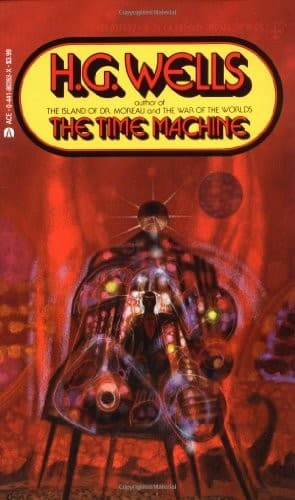
The Time Machine
H. G. Wells · 1895
Wells turns the future into a destination and makes human evolution itself the terrifying machine that remakes us.

The Island of Doctor Moreau
H. G. Wells · 1896
Vivisection becomes artificial personhood: a brutal early vision of uplift, lab-made minds, and the ethics of forced transformation.

Moxon's Master
Ambrose Bierce · 1893
A chess-playing automaton that may think and can kill: a compact pre-computer nightmare about intelligence emerging from mechanism.