
The Sandman
E.T.A. Hoffmann, 1815, classics
“Olympia is one of literature’s great uncanny artificial humans: a machine convincing enough to scramble desire, perception, and sanity.”

Frankenstein
Mary Shelley, 1818, children
“The template for created life as a moral problem: intelligence made by human hands, then abandoned by the maker who cannot control it.”

The Mummy! A Tale of the Twenty-Second Century
Jane C. Webb Loudon, 1827, Book
“A startling early future novel with advanced public systems and automata in law and medicine, decades before robots became a genre habit.”

Rappaccini's Daughter
Nathaniel Hawthorne, 1844, classics
“A poisoned, cultivated human body turns botany into proto-biotech and asks what happens when a person is engineered into an experiment.”

The Huge Hunter, Or, the Steam Man of the Prairies
Edward S. Ellis, 2007, adventure
“A steam-powered artificial man gives the century a clanking mechanical body: not AI yet, but a clear leap toward robot adventure fiction.”

The Brick Moon and Other Stories
Edward Everett Hale, 2020, Book
“Its artificial moon imagines engineered orbital infrastructure before spaceflight, turning the future into something humans can build.”
The Coming Race
Edward Bulwer Lytton Lytton, 2022, Book
“A hidden super-scientific society built around vril power, social redesign, and the fear that humanity may be outclassed by its successors.”
Erewhon
Samuel Butler, 1872, adventure
“Butler’s “Book of the Machines” treats machine evolution as a civilizational threat decades before computers made the fear literal.”

The Ablest Man in the World
Edward Page Mitchell, 1879, science fiction
“A clockwork brain inside a politician turns artificial intelligence into governance, ambition, and the horror of perfect calculation.”

Across the Zodiac
Percy Greg, 1880, adventure
“An early interplanetary voyage that treats technology as a vehicle for comparative social design and Martian political imagination.”
Mizora: A Prophecy
Mary E. Bradley Lane, 1890, Book
“A feminist scientific utopia where reproduction, education, food, and social design are technologically remade into a speculative future.”

The Fixed Period
Anthony Trollope, 1882, Book
“A future colony rationalizes compulsory death at sixty-seven, making bureaucratic optimization feel colder than any machine.”
The Future Eve
Auguste Villiers de l'Isle-Adam, 1886, classics
“Hadaly is a landmark android: a manufactured companion whose beauty, voice, and simulated soul expose the era’s fantasies and misogyny.”

A Crystal Age
William H. Hudson, 1887, Book
“A far-future pastoral society imagines progress as biological, social, and ecological redesign rather than more machinery.”

Strange Manuscript Found in a Copper Cylinder
James De Mille, 2009, Book
“Its discovered-world structure uses an alien social order to ask how arbitrary human values would look from a future or elsewhere.”
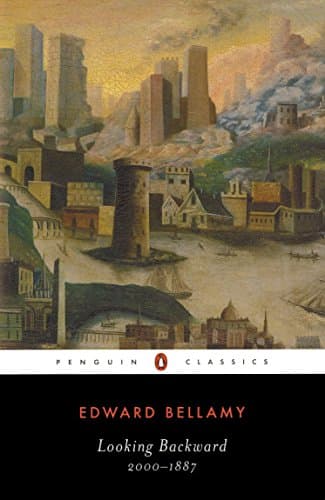
Looking backward, 2000-1887
Edward Bellamy, 1888, utopias
“A sleeper wakes in the year 2000 to find society reorganized by industrial coordination, consumer systems, and future social engineering.”
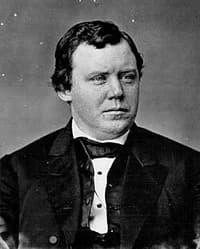
Caesar's Column: A Story of the Twentieth Century
Ignatius L. Donnelly, 1891, Book
“A violent class-war future where industrial capitalism, surveillance, and technological spectacle curdle into social collapse.”

News from Nowhere
William Morris, 1890, literature
“A counter-future to industrial technocracy: still future fiction, but one imagining progress through transformed work, beauty, and society.”
The Goddess Of Atvatabar: Being the History of the Discovery of the Interior World and Conquest of Atvatabar
William Richard Bradshaw, 1891, Book
“A maximalist hollow-earth fantasia packed with speculative machinery, strange power systems, and civilization as engineered spectacle.”

A Journey in Other Worlds
John Jacob Astor, 1894, classics
“A millionaire’s techno-utopian space future where corporate engineering scales up to planets, climate, and human destiny.”
The Angel of the Revolution: A Tale of the Coming Terror
George Chetwynd Griffith, 1894, Book
“Airships and revolutionary terror turn the future into a problem of asymmetric technology, speed, and political control from above.”
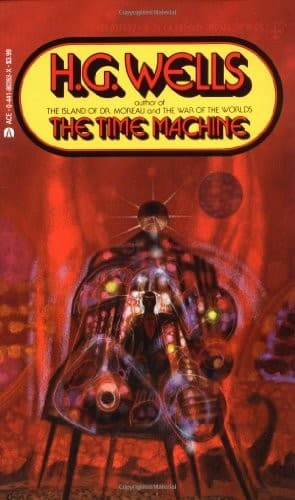
The Time Machine
H. G. Wells, 1895, adventure
“Wells turns the future into a destination and makes human evolution itself the terrifying machine that remakes us.”

The Island of Doctor Moreau
H. G. Wells, 1896, adventure
“Vivisection becomes artificial personhood: a brutal early vision of uplift, lab-made minds, and the ethics of forced transformation.”

Moxon's Master
Ambrose Bierce, 1893, classics
“A chess-playing automaton that may think and can kill: a compact pre-computer nightmare about intelligence emerging from mechanism.”