SSansFiction
The libraryCollectionsJournalStatsFor authors
Sign inJoin now
Sansfiction,

A digital library for books. Made by readers, for readers.

v 2.0 · 2026
The library
  • Discover
  • Collections
  • Book tracker
  • Journal
  • Stats
For authors
  • SF Links
  • Analytics
  • How it works
  • FAQ
Elsewhere
  • X / @sansfiction
  • Privacy
  • Terms
  • Contact
© 2026 SansFiction · Digital · GlobalA quiet room for your reading life.
The libraryCollectionsJournalStatsFor authors
Sign inJoin now →
Navigation
Library
Bookshelf
Journal
Discover
Collections
Tierlists
Stats
Profile
Author Page
Link Builder
Account
Sign in
S
G
BooksadventureWuthering Heights
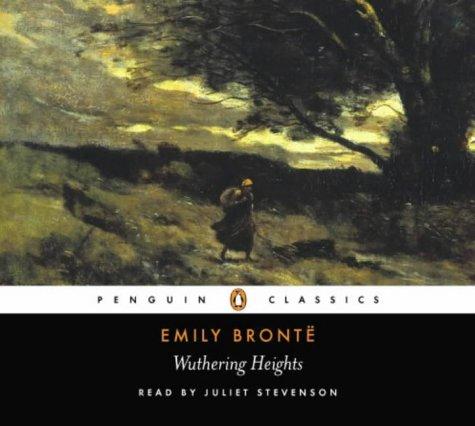
Cover of Wuthering Heights by Emily Brontë

Wuthering Heights,

by Emily Brontë, Richard J. Dunn

Ask AI
Rating3.6/ 5
Ratings1,416
Pages432
Reading Hours9h
Published2003
LanguageEnglish

§Synopsis

01

Discovered on the streets of Liverpool, Heathcliff is rescued by Mr Earnshaw and taken to the remote Yorkshire farmhouse of Wuthering Heights. Earnshaw's daughter Catherine rapidly forms a passionate attachment to him, but when Catherine's brother takes over the Heights, Heathcliff is lowered to the position of a barely-tolerated farmhand. When Catherine decides to marry the refined Edgar Linton instead, Heathcliff turns revenger. He determines to degrade not only those who sought to degrade him, but their children after them.

Wuthering Heights is one of the most famous love stories in the English language. It is also, as the Introduction to this edition explores, one of the most potent revenge narratives. Its ingenious narrative structure, vivid evocation of landscape, and the extraordinary power of its depiction of love and hatred have given it a unique place in English literature.

§Our take

Call it a love story and half the room will argue you've misread it. A 2007 British poll crowned it the greatest love story, and critics have been pushing back ever since, reading it instead as a study of abuse, class and revenge. Both camps have a point, and the book is more interesting for the fight. What's not disputed is the atmosphere: even hostile readers praise the moors, the weather and the prose. The harder sell is the cast, because nobody here is likable, and some readers find that unbearable while others insist the awfulness is the design. Then there's the narration, filtered through Nelly Dean, a servant with her own biases, so you're never quite sure you're getting the truth. If you want a Gothic where passion and cruelty are the same fire, this is the original.

§Themes

Love or abuse
The central bond is read either as all-consuming passion or as obsession and cruelty, and readers split the same way critics do.
Who's telling this?
Lockwood frames the tale and Nelly Dean tells most of it, with biases that shape everything you hear.
Class and property
Inheritance, land and the shifting meaning of 'gentleman' drive the plot as much as any passion.
Revenge versus forgiveness
Nelly advises leaving vengeance to God; Heathcliff prefers to handle it himself.
Two houses, two worlds
The stormy Heights against the calm Grange organises the whole book, across two generations.

§How it was received

The 1847 critics admired its power and imagination but found it coarse, confusing and morally troubling, with cruelty left unpunished. For decades the critics' favourite Brontë was Charlotte's Jane Eyre; it took the 1880s, a biography, and Virginia Woolf's 1925 championing to flip the verdict — and even then Leavis slammed the door in 1948. Du Maurier, thankfully, got it: the savagery and the poetry. By the 21st century it sat among the greatest English novels, with the love-story label still disputed.

§Read it if

  • You want a Gothic where the passion is genuinely disturbing, not just brooding
  • You like unreliable narrators and a structure you have to work at
  • You're the kind of reader who doesn't need to like the characters to be gripped by them

§Skip it if

  • Unlikable, cruel characters ruin a book for you. Nearly everyone here qualifies.
  • Nested narrators, period dialect and two generations of similar names sound like homework

§Before you start

Reading experience
A slow-burn Gothic with period dialect, a nested narrative and a second half some readers find drawn out, so expect a book that takes patience rather than pace.
Content notes
Domestic abuse and bullying of children, including punching, threats and injury; Dogs bite and are hanged; Death, corpses, funerals and references to suicide throughout; Heavy drinking, with one character implied to drink himself to death; Period language including a racist term, ethnic slurs and demeaning labels for women; Romance is restrained: a few kisses and embraces, no nudity.

§Common questions

Is Wuthering Heights really a love story?
That's the live debate. A 2007 British poll called it the greatest love story, but many critics and readers read it as a study of abuse and revenge instead. Some argue the real love story belongs to the second generation.
Is it hard to read?
The prose itself is accessible, but the nested narration, Joseph's heavy Yorkshire dialect and the two generations of similarly named characters trip readers up. Charlotte Brontë already softened the dialect for the 1850 edition.
How is the book different from the film adaptations?
Common Sense Media warns the novel is much darker than many screen versions, with few clear heroes. Critics of the 2026 film said it set aside the book's concerns with class, race and heredity.

§If you liked this

  • Jane Eyre by Charlotte Brontë — The other Brontë, long ranked above this one until the 1880s shifted the verdict, and the usual pairing for newcomers.
  • The Tenant of Wildfell Hall by Anne Brontë — Anne Brontë's unusually bold novel about abusive marriage, a sharp contemporary comparison for the cruelty here.
  • Romeo and Juliet by William Shakespeare — One dissenting reader calls it the better love story, and Shakespeare is among Brontë's named influences anyway.
Sources
  • Wikipedia
  • Wikipedia (film article)
  • Common Sense Media
  • Crossref-it study guide
  • Goodreads discussion
  • Project Gutenberg

Track this book

Add to your library to track progress and write reviews

§Genres
adventure1canon (literarature)1classics1fiction1general1literature1murder1
§Content Warnings
§Moods
adventurous1challenging1emotional1mysterious1reflective1sad1tense1
§Tags
#animal cruelty1

§About the Author

Emily Brontë
Emily Brontë

1 books in catalog

Set against the stark landscape of the Yorkshire moors, the 1847 Gothic romance Wuthering Heights remains one of the most intense and structurally innovative novels in English literature. Its author, Emily Brontë, originally published the work under the pseudonym Ellis Bell prior to her untimely death at thirty.

Although contemporary nineteenth-century critics frequently viewed its dark atmosphere and moral ambiguity as controversial, the novel earned lasting recognition for its dramatic power, complex multi-generational narrative structure, and vivid evocative prose.

Career & Background

Emily Jane Brontë was born on July 30, 1818, in Thornton, Yorkshire, England. She was the fifth child of Maria Brontë and the Reverend Patrick Brontë, who moved his family to the remote village of Haworth in 1820 to serve as perpetual curate. Following her mother's death in 1821 and the loss of her two oldest sisters to tuberculosis after attending the Clergy Daughters' School in Lancashire, Emily spent most of her life at the Haworth parsonage with her surviving sisters, Charlotte and Anne, and her brother, Branwell.

With full access to their father's extensive library, the Brontë siblings engaged in reading and collaborative creative writing from an early age. In 1846, Emily joined Charlotte and Anne in self-publishing a poetry volume titled Poems by Currer, Ellis, and Acton Bell, adopting masculine pseudonyms to bypass gender prejudices in publishing. Emily contributed twenty poems to the collection, including 'No Coward Soul Is Mine'. She published her sole novel, Wuthering Heights, in late 1847. Emily contracted tuberculosis and passed away on December 19, 1848, at the age of thirty in Haworth.

Writing Style & Themes

Emily Brontë's literary output is characterized by emotional intensity, psychological realism, and a deep connection to the natural wildness of the Yorkshire landscape. Unlike many Victorian authors who wrote with explicit moralizing intents, her narrative voice presents complex, passion-driven characters who act outside conventional social expectations.

Her poetry and prose consistently examine themes of isolation, obsessive love, spiritual independence, and death. Through framed narrative perspectives and vivid, lyrical descriptions, her work established a distinct presence in English literature that bridged romantic sensibility and Victorian Gothic realism.

Major Works

  • Wuthering Heights — Published in 1847 under the pseudonym Ellis Bell, this novel details the tempestuous and destructive relationship between Heathcliff and Catherine Earnshaw across two generations on the isolated Yorkshire moors.
  • Poems by Currer, Ellis, and Acton Bell — A joint 1846 poetry collection published alongside her sisters Charlotte and Anne, featuring twenty of Emily's poems that highlight her spiritual depth and rhythmic control.

§Other Editions

Showing 2 of 816 editions
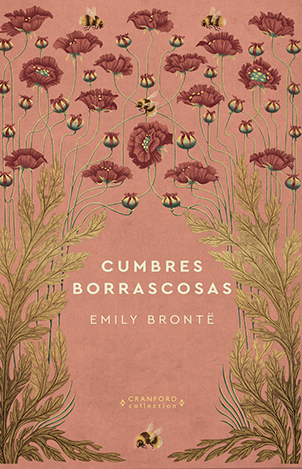
Cover of Cumbres borrascosas

Cumbres borrascosas

engHardcover
RBA Collection Cranford20208413292247
Amazon
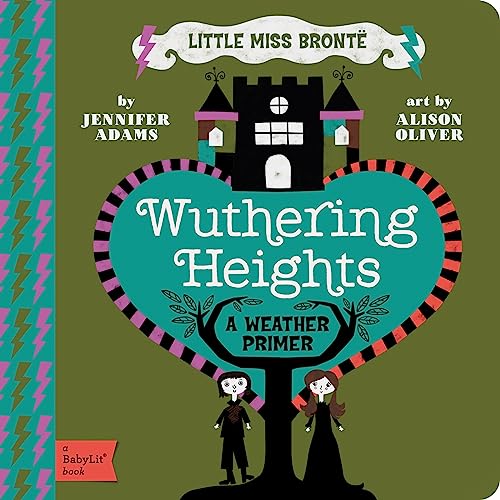
Cover of Wuthering Heights: A BabyLit® Weather Primer

Wuthering Heights: A BabyLit® Weather Primer

engBoard bookBrdbk
Gibbs Smith20139781423631736
§Genres
adventure1canon (literarature)1classics1fiction1general1literature1murder1
§Content Warnings
§Moods
adventurous1challenging1emotional1mysterious1reflective1sad1tense1
§Tags
#animal cruelty1

Metadata

ISBN-139780141804477
ISBN-100141804475
ASIN0141804475

Editions and availability

Find Wuthering Heights Emily Brontë in PDF, EPUB, ebook, audiobook, print, or library editions.

View on Amazon
Bookshop.orgGoogle Play BooksBarnes & NobleOpen Library

Featured In Lists

Book cover from this collectionBook cover from this collectionBook cover from this collectionBook cover from this collection
Book cover from this collection

100 Must Read Classics

99 books
Book cover from this collectionBook cover from this collectionBook cover from this collectionBook cover from this collection
Book cover from this collection

Gilmore Girls Reading List 🍂

407 books
Book cover from this collectionBook cover from this collectionBook cover from this collectionBook cover from this collection
Book cover from this collection

List 1001 Books Boxall

1000 books
Book cover from this collectionBook cover from this collectionBook cover from this collectionBook cover from this collection
Book cover from this collection

100 Greatest Books

98 books
Book cover from this collectionBook cover from this collectionBook cover from this collectionBook cover from this collection
Book cover from this collection

4lit

96 books
Book cover from this collectionBook cover from this collectionBook cover from this collectionBook cover from this collection
Book cover from this collection

200-ish Books to Read Before You Die

36 books