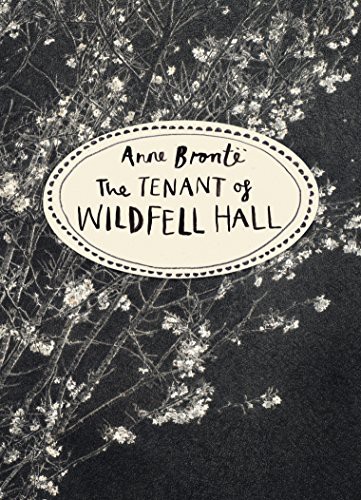
Anne Brontë's second and last novel was widely and contentiously reviewed upon its 1848 publication, in part because its subject matter - domestic violence, alcoholism, women's rights, and universal salvation - was so controversial. The tale unfolds through a series of letters between two friends as one man learns more about Helen Huntingdon and the past that brought this young painter and single mother to Wildfell Hall. Powerfully plotted and unconventionally structured, The Tenant of Wildfell Hall is now considered to be a classic of Victorian literature.
Add to your library to track progress and write reviews
Find The Tenant of Wildfell Hall Anne Brontë in PDF, EPUB, ebook, audiobook, print, or library editions.

2 books in catalog
Victorian realism found one of its most unvarnished early voices in nineteenth-century British literature through candid portrayals of governess life and domestic hardship. Anne Brontë, the youngest member of the Brontë literary family, wrote unsparing prose that directly addressed female independence, legal subjugation, and moral responsibility. Her second novel, The Tenant of Wildfell Hall, challenged contemporary conventions by depicting a woman leaving her abusive husband to pursue an independent artistic career.
Publishing under the male pseudonym Acton Bell alongside her sisters Charlotte and Emily, she grounded her stories in sharp observation and moral clarity rather than heightened romantic melodrama. Her debut novel, Agnes Grey, drew directly upon her personal experiences working as a household tutor, offering readers an authentic record of social inequality in mid-nineteenth-century England.
Born on January 17, 1820, in Yorkshire, Anne Brontë was the youngest of six children born to Patrick and Maria Brontë. Raised in the desolate village of Haworth, she experienced early family loss following the deaths of her mother and two older sisters. The surviving siblings formed a close creative bond, immersed in literature, music, and shared imaginative writing. Seeking financial self-reliance away from her family's genteel poverty, she worked as a governess between 1839 and 1845, gaining firsthand knowledge of the hardships faced by educated women employed in private households.
After leaving her teaching position, she fulfilled her literary ambitions alongside her sisters. In 1846, she contributed a selection of her verses to a joint poetry volume published under their assumed surnames of Currer, Ellis, and Acton Bell. Her debut novel Agnes Grey followed in 1847, published alongside Emily's Wuthering Heights. As a British novelist and poet, she published The Tenant of Wildfell Hall in 1848, just one year before her death on May 28, 1849, at the age of twenty-nine.
Her narrative approach relies on direct psychological insight, clear moral inquiry, and unvarnished realism. Unlike the romantic gothic atmosphere favored by her sisters, her writing focuses on pragmatic social critiques, religious conviction, and the ethical dilemmas of everyday life. She explored the vulnerabilities of women within Victorian class structures, illustrating how economic dependence restricted personal agency.
Her prose is marked by sober honesty and a commitment to truth. By depicting domestic abuse, alcoholism, and legal inequality without euphemism, she constructed early feminist narratives that prioritized moral courage and self-reliance over conventional romantic resolution.

2 books in catalog
Victorian realism found one of its most unvarnished early voices in nineteenth-century British literature through candid portrayals of governess life and domestic hardship. Anne Brontë, the youngest member of the Brontë literary family, wrote unsparing prose that directly addressed female independence, legal subjugation, and moral responsibility. Her second novel, The Tenant of Wildfell Hall, challenged contemporary conventions by depicting a woman leaving her abusive husband to pursue an independent artistic career.
Publishing under the male pseudonym Acton Bell alongside her sisters Charlotte and Emily, she grounded her stories in sharp observation and moral clarity rather than heightened romantic melodrama. Her debut novel, Agnes Grey, drew directly upon her personal experiences working as a household tutor, offering readers an authentic record of social inequality in mid-nineteenth-century England.
Born on January 17, 1820, in Yorkshire, Anne Brontë was the youngest of six children born to Patrick and Maria Brontë. Raised in the desolate village of Haworth, she experienced early family loss following the deaths of her mother and two older sisters. The surviving siblings formed a close creative bond, immersed in literature, music, and shared imaginative writing. Seeking financial self-reliance away from her family's genteel poverty, she worked as a governess between 1839 and 1845, gaining firsthand knowledge of the hardships faced by educated women employed in private households.
After leaving her teaching position, she fulfilled her literary ambitions alongside her sisters. In 1846, she contributed a selection of her verses to a joint poetry volume published under their assumed surnames of Currer, Ellis, and Acton Bell. Her debut novel Agnes Grey followed in 1847, published alongside Emily's Wuthering Heights. As a British novelist and poet, she published The Tenant of Wildfell Hall in 1848, just one year before her death on May 28, 1849, at the age of twenty-nine.
Her narrative approach relies on direct psychological insight, clear moral inquiry, and unvarnished realism. Unlike the romantic gothic atmosphere favored by her sisters, her writing focuses on pragmatic social critiques, religious conviction, and the ethical dilemmas of everyday life. She explored the vulnerabilities of women within Victorian class structures, illustrating how economic dependence restricted personal agency.
Her prose is marked by sober honesty and a commitment to truth. By depicting domestic abuse, alcoholism, and legal inequality without euphemism, she constructed early feminist narratives that prioritized moral courage and self-reliance over conventional romantic resolution.