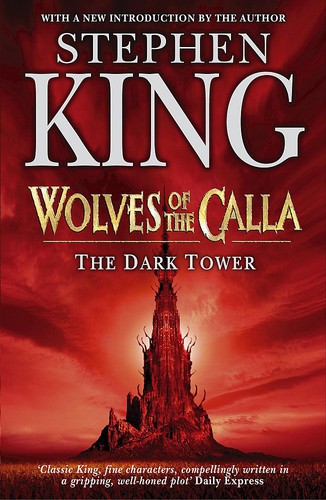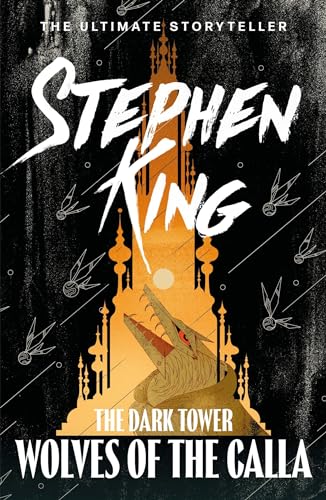

Roland Deschain’s ka-tet arrives at a crossroad where the mythic quest for the Dark Tower intersects with a visceral, localized tragedy. In the farming community of Calla Bryn Sturgis, the residents live under the shadow of a cyclical horror: once every generation, masked riders known as the Wolves emerge from the darkness of Thunderclap to "harvest" the town’s children. These raiders specifically target one child from every set of twins, returning them weeks later as "roont" husks—physically giant, intellectually diminished, and destined for a short, painful life. The town’s plea for protection forces the gunslingers into a moral stalemate: do they fulfill their ancient oath to protect the innocent, or do they maintain their focus on the Tower, the collapse of which would render all local victories meaningless?
The conflict is further complicated by the appearance of Father Callahan, a refugee from our own world who brings with him both a haunting past and a dangerous artifact known as Black Thirteen. As the ka-tet prepares the villagers for a stand against the Wolves, they discover that their mission is bifurcated. They must defend the Calla in Mid-World while simultaneously finding a way back to 1977 Manhattan to protect a single red rose—the physical manifestation of the Tower in our reality—from the encroaching interests of the Sombra Corporation. This duality of purpose creates a high-stakes environment where the gunslingers must master the art of being in two places, and two worlds, at once.
Stephen King shifts the atmosphere of the series toward a "borderlands" aesthetic, blending agrarian folkways with decaying high technology. Calla Bryn Sturgis is defined by its unique social structure—built almost entirely around the biological anomaly of twin births—and its specific dialect. The horror of the Wolves is not just in the kidnapping, but in the mechanical and biological mystery of the "roonting" process. The setting emphasizes a world that has "moved on," where the remnants of advanced weaponry (like the "sneetches" and "light-sticks") are treated with the same superstition as magic. The atmosphere is one of a looming, industrial-flavored apocalypse encroaching on a pastoral landscape.
By this fifth stage of the journey, the protagonists have evolved from a group of disparate addicts and children into a cohesive military unit. Roland’s leadership is no longer absolute; he must navigate the growing autonomy of Eddie, Susannah, and Jake. A significant portion of the early narrative focuses on Susannah’s internal struggle as she begins to suspect a hidden, secondary consciousness within herself—a "demon seed" that threatens the stability of the group. Meanwhile, the integration of Father Callahan serves as a bridge between King’s wider literary multiverse and the Dark Tower, exploring the theme of redemption for those who have previously failed their moral tests.
The narrative functions as a direct homage to and subversion of the "hired gun" trope popularized by The Seven Samurai and The Magnificent Seven. While it utilizes the classic setup of professional warriors training a pacifist peasantry, King adds a layer of metaphysical dread. The "Wolves" are not mere bandits; they are an enigma that challenges the gunslingers’ understanding of reality. Unlike the traditional Western where the stakes are limited to the town’s survival, the defense of the Calla is inextricably linked to the survival of the multiverse. The trope is further subverted by the inclusion of meta-fictional elements, as the characters become increasingly aware of the pop-culture echoes—from comic books to sci-fi cinema—that seem to be bleeding into their reality.
Roland Deschain’s ka-tet arrives at a crossroad where the mythic quest for the Dark Tower intersects with a visceral, localized tragedy. In the farming community of Calla Bryn Sturgis, the residents live under the shadow of a cyclical horror: once every generation, masked riders known as the Wolves emerge from the darkness of Thunderclap to "harvest" the town’s children. These raiders specifically target one child from every set of twins, returning them weeks later as "roont" husks—physically giant, intellectually diminished, and destined for a short, painful life. The town’s plea for protection forces the gunslingers into a moral stalemate: do they fulfill their ancient oath to protect the innocent, or do they maintain their focus on the Tower, the collapse of which would render all local victories meaningless?
The conflict is further complicated by the appearance of Father Callahan, a refugee from our own world who brings with him both a haunting past and a dangerous artifact known as Black Thirteen. As the ka-tet prepares the villagers for a stand against the Wolves, they discover that their mission is bifurcated. They must defend the Calla in Mid-World while simultaneously finding a way back to 1977 Manhattan to protect a single red rose—the physical manifestation of the Tower in our reality—from the encroaching interests of the Sombra Corporation. This duality of purpose creates a high-stakes environment where the gunslingers must master the art of being in two places, and two worlds, at once.
Stephen King shifts the atmosphere of the series toward a "borderlands" aesthetic, blending agrarian folkways with decaying high technology. Calla Bryn Sturgis is defined by its unique social structure—built almost entirely around the biological anomaly of twin births—and its specific dialect. The horror of the Wolves is not just in the kidnapping, but in the mechanical and biological mystery of the "roonting" process. The setting emphasizes a world that has "moved on," where the remnants of advanced weaponry (like the "sneetches" and "light-sticks") are treated with the same superstition as magic. The atmosphere is one of a looming, industrial-flavored apocalypse encroaching on a pastoral landscape.
By this fifth stage of the journey, the protagonists have evolved from a group of disparate addicts and children into a cohesive military unit. Roland’s leadership is no longer absolute; he must navigate the growing autonomy of Eddie, Susannah, and Jake. A significant portion of the early narrative focuses on Susannah’s internal struggle as she begins to suspect a hidden, secondary consciousness within herself—a "demon seed" that threatens the stability of the group. Meanwhile, the integration of Father Callahan serves as a bridge between King’s wider literary multiverse and the Dark Tower, exploring the theme of redemption for those who have previously failed their moral tests.
The narrative functions as a direct homage to and subversion of the "hired gun" trope popularized by The Seven Samurai and The Magnificent Seven. While it utilizes the classic setup of professional warriors training a pacifist peasantry, King adds a layer of metaphysical dread. The "Wolves" are not mere bandits; they are an enigma that challenges the gunslingers’ understanding of reality. Unlike the traditional Western where the stakes are limited to the town’s survival, the defense of the Calla is inextricably linked to the survival of the multiverse. The trope is further subverted by the inclusion of meta-fictional elements, as the characters become increasingly aware of the pop-culture echoes—from comic books to sci-fi cinema—that seem to be bleeding into their reality.
Add to your library to track progress and write reviews
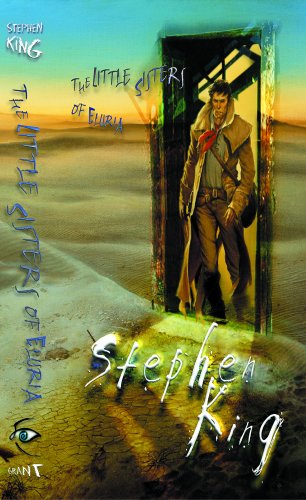
Find Wolves of the Calla Stephen King in PDF, EPUB, ebook, audiobook, print, or library editions.
The Dark Tower
The Dark Tower
37 books in catalog
Translating primal human fears into meticulous descriptions of everyday American life has characterized a vast body of speculative fiction since the publication of Carrie in 1974. Stephen King expanded the boundaries of horror, suspense, and fantasy by embedding supernatural forces within detailed settings of small-town domesticity and working-class struggles. Across more than 60 novels, five non-fiction books, and upwards of 200 short stories, his bibliography blends high-concept terror with character-driven psychological realism. This extensive work serves as an archive of contemporary Americana, examining how personal trauma, community secrets, and institutional decay manifest as physical or otherworldly monsters.
By grounding extraordinary horrors in recognizable settings—often within his home state of Maine—Stephen King established a narrative model where human vulnerability remains as dangerous as any supernatural threat. Major novels such as The Shining, The Stand, and It demonstrate his ability to examine collective social anxieties while maintaining a tight focus on individual character arcs. His output extends across multiple literary categories, spanning hardboiled crime fiction, epic dark fantasy, science fiction, and non-fiction memoirs on the mechanics of writing.
Stephen Edwin King was born in Portland, Maine, on September 21, 1947, to Donald and Nellie Ruth Pillsbury King. Following his parents' separation during his toddler years, he and his older brother, David, were raised by their mother under modest financial circumstances. The family lived in Fort Wayne, Indiana, and Stratford, Connecticut, before returning permanently to Durham, Maine, when King was eleven years old so his mother could care for her aging parents. King attended the University of Maine, earning a Bachelor of Arts in English in 1970. Following graduation, he worked as a high school English teacher while selling short stories to commercial magazines to supplement his family's modest income.
The publication of his debut novel Carrie in 1974 marked a major turning point, enabling King to leave teaching and pursue writing full-time. Throughout the remainder of the 1970s and 1980s, he published a continuous stream of widely read novels, including 'Salem's Lot, The Shining, Pet Sematary, and The Stand. To test whether his commercial reception stemmed from authorial reputation or intrinsic storytelling merit, he released several books under the pseudonym Richard Bachman, including Rage and the works collected in The Bachman Books. The public discovery of his Bachman pen name confirmed his adaptability across genres ranging from dystopian thrillers to hardboiled crime and dark fantasy.
Over a literary career spanning more than five decades, King's books have sold over 400 million copies worldwide and inspired numerous feature film, television, and comic book adaptations. In addition to his horror fiction, he expanded into mystery and hardboiled detective writing with the Bill Hodges Trilogy, launched by Mr. Mercedes and continuing through later detective character studies such as Holly. He has maintained a prolific publishing schedule into his seventies, releasing story collections like You Like It Darker alongside extended serialized works, while residing primarily in his home state of Maine.
A central narrative technique in King's writing is the contrast between cozy domestic reality and intrusive supernatural dread. He builds narrative tension by establishing intimate details of small-town life—frequently setting stories in fictional Maine locations such as Castle Rock and Derry—using pop-culture references, brand names, regional dialects, and authentic dialogue. This hyper-realistic grounding ensures that when terrifying or abnormal phenomena occur, the emotional impact on characters and readers is heightened. Recurring thematic concerns include the innocence and vulnerability of childhood, the corrupting influence of power, the weight of personal secrets, and the social isolation of rural communities.
Beyond external monsters and supernatural forces, King frequently investigates the inner workings of the creative mind and the burdens of artistic creation. Protagonists in works like Misery and The Shining are often writers or creative figures confronting addiction, isolation, or the destructive side of their own imaginations. King systematically outlined his philosophy on craft and his personal career development in his non-fiction memoir On Writing, emphasizing clear prose, honest dialogue, and reliance on situation over rigid outlines. His stories consistently suggest that while external evil exists, human cruelty, neglect, and unresolved grief are equally destructive forces.
King has also made notable contributions to the novella form and multi-volume dark fantasy epics. His 1982 collection Different Seasons demonstrated his capability outside pure horror, featuring non-supernatural stories focused on human resilience, friendship, and institutional injustice. His interconnected fictional universe connects standalone horror novels like Christine and Cujo with expansive multi-book sagas, creating a shared mythology that spans decades of creative output.
37 books in catalog
Translating primal human fears into meticulous descriptions of everyday American life has characterized a vast body of speculative fiction since the publication of Carrie in 1974. Stephen King expanded the boundaries of horror, suspense, and fantasy by embedding supernatural forces within detailed settings of small-town domesticity and working-class struggles. Across more than 60 novels, five non-fiction books, and upwards of 200 short stories, his bibliography blends high-concept terror with character-driven psychological realism. This extensive work serves as an archive of contemporary Americana, examining how personal trauma, community secrets, and institutional decay manifest as physical or otherworldly monsters.
By grounding extraordinary horrors in recognizable settings—often within his home state of Maine—Stephen King established a narrative model where human vulnerability remains as dangerous as any supernatural threat. Major novels such as The Shining, The Stand, and It demonstrate his ability to examine collective social anxieties while maintaining a tight focus on individual character arcs. His output extends across multiple literary categories, spanning hardboiled crime fiction, epic dark fantasy, science fiction, and non-fiction memoirs on the mechanics of writing.
Stephen Edwin King was born in Portland, Maine, on September 21, 1947, to Donald and Nellie Ruth Pillsbury King. Following his parents' separation during his toddler years, he and his older brother, David, were raised by their mother under modest financial circumstances. The family lived in Fort Wayne, Indiana, and Stratford, Connecticut, before returning permanently to Durham, Maine, when King was eleven years old so his mother could care for her aging parents. King attended the University of Maine, earning a Bachelor of Arts in English in 1970. Following graduation, he worked as a high school English teacher while selling short stories to commercial magazines to supplement his family's modest income.
The publication of his debut novel Carrie in 1974 marked a major turning point, enabling King to leave teaching and pursue writing full-time. Throughout the remainder of the 1970s and 1980s, he published a continuous stream of widely read novels, including 'Salem's Lot, The Shining, Pet Sematary, and The Stand. To test whether his commercial reception stemmed from authorial reputation or intrinsic storytelling merit, he released several books under the pseudonym Richard Bachman, including Rage and the works collected in The Bachman Books. The public discovery of his Bachman pen name confirmed his adaptability across genres ranging from dystopian thrillers to hardboiled crime and dark fantasy.
Over a literary career spanning more than five decades, King's books have sold over 400 million copies worldwide and inspired numerous feature film, television, and comic book adaptations. In addition to his horror fiction, he expanded into mystery and hardboiled detective writing with the Bill Hodges Trilogy, launched by Mr. Mercedes and continuing through later detective character studies such as Holly. He has maintained a prolific publishing schedule into his seventies, releasing story collections like You Like It Darker alongside extended serialized works, while residing primarily in his home state of Maine.
A central narrative technique in King's writing is the contrast between cozy domestic reality and intrusive supernatural dread. He builds narrative tension by establishing intimate details of small-town life—frequently setting stories in fictional Maine locations such as Castle Rock and Derry—using pop-culture references, brand names, regional dialects, and authentic dialogue. This hyper-realistic grounding ensures that when terrifying or abnormal phenomena occur, the emotional impact on characters and readers is heightened. Recurring thematic concerns include the innocence and vulnerability of childhood, the corrupting influence of power, the weight of personal secrets, and the social isolation of rural communities.
Beyond external monsters and supernatural forces, King frequently investigates the inner workings of the creative mind and the burdens of artistic creation. Protagonists in works like Misery and The Shining are often writers or creative figures confronting addiction, isolation, or the destructive side of their own imaginations. King systematically outlined his philosophy on craft and his personal career development in his non-fiction memoir On Writing, emphasizing clear prose, honest dialogue, and reliance on situation over rigid outlines. His stories consistently suggest that while external evil exists, human cruelty, neglect, and unresolved grief are equally destructive forces.
King has also made notable contributions to the novella form and multi-volume dark fantasy epics. His 1982 collection Different Seasons demonstrated his capability outside pure horror, featuring non-supernatural stories focused on human resilience, friendship, and institutional injustice. His interconnected fictional universe connects standalone horror novels like Christine and Cujo with expansive multi-book sagas, creating a shared mythology that spans decades of creative output.