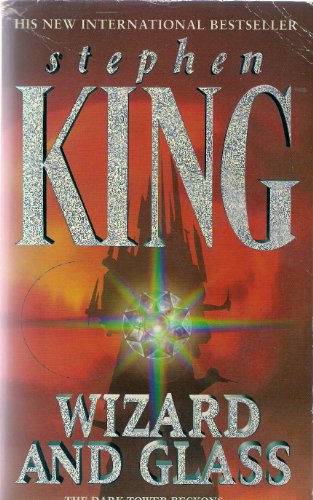

In the fourth volume of the Dark Tower saga, the relentless forward momentum of Roland Deschain’s quest for the Tower takes a profound detour into the shadows of the past. After surviving a lethal riddle contest against the malevolent, sentient monorail Blaine the Mono, Roland and his companions emerge into a version of Topeka, Kansas, that has been ravaged by a supernatural plague. Amidst the eerie, discordant hum of a "thinny"—a place where the fabric of reality has worn dangerously thin—Roland finally breaks his long silence. He recounts the formative mission of his youth, transporting his listeners back to the Barony of Mejis, a coastal frontier where the weight of duty first collided with the volatility of adolescent emotion.
The narrative shifts from the high-tech decay of a dying world to the dusty, deceptively pastoral landscape of Mejis. Here, a young Roland and his original companions, Cuthbert and Alain, are sent under assumed names to investigate a conspiracy involving the "Good Man" John Farson. What begins as a strategic reconnaissance mission quickly transforms into a complex web of political intrigue, forbidden romance, and ancient magic. The central conflict is not merely the encroaching revolution led by Farson’s agents, but the internal struggle of a young man caught between his identity as a protector of the light and the overwhelming pull of a first love that threatens to supersede his sacred oath.
The world-building in this installment emphasizes the "moved on" nature of Roland's world by contrasting the feudal, Western atmosphere of Mejis with the encroaching industrial sabotage of the rebellion. Mejis is a land of cattle barons and coastal winds, but it is defined by the presence of "the stuff"—crude oil being secretly harvested for Farson’s war machines. King introduces the concept of "thinnies," atmospheric anomalies that emit a hypnotic, mind-destroying warble, signaling the physical rot of the universe. This setting functions as a pressure cooker where traditional frontier life is being systematically dismantled by shadowy political forces, creating an atmosphere of pervasive paranoia and inevitable change.
Character development centers on the triad of young gunslingers: Roland, Cuthbert, and Alain. Unlike the hardened, solitary figure of the earlier books, the Roland we meet here is "Will Dearborn," a youth possessing immense skill but lacking the emotional armor of his older self. His relationship with his companions is defined by a tense hierarchy; Cuthbert provides a cynical, humorous foil to Roland’s stoic intensity, while Alain acts as the intuitive mediator. Their dynamic is tested by Roland’s burgeoning relationship with Susan Delgado, a woman bound by a grim contract to the local Mayor. The narrative explores the friction between the cold requirements of a Gunslinger’s training and the irrational, all-consuming nature of romantic obsession, illustrating how Roland’s legendary pragmatism was forged in the heat of personal crisis.
King utilizes the tropes of the classic Western and the star-crossed romance but strips away their sentimental veneers. The "Star-Crossed Lovers" trope is presented here through the lens of ka—destiny that is as much a curse as it is a calling. While the setting evokes the romanticism of the American West, the presence of Rhea of the Cöos, a malevolent witch, introduces a grim, folk-horror element that disrupts the genre's typical boundaries. The introduction of the Wizard's Glass—specifically the "Grapefruit," a sentient pink sphere of immense, corrupting power—serves as a catalyst for the book's moral dilemmas. This object subverts the "magical quest" trope by offering forbidden knowledge and voyeuristic power that demands a heavy psychological toll from anyone who peers into its depths.
The stakes of the Mejis flashback are rooted in a "Big Coffin Hunter" conspiracy. Led by the scarred and dangerous Eldred Jonas, a group of failed gunslingers operates as the enforcers for the local elite who have secretly aligned with the rebellion. The moral dilemma for the young Roland is one of timing and sacrifice: to expose the conspiracy and secure the oil, he must navigate a community where the law is a facade for treason. The tension is built on the realization that the protagonists are outmatched and isolated, forced to grow up with brutal speed as they realize that the honor of their station provides little protection against the deceptive, low-stakes evil of small-town greed and the high-stakes terror of a world-ending revolution.
In the fourth volume of the Dark Tower saga, the relentless forward momentum of Roland Deschain’s quest for the Tower takes a profound detour into the shadows of the past. After surviving a lethal riddle contest against the malevolent, sentient monorail Blaine the Mono, Roland and his companions emerge into a version of Topeka, Kansas, that has been ravaged by a supernatural plague. Amidst the eerie, discordant hum of a "thinny"—a place where the fabric of reality has worn dangerously thin—Roland finally breaks his long silence. He recounts the formative mission of his youth, transporting his listeners back to the Barony of Mejis, a coastal frontier where the weight of duty first collided with the volatility of adolescent emotion.
The narrative shifts from the high-tech decay of a dying world to the dusty, deceptively pastoral landscape of Mejis. Here, a young Roland and his original companions, Cuthbert and Alain, are sent under assumed names to investigate a conspiracy involving the "Good Man" John Farson. What begins as a strategic reconnaissance mission quickly transforms into a complex web of political intrigue, forbidden romance, and ancient magic. The central conflict is not merely the encroaching revolution led by Farson’s agents, but the internal struggle of a young man caught between his identity as a protector of the light and the overwhelming pull of a first love that threatens to supersede his sacred oath.
The world-building in this installment emphasizes the "moved on" nature of Roland's world by contrasting the feudal, Western atmosphere of Mejis with the encroaching industrial sabotage of the rebellion. Mejis is a land of cattle barons and coastal winds, but it is defined by the presence of "the stuff"—crude oil being secretly harvested for Farson’s war machines. King introduces the concept of "thinnies," atmospheric anomalies that emit a hypnotic, mind-destroying warble, signaling the physical rot of the universe. This setting functions as a pressure cooker where traditional frontier life is being systematically dismantled by shadowy political forces, creating an atmosphere of pervasive paranoia and inevitable change.
Character development centers on the triad of young gunslingers: Roland, Cuthbert, and Alain. Unlike the hardened, solitary figure of the earlier books, the Roland we meet here is "Will Dearborn," a youth possessing immense skill but lacking the emotional armor of his older self. His relationship with his companions is defined by a tense hierarchy; Cuthbert provides a cynical, humorous foil to Roland’s stoic intensity, while Alain acts as the intuitive mediator. Their dynamic is tested by Roland’s burgeoning relationship with Susan Delgado, a woman bound by a grim contract to the local Mayor. The narrative explores the friction between the cold requirements of a Gunslinger’s training and the irrational, all-consuming nature of romantic obsession, illustrating how Roland’s legendary pragmatism was forged in the heat of personal crisis.
King utilizes the tropes of the classic Western and the star-crossed romance but strips away their sentimental veneers. The "Star-Crossed Lovers" trope is presented here through the lens of ka—destiny that is as much a curse as it is a calling. While the setting evokes the romanticism of the American West, the presence of Rhea of the Cöos, a malevolent witch, introduces a grim, folk-horror element that disrupts the genre's typical boundaries. The introduction of the Wizard's Glass—specifically the "Grapefruit," a sentient pink sphere of immense, corrupting power—serves as a catalyst for the book's moral dilemmas. This object subverts the "magical quest" trope by offering forbidden knowledge and voyeuristic power that demands a heavy psychological toll from anyone who peers into its depths.
The stakes of the Mejis flashback are rooted in a "Big Coffin Hunter" conspiracy. Led by the scarred and dangerous Eldred Jonas, a group of failed gunslingers operates as the enforcers for the local elite who have secretly aligned with the rebellion. The moral dilemma for the young Roland is one of timing and sacrifice: to expose the conspiracy and secure the oil, he must navigate a community where the law is a facade for treason. The tension is built on the realization that the protagonists are outmatched and isolated, forced to grow up with brutal speed as they realize that the honor of their station provides little protection against the deceptive, low-stakes evil of small-town greed and the high-stakes terror of a world-ending revolution.
Add to your library to track progress and write reviews

37 books in catalog
Translating primal human fears into meticulous descriptions of everyday American life has characterized a vast body of speculative fiction since the publication of Carrie in 1974. Stephen King expanded the boundaries of horror, suspense, and fantasy by embedding supernatural forces within detailed settings of small-town domesticity and working-class struggles. Across more than 60 novels, five non-fiction books, and upwards of 200 short stories, his bibliography blends high-concept terror with character-driven psychological realism. This extensive work serves as an archive of contemporary Americana, examining how personal trauma, community secrets, and institutional decay manifest as physical or otherworldly monsters.
By grounding extraordinary horrors in recognizable settings—often within his home state of Maine—Stephen King established a narrative model where human vulnerability remains as dangerous as any supernatural threat. Major novels such as The Shining, The Stand, and It demonstrate his ability to examine collective social anxieties while maintaining a tight focus on individual character arcs. His output extends across multiple literary categories, spanning hardboiled crime fiction, epic dark fantasy, science fiction, and non-fiction memoirs on the mechanics of writing.
Stephen Edwin King was born in Portland, Maine, on September 21, 1947, to Donald and Nellie Ruth Pillsbury King. Following his parents' separation during his toddler years, he and his older brother, David, were raised by their mother under modest financial circumstances. The family lived in Fort Wayne, Indiana, and Stratford, Connecticut, before returning permanently to Durham, Maine, when King was eleven years old so his mother could care for her aging parents. King attended the University of Maine, earning a Bachelor of Arts in English in 1970. Following graduation, he worked as a high school English teacher while selling short stories to commercial magazines to supplement his family's modest income.
The publication of his debut novel Carrie in 1974 marked a major turning point, enabling King to leave teaching and pursue writing full-time. Throughout the remainder of the 1970s and 1980s, he published a continuous stream of widely read novels, including 'Salem's Lot, The Shining, Pet Sematary, and The Stand. To test whether his commercial reception stemmed from authorial reputation or intrinsic storytelling merit, he released several books under the pseudonym Richard Bachman, including Rage and the works collected in The Bachman Books. The public discovery of his Bachman pen name confirmed his adaptability across genres ranging from dystopian thrillers to hardboiled crime and dark fantasy.
Over a literary career spanning more than five decades, King's books have sold over 400 million copies worldwide and inspired numerous feature film, television, and comic book adaptations. In addition to his horror fiction, he expanded into mystery and hardboiled detective writing with the Bill Hodges Trilogy, launched by Mr. Mercedes and continuing through later detective character studies such as Holly. He has maintained a prolific publishing schedule into his seventies, releasing story collections like You Like It Darker alongside extended serialized works, while residing primarily in his home state of Maine.
A central narrative technique in King's writing is the contrast between cozy domestic reality and intrusive supernatural dread. He builds narrative tension by establishing intimate details of small-town life—frequently setting stories in fictional Maine locations such as Castle Rock and Derry—using pop-culture references, brand names, regional dialects, and authentic dialogue. This hyper-realistic grounding ensures that when terrifying or abnormal phenomena occur, the emotional impact on characters and readers is heightened. Recurring thematic concerns include the innocence and vulnerability of childhood, the corrupting influence of power, the weight of personal secrets, and the social isolation of rural communities.
Beyond external monsters and supernatural forces, King frequently investigates the inner workings of the creative mind and the burdens of artistic creation. Protagonists in works like Misery and The Shining are often writers or creative figures confronting addiction, isolation, or the destructive side of their own imaginations. King systematically outlined his philosophy on craft and his personal career development in his non-fiction memoir On Writing, emphasizing clear prose, honest dialogue, and reliance on situation over rigid outlines. His stories consistently suggest that while external evil exists, human cruelty, neglect, and unresolved grief are equally destructive forces.
King has also made notable contributions to the novella form and multi-volume dark fantasy epics. His 1982 collection Different Seasons demonstrated his capability outside pure horror, featuring non-supernatural stories focused on human resilience, friendship, and institutional injustice. His interconnected fictional universe connects standalone horror novels like Christine and Cujo with expansive multi-book sagas, creating a shared mythology that spans decades of creative output.
37 books in catalog
Translating primal human fears into meticulous descriptions of everyday American life has characterized a vast body of speculative fiction since the publication of Carrie in 1974. Stephen King expanded the boundaries of horror, suspense, and fantasy by embedding supernatural forces within detailed settings of small-town domesticity and working-class struggles. Across more than 60 novels, five non-fiction books, and upwards of 200 short stories, his bibliography blends high-concept terror with character-driven psychological realism. This extensive work serves as an archive of contemporary Americana, examining how personal trauma, community secrets, and institutional decay manifest as physical or otherworldly monsters.
By grounding extraordinary horrors in recognizable settings—often within his home state of Maine—Stephen King established a narrative model where human vulnerability remains as dangerous as any supernatural threat. Major novels such as The Shining, The Stand, and It demonstrate his ability to examine collective social anxieties while maintaining a tight focus on individual character arcs. His output extends across multiple literary categories, spanning hardboiled crime fiction, epic dark fantasy, science fiction, and non-fiction memoirs on the mechanics of writing.
Stephen Edwin King was born in Portland, Maine, on September 21, 1947, to Donald and Nellie Ruth Pillsbury King. Following his parents' separation during his toddler years, he and his older brother, David, were raised by their mother under modest financial circumstances. The family lived in Fort Wayne, Indiana, and Stratford, Connecticut, before returning permanently to Durham, Maine, when King was eleven years old so his mother could care for her aging parents. King attended the University of Maine, earning a Bachelor of Arts in English in 1970. Following graduation, he worked as a high school English teacher while selling short stories to commercial magazines to supplement his family's modest income.
The publication of his debut novel Carrie in 1974 marked a major turning point, enabling King to leave teaching and pursue writing full-time. Throughout the remainder of the 1970s and 1980s, he published a continuous stream of widely read novels, including 'Salem's Lot, The Shining, Pet Sematary, and The Stand. To test whether his commercial reception stemmed from authorial reputation or intrinsic storytelling merit, he released several books under the pseudonym Richard Bachman, including Rage and the works collected in The Bachman Books. The public discovery of his Bachman pen name confirmed his adaptability across genres ranging from dystopian thrillers to hardboiled crime and dark fantasy.
Over a literary career spanning more than five decades, King's books have sold over 400 million copies worldwide and inspired numerous feature film, television, and comic book adaptations. In addition to his horror fiction, he expanded into mystery and hardboiled detective writing with the Bill Hodges Trilogy, launched by Mr. Mercedes and continuing through later detective character studies such as Holly. He has maintained a prolific publishing schedule into his seventies, releasing story collections like You Like It Darker alongside extended serialized works, while residing primarily in his home state of Maine.
A central narrative technique in King's writing is the contrast between cozy domestic reality and intrusive supernatural dread. He builds narrative tension by establishing intimate details of small-town life—frequently setting stories in fictional Maine locations such as Castle Rock and Derry—using pop-culture references, brand names, regional dialects, and authentic dialogue. This hyper-realistic grounding ensures that when terrifying or abnormal phenomena occur, the emotional impact on characters and readers is heightened. Recurring thematic concerns include the innocence and vulnerability of childhood, the corrupting influence of power, the weight of personal secrets, and the social isolation of rural communities.
Beyond external monsters and supernatural forces, King frequently investigates the inner workings of the creative mind and the burdens of artistic creation. Protagonists in works like Misery and The Shining are often writers or creative figures confronting addiction, isolation, or the destructive side of their own imaginations. King systematically outlined his philosophy on craft and his personal career development in his non-fiction memoir On Writing, emphasizing clear prose, honest dialogue, and reliance on situation over rigid outlines. His stories consistently suggest that while external evil exists, human cruelty, neglect, and unresolved grief are equally destructive forces.
King has also made notable contributions to the novella form and multi-volume dark fantasy epics. His 1982 collection Different Seasons demonstrated his capability outside pure horror, featuring non-supernatural stories focused on human resilience, friendship, and institutional injustice. His interconnected fictional universe connects standalone horror novels like Christine and Cujo with expansive multi-book sagas, creating a shared mythology that spans decades of creative output.
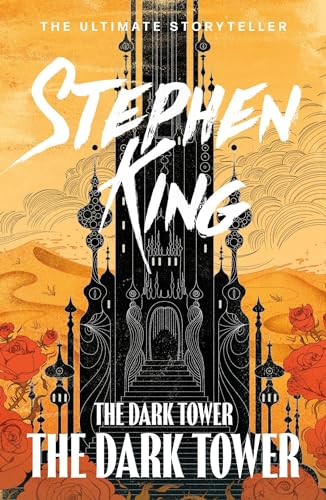
The Dark Tower
The Dark Tower