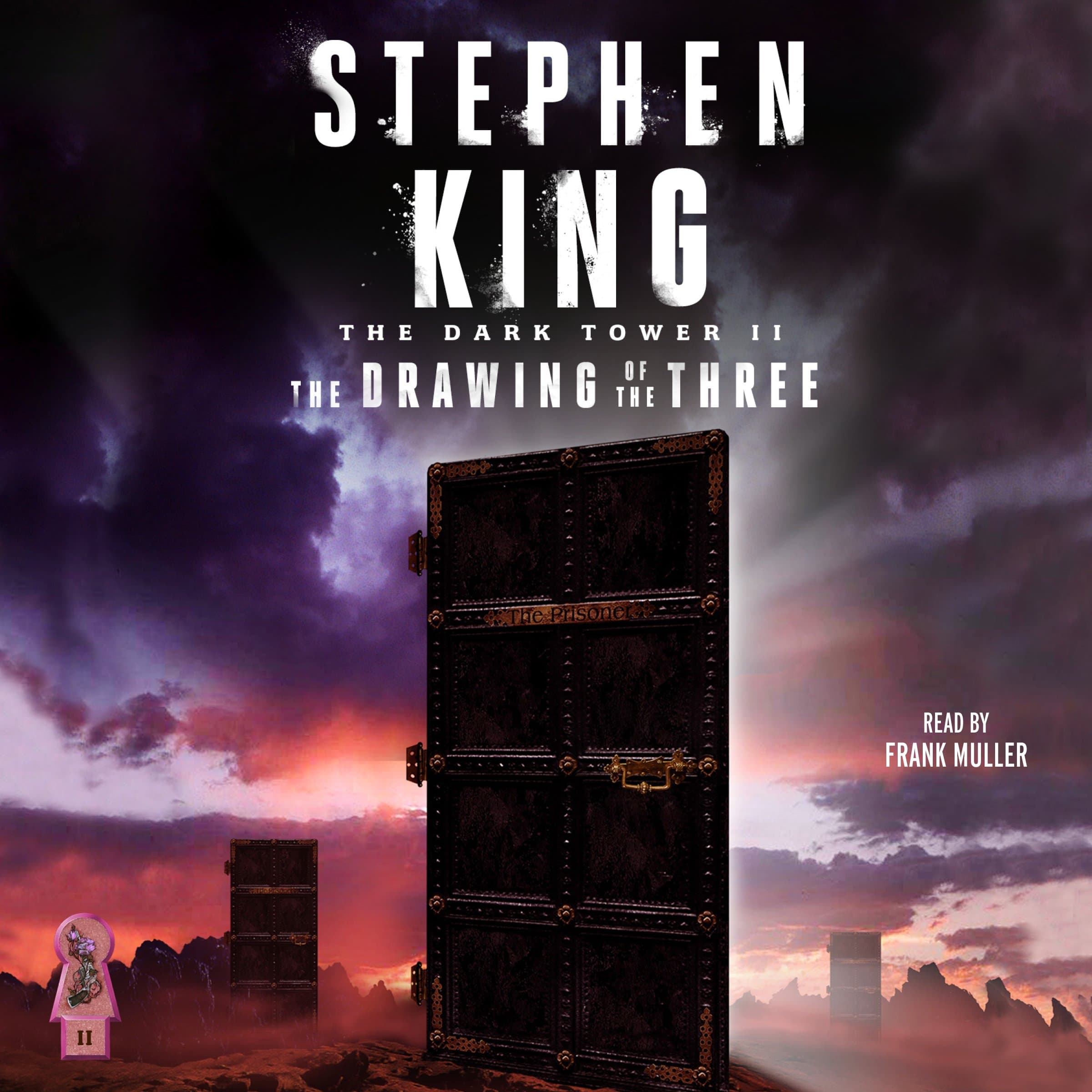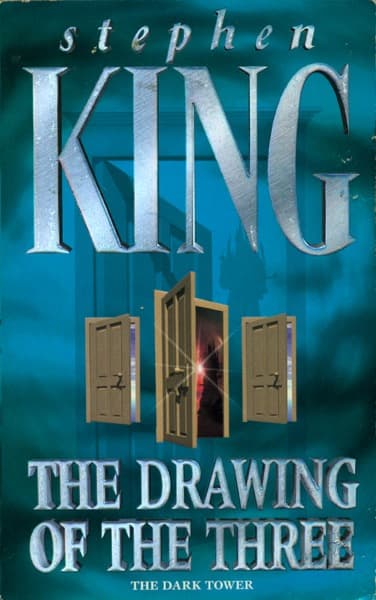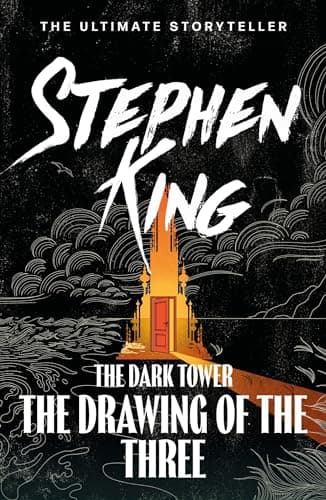

Roland Deschain, the last gunslinger of a dying world, begins this leg of his journey not with a heroic stride, but in a state of desperate vulnerability. After his long pursuit of the Man in Black, Roland wakes on a desolate beach along the Western Sea, where he is immediately maimed by predatory, shore-dwelling creatures. Crippled and burning with a systemic infection that would kill a lesser man, he discovers a series of freestanding doors standing inexplicably on the sand. These portals are not merely gateways to other locations; they are apertures into different eras of our own world—1980s and 1960s New York—allowing Roland to peer through the eyes of specific individuals destined to join his quest.
The core conflict is one of forced symbiosis and cultural collision. Roland must "draw" three companions from these disparate timelines to help him reach the Dark Tower, yet he does so from a position of near-total physical collapse. The narrative focuses on the internal and external struggle of the first of these companions: Eddie Dean, a young man trapped in a cycle of heroin addiction and a dangerous drug-smuggling operation. Roland’s survival depends on a man who cannot even save himself, creating a high-stakes psychological drama where the gritty reality of urban crime meets the high-fantasy stakes of a crumbling universe.
The world-building in this installment shifts from the sprawling deserts of the previous volume to the liminal space of the Western Sea. King establishes a unique set of rules for interdimensional travel: Roland does not simply step through a door; he "populates" the mind of the person on the other side. This creates a fascinating sensory experience where Roland can influence the host's actions, share their thoughts, and even bring physical items back and forth across the threshold. The atmosphere is one of claustrophobic tension, as the vast, empty horizon of Roland's world is traded for the crowded, frantic energy of 20th-century Manhattan, viewed through the lens of a man who considers a toaster to be an artifact of high magic.
The initial character arc centers on the power struggle between Roland’s iron-willed pragmatism and Eddie Dean’s volatile dependency. Roland is depicted not as a mentor, but as a survivalist who views Eddie as a necessary tool, while Eddie views Roland as both a savior and a terrifying captor. This relationship explores the theme of "Ka," or destiny, as a force that binds people together regardless of their consent. As Roland "draws" his second companion—a woman from 1964 with a fractured psyche—the dynamic evolves into a complex study of identity and trauma. The protagonist's development is marked by his transition from a solitary wanderer to a leader who must manage the fragile mental states of people who have no context for the monsters and magic of his world.
While the "portal fantasy" trope typically involves a protagonist from our world being whisked away to a magical realm to become a hero, this narrative subverts that expectation through the "Drawing." Instead of choosing paragons of virtue, the universe—or "Ka"—selects individuals who are marginalized, broken, or suffering from deep-seated internal conflicts. The "Chosen Ones" are a drug addict and a woman struggling with a severe dissociative disorder. Furthermore, the trope of the "unstoppable warrior" is dismantled as Roland spends much of the first half of the book incapacitated by fever, forcing the narrative to rely on his wits and his ability to manipulate the "civilized" world from within the minds of his new companions. This creates a grim, grounded take on the genre where the greatest obstacles are not dragons, but withdrawal symptoms and systemic prejudice.
Roland Deschain, the last gunslinger of a dying world, begins this leg of his journey not with a heroic stride, but in a state of desperate vulnerability. After his long pursuit of the Man in Black, Roland wakes on a desolate beach along the Western Sea, where he is immediately maimed by predatory, shore-dwelling creatures. Crippled and burning with a systemic infection that would kill a lesser man, he discovers a series of freestanding doors standing inexplicably on the sand. These portals are not merely gateways to other locations; they are apertures into different eras of our own world—1980s and 1960s New York—allowing Roland to peer through the eyes of specific individuals destined to join his quest.
The core conflict is one of forced symbiosis and cultural collision. Roland must "draw" three companions from these disparate timelines to help him reach the Dark Tower, yet he does so from a position of near-total physical collapse. The narrative focuses on the internal and external struggle of the first of these companions: Eddie Dean, a young man trapped in a cycle of heroin addiction and a dangerous drug-smuggling operation. Roland’s survival depends on a man who cannot even save himself, creating a high-stakes psychological drama where the gritty reality of urban crime meets the high-fantasy stakes of a crumbling universe.
The world-building in this installment shifts from the sprawling deserts of the previous volume to the liminal space of the Western Sea. King establishes a unique set of rules for interdimensional travel: Roland does not simply step through a door; he "populates" the mind of the person on the other side. This creates a fascinating sensory experience where Roland can influence the host's actions, share their thoughts, and even bring physical items back and forth across the threshold. The atmosphere is one of claustrophobic tension, as the vast, empty horizon of Roland's world is traded for the crowded, frantic energy of 20th-century Manhattan, viewed through the lens of a man who considers a toaster to be an artifact of high magic.
The initial character arc centers on the power struggle between Roland’s iron-willed pragmatism and Eddie Dean’s volatile dependency. Roland is depicted not as a mentor, but as a survivalist who views Eddie as a necessary tool, while Eddie views Roland as both a savior and a terrifying captor. This relationship explores the theme of "Ka," or destiny, as a force that binds people together regardless of their consent. As Roland "draws" his second companion—a woman from 1964 with a fractured psyche—the dynamic evolves into a complex study of identity and trauma. The protagonist's development is marked by his transition from a solitary wanderer to a leader who must manage the fragile mental states of people who have no context for the monsters and magic of his world.
While the "portal fantasy" trope typically involves a protagonist from our world being whisked away to a magical realm to become a hero, this narrative subverts that expectation through the "Drawing." Instead of choosing paragons of virtue, the universe—or "Ka"—selects individuals who are marginalized, broken, or suffering from deep-seated internal conflicts. The "Chosen Ones" are a drug addict and a woman struggling with a severe dissociative disorder. Furthermore, the trope of the "unstoppable warrior" is dismantled as Roland spends much of the first half of the book incapacitated by fever, forcing the narrative to rely on his wits and his ability to manipulate the "civilized" world from within the minds of his new companions. This creates a grim, grounded take on the genre where the greatest obstacles are not dragons, but withdrawal symptoms and systemic prejudice.
Add to your library to track progress and write reviews
Find The Drawing of the Three Stephen King in PDF, EPUB, ebook, audiobook, print, or library editions.
37 books in catalog
Translating primal human fears into meticulous descriptions of everyday American life has characterized a vast body of speculative fiction since the publication of Carrie in 1974. Stephen King expanded the boundaries of horror, suspense, and fantasy by embedding supernatural forces within detailed settings of small-town domesticity and working-class struggles. Across more than 60 novels, five non-fiction books, and upwards of 200 short stories, his bibliography blends high-concept terror with character-driven psychological realism. This extensive work serves as an archive of contemporary Americana, examining how personal trauma, community secrets, and institutional decay manifest as physical or otherworldly monsters.
By grounding extraordinary horrors in recognizable settings—often within his home state of Maine—Stephen King established a narrative model where human vulnerability remains as dangerous as any supernatural threat. Major novels such as The Shining, The Stand, and It demonstrate his ability to examine collective social anxieties while maintaining a tight focus on individual character arcs. His output extends across multiple literary categories, spanning hardboiled crime fiction, epic dark fantasy, science fiction, and non-fiction memoirs on the mechanics of writing.
Stephen Edwin King was born in Portland, Maine, on September 21, 1947, to Donald and Nellie Ruth Pillsbury King. Following his parents' separation during his toddler years, he and his older brother, David, were raised by their mother under modest financial circumstances. The family lived in Fort Wayne, Indiana, and Stratford, Connecticut, before returning permanently to Durham, Maine, when King was eleven years old so his mother could care for her aging parents. King attended the University of Maine, earning a Bachelor of Arts in English in 1970. Following graduation, he worked as a high school English teacher while selling short stories to commercial magazines to supplement his family's modest income.
The publication of his debut novel Carrie in 1974 marked a major turning point, enabling King to leave teaching and pursue writing full-time. Throughout the remainder of the 1970s and 1980s, he published a continuous stream of widely read novels, including 'Salem's Lot, The Shining, Pet Sematary, and The Stand. To test whether his commercial reception stemmed from authorial reputation or intrinsic storytelling merit, he released several books under the pseudonym Richard Bachman, including Rage and the works collected in The Bachman Books. The public discovery of his Bachman pen name confirmed his adaptability across genres ranging from dystopian thrillers to hardboiled crime and dark fantasy.
Over a literary career spanning more than five decades, King's books have sold over 400 million copies worldwide and inspired numerous feature film, television, and comic book adaptations. In addition to his horror fiction, he expanded into mystery and hardboiled detective writing with the Bill Hodges Trilogy, launched by Mr. Mercedes and continuing through later detective character studies such as Holly. He has maintained a prolific publishing schedule into his seventies, releasing story collections like You Like It Darker alongside extended serialized works, while residing primarily in his home state of Maine.
A central narrative technique in King's writing is the contrast between cozy domestic reality and intrusive supernatural dread. He builds narrative tension by establishing intimate details of small-town life—frequently setting stories in fictional Maine locations such as Castle Rock and Derry—using pop-culture references, brand names, regional dialects, and authentic dialogue. This hyper-realistic grounding ensures that when terrifying or abnormal phenomena occur, the emotional impact on characters and readers is heightened. Recurring thematic concerns include the innocence and vulnerability of childhood, the corrupting influence of power, the weight of personal secrets, and the social isolation of rural communities.
Beyond external monsters and supernatural forces, King frequently investigates the inner workings of the creative mind and the burdens of artistic creation. Protagonists in works like Misery and The Shining are often writers or creative figures confronting addiction, isolation, or the destructive side of their own imaginations. King systematically outlined his philosophy on craft and his personal career development in his non-fiction memoir On Writing, emphasizing clear prose, honest dialogue, and reliance on situation over rigid outlines. His stories consistently suggest that while external evil exists, human cruelty, neglect, and unresolved grief are equally destructive forces.
King has also made notable contributions to the novella form and multi-volume dark fantasy epics. His 1982 collection Different Seasons demonstrated his capability outside pure horror, featuring non-supernatural stories focused on human resilience, friendship, and institutional injustice. His interconnected fictional universe connects standalone horror novels like Christine and Cujo with expansive multi-book sagas, creating a shared mythology that spans decades of creative output.
37 books in catalog
Translating primal human fears into meticulous descriptions of everyday American life has characterized a vast body of speculative fiction since the publication of Carrie in 1974. Stephen King expanded the boundaries of horror, suspense, and fantasy by embedding supernatural forces within detailed settings of small-town domesticity and working-class struggles. Across more than 60 novels, five non-fiction books, and upwards of 200 short stories, his bibliography blends high-concept terror with character-driven psychological realism. This extensive work serves as an archive of contemporary Americana, examining how personal trauma, community secrets, and institutional decay manifest as physical or otherworldly monsters.
By grounding extraordinary horrors in recognizable settings—often within his home state of Maine—Stephen King established a narrative model where human vulnerability remains as dangerous as any supernatural threat. Major novels such as The Shining, The Stand, and It demonstrate his ability to examine collective social anxieties while maintaining a tight focus on individual character arcs. His output extends across multiple literary categories, spanning hardboiled crime fiction, epic dark fantasy, science fiction, and non-fiction memoirs on the mechanics of writing.
Stephen Edwin King was born in Portland, Maine, on September 21, 1947, to Donald and Nellie Ruth Pillsbury King. Following his parents' separation during his toddler years, he and his older brother, David, were raised by their mother under modest financial circumstances. The family lived in Fort Wayne, Indiana, and Stratford, Connecticut, before returning permanently to Durham, Maine, when King was eleven years old so his mother could care for her aging parents. King attended the University of Maine, earning a Bachelor of Arts in English in 1970. Following graduation, he worked as a high school English teacher while selling short stories to commercial magazines to supplement his family's modest income.
The publication of his debut novel Carrie in 1974 marked a major turning point, enabling King to leave teaching and pursue writing full-time. Throughout the remainder of the 1970s and 1980s, he published a continuous stream of widely read novels, including 'Salem's Lot, The Shining, Pet Sematary, and The Stand. To test whether his commercial reception stemmed from authorial reputation or intrinsic storytelling merit, he released several books under the pseudonym Richard Bachman, including Rage and the works collected in The Bachman Books. The public discovery of his Bachman pen name confirmed his adaptability across genres ranging from dystopian thrillers to hardboiled crime and dark fantasy.
Over a literary career spanning more than five decades, King's books have sold over 400 million copies worldwide and inspired numerous feature film, television, and comic book adaptations. In addition to his horror fiction, he expanded into mystery and hardboiled detective writing with the Bill Hodges Trilogy, launched by Mr. Mercedes and continuing through later detective character studies such as Holly. He has maintained a prolific publishing schedule into his seventies, releasing story collections like You Like It Darker alongside extended serialized works, while residing primarily in his home state of Maine.
A central narrative technique in King's writing is the contrast between cozy domestic reality and intrusive supernatural dread. He builds narrative tension by establishing intimate details of small-town life—frequently setting stories in fictional Maine locations such as Castle Rock and Derry—using pop-culture references, brand names, regional dialects, and authentic dialogue. This hyper-realistic grounding ensures that when terrifying or abnormal phenomena occur, the emotional impact on characters and readers is heightened. Recurring thematic concerns include the innocence and vulnerability of childhood, the corrupting influence of power, the weight of personal secrets, and the social isolation of rural communities.
Beyond external monsters and supernatural forces, King frequently investigates the inner workings of the creative mind and the burdens of artistic creation. Protagonists in works like Misery and The Shining are often writers or creative figures confronting addiction, isolation, or the destructive side of their own imaginations. King systematically outlined his philosophy on craft and his personal career development in his non-fiction memoir On Writing, emphasizing clear prose, honest dialogue, and reliance on situation over rigid outlines. His stories consistently suggest that while external evil exists, human cruelty, neglect, and unresolved grief are equally destructive forces.
King has also made notable contributions to the novella form and multi-volume dark fantasy epics. His 1982 collection Different Seasons demonstrated his capability outside pure horror, featuring non-supernatural stories focused on human resilience, friendship, and institutional injustice. His interconnected fictional universe connects standalone horror novels like Christine and Cujo with expansive multi-book sagas, creating a shared mythology that spans decades of creative output.
The Dark Tower
The Dark Tower