SSansFiction
The libraryCollectionsJournalStatsFor authors
Sign inJoin now
Sansfiction,

A digital library for books. Made by readers, for readers.

v 2.0 · 2026
The library
  • Discover
  • Collections
  • Book tracker
  • Journal
  • Stats
For authors
  • SF Links
  • Analytics
  • How it works
  • FAQ
Elsewhere
  • X / @sansfiction
  • Privacy
  • Terms
  • Contact
© 2026 SansFiction · Digital · GlobalA quiet room for your reading life.
The libraryCollectionsJournalStatsFor authors
Sign inJoin now →
Navigation
Library
Bookshelf
Journal
Discover
Collections
Tierlists
Stats
Profile
Author Page
Link Builder
Account
Sign in
S
G
BooksactionThe Hunger Games
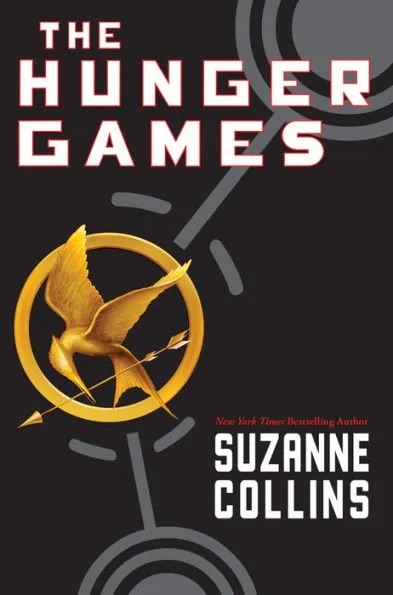
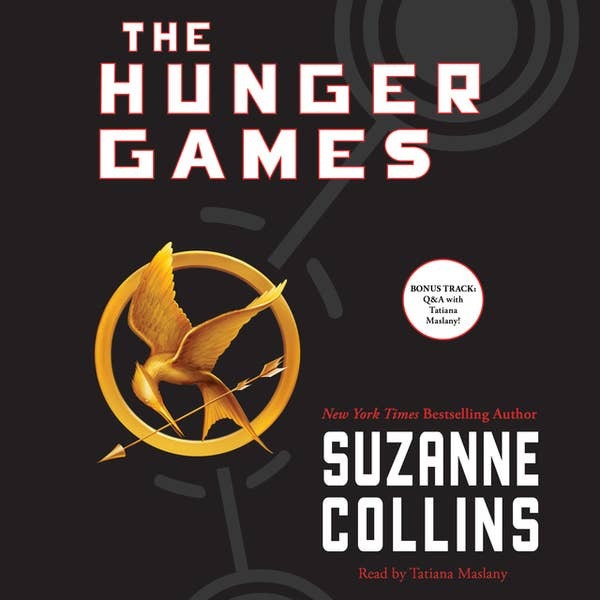
Cover of The Hunger Games by Suzanne Collins
№ 1 · The Hunger Games

The Hunger Games,

by Suzanne Collins

Ask AI
Rating4.1/ 5
Ratings5,777
Pages374
Reading Hours8h
Published2018
LanguageEnglish

§Synopsis

01

In the nation of Panem, survival is not a civil right but a state-regulated performance. Established as a punitive measure after a failed rebellion generations ago, the annual Hunger Games serve as a calculated tool of psychological control, forcing each of the twelve outlying districts to surrender two "tributes"—one boy and one girl—to a televised fight to the death. For sixteen-year-old Katniss Everdeen, the struggle for existence is already a daily reality in the impoverished coal-mining region of District 12. However, the stakes shift from the slow erosion of starvation to the immediate violence of the arena when she volunteers to take her younger sister’s place in the games.

The narrative explores the intersection of voyeurism and authoritarianism, examining how a government maintains power by turning trauma into entertainment. Once Katniss is whisked away to the opulent, garish Capitol, she is forced to navigate a world where her image is as vital as her hunting skills. To survive, she must balance her innate instinct for self-preservation against the moral cost of becoming a participant in the Capitol’s cruel pageantry. The story centers on the tension between individual identity and the personas demanded by a regime that views human life as a disposable resource.

The Architecture of Panem

The world of Panem is built upon a rigid hierarchy of resource extraction and geographical isolation. While the Capitol basks in technologically advanced luxury and aesthetic excess, the surrounding districts are relegated to specific industries—mining, agriculture, textiles—to support the center’s lifestyle. The environment is one of extreme surveillance and "Peacekeeper" enforcement, where even a casual conversation can be deemed treasonous. The transition from the grey, starving landscape of District 12 to the saturated, sensory-overloaded Capitol highlights the vast socio-economic divide that fuels the novel's central conflict.

Main Characters

  • Katniss Everdeen: A pragmatist and skilled archer who has spent years illegally hunting to keep her family alive following her father's death.
  • Peeta Mellark: The baker’s son and fellow District 12 tribute whose innate understanding of optics and charm provides a strategic counterpoint to Katniss's stoicism.
  • Haymitch Abernathy: The only living victor from District 12, whose years of trauma and alcoholism mask a sharp, cynical mind for survival.
  • Effie Trinket: A Capitol escort whose obsession with punctuality and etiquette serves as a jarring contrast to the grim reality of the tributes’ situation.
  • Gale Hawthorne: Katniss’s closest friend and hunting partner, who represents the brewing resentment and desire for rebellion within the districts.

Identity and Performance

Character development in the first half of the novel focuses on the internal conflict between authenticity and artifice. Katniss, who prides herself on her emotional detachment and survivalist logic, is thrust into a situation where she must perform a curated version of herself to gain "sponsors"—wealthy Capitol citizens who can provide life-saving supplies during the games. Her dynamic with Peeta Mellark is particularly complex, as she struggles to discern whether his actions are born of genuine affection or a calculated strategy to win over the audience. This transformation from a private citizen to a public symbol marks the beginning of her psychological journey.

Deconstructing the Dystopian Spectacle

The novel utilizes and subverts several major genre tropes to critique modern media consumption. While it employs the "Death Game" or "Battle Royale" structure, it places more emphasis on the pre-game manipulation and the role of the spectator than on the combat itself. It also subverts the "Chosen One" trope; Katniss is not selected by prophecy or destiny, but by a voluntary act of sacrifice that disrupts the Capitol’s carefully managed narrative. By blending the aesthetics of ancient gladiatorial combat with contemporary reality television, the story explores how state violence is sanitized and sold back to the populace as a necessary social ritual.

§Our take

The cleverest thing here is the mechanism. Collins has said the idea came from flipping between reality TV and war coverage, and the book never lets the two images separate. Tributes win sponsors by being likable on camera, so charm becomes a survival tool. A media-studies reading sees Katniss's refusals to play along as jamming the broadcast.

Not everyone buys the critique. Kenneth Oppel, in The Globe and Mail, argues the story hands readers the same appetite for violence it claims to condemn. Even admirers call the prose functional, plot delivery over lyricism. But the machinery works: cameras, sponsors, staged affection, and a heroine who picks loyalty when strategy would pay better. It's told in present tense, locked inside her head.

§Themes

Spectacle and surveillance
Styling, interviews, manufactured storylines and compulsory viewing turn trauma into entertainment.
Survival versus morality
The rules push everyone toward kill-or-be-killed, yet Katniss keeps choosing loyalty over pure strategy.
Inequality
Capitol luxury rests on starving districts, and viewers on their sofas can't grasp how poor those districts are.
Mythic tribute
Collins built the premise on Theseus, with Roman gladiatorial games and Spartacus in the background.

§How it was received

Kirkus gave it a starred review and found it more exciting than The Giver. Other reviewers praised the plotting and the heroine while noting the prose mostly narrates action. Oppel argued in The Globe and Mail that the book delivers as entertainment the violence it claims to criticize, and readers split on whether the love triangle deepens or dilutes the politics.

§Read it if

  • You want a fast read you can finish in a sitting or two
  • You like dystopias that look at how media and privilege work, not just the death game
  • You'd rather have a capable, unsentimental heroine than a passive YA lead

§Skip it if

  • You want lyrical prose. Even fans call the writing functional.
  • On-page deaths of young people and graphic injuries will be too much for you.

§Before you start

Reading experience
fast pace. moderate difficulty. First-person present tense keeps everything immediate. Readers report finishing it in one or two sittings, and the sad beats still land on rereads. The violence is unflinching: teen deaths, gangrene, amputation, burns, animal death, starvation and even recounted cannibalism. Romance stays at kissing and crushes.
Reading order
Book 1 of 5. Read in publication order: The Hunger Games, Catching Fire (2009), Mockingjay (2010), then the prequels The Ballad of Songbirds and Snakes (2020) and Sunrise on the Reaping (2025). The prequels are set earlier but deepen the world rather than introduce it, so save them for after the trilogy.
Content notes
Graphic violence between teens, including wounds, gangrene, amputation and burns (Common Sense Media); On-page deaths of young characters and grief throughout (Trigger Warning Database); Detailed hunting, skinning and animal death; fatal animal attacks (Trigger Warning Database); Poverty and starvation are central, with references to death by starvation and recounted cannibalism (Trigger Warning Database); Adults drink, and one significant character is often drunk (Common Sense Media); Romance stays light: kissing and crushes only (Common Sense Media).

§Common questions

Is The Hunger Games appropriate for a 12-year-old?
Guidance varies. Common Sense Media says 13 and up, Kirkus says 11 and up. Expect intense violence, including teen deaths, and heavy themes of starvation and grief.
Is The Hunger Games a copy of Battle Royale?
Both have teens forced to fight, but Collins stays close to one heroine in present tense while Battle Royale is a cooler, many-character story. Collins has said she didn't know the Japanese novel until hers was finished, and its author reacted to the comparisons with amusement.
Do adults enjoy The Hunger Games, or is it just for teens?
It is hardly a teens-only book: in one 2012 bookseller observation, adult buyers outnumbered teens, citing Katniss, the writing and the tension.

§If you liked this

  • Battle Royale by Koushun Takami — The premise cousin: teens in a state-run death contest, but cooler in tone, more graphic, and spread across about 40 characters.
  • The Giver by Lois Lowry — An earlier YA dystopia. Kirkus sets the two side by side and finds Collins more exciting.
  • The Lottery by Shirley Jackson — Kirkus names Jackson's story as a touchstone: a community's ritual sacrifice that everyone accepts.
  • Divergent by Veronica Roth — A frequent read-alike, with a teen heroine in a rigid, factioned dystopia from the same post-Hunger Games wave.
Sources
  • wknofm.org
  • mediacommons.org
  • theglobeandmail.com
  • en.wikipedia.org
  • kirkusreviews.com
  • goodreads.com
  • admin.bookreporter.com
  • commonsensemedia.org
  • reactormag.com
  • csmonitor.com
  • bookreporter.com
  • scholastic.com
  • triggerwarningdatabase.com
  • goodreads.com

Track this book

Add to your library to track progress and write reviews

§Genres
action1adventure1classics1dystopian1fantasy1fiction1romance1
§Content Warnings
§Moods
adventurous1challenging1dark1emotional1hopeful1inspiring1mysterious1
§Tags
#alcoholism1#diverse characters1#fire/fire injury1#grief1

§About the Author

Suzanne Collins
Suzanne Collins

5 books in catalog

Dystopian fiction and young adult literature were transformed by the publication of The Hunger Games, a narrative exploring systemic authoritarianism, state-sanctioned violence, and the media spectacle of combat. Suzanne Collins introduced readers to the nation of Panem, where coerced youth fight to the death in televised survival competitions. Her work grounded speculative world-building in classical mythology, military history, and philosophical theories of war, examining the human cost of conflict and the mechanics of political control. The original trilogy and its subsequent expansions have sold over 100 million copies worldwide, been translated into 55 languages, and spawned a major feature film franchise grossing upwards of $3.3 billion globally.

Before achieving widespread recognition for her speculative worlds, Collins spent over a decade writing for acclaimed children's television programs before transitioning to long-form prose. Her bibliography spans middle-grade urban fantasy in the Underland Chronicles, autobiographical picture books, and high-stakes speculative fiction. Recognized on the TIME 100 list and honored with the Authors Guild Award for Distinguished Service to the Literary Community, her writing avoids sanitized heroic tropes, focusing instead on the psychological trauma, propaganda, and moral compromises inherent to surviving war.

Career & Background

Born on August 10, 1962, in Hartford, Connecticut, Suzanne Marie Collins grew up in a military family as the daughter of a career United States Air Force officer. Her father's service, which included a deployment during the Vietnam War, profoundly shaped her childhood and instilled a lifelong interest in military history, political science, and the ethical dilemmas of armed conflict. This personal family experience later provided the foundation for her autobiographical picture book, Year of the Jungle. Collins pursued her formal education in the dramatic arts, graduating from Indiana University Bloomington with a double major in Drama and Telecommunications before earning an M.F.A. in Dramatic Writing from New York University's Tisch School of the Arts.

In 1991, Collins launched her professional writing career in television, joining the writers' rooms for prominent children's networks. She earned credits on influential programs for Nickelodeon, including the Emmy-nominated series Clarissa Explains It All and The Mystery Files of Shelby Woo. For preschool audiences, she wrote episodes for the Emmy-nominated series Little Bear and Oswald. She also co-wrote the animated holiday special Santa, Baby! with Peter Bakalian, earning a Writers Guild of America Award nomination in Animation. Her television career continued as Head Writer for Scholastic Entertainment's Clifford's Puppy Days and as a freelance writer on Wow! Wow! Wubbzy!.

While working on the Kids' WB animated series Generation O!, Collins met author and illustrator James Proimos, who encouraged her to apply her storytelling talents to prose fiction. Recognizing that novel writing offered greater narrative freedom for complex world-building, she reinterpreted the classic 'rabbit hole' fantasy trope for an urban setting, resulting in her debut novel, Gregor the Overlander, published in 2003. This novel launched the five-book middle-grade series the Underland Chronicles, establishing her distinct narrative style that blends accessible, fast-paced action with serious themes of warfare, political diplomacy, and biological conflict.

Writing Style & Themes

The core of Collins's literary work is an uncompromising examination of the causes, execution, and lingering trauma of violence. Rather than presenting sanitized heroics or romanticized battles, her narratives explore 'just war' theory, probing the ethical boundaries of when conflict is justified and how moral corruption affects both aggressors and resistance movements. Her inspiration for The Hunger Games famously emerged while channel surfing late at night, when real-time footage of the Iraq War merged unsettlingly with competitive reality television programming, highlighting the dangerous blurring of human tragedy and public entertainment.

A central thematic pillar across her novels is the weaponization of media, propaganda, and societal control. In Panem, cameras function as tools of oppression and rebellion alike, demonstrating how authoritarian regimes manipulate narratives to maintain power through fear, poverty, and enforced hunger. In discussing her novel Sunrise on the Reaping, Collins cited philosopher David Hume's observations on implicit submission and 'the easiness with which the many are governed by the few,' emphasizing how state propaganda and narrative control secure public compliance. Questions of media manipulation, public spectacle, and 'Real or not real?' serve as persistent thematic anchors throughout her fiction.

Stylistically, Collins utilizes sparse, immediate, and visceral prose that prioritizes internal psychological realism over ornate description. Her first-person, present-tense narration in The Hunger Games trilogy immerses readers directly into the survival instincts, hypervigilance, and moral crises of her characters. Her stories pay rigorous attention to the psychological toll of violence, portraying post-traumatic stress disorder (PTSD), grief, guilt, and the loss of innocence among child soldiers and survivors with unyielding honesty. By anchoring dystopian and fantasy frameworks in historical realities, her work challenges readers to critically analyze power structures, historical memory, and civic responsibility.

Major Works

  • The Hunger Games — Published in 2008, The Hunger Games launched the dystopian trilogy set in the post-apocalyptic nation of Panem. The novel introduces Katniss Everdeen, a sixteen-year-old girl who volunteers to replace her younger sister in the annual Hunger Games, a televised death match forced upon twelve subjugated districts by the Capitol. The book explores themes of poverty, survival, government oppression, and resistance.
  • Catching Fire — The second novel in the trilogy, Catching Fire, published in 2009, continues Katniss Everdeen's story following her defiance of the Capitol in the 74th Hunger Games. As unrest spreads across the districts, Katniss and her fellow tribute Peeta Mellark are forced back into the arena for the 75th Hunger Games, known as the Quarter Quell, escalating the conflict between the oppressed citizens and President Snow's totalitarian regime.
  • Mockingjay — Concluding the original trilogy, Mockingjay (2010) chronicles the full-scale rebellion against the Capitol. Katniss becomes the reluctant symbol of the revolution while navigating intense military strategy, propaganda campaigns, severe personal trauma, and the complex ethical choices required to overthrow an authoritarian power without replacing it with a new tyranny.
  • The Ballad of Songbirds and Snakes — Published in 2020, The Ballad of Songbirds and Snakes serves as a prequel to the original trilogy, focusing on eighteen-year-old Coriolanus Snow during the 10th annual Hunger Games. The novel provides critical historical context regarding the early development of the Hunger Games, exploring themes of human nature, political power, and the philosophical foundations of Capitol control.
  • Sunrise on the Reaping — Scheduled for publication in 2025, Sunrise on the Reaping returns to the world of Panem during the 50th annual Hunger Games, the Second Quarter Quell won by Haymitch Abernathy. The narrative draws inspiration from philosopher David Hume's theories on implicit submission, narrative control, and propaganda, exploring how authoritarian power is maintained through psychological and political manipulation.
  • Underland Chronicles — Beginning in 2003 with Gregor the Overlander, this five-book middle-grade series follows a young boy named Gregor who falls through a grate in his laundry room into the subterranean world of the Underland beneath New York City. Across five novels, the series addresses heavy topics including war, biological weapons, genocide, prophecy, and political diplomacy for a younger readership.
  • Year of the Jungle — An autobiographical picture book published in 2013, Year of the Jungle draws upon the author's childhood experience during her father's deployment in the Vietnam War. Illustrated by James Proimos, the story makes complex feelings of fear, uncertainty, and familial separation accessible to young children.

§Featured Series

The Hunger Games

Cover of The Ballad of Songbirds and Snakes by Suzanne Collins

The Ballad of Songbirds and Snakes

Suzanne Collins, 2010
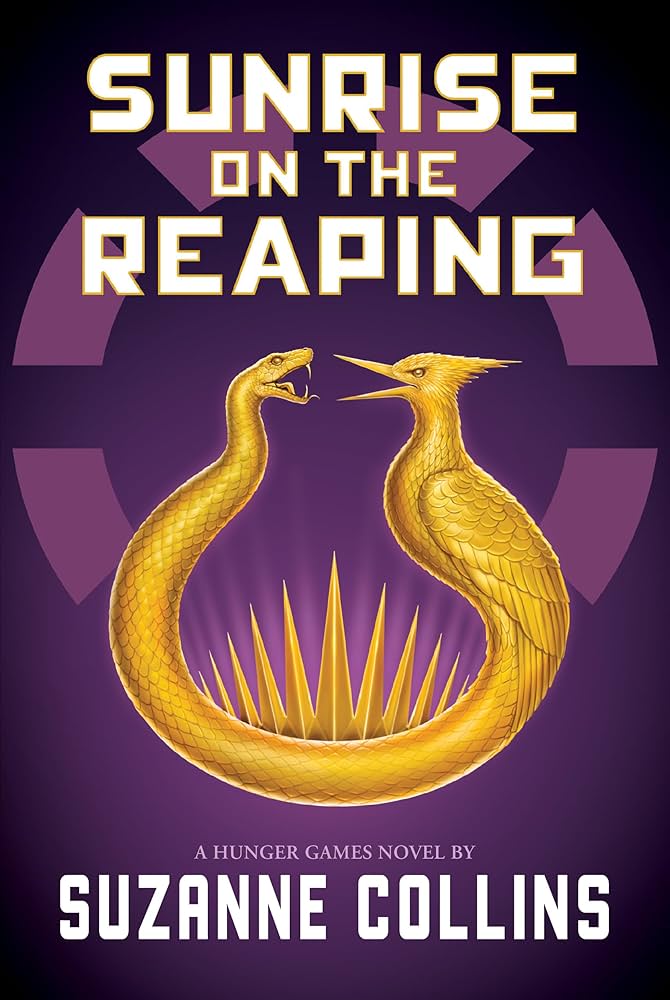
Cover of Sunrise on the Reaping by Suzanne Collins

Sunrise on the Reaping

Suzanne Collins, 2025
Cover of The Hunger Games by Suzanne Collins

The Hunger Games

Suzanne Collins, 2008
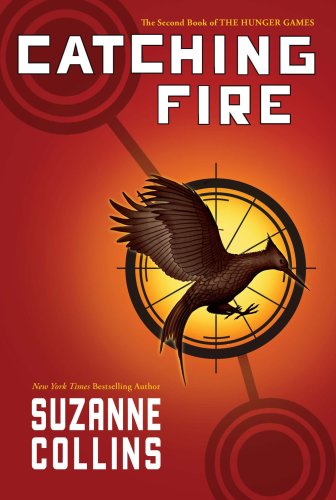
Cover of Catching Fire by Suzanne Collins

Catching Fire

Suzanne Collins, 2009
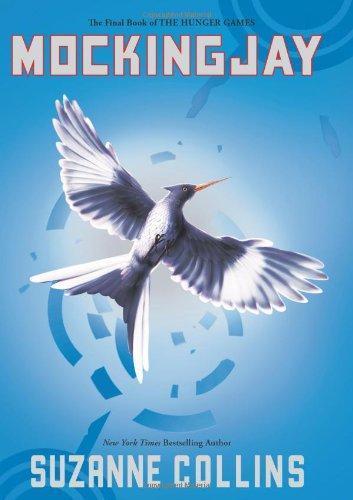
Cover of Mockingjay by Suzanne Collins

Mockingjay

Suzanne Collins, 2010

§Other Editions

Showing 2 of 175 editions
Cover of The Hunger Games

The Hunger Games

engHardcover
Scholastic Press20089780439023481
Amazon
Cover of Deluxe Hunger Games Collection

Deluxe Hunger Games Collection

engHardcoverDeluxe Collection
Scholastic20259780702342363
§Genres
action1adventure1classics1dystopian1fantasy1fiction1romance1
§Content Warnings
§Moods
adventurous1challenging1dark1emotional1hopeful1inspiring1mysterious1
§Tags
#alcoholism1#diverse characters1#fire/fire injury1#grief1

Metadata

ISBN-139781338334906
ISBN-101338334905
ASINB07HHH7L77

Editions and availability

Find The Hunger Games Suzanne Collins in PDF, EPUB, ebook, audiobook, print, or library editions.

View on Amazon
Bookshop.orgGoogle Play BooksBarnes & NobleOpen Library

Featured In Lists

Book cover from this collectionBook cover from this collectionBook cover from this collectionBook cover from this collection
Book cover from this collection

The Book You Saw on TikTok

74 books
Book cover from this collectionBook cover from this collectionBook cover from this collectionBook cover from this collection
Book cover from this collection

Readers Pick Their 100 Best Books of the 21st Century

100 books
Book cover from this collectionBook cover from this collectionBook cover from this collectionBook cover from this collection
Book cover from this collection

Sword And Laser

134 books
Book cover from this collectionBook cover from this collectionBook cover from this collectionBook cover from this collection
Book cover from this collection

2024 Book Releases

1000 books
Book cover from this collectionBook cover from this collectionBook cover from this collectionBook cover from this collection
Book cover from this collection

Favorite books with a coming of age story with female protagonist

80 books
Book cover from this collectionBook cover from this collectionBook cover from this collectionBook cover from this collection
Book cover from this collection

Owned

12 books
Book cover from this collectionBook cover from this collectionBook cover from this collectionBook cover from this collection
Book cover from this collection

Taylor Swift's Bookshelf: Gothic Novels and YA Favorites

12 books•@sansfictionbot
Book cover from this collectionBook cover from this collectionBook cover from this collectionBook cover from this collection
Book cover from this collection

MegaReadingList

91 books