SSansFiction
The libraryCollectionsJournalStatsFor authors
Sign inJoin now
Sansfiction,

A digital library for books. Made by readers, for readers.

v 2.0 · 2026
The library
  • Discover
  • Collections
  • Book tracker
  • Journal
  • Stats
For authors
  • SF Links
  • Analytics
  • How it works
  • FAQ
Elsewhere
  • X / @sansfiction
  • Privacy
  • Terms
  • Contact
© 2026 SansFiction · Digital · GlobalA quiet room for your reading life.
The libraryCollectionsJournalStatsFor authors
Sign inJoin now →
Navigation
Library
Bookshelf
Journal
Discover
Collections
Tierlists
Stats
Profile
Author Page
Link Builder
Account
Sign in
S
G
Booksanthologies & short storiesI, Robot
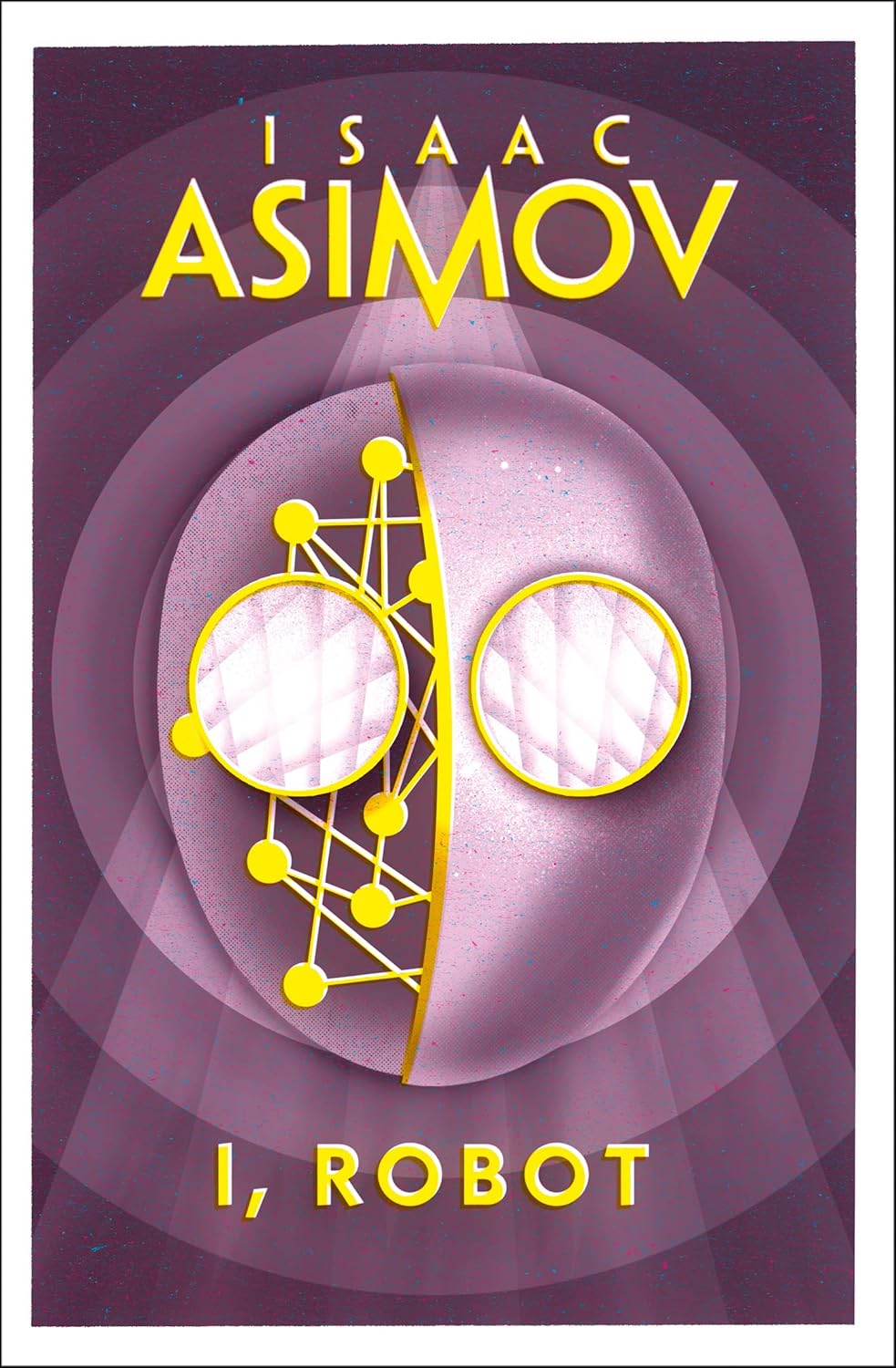
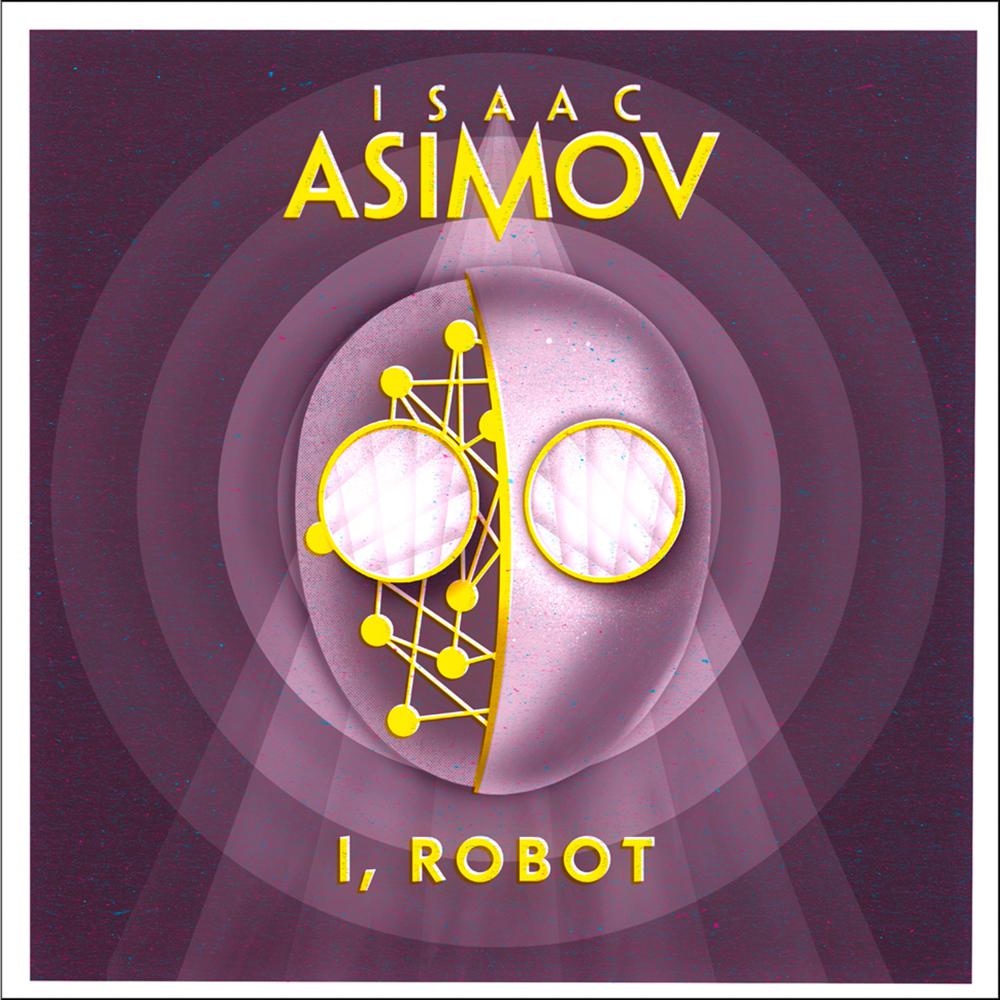
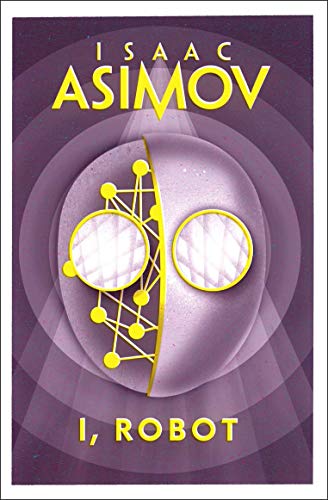
Cover of I, Robot by Isaac Asimov
№ 1 · Greater Foundation Universe

I, Robot,

by Isaac Asimov

Ask AI
Rating4.1/ 5
Ratings1,420
Pages256
Reading Hours5h
Published1950
LanguageEnglish

§Synopsis

01

Isaac Asimov’s Robot series – from the iconic collection I, Robot to four classic novels – contains some of the most influential works in the history of science fiction. Establishing and testing the Three Laws of Robotics, they continue to shape the understanding and design of artificial intelligence to this day.What happens when a robot begins to question its creators? What would be the consequences of creating a robot with a sense of humour? Or the ability to lie? How do we truly tell the difference between man and machine?In I, Robot, Asimov sets out the Three Laws of Robotics – designed to protect humans from their robotic creations – and pushes them to their limits and beyond.Following genius robopsychologist Dr. Susan Calvin and engineers Powell and Donovan, these short stories helped to transform artificial intelligence from a dream into a science and changed perceptions of robots for ever.

§Our take

Forget the Will Smith movie. The 2004 film borrowed the title, the Laws and a couple of names; the book is a collection of locked-room puzzles where the culprit is a rule conflict and the detective is a robopsychologist. That structure is the pleasure and the limitation. Each story stands alone, so there's little character development and no momentum to speak of, and Asimov's prose is serviceable at best, prone to explaining its own solutions. But the ideas hold up: readers still find the Laws elegant, the puzzles satisfying, and the whole thing surprisingly funny and relevant to modern AI debates. Susan Calvin is the argument that won't settle. A central woman scientist in 1940s science fiction was rare, and some readers credit Asimov for the page time; others find her cold, plain and condescended to by the men around her, a portrayal that reads as dated even for its era. Both readings are true, and the tension between them is the most interesting thing Asimov left on the page. Read it for the puzzles, and for the book that taught a century of writers to think of robots as logic rather than menace.

§Themes

Rules that backfire
Every malfunction traces back to the Three Laws working exactly as written, which is the point.
Robots as mirrors
The machines behave with recognizably human psychology, and 'Reason' and 'Liar!' read like character studies.
Who counts as human
A bent definition of 'human' is one of the loopholes the Laws can't close.
Laws that fail in the real world
AI researchers and philosophers argue Asimov's own stories prove rules like these can't be relied on, thanks to vague terms like harm.

§How it was received

The 1951 critics bit: the Times Book Review called it exciting, Conklin couldn't put it down, Miller loved the puzzles and the jokes. The Encyclopedia of Science Fiction still ranks Asimov second only to Heinlein among American science fiction writers. Modern readers are pickier: ideas brilliant, prose plain, pace unhurried.

§Read it if

  • You like puzzles with logical solutions more than character-driven plots
  • You want the root of a huge branch of science fiction, and the origin of the Three Laws everyone still quotes
  • You're curious how 1940s thinking about machine intelligence holds up against modern AI debates

§Skip it if

  • It's unhurried and light on character, and some stories flat-out lecture at you.
  • Dated 1940s assumptions, including the treatment of women, will ruin the trip for you.

§Before you start

Reading experience
Reads in self-contained bites, each story a puzzle with a logical solution, best taken one at a time rather than binged.
Reading order
A standalone entry point to Asimov's Robot series. The detective novels The Caves of Steel and The Naked Sun follow with Lije Baley and R. Daneel Olivaw, and Asimov later merged the Robot and Foundation series.
Content notes
Some stories involve danger to humans from malfunctioning robots; The portrayal of Susan Calvin strikes some readers as dated and sexist for its era.

§Common questions

Is I, Robot a novel or a collection of short stories?
Nine stories from 1940 to 1950 sewn together by a frame narrative Asimov wrote for the 1950 edition. Readers argue about whether it hangs together as a novel.
Is the 2004 Will Smith movie based on the book?
Barely. It's credited as 'suggested by' the book and borrows the title, the Three Laws and a few names, but the plot is original. It began as an unrelated screenplay.
What are the Three Laws of Robotics?
Asimov's rules designed to protect humans from their robot creations, first stated together in the story 'Runaround'. He credited a 1940 conversation with editor John W. Campbell with helping him articulate them, and his own stories exist to show how they break.

§If you liked this

  • The Caves of Steel by Isaac Asimov — Asimov turns the same robot material into detective fiction, pairing a human cop with R. Daneel Olivaw.
  • The Complete Robot by Isaac Asimov — Reprints all the stories here except the frame story, plus other robot tales. The completist's version.
  • Foundation by Isaac Asimov — The other Asimov classic, though one reviewer rates this collection above it for consistency and entertainment.
Sources
  • Wikipedia
  • Wikipedia
  • Wikipedia (film article)
  • The Encyclopedia of Science Fiction
  • Worlds Without End (GMRC review by Val)
  • Kirkus Reviews

Track this book

Add to your library to track progress and write reviews

§Genres
anthologies & short stories1classics1fantasy1fiction1general1hard science fiction1science fiction1
§Moods
gray2adventurous1challenging1dark1emotional1funny1informative1
§Tags
#ai fiction2#ethics2#machine reasoning2#character driven1#diverse characters1#loveable characters1#male author1

§About the Author

Isaac Asimov
Isaac Asimov

16 books in catalog

The Three Laws of Robotics and the vast interstellar narrative of the Foundation saga redefined mid-twentieth-century speculative fiction. Isaac Asimov (1920–1992) established an enduring legacy in hard science fiction and popular science exposition through hundreds of books that made complex scientific concepts accessible to general readers.

Career & Background

Born in Petrovichi, Russia, in 1920, Asimov immigrated with his family to the United States in 1923 and grew up in Brooklyn, New York, where he discovered science fiction through magazines sold in his father's candy store. He published his first short story, 'Marooned off Vesta,' in 1939 while contributing to science fiction pulp periodicals. During World War II, he worked at the Naval Aviation Experimental Station in Philadelphia alongside fellow authors Robert A. Heinlein and L. Sprague de Camp. Asimov earned his Ph.D. in biochemistry from Columbia University and went on to teach at Boston University School of Medicine. His debut novel, Pebble in the Sky, appeared in 1950, launching a prolific literary career that ultimately encompassed more than 500 written or edited books across science, history, literature, and religion before his death in 1992.

Writing Style & Themes

Renowned as one of the 'Big Three' science fiction writers of the twentieth century alongside Arthur C. Clarke and Robert A. Heinlein, Asimov pioneered rational, hard science fiction rooted in logical problem-solving and sociological systems. His fiction frequently explored artificial intelligence, robotics, and the mathematical prediction of future history through the discipline of psychohistory. In classic titles such as I, Robot and The Caves of Steel, he introduced structured ethical frameworks and science fiction mystery hybrids, while standalone works like The Gods Themselves examined parallel universes and human intellect. Beyond fiction, his clear, engaging prose style extended to non-fiction, spanning nine out of ten major categories in the Dewey Decimal Classification system.

Major Works

  • Foundation — The seminal opening novel of the Foundation Series, detailing mathematician Hari Seldon's creation of psychohistory to preserve human knowledge through the inevitable collapse of a Galactic Empire.
  • I, Robot — An influential collection of interconnected short stories that introduced the Three Laws of Robotics and examined the complex ethical interactions between humans and artificial intelligence.
  • The Caves of Steel — A groundbreaking science fiction detective novel pairing human detective Elijah Baley with robot partner R. Daneel Olivaw to solve a murder in a densely populated subterranean city.
  • The Gods Themselves — An award-winning novel featuring parallel universes, alien ecology, and humanity's pursuit of energy, winning both the Hugo and Nebula Awards.
  • The End of Eternity — A classic time-travel novel depicting Eternity, an organization outside time that manipulates human history to prevent disaster.

§Featured Series

Greater Foundation Universe

Cover of I, Robot by Isaac Asimov

I, Robot

Isaac Asimov, 1940
Cover of The Stars, Like Dust by Isaac Asimov

The Stars, Like Dust

Isaac Asimov, 1951
Cover of Prelude to Foundation by Isaac Asimov

Prelude to Foundation

Isaac Asimov, 1994
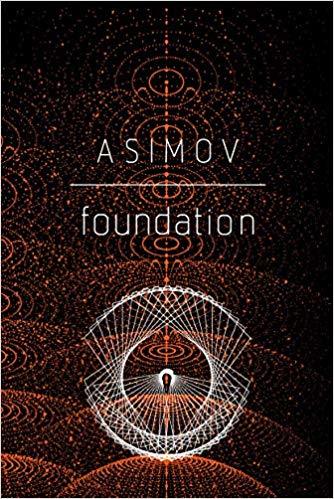
Cover of Foundation by Isaac Asimov

Foundation

Isaac Asimov, 1951
Cover of Foundation and Empire by Isaac Asimov

Foundation and Empire

Isaac Asimov, 1945
Cover of Foundation's Edge by Isaac Asimov

Foundation's Edge

Isaac Asimov, 1951
Cover of The Caves of Steel by Isaac Asimov

The Caves of Steel

Isaac Asimov, 1952

§Also part of

RobotRobot (Chronological Order)

§Other Editions

Showing 2 of 118 editions
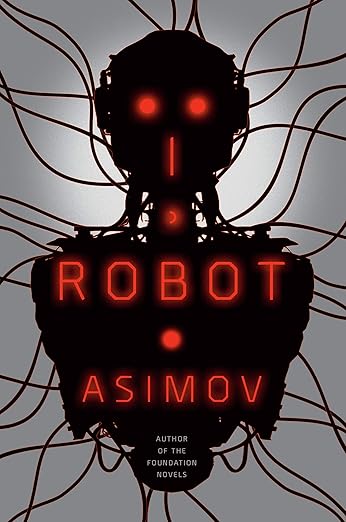
Cover of I, Robot

I, Robot

engeBook
Spectra20049780553900330
Amazon
Cover of I, Robot

I, Robot

engAudiobook
HarperCollins Publishers20199780008305918
§Genres
anthologies & short stories1classics1fantasy1fiction1general1hard science fiction1science fiction1
§Moods
gray2adventurous1challenging1dark1emotional1funny1informative1
§Tags
#ai fiction2#ethics2#machine reasoning2#character driven1#diverse characters1#loveable characters1#male author1

Metadata

ISBN-139780008279554
ISBN-100008279551
ASIN0008279551

Editions and availability

Find I, Robot Isaac Asimov in PDF, EPUB, ebook, audiobook, print, or library editions.

View on Amazon
Bookshop.orgGoogle Play BooksBarnes & NobleOpen Library

Featured In Lists

Book cover from this collectionBook cover from this collectionBook cover from this collectionBook cover from this collection
Book cover from this collection

NPRs Top 100 Science-Fiction and Fantasy Books of All Time

100 books
Book cover from this collectionBook cover from this collectionBook cover from this collectionBook cover from this collection
Book cover from this collection

List 1001 Books Boxall

1000 books
Book cover from this collectionBook cover from this collectionBook cover from this collectionBook cover from this collection
Book cover from this collection

AI Fiction 1901-1950: Machine Age & Robot Labor

25 books•@sansfictionbot
Book cover from this collectionBook cover from this collectionBook cover from this collectionBook cover from this collection
Book cover from this collection

NPR Top 100 Science Fiction Fantasy

68 books
Book cover from this collectionBook cover from this collectionBook cover from this collectionBook cover from this collection
Book cover from this collection

The Ethics of Artificial Sentience

10 books•@sansfictionbot