
§Author· 16 books
Isaac Asimov
Also known as Dr. Isaac Asimov, Isaak Asimov, Isaak Iudich Azimov, Isak Asimov, I. Asimov
The Three Laws of Robotics and the vast interstellar narrative of the Foundation saga redefined mid-twentieth-century speculative fiction. Isaac Asimov (1920–1992) established an enduring legacy in hard science fiction and popular science exposition through hundreds of books that made complex scientific concepts accessible to general readers.
Career & Background
Born in Petrovichi, Russia, in 1920, Asimov immigrated with his family to the United States in 1923 and grew up in Brooklyn, New York, where he discovered science fiction through magazines sold in his father's candy store. He published his first short story, 'Marooned off Vesta,' in 1939 while contributing to science fiction pulp periodicals. During World War II, he worked at the Naval Aviation Experimental Station in Philadelphia alongside fellow authors Robert A. Heinlein and L. Sprague de Camp. Asimov earned his Ph.D. in biochemistry from Columbia University and went on to teach at Boston University School of Medicine. His debut novel, Pebble in the Sky, appeared in 1950, launching a prolific literary career that ultimately encompassed more than 500 written or edited books across science, history, literature, and religion before his death in 1992.
Writing Style & Themes
Renowned as one of the 'Big Three' science fiction writers of the twentieth century alongside Arthur C. Clarke and Robert A. Heinlein, Asimov pioneered rational, hard science fiction rooted in logical problem-solving and sociological systems. His fiction frequently explored artificial intelligence, robotics, and the mathematical prediction of future history through the discipline of psychohistory. In classic titles such as I, Robot and The Caves of Steel, he introduced structured ethical frameworks and science fiction mystery hybrids, while standalone works like The Gods Themselves examined parallel universes and human intellect. Beyond fiction, his clear, engaging prose style extended to non-fiction, spanning nine out of ten major categories in the Dewey Decimal Classification system.
Major Works
- Foundation — The seminal opening novel of the Foundation Series, detailing mathematician Hari Seldon's creation of psychohistory to preserve human knowledge through the inevitable collapse of a Galactic Empire.
- I, Robot — An influential collection of interconnected short stories that introduced the Three Laws of Robotics and examined the complex ethical interactions between humans and artificial intelligence.
- The Caves of Steel — A groundbreaking science fiction detective novel pairing human detective Elijah Baley with robot partner R. Daneel Olivaw to solve a murder in a densely populated subterranean city.
- The Gods Themselves — An award-winning novel featuring parallel universes, alien ecology, and humanity's pursuit of energy, winning both the Hugo and Nebula Awards.
- The End of Eternity — A classic time-travel novel depicting Eternity, an organization outside time that manipulates human history to prevent disaster.
§All Books
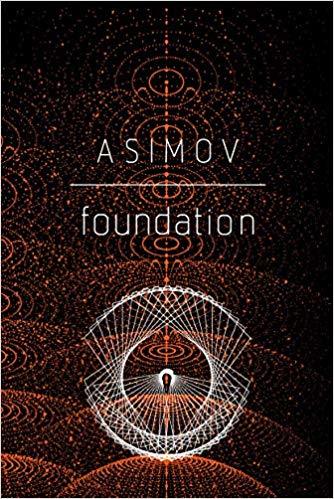
Foundation
Isaac Asimov, 1951
1,747 ratings
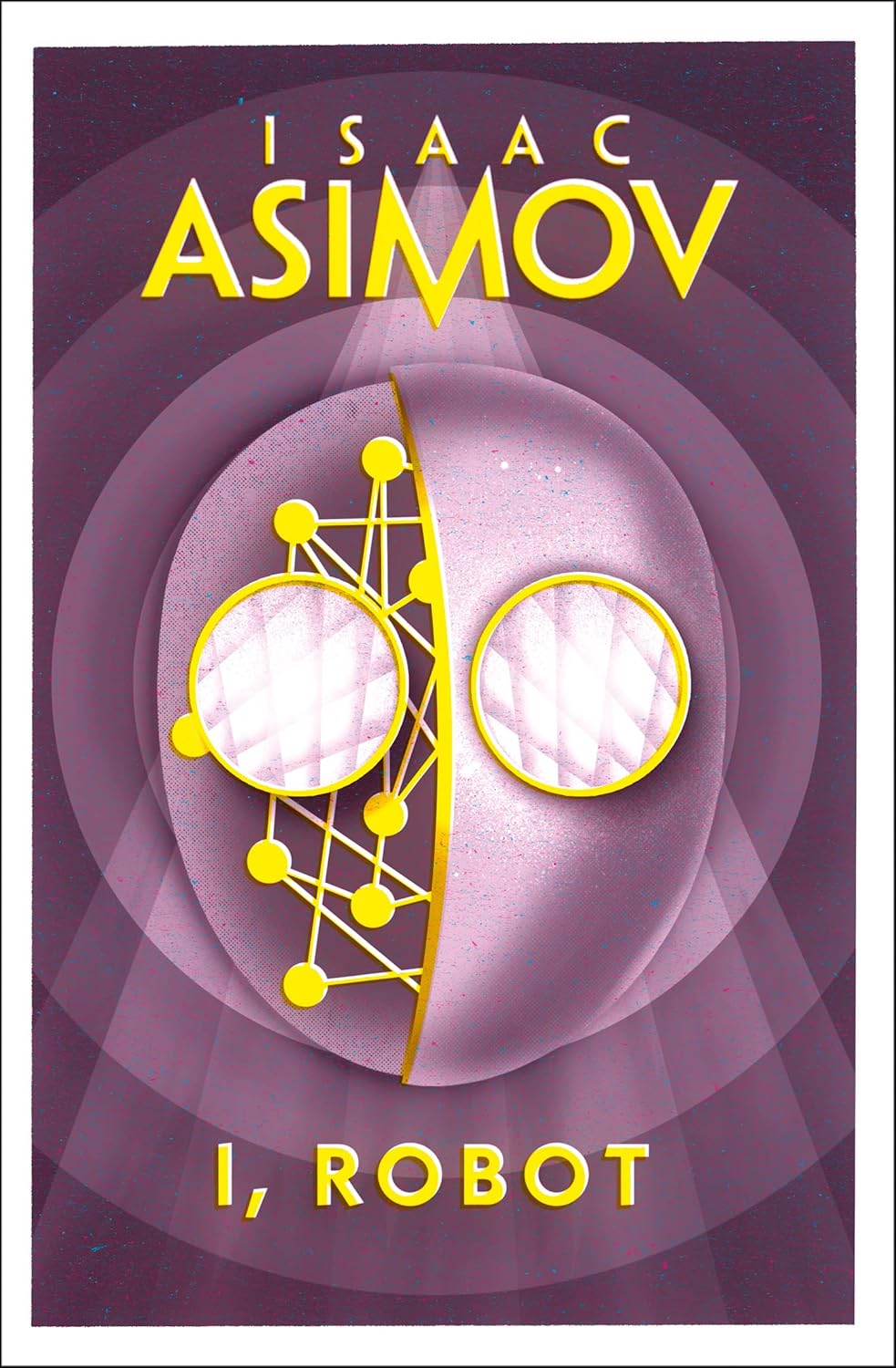
I, Robot
Isaac Asimov, 1940
1,420 ratings

Foundation and Empire
Isaac Asimov, 1945
830 ratings
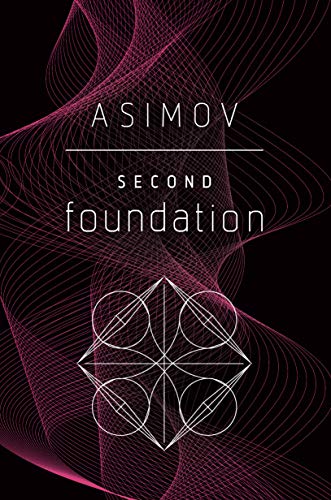
Second Foundation
Isaac Asimov, 1952
762 ratings

The Caves of Steel
Isaac Asimov, 1952
410 ratings

Foundation's Edge
Isaac Asimov, 1951
363 ratings
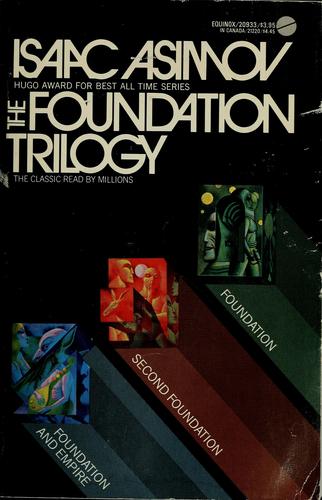
Foundation Series
Isaac Asimov, 1950
263 ratings
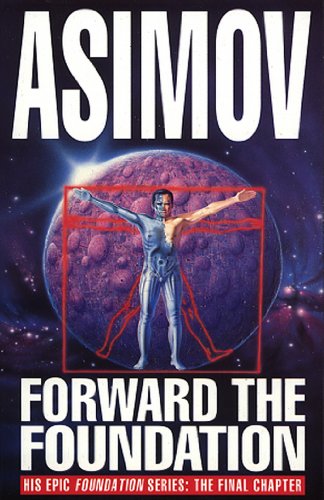
Forward the Foundation
Isaac Asimov, 1993
244 ratings

The Robots of Dawn
Isaac Asimov, 1958
219 ratings

The Gods Themselves
Isaac Asimov, 1972
213 ratings

The End of Eternity
Isaac Asimov, 1955
213 ratings
The Stars, Like Dust
Isaac Asimov, 1951
134 ratings
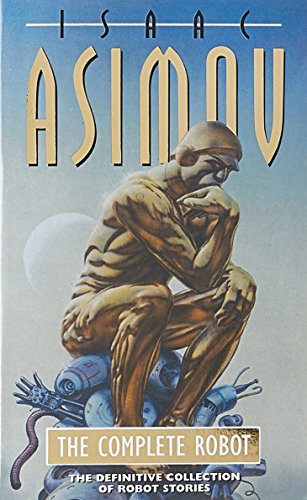
The Complete Robot
Isaac Asimov, 1982
83 ratings
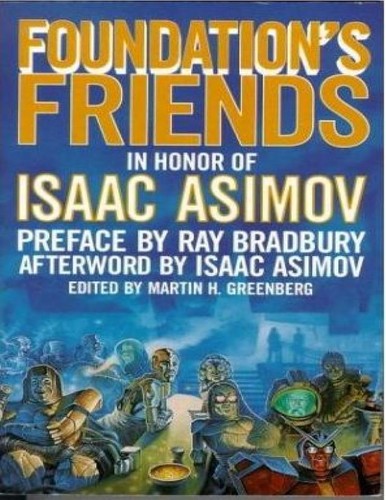
Foundation's Friends
Ben Bova, 1989
10 ratings
Prelude to Foundation
Isaac Asimov, 1994
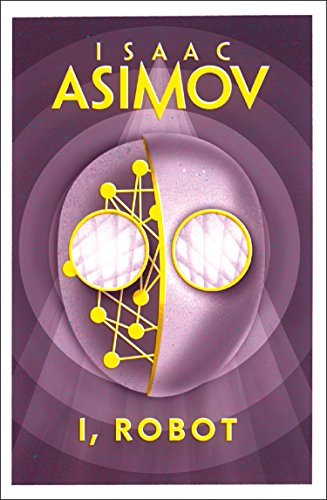
I, Robot: The science fiction classic
Isaac Asimov, 1950
§ About Isaac Asimov's books
- Books on SansFiction
- 16
- Published
- 1940–1994
- Average rating
- 4.1 / 5 across 6,911 ratings
- Genres
- Classics, Fiction, Adventure, Dystopian
- Series
- Foundation (Publication Order), Greater Foundation Universe
Start here: Foundation (1951)
One of the great masterworks of science fiction, the Foundation novels of Isaac Asimov are unsurpassed for their unique blend of nonstop action, daring ideas, and extensive world-building. The story of our future begins with the history of Foundation and its greatest psychohistorian: Hari Seldon.
Foundation (Publication Order): reading order
Greater Foundation Universe: reading order
Foundation (Chronological Order): reading order
Robot: reading order
Robot (Chronological Order): reading order
Foundation Universe: reading order
Common questions about Isaac Asimov
- Who is Isaac Asimov?
- Born in Petrovichi, Russia, in 1920, Asimov immigrated with his family to the United States in 1923 and grew up in Brooklyn, New York, where he discovered science fiction through magazines sold in his father's candy store. He published his first short story, 'Marooned off Vesta,' in 1939 while contributing to science fiction pulp periodicals.
- What is Isaac Asimov best known for?
- Isaac Asimov is best known for Foundation, published in 1951 with 1,747 ratings and a 4.0 average. It is the most-rated of Isaac Asimov's books on SansFiction.
- How many books has Isaac Asimov written?
- SansFiction lists 16 books by Isaac Asimov, published between 1940 and 1994. The most popular are Foundation, I, Robot, Foundation and Empire, Second Foundation and The Caves of Steel.
- What order should I read Isaac Asimov's Foundation (Publication Order) books in?
- Read the Foundation (Publication Order) books in series order: 1. Foundation, 1. Foundation Series, 2. Foundation and Empire, 3. Second Foundation, 4. Foundation's Edge, 6. Prelude to Foundation, 7. Forward the Foundation.
- What genres does Isaac Asimov write?
- Isaac Asimov's books on SansFiction are tagged Classics, Fiction, Adventure and Dystopian.