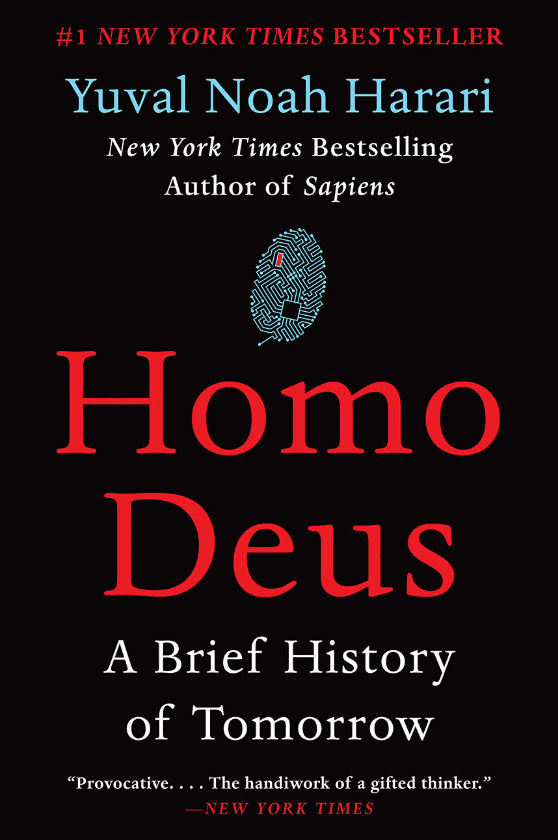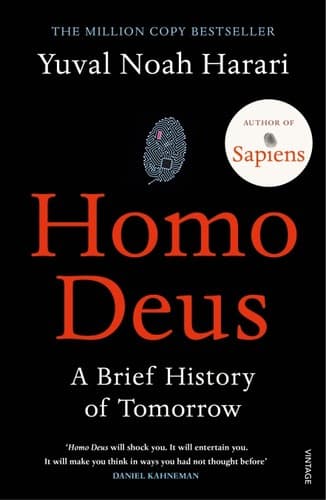
"Over the past century humankind has managed to do the impossible and rein in famine, plague, and war. This may seem hard to accept, but, as Harari explains in his trademark style--thorough, yet riveting--famine, plague and war have been transformed from incomprehensible and uncontrollable forces of nature into manageable challenges. For the first time ever, more people die from eating too much than from eating too little; more people die from old age than from infectious diseases; and more people commit suicide than are killed by soldiers, terrorists and criminals put together. The average American is a thousand times more likely to die from binging at McDonalds than from being blown up by Al Qaeda. What then will replace famine, plague, and war at the top of the human agenda? As the self-made gods of planet earth, what destinies will we set ourselves, and which quests will we undertake? Homo Deus explores the projects, dreams and nightmares that will shape the twenty-first century--from overcoming death to creating artificial life. It asks the fundamental questions: Where do we go from here? And how will we protect this fragile world from our own destructive powers? This is the next stage of evolution" -- provided by publisher.
Add to your library to track progress and write reviews
Find Homo Deus: A Brief History of Tomorrow Yuval Noah Harari in PDF, EPUB, ebook, audiobook, print, or library editions.

21 books in catalog
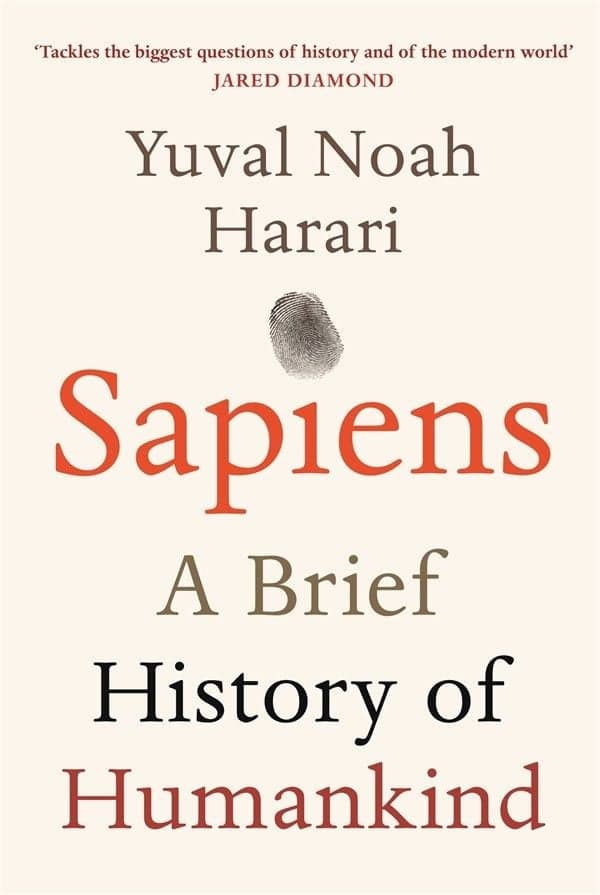
Examining the sweeping trajectory of human evolution, social structures, and technological advancement, macro-historical non-fiction offers critical frameworks for understanding contemporary global challenges. Yuval Noah Harari brought large-scale historical analysis to a broad audience with Sapiens: A Brief History of Humankind, which explores how cognitive development, agricultural shifts, and shared cultural fictions shaped human society.
Born in Kiryat Atta, Israel, on February 24, 1976, Harari pursued advanced historical research at the University of Oxford, earning his doctorate in 2002. He subsequently joined the faculty at the Hebrew University of Jerusalem as a professor of history, specializing in world, medieval, and military history. His undergraduate lectures on world history served as the basis for his 2011 book Sapiens: A Brief History of Humankind. In 2019, Harari and Itzik Yahav co-founded Sapienship, a social impact company that develops projects in education and entertainment to address pressing global issues.
Harari combines history, evolutionary biology, and anthropology to address macro-historical questions regarding human existence. His writing analyzes how shared narratives, free will, consciousness, happiness, and suffering influence human behavior and social structures. In works such as Homo Deus: A Brief History of Tomorrow and Nexus: A Brief History of Information Networks from the Stone Age to AI, he examines the historical evolution of information networks and evaluates the existential risks associated with artificial intelligence and non-human decision-making systems.
Homo