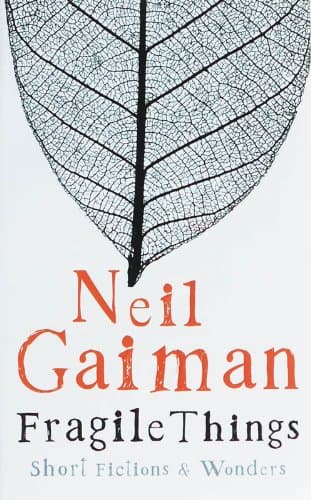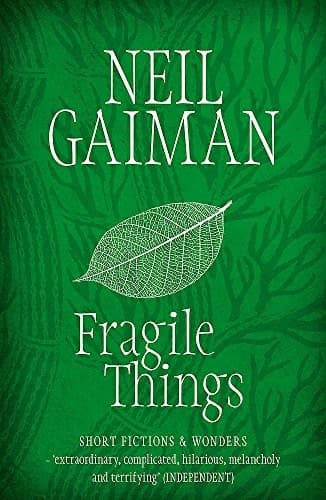
Reality in Fragile Things is not a solid foundation but a thin veil, easily torn by the weight of a narrative or a sudden shift in perspective. Neil Gaiman presents a landscape where the ordinary world—the pubs of Scotland, the streets of London, the social anxieties of a teenage party—is constantly encroached upon by the impossible. The central tension lies in the vulnerability of human constructs; characters often find themselves grappling with the realization that their memories, their social orders, and even their identities are as delicate as butterfly wings, susceptible to the gravity of older, darker myths.
The collection functions as a mechanical exploration of how we construct meaning through fiction. Whether it is a group of gourmands hunting for a mythical bird or a detective navigating a city ruled by eldritch horrors, the stakes are rarely about simple physical survival. Instead, the conflict centers on the preservation of the self against the overwhelming vastness of the unknown. These stories examine the threshold where the familiar ends and the "wonder" begins, challenging the reader to consider if the things we hold most dear are truly permanent or merely temporary anchors in a sea of shifting truths.
Gaiman crafts a multiverse where the rules of logic are secondary to the rules of folklore. The settings range from a strangely altered Victorian England, where the social hierarchy is dictated by ancient, inhuman sovereigns, to a subterranean circus that defies the physical boundaries of the tent it inhabits. The atmosphere is consistently liminal—the space between waking and dreaming—where the "wonders" are often dangerous and the shadows possess a tangible weight. These worlds operate on the principle of the "unreliable reality," where the environment reacts to the observer’s expectations, fears, or the stories they choose to believe.
In the early stages of these narratives, the protagonists are defined by their resistance to the fantastic. Their initial arcs involve the erosion of their skepticism. Shadow Moon attempts to maintain a boundary between his past and his present, but the environment refuses to let him remain a passive observer. Similarly, characters like Enn or the members of an exclusive epicurean club start with narrow, mundane objectives—finding a date or tasting a rare bird—only to find their social masks slipping as they encounter forces that do not recognize human social contracts. The development is centered on the peeling back of layers to reveal the "fragile thing" at the core of their being.
The collection excels at "genre-bending," particularly through the subversion of the Gothic and the Hardboiled Detective tropes. In the opening movements of the Holmesian pastiches, the familiar comforting logic of a mystery is inverted, using the structure of a police procedural to introduce cosmic horror. The "Stranger in a Strange Land" trope is also frequently employed but reversed; often, it is the protagonist who is the anomaly in a setting that has its own, albeit terrifying, internal logic. Gaiman also utilizes the "Deal with the Devil" motif, focusing not on the bargain itself, but on the psychological toll of realizing that the price is often paid in the currency of one's own sanity.
Add to your library to track progress and write reviews
Find Fragile Things: Short Fictions and Wonders Neil Gaiman in PDF, EPUB, ebook, audiobook, print, or library editions.

44 books in catalog
Groundbreaking dark fantasy comic books and dark, whimsical prose fiction have reshaped speculative literature, most famously through the comic book series The Sandman. English author Neil Gaiman, born Neil Richard Gaiman on 10 November 1960, created this influential series before publishing widely acclaimed fantasy novels including Stardust, American Gods, Coraline, and The Graveyard Book.
Born Neil Richard Gaiman in Portchester, Hampshire, UK, he spent much of his childhood reading in public libraries, where he discovered the works of C.S. Lewis, J.R.R. Tolkien, Edgar Allan Poe, Ursula K. LeGuin, and G.K. Chesterton. He began his professional career in journalism before transitioning into comic book writing in the late 1980s, gaining prominence with Black Orchid in 1988 and launching The Sandman series for DC Comics' Vertigo imprint in 1989. Over the subsequent decades, he expanded into writing novels, short fiction, audio theatre, screenplays, and films, eventually taking up residence in the United States near Minneapolis.
His fiction has earned widespread critical recognition, receiving Hugo, Nebula, and Bram Stoker awards. In 2008, he published The Graveyard Book, becoming the first author to win both the American Newbery Medal and the British Carnegie Medal for the same work. In 2013, his novel The Ocean at the End of the Lane was voted Book of the Year in the British National Book Awards. His extensive bibliography and media adaptations continued to draw major critical attention through 2017 and beyond.
Gaiman's literary work is noted for combining imaginative fantasy with a darkly humorous tone, fusing modern settings with classical mythology, folklore, and fairy tale motifs. His stories frequently explore themes of memory, childhood innocence, ancient gods navigating contemporary society, and the fundamental power of stories. Across all age categories, his narratives balance gothic atmosphere with warm human empathy and sharp observational wit.
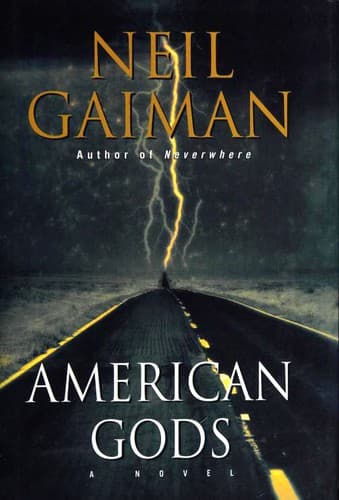
American Gods