SSansFiction
The libraryCollectionsJournalStatsFor authors
Sign inJoin now
Sansfiction,

A digital library for books. Made by readers, for readers.

v 2.0 · 2026
The library
  • Discover
  • Collections
  • Book tracker
  • Journal
  • Stats
For authors
  • SF Links
  • Analytics
  • How it works
  • FAQ
Elsewhere
  • X / @sansfiction
  • Privacy
  • Terms
  • Contact
© 2026 SansFiction · Digital · GlobalA quiet room for your reading life.
The libraryCollectionsJournalStatsFor authors
Sign inJoin now →
Navigation
Library
Bookshelf
Journal
Discover
Collections
Tierlists
Stats
Profile
Author Page
Link Builder
Account
Sign in
S
G
BooksadventureFragile Things: Short Fictions & Wonders
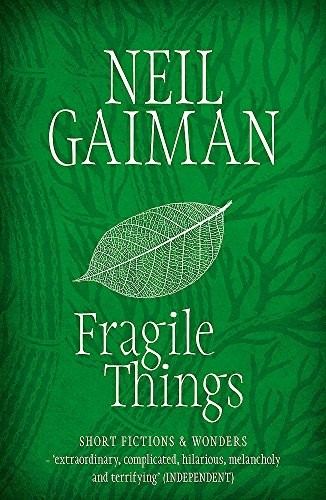
Cover of Fragile Things: Short Fictions & Wonders by Neil Gaiman
№ 1.1 · American Gods

Fragile Things: Short Fictions & Wonders,

by Neil Gaiman

Ask AI
Rating3.9/ 5
Ratings169
Pages384
Reading Hours8h
Published2007
LanguageEnglish

§Synopsis

01

Reality in Fragile Things is not a solid foundation but a thin veil, easily torn by the weight of a narrative or a sudden shift in perspective. Neil Gaiman presents a landscape where the ordinary world—the pubs of Scotland, the streets of London, the social anxieties of a teenage party—is constantly encroached upon by the impossible. The central tension lies in the vulnerability of human constructs; characters often find themselves grappling with the realization that their memories, their social orders, and even their identities are as delicate as butterfly wings, susceptible to the gravity of older, darker myths.

The collection functions as a mechanical exploration of how we construct meaning through fiction. Whether it is a group of gourmands hunting for a mythical bird or a detective navigating a city ruled by eldritch horrors, the stakes are rarely about simple physical survival. Instead, the conflict centers on the preservation of the self against the overwhelming vastness of the unknown. These stories examine the threshold where the familiar ends and the "wonder" begins, challenging the reader to consider if the things we hold most dear are truly permanent or merely temporary anchors in a sea of shifting truths.

The Architecture of the Impossible

Gaiman crafts a multiverse where the rules of logic are secondary to the rules of folklore. The settings range from a strangely altered Victorian England, where the social hierarchy is dictated by ancient, inhuman sovereigns, to a subterranean circus that defies the physical boundaries of the tent it inhabits. The atmosphere is consistently liminal—the space between waking and dreaming—where the "wonders" are often dangerous and the shadows possess a tangible weight. These worlds operate on the principle of the "unreliable reality," where the environment reacts to the observer’s expectations, fears, or the stories they choose to believe.

Main Characters

  • Shadow Moon: A stoic, drifting man seeking a quiet life in Scotland who finds himself pulled into the lingering, archaic rituals of a world he thought he had left behind.
  • The Detective: A sharp-witted investigator in a distorted London who serves a monarchy far more ancient and terrifying than any human lineage.
  • Miss Finch: A stern, unimaginative woman whose rigid worldview is tested when she is coerced into attending an underground performance that defies rational explanation.
  • Enn: A socially awkward teenager whose attempts to navigate the alien landscape of a local house party lead him to discover that the girls he meets are more literal "outsiders" than he imagined.

The Fragility of Identity

In the early stages of these narratives, the protagonists are defined by their resistance to the fantastic. Their initial arcs involve the erosion of their skepticism. Shadow Moon attempts to maintain a boundary between his past and his present, but the environment refuses to let him remain a passive observer. Similarly, characters like Enn or the members of an exclusive epicurean club start with narrow, mundane objectives—finding a date or tasting a rare bird—only to find their social masks slipping as they encounter forces that do not recognize human social contracts. The development is centered on the peeling back of layers to reveal the "fragile thing" at the core of their being.

Subverting the Familiar

The collection excels at "genre-bending," particularly through the subversion of the Gothic and the Hardboiled Detective tropes. In the opening movements of the Holmesian pastiches, the familiar comforting logic of a mystery is inverted, using the structure of a police procedural to introduce cosmic horror. The "Stranger in a Strange Land" trope is also frequently employed but reversed; often, it is the protagonist who is the anomaly in a setting that has its own, albeit terrifying, internal logic. Gaiman also utilizes the "Deal with the Devil" motif, focusing not on the bargain itself, but on the psychological toll of realizing that the price is often paid in the currency of one's own sanity.

Track this book

Add to your library to track progress and write reviews

§Genres
adventure1etc1fairy tales parodies1fantasy1fiction1imitations1mystery1
§Moods
adventurous1emotional1funny1mysterious1
§Tags
#diverse characters1#unloveable characters1#weak character development1

§About the Author

Neil Gaiman
Neil Gaiman

44 books in catalog

Groundbreaking dark fantasy comic books and dark, whimsical prose fiction have reshaped speculative literature, most famously through the comic book series The Sandman. English author Neil Gaiman, born Neil Richard Gaiman on 10 November 1960, created this influential series before publishing widely acclaimed fantasy novels including Stardust, American Gods, Coraline, and The Graveyard Book.

Career & Background

Born Neil Richard Gaiman in Portchester, Hampshire, UK, he spent much of his childhood reading in public libraries, where he discovered the works of C.S. Lewis, J.R.R. Tolkien, Edgar Allan Poe, Ursula K. LeGuin, and G.K. Chesterton. He began his professional career in journalism before transitioning into comic book writing in the late 1980s, gaining prominence with Black Orchid in 1988 and launching The Sandman series for DC Comics' Vertigo imprint in 1989. Over the subsequent decades, he expanded into writing novels, short fiction, audio theatre, screenplays, and films, eventually taking up residence in the United States near Minneapolis.

His fiction has earned widespread critical recognition, receiving Hugo, Nebula, and Bram Stoker awards. In 2008, he published The Graveyard Book, becoming the first author to win both the American Newbery Medal and the British Carnegie Medal for the same work. In 2013, his novel The Ocean at the End of the Lane was voted Book of the Year in the British National Book Awards. His extensive bibliography and media adaptations continued to draw major critical attention through 2017 and beyond.

Writing Style & Themes

Gaiman's literary work is noted for combining imaginative fantasy with a darkly humorous tone, fusing modern settings with classical mythology, folklore, and fairy tale motifs. His stories frequently explore themes of memory, childhood innocence, ancient gods navigating contemporary society, and the fundamental power of stories. Across all age categories, his narratives balance gothic atmosphere with warm human empathy and sharp observational wit.

Major Works

  • The Graveyard Book — Published in 2008, this novel tells the story of an orphaned boy raised by supernatural inhabitants of a cemetery, winning both the Newbery Medal and Carnegie Medal.
  • Good Omens: The Nice and Accurate Prophecies of Agnes Nutter, Witch — Co-authored with Terry Pratchett in 1990, this comedic novel follows an angel and a demon collaborating to prevent the coming apocalypse.
  • Anansi Boys — First published in 2005, this fantasy novel explores West African mythology and family dynamics through the sons of the trickster god Anansi.
  • Fragile Things: Short Fictions and Wonders — A 2006 collection of short stories and poetry highlighting Gaiman's range in urban fantasy, horror, and speculative fiction.
  • The Sandman #1: Sleep of the Just — The 1989 premiere issue of the landmark Vertigo comic book series that introduced Lord Morpheus, the King of Dreams.

§Featured Series

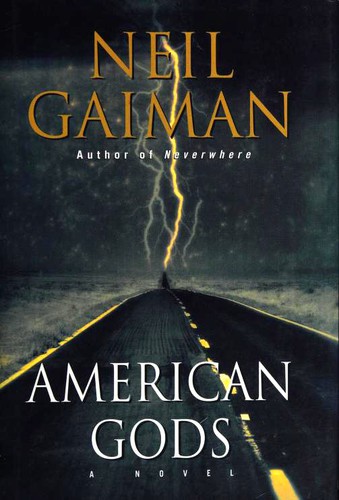
American Gods

Cover of American Gods by Neil Gaiman

American Gods

Neil Gaiman, 2001
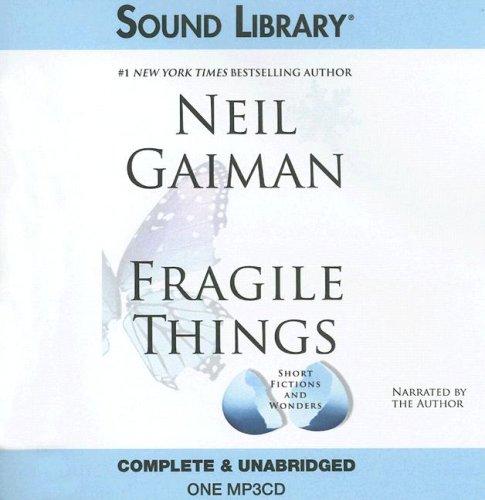
Cover of Fragile Things: Short Fictions and Wonders by Neil Gaiman

Fragile Things: Short Fictions and Wonders

Neil Gaiman, 2006
Cover of Black Dog by Neil Gaiman

Black Dog

Neil Gaiman, 2016
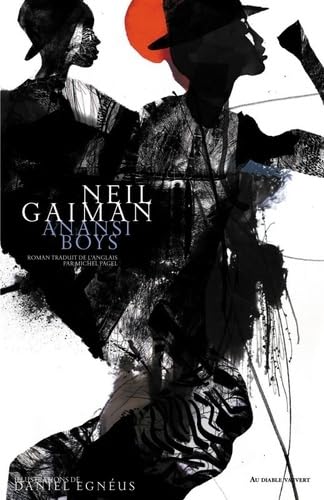
Cover of Anansi Boys by Neil Gaiman

Anansi Boys

Neil Gaiman, 2005

§Other Editions

Showing 2 of 26 editions
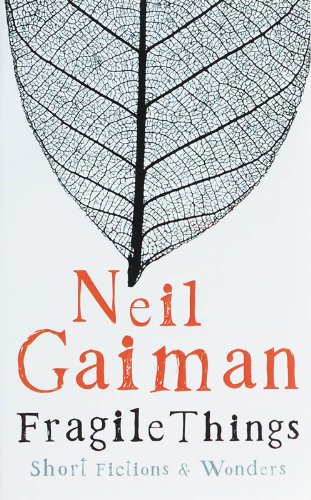
Cover of Fragile Things: Short Fictions & Wonders

Fragile Things: Short Fictions & Wonders

engPaperbackNew ed.
Headline20069780755334148
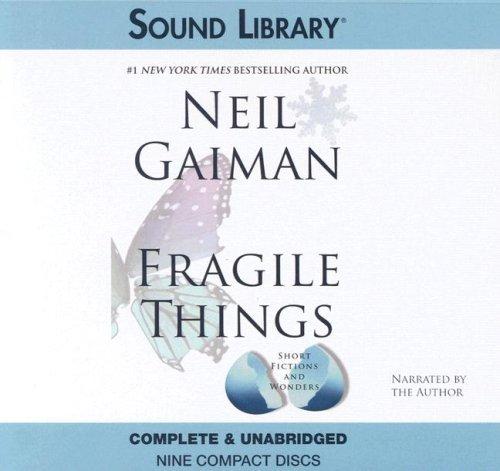
Cover of Fragile Things: Short Fictions and Wonders

Fragile Things: Short Fictions and Wonders

engAudio CD
Sound Library20069780792745266
§Genres
adventure1etc1fairy tales parodies1fantasy1fiction1imitations1mystery1
§Moods
adventurous1emotional1funny1mysterious1
§Tags
#diverse characters1#unloveable characters1#weak character development1

Metadata

ISBN-139780755334155
ISBN-100755334159

Editions and availability

Find Fragile Things: Short Fictions & Wonders Neil Gaiman in PDF, EPUB, ebook, audiobook, print, or library editions.

Bookshop.orgGoogle Play BooksBarnes & NobleOpen Library