SSansFiction
The libraryCollectionsJournalStatsFor authors
Sign inJoin now
Sansfiction,

A digital library for books. Made by readers, for readers.

v 2.0 · 2026
The library
  • Discover
  • Collections
  • Book tracker
  • Journal
  • Stats
For authors
  • SF Links
  • Analytics
  • How it works
  • FAQ
Elsewhere
  • X / @sansfiction
  • Privacy
  • Terms
  • Contact
© 2026 SansFiction · Digital · GlobalA quiet room for your reading life.
The libraryCollectionsJournalStatsFor authors
Sign inJoin now →
Navigation
Library
Bookshelf
Journal
Discover
Collections
Tierlists
Stats
Profile
Author Page
Link Builder
Account
Sign in
S
G
BooksadventureChapterhouse: Dune
Cover of Chapterhouse: Dune by Frank Herbert
№ 6 · Dune

Chapterhouse: Dune,

by Frank Herbert

Ask AI
Rating3.7/ 5
Ratings250
Pages624
Reading Hours13h
Published1985
Language—

§Synopsis

01

The desert planet Arrakis is a cinder, its sands fused to glass and its legendary sandworms extinct. With the primary source of the spice melange destroyed, the known universe teeters on the brink of a total collapse of order, dominated by the Honored Matres—a violent, predatory matriarchy returning from the "Scattering" with a thirst for absolute dominion. The Bene Gesserit, once the shadow-masters of the Imperium, find themselves on the defensive, hunted across the stars and reduced to a single, desperate gamble for survival on their hidden world of Chapterhouse.

Under the leadership of Mother Superior Darwi Odrade, the Sisterhood is engaged in a race against extinction. They are systematically destroying the lush, green ecosystem of Chapterhouse to create a new desert, mile by scorched mile, in hopes of restarting the lifecycle of the worm. This ecological sacrifice is matched by a psychological one, as the Bene Gesserit must decide whether to maintain their ancient, calculated traditions or evolve into something as ruthless as the enemy that pursues them.

The Mechanics of Ecological Transformation

The setting of Chapterhouse serves as a laboratory for Frank Herbert’s fascination with planetary engineering. Unlike the natural evolution of Arrakis, the desertification of Chapterhouse is an artificial, forced process. The Sisterhood uses "sandtrout" to sequester the planet’s water, a slow and agonizing transition that mirrors the hardening of their own social structures. This setting is defined by the "no-ship"—a massive vessel invisible to prescience—which serves as a floating prison and laboratory where the most dangerous remnants of the old empire are kept in a state of precarious containment.

Main Characters

  • Darwi Odrade: The pragmatic Mother Superior tasked with leading the Sisterhood through its greatest existential crisis while wrestling with her own "Other Memory."
  • Duncan Idaho: A ghola of the legendary commander, confined within a no-ship and burdened by the memories of countless past lives and an uncertain destiny.
  • Murbella: A captured Honored Matre whose physical prowess and volatile temperament make her both a dangerous prisoner and a potential key to understanding the enemy.
  • Miles Teg: A child ghola of the great Bashar, whose tactical genius is essential to the Sisterhood's defense if his memories can be successfully reawakened.
  • Scytale: The last surviving Tleilaxu Master, a desperate prisoner who holds the genetic secrets of the past in a hidden capsule within his own body.

Dynamics of Survival and Indoctrination

The narrative focuses heavily on the psychological tension between Mother Superior Odrade and her captive, Murbella. This relationship represents the core conflict of the book: the struggle between the Bene Gesserit’s disciplined, long-term manipulation of humanity and the Honored Matres’ immediate, visceral enslavement through chemical and sexual addiction. Odrade’s primary challenge is not just military but philosophical. She must determine if the Sisterhood can absorb the strengths of their "dark mirror" rivals without losing the very humanity they have spent millennia trying to preserve.

Subverting the Legacy of the Hero

Herbert utilizes the trope of the "Chosen One" only to further deconstruct it. While the legacy of Paul Atreides and the God Emperor hangs over the characters, the story shifts the focus away from a single messiah and toward the collective survival of a culture. The book subverts the "Evil Empire" trope by presenting the Honored Matres not just as villains, but as a reactionary force fleeing from an even greater, unnamed terror in the deep reaches of space. This creates a layered conflict where the protagonists are forced to use the tools of their enemies—espionage, biological warfare, and psychological conditioning—simply to remain relevant in a changing universe.

Track this book

Add to your library to track progress and write reviews

§Genres
adventure1aventure1classics1classique1fantasy1fiction1literature1
§Moods
adventurous2challenging2slow-paced2
§Tags
#clasici1#fantezie1#sci-fi1

§About the Author

Frank Herbert
Frank Herbert

22 books in catalog

The desert planet of Arrakis, with its giant sandworms, complex ecology, and political factions vying for control over the spice melange, remains one of the most thoroughly detailed world-building achievements in speculative fiction. American author Frank Herbert introduced this setting in his seminal 1965 novel Dune, creating an expansive universe that transformed epic science fiction by weaving together ecology, philosophy, religion, and political intrigue.

Career & Background

Born in Tacoma, Washington in 1920, Herbert spent his youth in the Pacific Northwest and worked on local newspapers as a teenager. He attended the University of Washington in Seattle and worked a wide variety of jobs throughout his early adult life, including time as a TV cameraman, radio commentator, oyster diver, jungle survival instructor, lay analyst, and creative writing teacher. He also worked as a reporter and later editor of a number of West Coast newspapers before becoming a full-time writer. Herbert began publishing science fiction in 1952 with his short story 'Looking for Something?' in Startling Stories. His research into the Oregon Dunes during the 1950s served as a primary catalyst for his ecological themes. He achieved widespread fame more than ten years later following the serial publication in Analog of 'Dune World' and 'The Prophet of Dune', which were amalgamated into the novel Dune in 1965.

Writing Style & Themes

Herbert's fiction is distinguished by its intricate world-building, ecological awareness, and deep examination of human potential and institutional vulnerability. Rather than relying solely on technological advancement, his narrative focus often centers on human adaptability, psychological conditioning, religious mythmaking, and the perilous consequences of messianic leadership. He frequently explored how harsh environments shape cultures, social structures, and survival strategies, a focus prominently displayed in novels such as Destination: Void and The Jesus Incident alongside his desert sagas.

Major Works

  • Dune — Published in 1965 after being serialized in Analog as 'Dune World' and 'The Prophet of Dune', this novel explores Paul Atreides's journey on the desert planet Arrakis amid feudal galactic politics and ecological struggle.
  • Dune Messiah — The second novel in the series continues the narrative of Paul Atreides, examining the tragic consequences of imperial power and religious fervor.
  • Children of Dune — The third installment focuses on Paul's twin children, Leto II and Ghanima, as they navigate the shifting ecological and political landscape of Arrakis.
  • Destination: Void — A standalone science fiction novel exploring artificial intelligence, human consciousness, and survival aboard a crewed starship.
  • The Jesus Incident — Co-authored with Bill Ransom, this novel expands upon the themes of artificial intelligence, worship, and ecological adaptation on an alien ocean world.

§Featured Series

Dune

Cover of Dune by Frank Herbert

Dune

Frank Herbert, 1965
Cover of Dune Messiah by Frank Herbert

Dune Messiah

Frank Herbert, 1965
Cover of Children of Dune by Frank Herbert

Children of Dune

Frank Herbert, 1975
Cover of God Emperor of Dune by Frank Herbert

God Emperor of Dune

Frank Herbert, 1981
Cover of Heretics of Dune by Frank Herbert

Heretics of Dune

Frank Herbert, 1984
Cover of Chapterhouse: Dune by Frank Herbert

Chapterhouse: Dune

Frank Herbert, 1985
Cover of Hunters of Dune by Brian Herbert, Kevin J. Anderson

Hunters of Dune

Brian Herbert, 2006
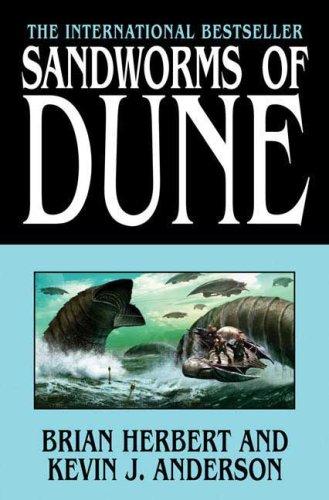
Cover of Sandworms of Dune by Brian Herbert, Kevin J. Anderson

Sandworms of Dune

Brian Herbert, 2007

§Also part of

Dune Universe (Publication Order)Dune Universe (Chronological)

§Editions

Showing 3 of 43 editions
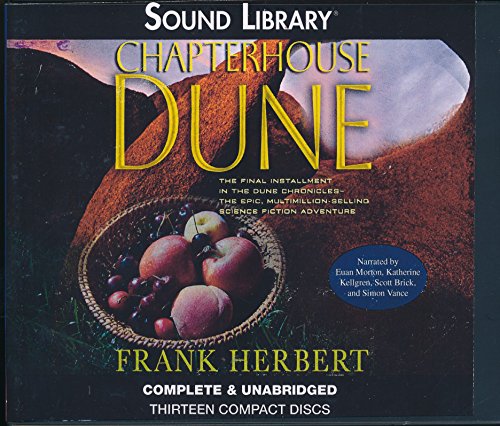
Cover of Chapterhouse Dune

Chapterhouse Dune

Audio CD
Macmillan Audio19859781427203175
Cover of Diuna: Kapitularz

Diuna: Kapitularz

Paperback
Phantom Press19859788385432104
Cover of Chapter House Dune

Chapter House Dune

Hardcover
Gollancz19859781473233812
§Genres
adventure1aventure1classics1classique1fantasy1fiction1literature1
§Moods
adventurous2challenging2slow-paced2
§Tags
#clasici1#fantezie1#sci-fi1

Metadata

ISBN-139781427203175
ISBN-101427203172
ASINB001O1O6IQ

Editions and availability

Find Chapterhouse: Dune Frank Herbert in PDF, EPUB, ebook, audiobook, print, or library editions.

View on Amazon
Bookshop.orgGoogle Play BooksBarnes & NobleOpen Library

Featured In Lists

Book cover from this collectionBook cover from this collectionBook cover from this collectionBook cover from this collection
Book cover from this collection

2025 magic

10 books•@fgbytes