SSansFiction
The libraryCollectionsJournalStatsFor authors
Sign inJoin now
Sansfiction,

A digital library for books. Made by readers, for readers.

v 2.0 · 2026
The library
  • Discover
  • Collections
  • Book tracker
  • Journal
  • Stats
For authors
  • SF Links
  • Analytics
  • How it works
  • FAQ
Elsewhere
  • X / @sansfiction
  • Privacy
  • Terms
  • Contact
© 2026 SansFiction · Digital · GlobalA quiet room for your reading life.
The libraryCollectionsJournalStatsFor authors
Sign inJoin now →
Navigation
Library
Bookshelf
Journal
Discover
Collections
Tierlists
Stats
Profile
Author Page
Link Builder
Account
Sign in
S
G
BooksactionCatching Fire
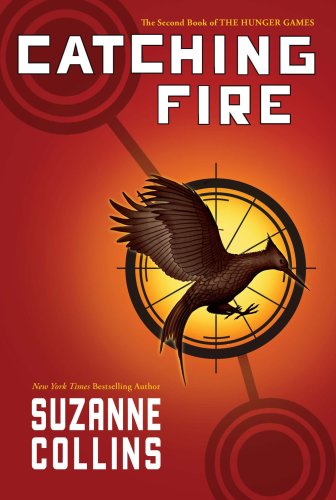
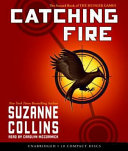
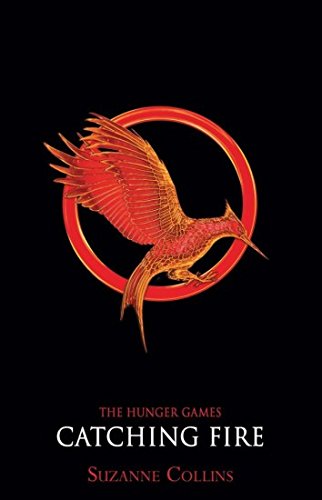
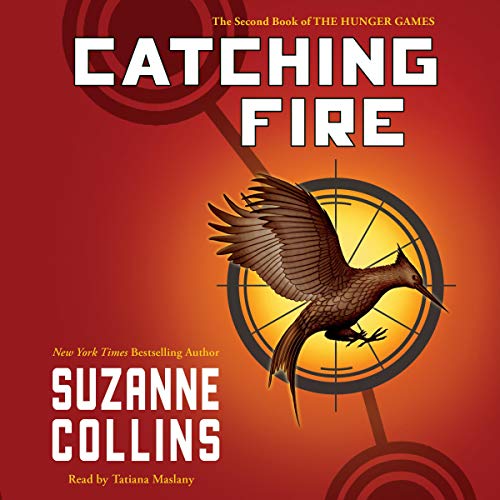
Cover of Catching Fire by Suzanne Collins
№ 2 · The Hunger Games

Catching Fire,

by Suzanne Collins

Ask AI
Rating4.1/ 5
Ratings3,898
Pages391
Reading Hours8h
Published2019
LanguageEnglish

§Synopsis

01

Winning the Hunger Games was supposed to be the end of the nightmare, but for Katniss Everdeen, the victory has only traded a physical arena for a psychological one. Returning to District 12 does not bring peace; instead, she finds herself trapped in a rigid performance of gratitude and romance mandated by the Capitol. Her act of defiance with the poisonous berries has been interpreted by the oppressed districts as a rallying cry, placing a target on her back that endangers everyone she loves.

The tension escalates when President Snow makes an unprecedented personal visit to Katniss’s home. His ultimatum is clear: during the upcoming Victory Tour, she must convince not just the public, but Snow himself, that her actions in the arena were fueled by nothing but headstrong love. If she fails to extinguish the sparks of rebellion her image has ignited, the consequences will be measured in the lives of her family and the destruction of her district.

The Architecture of Oppression

Panem is a world built on the concept of "Bread and Circuses," where the Capitol maintains control through a combination of sensory distraction and brutal scarcity. The setting expands beyond the confines of the arena to show the inner workings of the districts, from the starvation-level poverty of the Seam to the forced opulence of the Victors' Village. This volume explores the mechanics of a totalitarian regime that uses technology, media manipulation, and military force to maintain a fragile peace. The atmosphere is one of pervasive surveillance, where even a whisper in the woods can be interpreted as treason.

Main Characters

  • Katniss Everdeen: A survivor grappling with severe post-traumatic stress who must now navigate a lethal game of political optics to keep her family alive.
  • Peeta Mellark: The charismatic co-victor whose talent for public speaking and genuine nature becomes the Capitol’s most effective—and most reluctant—tool for pacification.
  • Gale Hawthorne: Katniss’s oldest friend whose growing radicalization and resentment toward the Capitol create a sharp contrast to the life Katniss is forced to project.
  • President Snow: The calculated, scent-of-blood-and-roses antagonist who views Katniss not as a girl, but as a systemic glitch that must be corrected or deleted.
  • Haymitch Abernathy: The cynical mentor who must sober up long enough to guide his tributes through a different kind of war where the rules are unwritten and the stakes are existential.

The Evolution of the Reluctant Hero

In this installment, character development shifts from physical survival to the moral complexities of leadership. Katniss begins the story wanting only to return to her previous life, but she is forced to realize that her "previous life" no longer exists. Her relationship with Peeta is defined by a painful disconnect between their public personas and their private trauma. Meanwhile, her dynamic with Gale becomes strained as his desire for revolution clashes with her desperate need for safety. The protagonist’s journey is defined by the realization that her identity is no longer her own; it has been colonized by the state and the revolution alike.

Deconstructing the Dystopian Sequel

Collins utilizes and subverts the "Love Triangle" trope by framing it not as a simple romantic choice, but as a conflict of ideologies—safety and domesticity versus rebellion and change. The book also leans heavily into the "State vs. Individual" trope, examining how a government can weaponize a person's private emotions for public propaganda. Unlike many sequels that merely repeat the successes of the first, this narrative shifts the genre from a survival thriller to a political drama, focusing on the "spark" of civil unrest and the terrifying speed at which a spark can become an uncontrollable blaze.

§Our take

Collins has called the middle of her trilogy the book about aftermath and consequences, and it earns that. The story opens after the victory, and Katniss's nightmares and forced public performance carry real weight next to the physical danger. Private defiance gets read as politics. The televised romance the Capitol demands leaves her no free space to decide how her feelings look. Critics praised the momentum and the sharp social commentary, and one widely repeated verdict calls it a rare sequel that improves on its predecessor. In reader polls it usually ranks second to The Hunger Games, though a vocal group names it their favorite of the three.

§Themes

Becoming a symbol
Katniss wants her old life back. Instead her private defiance gets recast as rebellion, and her image is used by forces bigger than her.
Media manipulation
A staged romance for Capitol cameras makes forced performance part of staying alive.
After the win
The story starts after the victory. Nightmares and hypervigilance are part of what winning costs.
Love as performance
The Katniss, Peeta and Gale triangle reads as obligation and show, since she has no free space to choose how her feelings look.

§How it was received

Critics were largely warm. One trade review highlighted the propulsive action and the love triangle, another the sharp social commentary. One long-form reviewer disagreed, finding the opening forced and the plot dependent on convenient rescues. Readers split along similar lines: some find the structure repetitive, others rank it above the first book.

§Read it if

  • You want more politics and worldbuilding than the first book's arena gave you
  • You like stories about staged public images and reality-TV satire
  • You want a fast read with short chapters and a lot of emotional weight

§Skip it if

  • You want a self-contained story. It ends on an open cliffhanger and assumes you've read book one.
  • Slow, politics-heavy openings before the action frustrate you.

§Before you start

Reading experience
moderate pace. easy to read. A slower, character- and politics-driven first half gives way to a fast second half, and short chapters keep it quick despite the darkness.
Reading order
Book 2 of the Hunger Games trilogy: The Hunger Games (2008), Catching Fire (2009), Mockingjay (2010). Read in order and keep Mockingjay handy. The prequels, The Ballad of Songbirds and Snakes and Sunrise on the Reaping, are set earlier and aren't needed here.
Content notes
Significant and sometimes graphic violence, including severe injuries; Psychological cruelty and torture, plus references to child death and starvation; Romance stays at kissing, but coercive and non-consensual elements in the romantic pressure threads are flagged; Katniss's ongoing trauma symptoms (nightmares, hypervigilance) are a heavy thread for some readers.

§Common questions

Do I need to read The Hunger Games first?
Yes. It assumes you've read the first book and ends on an open cliffhanger, so have Mockingjay ready.
Is it okay for teens?
Common Sense Media rates it 13+ and flags graphic violence, psychological cruelty and coercive romantic pressure. Check its page for the full breakdown.
Is it better than The Hunger Games?
Readers disagree. A widely repeated critical verdict says it improves on the first, but reader polls usually put the original on top, with a vocal group voting for this one.

§If you liked this

  • Mockingjay by Suzanne Collins — The direct continuation. The rebellion started here becomes open war, in a darker tone readers often rate lower.
  • Legend by Marie Lu — Fast YA dystopia where two opposed protagonists uncover their government's deception.
  • Uglies by Scott Westerfeld — A dystopia that enforces conformity through appearance, echoing this book's image-management theme.
  • Unwind by Neal Shusterman — Teens running from a system that treats them as disposable. For readers who want the politics over the romance.
Sources
  • en.wikipedia.org
  • suzannecollinsbooks.com
  • eyrie.org
  • goodreads.com
  • goodreads.com
  • csmonitor.com
  • commonsensemedia.org
  • barrielibrary.ca
  • en.wikipedia.org

Track this book

Add to your library to track progress and write reviews

§Genres
action1adventure1dystopian1fantasy1fiction1juvenile nonfiction1romance1
§Content Warnings
§Moods
adventurous1challenging1emotional1hopeful1inspiring1mysterious1reflective1
§Tags
#diverse characters1#loveable characters1#not diverse characters1#plot driven1

§About the Author

Suzanne Collins
Suzanne Collins

5 books in catalog

Dystopian fiction and young adult literature were transformed by the publication of The Hunger Games, a narrative exploring systemic authoritarianism, state-sanctioned violence, and the media spectacle of combat. Suzanne Collins introduced readers to the nation of Panem, where coerced youth fight to the death in televised survival competitions. Her work grounded speculative world-building in classical mythology, military history, and philosophical theories of war, examining the human cost of conflict and the mechanics of political control. The original trilogy and its subsequent expansions have sold over 100 million copies worldwide, been translated into 55 languages, and spawned a major feature film franchise grossing upwards of $3.3 billion globally.

Before achieving widespread recognition for her speculative worlds, Collins spent over a decade writing for acclaimed children's television programs before transitioning to long-form prose. Her bibliography spans middle-grade urban fantasy in the Underland Chronicles, autobiographical picture books, and high-stakes speculative fiction. Recognized on the TIME 100 list and honored with the Authors Guild Award for Distinguished Service to the Literary Community, her writing avoids sanitized heroic tropes, focusing instead on the psychological trauma, propaganda, and moral compromises inherent to surviving war.

Career & Background

Born on August 10, 1962, in Hartford, Connecticut, Suzanne Marie Collins grew up in a military family as the daughter of a career United States Air Force officer. Her father's service, which included a deployment during the Vietnam War, profoundly shaped her childhood and instilled a lifelong interest in military history, political science, and the ethical dilemmas of armed conflict. This personal family experience later provided the foundation for her autobiographical picture book, Year of the Jungle. Collins pursued her formal education in the dramatic arts, graduating from Indiana University Bloomington with a double major in Drama and Telecommunications before earning an M.F.A. in Dramatic Writing from New York University's Tisch School of the Arts.

In 1991, Collins launched her professional writing career in television, joining the writers' rooms for prominent children's networks. She earned credits on influential programs for Nickelodeon, including the Emmy-nominated series Clarissa Explains It All and The Mystery Files of Shelby Woo. For preschool audiences, she wrote episodes for the Emmy-nominated series Little Bear and Oswald. She also co-wrote the animated holiday special Santa, Baby! with Peter Bakalian, earning a Writers Guild of America Award nomination in Animation. Her television career continued as Head Writer for Scholastic Entertainment's Clifford's Puppy Days and as a freelance writer on Wow! Wow! Wubbzy!.

While working on the Kids' WB animated series Generation O!, Collins met author and illustrator James Proimos, who encouraged her to apply her storytelling talents to prose fiction. Recognizing that novel writing offered greater narrative freedom for complex world-building, she reinterpreted the classic 'rabbit hole' fantasy trope for an urban setting, resulting in her debut novel, Gregor the Overlander, published in 2003. This novel launched the five-book middle-grade series the Underland Chronicles, establishing her distinct narrative style that blends accessible, fast-paced action with serious themes of warfare, political diplomacy, and biological conflict.

Writing Style & Themes

The core of Collins's literary work is an uncompromising examination of the causes, execution, and lingering trauma of violence. Rather than presenting sanitized heroics or romanticized battles, her narratives explore 'just war' theory, probing the ethical boundaries of when conflict is justified and how moral corruption affects both aggressors and resistance movements. Her inspiration for The Hunger Games famously emerged while channel surfing late at night, when real-time footage of the Iraq War merged unsettlingly with competitive reality television programming, highlighting the dangerous blurring of human tragedy and public entertainment.

A central thematic pillar across her novels is the weaponization of media, propaganda, and societal control. In Panem, cameras function as tools of oppression and rebellion alike, demonstrating how authoritarian regimes manipulate narratives to maintain power through fear, poverty, and enforced hunger. In discussing her novel Sunrise on the Reaping, Collins cited philosopher David Hume's observations on implicit submission and 'the easiness with which the many are governed by the few,' emphasizing how state propaganda and narrative control secure public compliance. Questions of media manipulation, public spectacle, and 'Real or not real?' serve as persistent thematic anchors throughout her fiction.

Stylistically, Collins utilizes sparse, immediate, and visceral prose that prioritizes internal psychological realism over ornate description. Her first-person, present-tense narration in The Hunger Games trilogy immerses readers directly into the survival instincts, hypervigilance, and moral crises of her characters. Her stories pay rigorous attention to the psychological toll of violence, portraying post-traumatic stress disorder (PTSD), grief, guilt, and the loss of innocence among child soldiers and survivors with unyielding honesty. By anchoring dystopian and fantasy frameworks in historical realities, her work challenges readers to critically analyze power structures, historical memory, and civic responsibility.

Major Works

  • The Hunger Games — Published in 2008, The Hunger Games launched the dystopian trilogy set in the post-apocalyptic nation of Panem. The novel introduces Katniss Everdeen, a sixteen-year-old girl who volunteers to replace her younger sister in the annual Hunger Games, a televised death match forced upon twelve subjugated districts by the Capitol. The book explores themes of poverty, survival, government oppression, and resistance.
  • Catching Fire — The second novel in the trilogy, Catching Fire, published in 2009, continues Katniss Everdeen's story following her defiance of the Capitol in the 74th Hunger Games. As unrest spreads across the districts, Katniss and her fellow tribute Peeta Mellark are forced back into the arena for the 75th Hunger Games, known as the Quarter Quell, escalating the conflict between the oppressed citizens and President Snow's totalitarian regime.
  • Mockingjay — Concluding the original trilogy, Mockingjay (2010) chronicles the full-scale rebellion against the Capitol. Katniss becomes the reluctant symbol of the revolution while navigating intense military strategy, propaganda campaigns, severe personal trauma, and the complex ethical choices required to overthrow an authoritarian power without replacing it with a new tyranny.
  • The Ballad of Songbirds and Snakes — Published in 2020, The Ballad of Songbirds and Snakes serves as a prequel to the original trilogy, focusing on eighteen-year-old Coriolanus Snow during the 10th annual Hunger Games. The novel provides critical historical context regarding the early development of the Hunger Games, exploring themes of human nature, political power, and the philosophical foundations of Capitol control.
  • Sunrise on the Reaping — Scheduled for publication in 2025, Sunrise on the Reaping returns to the world of Panem during the 50th annual Hunger Games, the Second Quarter Quell won by Haymitch Abernathy. The narrative draws inspiration from philosopher David Hume's theories on implicit submission, narrative control, and propaganda, exploring how authoritarian power is maintained through psychological and political manipulation.
  • Underland Chronicles — Beginning in 2003 with Gregor the Overlander, this five-book middle-grade series follows a young boy named Gregor who falls through a grate in his laundry room into the subterranean world of the Underland beneath New York City. Across five novels, the series addresses heavy topics including war, biological weapons, genocide, prophecy, and political diplomacy for a younger readership.
  • Year of the Jungle — An autobiographical picture book published in 2013, Year of the Jungle draws upon the author's childhood experience during her father's deployment in the Vietnam War. Illustrated by James Proimos, the story makes complex feelings of fear, uncertainty, and familial separation accessible to young children.

§Featured Series

The Hunger Games

Cover of The Ballad of Songbirds and Snakes by Suzanne Collins

The Ballad of Songbirds and Snakes

Suzanne Collins, 2010
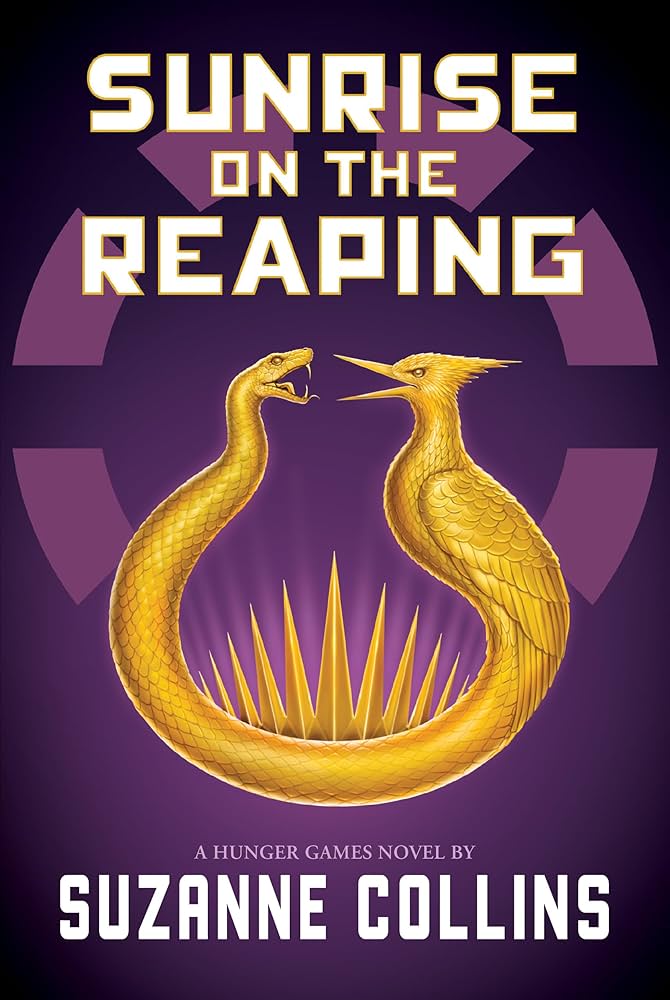
Cover of Sunrise on the Reaping by Suzanne Collins

Sunrise on the Reaping

Suzanne Collins, 2025
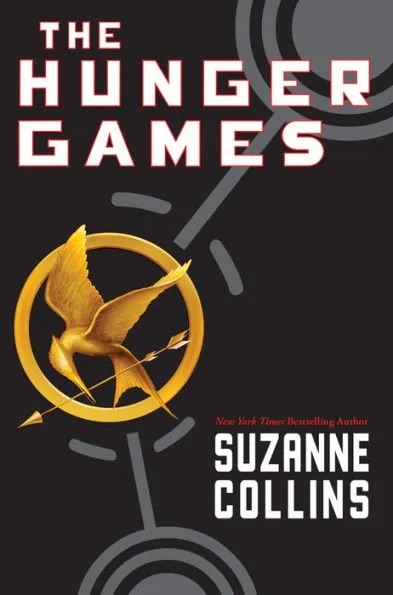
Cover of The Hunger Games by Suzanne Collins

The Hunger Games

Suzanne Collins, 2008
Cover of Catching Fire by Suzanne Collins

Catching Fire

Suzanne Collins, 2009
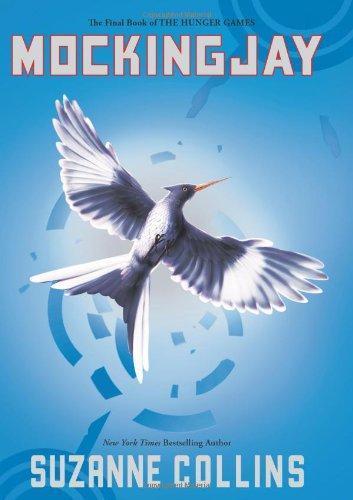
Cover of Mockingjay by Suzanne Collins

Mockingjay

Suzanne Collins, 2010

§Other Editions

Showing 2 of 126 editions
Cover of Catching Fire

Catching Fire

engAudiobookUnabridged
Scholastic20099780545222457
Amazon
Cover of The Hunger Games: Catching Fire

The Hunger Games: Catching Fire

engPaperback
Scholastic Inc.20219781407132099
§Genres
action1adventure1dystopian1fantasy1fiction1juvenile nonfiction1romance1
§Content Warnings
§Moods
adventurous1challenging1emotional1hopeful1inspiring1mysterious1reflective1
§Tags
#diverse characters1#loveable characters1#not diverse characters1#plot driven1

Metadata

ISBN-139781338589016
ISBN-100545222451
ASIN1338589016

Editions and availability

Find Catching Fire Suzanne Collins in PDF, EPUB, ebook, audiobook, print, or library editions.

View on Amazon
Bookshop.orgGoogle Play BooksBarnes & NobleOpen Library

Featured In Lists

Book cover from this collectionBook cover from this collectionBook cover from this collectionBook cover from this collection
Book cover from this collection

The Book You Saw on TikTok

74 books
Book cover from this collectionBook cover from this collectionBook cover from this collectionBook cover from this collection
Book cover from this collection

MegaReadingList

91 books