A Song of Ice and Fire, 5-Book Boxed Set
GEORGE R.R. MARTIN
A Song of Ice and Fire, 5-Book Boxed Set
GEORGE R.R. MARTIN
The struggle for power in Westeros begins not with a war, but with a whisper of change. As a decade-long summer draws to an end, the fragile peace of the Seven Kingdoms is threatened by the death of a king’s advisor and the chilling reports of an ancient shadow stirring beyond the massive ice fortification known as the Wall. While noble houses navigate the treacherous waters of courtly politics and ancient blood feuds, the fundamental tension of the series emerges: the conflict between the personal honor of individuals and the brutal pragmatism required to survive a game where the stakes are life and death.
George R.R. Martin constructs a narrative where the environment itself is a character, defined by seasons that last for years and a history that weighs heavily on every decision. The story moves between the cold, stoic North, the decadent and lethal capital of King’s Landing, and the scorched plains of the eastern continent. It is a world where magic is a fading memory—or perhaps a gathering storm—and where the true monsters are often found in the hearts of men and women rather than in the myths of the past. The narrative focuses on the burden of leadership, the cost of loyalty, and the complex morality of those who must choose between their families, their vows, and their own survival.
The setting of the series operates on a foundation of "hard" fantasy, where the rules of geography, logistics, and social hierarchy are strictly enforced. Westeros is a feudal society rooted in European medieval history, yet it is marked by a unique meteorological anomaly: unpredictable seasons. This creates a perpetual state of anxiety; the phrase "Winter is Coming" serves as both a literal warning and a cultural philosophy. Beyond the Wall, a massive barrier of ice and ancient spells, lies a wilderness that challenges the sovereignty of the Seven Kingdoms. To the east, across the Narrow Sea, the continent of Essos offers a sprawling contrast of city-states and nomadic cultures, providing a landscape where lost dynasties and forgotten magic begin to resurface.
The narrative arc for most protagonists is defined by the stripping away of their initial illusions. Ned Stark’s belief in the power of truth is challenged by the systemic deceit of the royal court, while Jon Snow’s romanticized view of the Night’s Watch is met with the harsh reality of life among criminals and exiles. Relationship dynamics are often transactional or dictated by birthright; the bond between the Lannister siblings, for instance, is a complex web of shared ambition and mutual protection that shapes the fate of the realm. Development is internal and psychological, focusing on how these characters reconcile their personal desires with the rigid expectations of their noble houses and the crushing weight of their respective legacies.
This series is renowned for its deconstruction of high fantasy conventions. While many stories in the genre rely on a clear dichotomy between good and evil, Martin utilizes "gray" morality, where every character has justifiable motivations for their actions, however cruel they may seem. The trope of the "Chosen One" or the "Rightful King" is treated with skepticism; legitimacy is portrayed not as a divine right, but as a product of military might and political maneuvering. Additionally, the series subverts the traditional safety of main characters, establishing early on that no one is immune to the consequences of their mistakes, and that "plot armor" does not exist in a world dictated by the harsh realities of power and war.
The struggle for power in Westeros begins not with a war, but with a whisper of change. As a decade-long summer draws to an end, the fragile peace of the Seven Kingdoms is threatened by the death of a king’s advisor and the chilling reports of an ancient shadow stirring beyond the massive ice fortification known as the Wall. While noble houses navigate the treacherous waters of courtly politics and ancient blood feuds, the fundamental tension of the series emerges: the conflict between the personal honor of individuals and the brutal pragmatism required to survive a game where the stakes are life and death.
George R.R. Martin constructs a narrative where the environment itself is a character, defined by seasons that last for years and a history that weighs heavily on every decision. The story moves between the cold, stoic North, the decadent and lethal capital of King’s Landing, and the scorched plains of the eastern continent. It is a world where magic is a fading memory—or perhaps a gathering storm—and where the true monsters are often found in the hearts of men and women rather than in the myths of the past. The narrative focuses on the burden of leadership, the cost of loyalty, and the complex morality of those who must choose between their families, their vows, and their own survival.
The setting of the series operates on a foundation of "hard" fantasy, where the rules of geography, logistics, and social hierarchy are strictly enforced. Westeros is a feudal society rooted in European medieval history, yet it is marked by a unique meteorological anomaly: unpredictable seasons. This creates a perpetual state of anxiety; the phrase "Winter is Coming" serves as both a literal warning and a cultural philosophy. Beyond the Wall, a massive barrier of ice and ancient spells, lies a wilderness that challenges the sovereignty of the Seven Kingdoms. To the east, across the Narrow Sea, the continent of Essos offers a sprawling contrast of city-states and nomadic cultures, providing a landscape where lost dynasties and forgotten magic begin to resurface.
The narrative arc for most protagonists is defined by the stripping away of their initial illusions. Ned Stark’s belief in the power of truth is challenged by the systemic deceit of the royal court, while Jon Snow’s romanticized view of the Night’s Watch is met with the harsh reality of life among criminals and exiles. Relationship dynamics are often transactional or dictated by birthright; the bond between the Lannister siblings, for instance, is a complex web of shared ambition and mutual protection that shapes the fate of the realm. Development is internal and psychological, focusing on how these characters reconcile their personal desires with the rigid expectations of their noble houses and the crushing weight of their respective legacies.
This series is renowned for its deconstruction of high fantasy conventions. While many stories in the genre rely on a clear dichotomy between good and evil, Martin utilizes "gray" morality, where every character has justifiable motivations for their actions, however cruel they may seem. The trope of the "Chosen One" or the "Rightful King" is treated with skepticism; legitimacy is portrayed not as a divine right, but as a product of military might and political maneuvering. Additionally, the series subverts the traditional safety of main characters, establishing early on that no one is immune to the consequences of their mistakes, and that "plot armor" does not exist in a world dictated by the harsh realities of power and war.
Add to your library to track progress and write reviews
16 books in catalog
The stakes in epic fantasy reach their highest tension when key characters face genuine mortality rather than narrative immunity. Long-form epic fantasy redefined political realism and subverted classic genre tropes through A Song of Ice and Fire, a monumental fantasy saga launched with the 1996 novel A Game of Thrones. Written by George R.R. Martin, this body of work shifted modern fantasy from idealized moral duopolies into intricate, morally ambiguous power struggles grounded in medieval historicism and irreversible character consequences. With over 90 million copies of his books in print worldwide, his writing spans science fiction, horror, and epic fantasy, earning multiple Hugo, Nebula, and Emmy awards while inspiring major television adaptations.
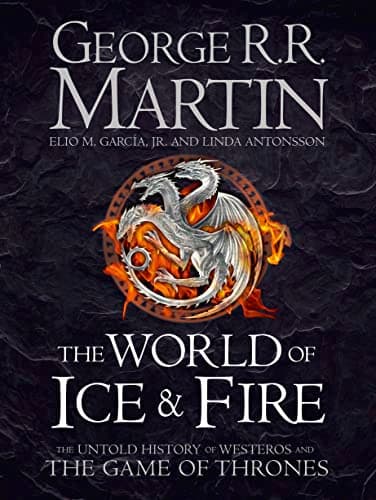
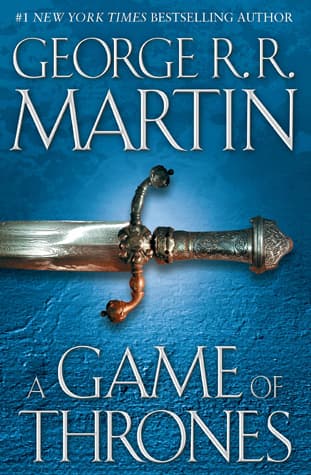
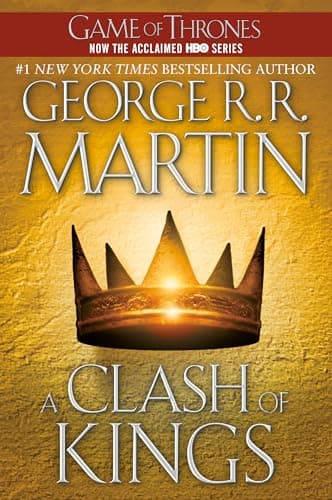
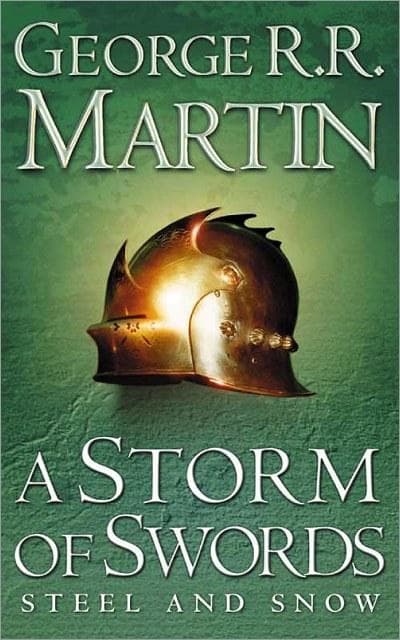
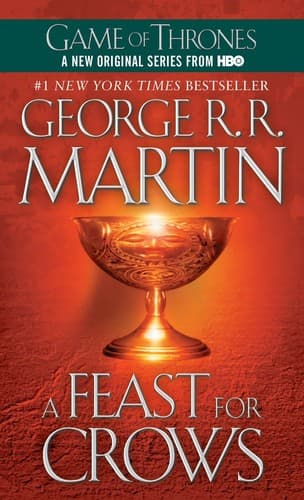
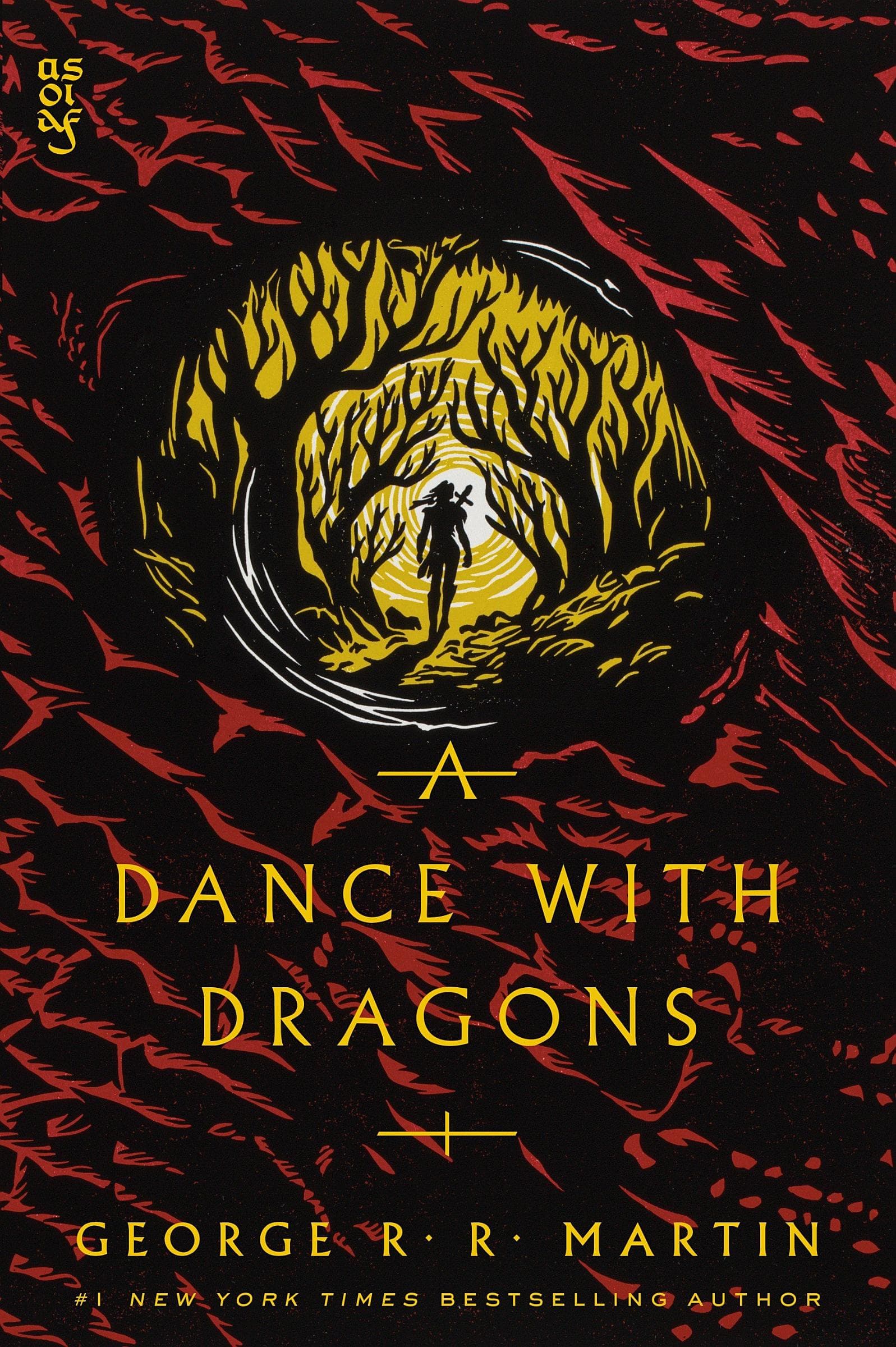
Beyond his core fantasy novels, Martin's extensive bibliography encompasses rich science fiction like Dying of the Light and imaginary history chronicles such as Fire & Blood. Readers entering this expansive universe can explore standalone masterpieces or comprehensive multi-volume editions like A Game of Thrones 5-Book Bundle: A Song of Ice and Fire Series: A Game of Thrones, A Clash of Kings, A Storm of Swords, A Feast for Crows, and A Dance with Dragons, which trace the tragic downfall and intense rivalries of noble dynasties across Westeros and Essos.
Born on September 20, 1948, in Bayonne, New Jersey, George R.R. Martin was raised in a working-class family near the docks of the Kill van Kull. The son of longshoreman Raymond Collins Martin and Margaret Brady Martin, he grew up alongside two sisters, Darleen and Janet. He attended Mary Jane Donohoe School and Marist High School, developing an early passion for storytelling by writing monster stories and selling them to neighborhood children. During his teenage years, he became an avid reader and collector of comic books, contributing original fan fiction to various amateur comic fanzines. He pursued higher education in journalism at Northwestern University's Medill School of Journalism, graduating summa cum laude with a Bachelor's degree before completing his Master's degree in 1971. His first professional fiction sale occurred when his short story 'The Hero' was published in the February 1971 issue of Galaxy magazine.
Throughout the 1970s and early 1980s, Martin maintained a multifaceted career while establishing his literary reputation. He served as a VISTA volunteer from 1972 to 1974, directed chess tournaments for the Continental Chess Association, and taught journalism at Clarke College in Dubuque, Iowa, from 1976 to 1978. During this period, he produced celebrated short fiction and released his debut novel, Dying of the Light (1977), a science fiction tale set on the rogue planet Worlorn. He followed this success with Fevre Dream (1982), an acclaimed dark fantasy novel combining antebellum Mississippi riverboat navigation with a unique vampire mythos. However, after his 1983 horror novel The Armageddon Rag suffered severe commercial disappointment, Martin shifted his creative efforts toward Hollywood and television production.
In television, Martin served as a staff writer, story editor, and producer, contributing scripts to the mid-1980s revival of The Twilight Zone (1985) and the fantasy drama series Beauty and the Beast (1987). Although television production sharpened his craft regarding dramatic pacing, character interaction, and dialogue structure, he found the practical constraints of broadcast budgets and studio notes deeply limiting for the vast scale of world-building he wished to execute. Desiring complete creative control, Martin returned to full-time prose fiction in the early 1990s. This return culminated in 1996 with the publication of A Game of Thrones, the first volume of A Song of Ice and Fire, which transformed epic fantasy reading expectations globally.
Central to Martin's creative philosophy is William Faulkner's assertion that the human heart in conflict with itself is the primary subject worth writing about. Martin explicitly rejects absolute divisions of pure good and pure evil, constructing complex characters driven by competing motives, personal flaws, duty, honor, ambition, and survival instincts. He famously describes his storytelling process through the metaphor of a 'gardener'—planting narrative seeds and allowing characters and subplots to evolve organically within a structured world, rather than forcing them into a rigid, predetermined outline. This organic technique generates a dense, interconnected web of cause and effect where small individual choices precipitate far-reaching structural and political consequences.
Thematically, his works explore the corruptive nature of political power, the fragility of feudal systems, social rigidity, and the visceral realities of war. Rather than relying on romanticized medieval tropes, Martin incorporates realistic medieval economics, logistical constraints, social customs, heraldry, and dynastic politics. His signature narrative structure utilizes alternating third-person limited points of view across individual POV chapters. By forcing readers to view events through the eyes of opposing factional leaders and flawed protagonists, he creates empathetic understanding across adversarial lines. Furthermore, his willingness to kill prominent characters reinforces a pervasive atmosphere of genuine jeopardy, emphasizing that high political games carry lethal risks.
16 books in catalog
The stakes in epic fantasy reach their highest tension when key characters face genuine mortality rather than narrative immunity. Long-form epic fantasy redefined political realism and subverted classic genre tropes through A Song of Ice and Fire, a monumental fantasy saga launched with the 1996 novel A Game of Thrones. Written by George R.R. Martin, this body of work shifted modern fantasy from idealized moral duopolies into intricate, morally ambiguous power struggles grounded in medieval historicism and irreversible character consequences. With over 90 million copies of his books in print worldwide, his writing spans science fiction, horror, and epic fantasy, earning multiple Hugo, Nebula, and Emmy awards while inspiring major television adaptations.
Beyond his core fantasy novels, Martin's extensive bibliography encompasses rich science fiction like Dying of the Light and imaginary history chronicles such as Fire & Blood. Readers entering this expansive universe can explore standalone masterpieces or comprehensive multi-volume editions like A Game of Thrones 5-Book Bundle: A Song of Ice and Fire Series: A Game of Thrones, A Clash of Kings, A Storm of Swords, A Feast for Crows, and A Dance with Dragons, which trace the tragic downfall and intense rivalries of noble dynasties across Westeros and Essos.
Born on September 20, 1948, in Bayonne, New Jersey, George R.R. Martin was raised in a working-class family near the docks of the Kill van Kull. The son of longshoreman Raymond Collins Martin and Margaret Brady Martin, he grew up alongside two sisters, Darleen and Janet. He attended Mary Jane Donohoe School and Marist High School, developing an early passion for storytelling by writing monster stories and selling them to neighborhood children. During his teenage years, he became an avid reader and collector of comic books, contributing original fan fiction to various amateur comic fanzines. He pursued higher education in journalism at Northwestern University's Medill School of Journalism, graduating summa cum laude with a Bachelor's degree before completing his Master's degree in 1971. His first professional fiction sale occurred when his short story 'The Hero' was published in the February 1971 issue of Galaxy magazine.
Throughout the 1970s and early 1980s, Martin maintained a multifaceted career while establishing his literary reputation. He served as a VISTA volunteer from 1972 to 1974, directed chess tournaments for the Continental Chess Association, and taught journalism at Clarke College in Dubuque, Iowa, from 1976 to 1978. During this period, he produced celebrated short fiction and released his debut novel, Dying of the Light (1977), a science fiction tale set on the rogue planet Worlorn. He followed this success with Fevre Dream (1982), an acclaimed dark fantasy novel combining antebellum Mississippi riverboat navigation with a unique vampire mythos. However, after his 1983 horror novel The Armageddon Rag suffered severe commercial disappointment, Martin shifted his creative efforts toward Hollywood and television production.
In television, Martin served as a staff writer, story editor, and producer, contributing scripts to the mid-1980s revival of The Twilight Zone (1985) and the fantasy drama series Beauty and the Beast (1987). Although television production sharpened his craft regarding dramatic pacing, character interaction, and dialogue structure, he found the practical constraints of broadcast budgets and studio notes deeply limiting for the vast scale of world-building he wished to execute. Desiring complete creative control, Martin returned to full-time prose fiction in the early 1990s. This return culminated in 1996 with the publication of A Game of Thrones, the first volume of A Song of Ice and Fire, which transformed epic fantasy reading expectations globally.
Central to Martin's creative philosophy is William Faulkner's assertion that the human heart in conflict with itself is the primary subject worth writing about. Martin explicitly rejects absolute divisions of pure good and pure evil, constructing complex characters driven by competing motives, personal flaws, duty, honor, ambition, and survival instincts. He famously describes his storytelling process through the metaphor of a 'gardener'—planting narrative seeds and allowing characters and subplots to evolve organically within a structured world, rather than forcing them into a rigid, predetermined outline. This organic technique generates a dense, interconnected web of cause and effect where small individual choices precipitate far-reaching structural and political consequences.
Thematically, his works explore the corruptive nature of political power, the fragility of feudal systems, social rigidity, and the visceral realities of war. Rather than relying on romanticized medieval tropes, Martin incorporates realistic medieval economics, logistical constraints, social customs, heraldry, and dynastic politics. His signature narrative structure utilizes alternating third-person limited points of view across individual POV chapters. By forcing readers to view events through the eyes of opposing factional leaders and flawed protagonists, he creates empathetic understanding across adversarial lines. Furthermore, his willingness to kill prominent characters reinforces a pervasive atmosphere of genuine jeopardy, emphasizing that high political games carry lethal risks.
A Song of Ice and Fire