Add to your library to track progress and write reviews
Add to your library to track progress and write reviews
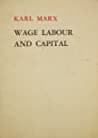
Find Wage Labour and Capital Karl Marx in PDF, EPUB, ebook, audiobook, print, or library editions.
Find Wage Labour and Capital Karl Marx in PDF, EPUB, ebook, audiobook, print, or library editions.

4 books in catalog
A foundational body of nineteenth-century political and economic critique transformed modern political theory through rigorous analyses of capital, labour, and historical class dynamics, epitomized by the radical text The Communist Manifesto. Karl Marx, a German philosopher, economist, sociologist, journalist, and revolutionary socialist, formulated the theory of historical materialism to explain how economic structures and class struggles shape human society and historical progress.
Born on May 5, 1818, in Trier in the Prussian Rhine province to a lawyer, Marx received a classical education before studying jurisprudence at Bonn and Berlin. His academic focus quickly shifted to philosophy and the ideas of G.W.F. Hegel and Ludwig Feuerbach, culminating in a doctorate in philosophy from the University of Jena in 1841. After serving briefly as the editor of a liberal newspaper in Cologne, he moved to Paris with his wife, Jenny, in 1843, immersing himself in revolutionary communist thought. Over the following decades, living in cities such as Brussels and London, he maintained a lifelong intellectual and political partnership with Friedrich Engels, with whom he produced seminal pamphlets and foundational theoretical texts.
Marx's writings combine philosophical critique, detailed historical analysis, and systematic economic theory. Central to his work is historical materialism, an analytical framework asserting that societal development and institutional forms are primarily driven by material conditions and class conflicts under capitalism. In works like Wage Labour and Capital and German Ideology, he examined the relationship between labor power, wage dynamics, and ideological structures. His prose ranges from sharp polemical agitation designed for working-class organization to meticulous economic investigation dissecting classical political economy and capital accumulation.
4 books in catalog
A foundational body of nineteenth-century political and economic critique transformed modern political theory through rigorous analyses of capital, labour, and historical class dynamics, epitomized by the radical text The Communist Manifesto. Karl Marx, a German philosopher, economist, sociologist, journalist, and revolutionary socialist, formulated the theory of historical materialism to explain how economic structures and class struggles shape human society and historical progress.
Born on May 5, 1818, in Trier in the Prussian Rhine province to a lawyer, Marx received a classical education before studying jurisprudence at Bonn and Berlin. His academic focus quickly shifted to philosophy and the ideas of G.W.F. Hegel and Ludwig Feuerbach, culminating in a doctorate in philosophy from the University of Jena in 1841. After serving briefly as the editor of a liberal newspaper in Cologne, he moved to Paris with his wife, Jenny, in 1843, immersing himself in revolutionary communist thought. Over the following decades, living in cities such as Brussels and London, he maintained a lifelong intellectual and political partnership with Friedrich Engels, with whom he produced seminal pamphlets and foundational theoretical texts.
Marx's writings combine philosophical critique, detailed historical analysis, and systematic economic theory. Central to his work is historical materialism, an analytical framework asserting that societal development and institutional forms are primarily driven by material conditions and class conflicts under capitalism. In works like Wage Labour and Capital and German Ideology, he examined the relationship between labor power, wage dynamics, and ideological structures. His prose ranges from sharp polemical agitation designed for working-class organization to meticulous economic investigation dissecting classical political economy and capital accumulation.