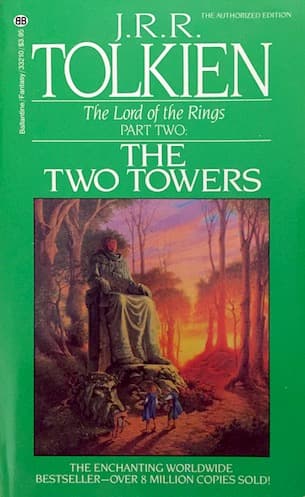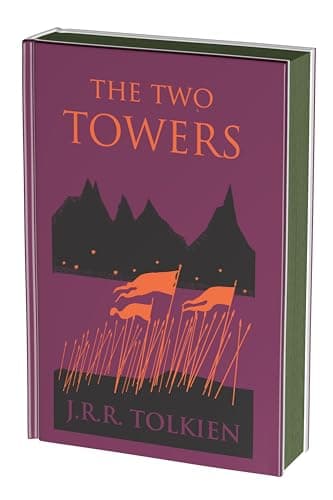
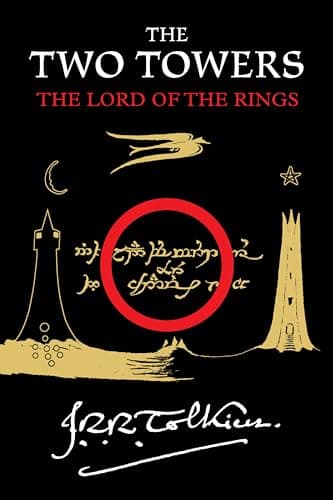
The Fellowship is broken, and the hope that once held the company together has splintered into three desperate threads. With the loss of their guide and the betrayal of a comrade, the remaining members are forced to navigate a Middle-earth that is rapidly darkening. The quest to destroy the One Ring is no longer a shared journey but a lonely, perilous trek through increasingly hostile terrain where the distinction between ally and enemy is blurred by ancient grudges and new ambitions.
This middle movement shifts from the high-fantasy adventure of the initial journey toward a gritty exploration of political decay and logistical endurance. While one group of survivors tracks a band of captors across the scorched plains of Rohan, the Ring-bearer moves deeper into the barren wastes, followed by a creature whose obsession mirrors his own possible future. The scale of the conflict expands from a secret mission to a continental war, focusing on the mechanical mobilization of power and the fragile nature of ancient alliances.
Tolkien introduces a stark contrast between the natural world and the encroaching machinery of war. The kingdom of Rohan represents a waning heroic age—a culture of horse-lords whose traditions are being eroded by internal treachery and external pressure. In contrast, Isengard represents the birth of total war, where the natural world is uprooted to feed the furnaces of industry. This environmental tension is personified in the ancient Forest of Fangorn, a place of deep, sentient memory that stands as the last bastion against the modernization of evil. The atmosphere is one of "long defeat," where even the landscapes seem to mourn the passing of an older, more stable era.
The character arcs in this installment focus heavily on the transition from followers to leaders. Without a wizard to direct their path, Aragorn, Legolas, and Gimli must rely on tracking skills and diplomatic intuition to navigate the complex politics of Rohan. Their development is marked by "the choice of the path"—deciding which crisis takes precedence when every option leads to potential ruin. Meanwhile, Frodo’s development is internal and regressive; as he nears the border of Mordor, his world narrows to the weight of the Ring, forcing a shift in his relationship with Sam from equal companions to master and protector.
The narrative utilizes the "Splintered Party" trope to heighten tension, but it subverts the traditional epic by focusing on the exhaustion and logistics of travel. Rather than teleporting heroes to the next battle, the prose dwells on the physical toll of a three-day pursuit on foot and the scarcity of resources in the wild. It also explores the "Corrupted Mentor" trope through the figure of Saruman, demonstrating how the pursuit of order and knowledge can devolve into a sterile, mechanical cruelty. The book replaces the clear-cut morality of the Shire with a world of "Grey Diplomacy," where even the "good" characters are often paralyzed by doubt, grief, or cultural decline.
The Fellowship is broken, and the hope that once held the company together has splintered into three desperate threads. With the loss of their guide and the betrayal of a comrade, the remaining members are forced to navigate a Middle-earth that is rapidly darkening. The quest to destroy the One Ring is no longer a shared journey but a lonely, perilous trek through increasingly hostile terrain where the distinction between ally and enemy is blurred by ancient grudges and new ambitions.
This middle movement shifts from the high-fantasy adventure of the initial journey toward a gritty exploration of political decay and logistical endurance. While one group of survivors tracks a band of captors across the scorched plains of Rohan, the Ring-bearer moves deeper into the barren wastes, followed by a creature whose obsession mirrors his own possible future. The scale of the conflict expands from a secret mission to a continental war, focusing on the mechanical mobilization of power and the fragile nature of ancient alliances.
Tolkien introduces a stark contrast between the natural world and the encroaching machinery of war. The kingdom of Rohan represents a waning heroic age—a culture of horse-lords whose traditions are being eroded by internal treachery and external pressure. In contrast, Isengard represents the birth of total war, where the natural world is uprooted to feed the furnaces of industry. This environmental tension is personified in the ancient Forest of Fangorn, a place of deep, sentient memory that stands as the last bastion against the modernization of evil. The atmosphere is one of "long defeat," where even the landscapes seem to mourn the passing of an older, more stable era.
The character arcs in this installment focus heavily on the transition from followers to leaders. Without a wizard to direct their path, Aragorn, Legolas, and Gimli must rely on tracking skills and diplomatic intuition to navigate the complex politics of Rohan. Their development is marked by "the choice of the path"—deciding which crisis takes precedence when every option leads to potential ruin. Meanwhile, Frodo’s development is internal and regressive; as he nears the border of Mordor, his world narrows to the weight of the Ring, forcing a shift in his relationship with Sam from equal companions to master and protector.
The narrative utilizes the "Splintered Party" trope to heighten tension, but it subverts the traditional epic by focusing on the exhaustion and logistics of travel. Rather than teleporting heroes to the next battle, the prose dwells on the physical toll of a three-day pursuit on foot and the scarcity of resources in the wild. It also explores the "Corrupted Mentor" trope through the figure of Saruman, demonstrating how the pursuit of order and knowledge can devolve into a sterile, mechanical cruelty. The book replaces the clear-cut morality of the Shire with a world of "Grey Diplomacy," where even the "good" characters are often paralyzed by doubt, grief, or cultural decline.
Add to your library to track progress and write reviews
Add to your library to track progress and write reviews
Find The Two Towers Collector's Edition J.R.R. Tolkien in PDF, EPUB, ebook, audiobook, print, or library editions.
Find The Two Towers Collector's Edition J.R.R. Tolkien in PDF, EPUB, ebook, audiobook, print, or library editions.

7 books in catalog
Deep in the mud of the Somme in 1916, a young officer of the Lancashire Fusiliers began scribbling a mythology that would eventually redefine the boundaries of fantasy literature. While his contemporaries focused on the stark realism of the First World War, this Oxford-educated philologist sought to fill a perceived void in English culture by constructing a vast, interconnected legendarium rooted in the ancient structures of language itself. What began as an academic's private obsession with Old Norse and Anglo-Saxon dialects evolved into an influential fantasy phenomenon, with The Lord of the Rings selling over 150 million copies and being translated into more than 40 languages.
Beyond its commercial scale, the epic mythos created by J.R.R. Tolkien earned honors as the 'Greatest Book of the 20th Century' in polls conducted by Amazon and Waterstones, inspired a multi-billion dollar film franchise, and established the foundational blueprint for high fantasy world-building across modern publishing.
Born in Bloemfontein, South Africa, on January 3, 1892, to English parents, John Ronald Reuel Tolkien moved to England at age three and was brought up in and around Birmingham before studying at Exeter College, Oxford. Before becoming a household name, J.R.R. Tolkien was a formidable scholar of early Germanic languages and English literature. He served as an officer during the First World War in 1916, experiencing heavy combat at the Battle of the Somme. Following his military service, he devoted his professional life to academia, serving as the Rawlinson and Bosworth Professor of Anglo-Saxon at the University of Oxford from 1925 to 1945, and subsequently as the Merton Professor of English Language and Literature from 1945 until his retirement in 1959. His academic commentary on Beowulf remains a foundational work in medieval literary criticism.
His transition to fiction was accidental, famously beginning with a spontaneous sentence scrawled on a blank exam paper: 'In a hole in the ground there lived a hobbit.' This spark led to the publication of The Hobbit (also published as The Hobbit, or There and Back Again) in 1937. The success of the children's book prompted his publishers to request a sequel, which took twelve years to complete and expanded into the far more complex epic The Lord of the Rings. Throughout his time in Oxford, he was a key figure in 'The Inklings,' an informal literary discussion group that included his close friend C.S. Lewis. Tolkien lived until 1973, leaving behind an extensive archive of mythic writings.
Tolkien's prose is characterized by its commitment to 'sub-creation'—the secondary invention of a fictional world that possesses the inner consistency of reality. Unlike many fantasy writers who employ magic merely as a plot device, Tolkien's world-building was fundamentally a philological exercise. He famously maintained that his stories were written primarily to provide a home for his invented languages, including Quenya and Sindarin, rather than constructing languages to serve a pre-existing narrative.
Thematically, his work explores the tension between the organic natural world and the destructive forces of industrialization, reflecting his personal opposition to the rapid mechanization of the English countryside. Recurring motifs include the 'ennoblement of the humble,' where the smallest and least assertive individuals alter the trajectory of history, as well as the corruptive influence of absolute power. His writing is also deeply elegiac, frequently emphasizing the 'long defeat'—the tragic perspective that even in great victories, ancient beauty and wisdom are inevitably lost over time.
7 books in catalog
Deep in the mud of the Somme in 1916, a young officer of the Lancashire Fusiliers began scribbling a mythology that would eventually redefine the boundaries of fantasy literature. While his contemporaries focused on the stark realism of the First World War, this Oxford-educated philologist sought to fill a perceived void in English culture by constructing a vast, interconnected legendarium rooted in the ancient structures of language itself. What began as an academic's private obsession with Old Norse and Anglo-Saxon dialects evolved into an influential fantasy phenomenon, with The Lord of the Rings selling over 150 million copies and being translated into more than 40 languages.
Beyond its commercial scale, the epic mythos created by J.R.R. Tolkien earned honors as the 'Greatest Book of the 20th Century' in polls conducted by Amazon and Waterstones, inspired a multi-billion dollar film franchise, and established the foundational blueprint for high fantasy world-building across modern publishing.
Born in Bloemfontein, South Africa, on January 3, 1892, to English parents, John Ronald Reuel Tolkien moved to England at age three and was brought up in and around Birmingham before studying at Exeter College, Oxford. Before becoming a household name, J.R.R. Tolkien was a formidable scholar of early Germanic languages and English literature. He served as an officer during the First World War in 1916, experiencing heavy combat at the Battle of the Somme. Following his military service, he devoted his professional life to academia, serving as the Rawlinson and Bosworth Professor of Anglo-Saxon at the University of Oxford from 1925 to 1945, and subsequently as the Merton Professor of English Language and Literature from 1945 until his retirement in 1959. His academic commentary on Beowulf remains a foundational work in medieval literary criticism.
His transition to fiction was accidental, famously beginning with a spontaneous sentence scrawled on a blank exam paper: 'In a hole in the ground there lived a hobbit.' This spark led to the publication of The Hobbit (also published as The Hobbit, or There and Back Again) in 1937. The success of the children's book prompted his publishers to request a sequel, which took twelve years to complete and expanded into the far more complex epic The Lord of the Rings. Throughout his time in Oxford, he was a key figure in 'The Inklings,' an informal literary discussion group that included his close friend C.S. Lewis. Tolkien lived until 1973, leaving behind an extensive archive of mythic writings.
Tolkien's prose is characterized by its commitment to 'sub-creation'—the secondary invention of a fictional world that possesses the inner consistency of reality. Unlike many fantasy writers who employ magic merely as a plot device, Tolkien's world-building was fundamentally a philological exercise. He famously maintained that his stories were written primarily to provide a home for his invented languages, including Quenya and Sindarin, rather than constructing languages to serve a pre-existing narrative.
Thematically, his work explores the tension between the organic natural world and the destructive forces of industrialization, reflecting his personal opposition to the rapid mechanization of the English countryside. Recurring motifs include the 'ennoblement of the humble,' where the smallest and least assertive individuals alter the trajectory of history, as well as the corruptive influence of absolute power. His writing is also deeply elegiac, frequently emphasizing the 'long defeat'—the tragic perspective that even in great victories, ancient beauty and wisdom are inevitably lost over time.
The Lord of the Rings
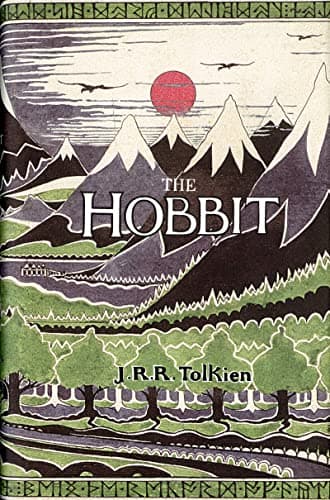
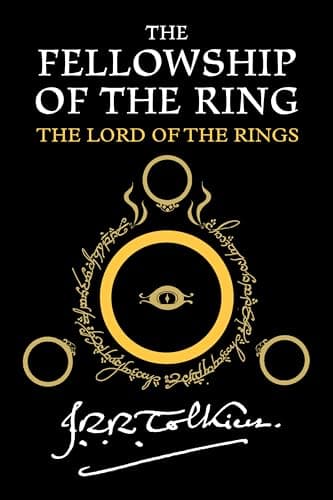
The Lord of the Rings