“If you cannot speak truth at a beheading, when can you speak it?”
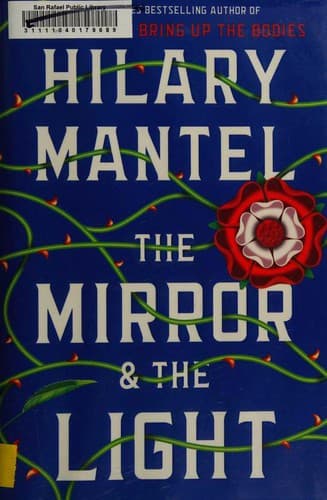
England, May 1536. Anne Boleyn is dead, decapitated in the space of a heartbeat by a hired French executioner. As her remains are bundled into oblivion, Thomas Cromwell breakfasts with the victors. The blacksmith’s son from Putney emerges from the spring’s bloodbath to continue his climb to power and wealth, while his formidable master, Henry VIII, settles to short-lived happiness with his third queen before Jane dies giving birth to the male heir he most craves.
Cromwell is a man with only his wits to rely on; he has no great family to back him, no private army. Despite rebellion at home, traitors plotting abroad and the threat of invasion testing Henry’s regime to the breaking point, Cromwell’s robust imagination sees a new country in the mirror of the future. But can a nation, or a person, shed the past like a skin? Do the dead continually unbury themselves? What will you do, the Spanish ambassador asks Cromwell, when the king turns on you, as sooner or later he turns on everyone close to him?
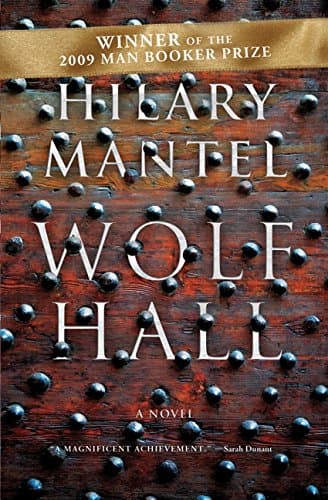
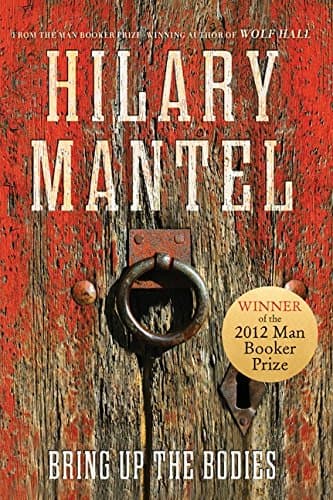
With The Mirror & the Light, Hilary Mantel brings to a triumphant close the trilogy she began with Wolf Hall and Bring Up the Bodies. She traces the final years of Thomas Cromwell, the boy from nowhere who climbs to the heights of power, offering a defining portrait of predator and prey, of a ferocious contest between present and past, between royal will and a common man’s vision: of a modern nation making itself through conflict, passion, and courage. --front flap
Add to your library to track progress and write reviews
4 books in catalog
Historical fiction reached new narrative depths through an immersive reimagining of Tudor politics in Wolf Hall. Hilary Mantel brought detailed psychological perspective and immediate present-tense realism to the story of Thomas Cromwell, turning sixteenth-century royal administration into a subtle examination of power, loyalty, and self-preservation.
Born Hilary Mary Thompson on July 6, 1952, in Glossop, Derbyshire, she grew up in a working-class Roman Catholic family. She studied law at the London School of Economics and the University of Sheffield, graduating with a Bachelor of Jurisprudence in 1973. Before devoting herself fully to literature, she worked as a social worker and lived abroad in Botswana for five years and Saudi Arabia for four years. Her time in Saudi Arabia informed her 1988 novel Eight Months on Ghazzah Street, and she later served as film critic for The Spectator from 1987 to 1991. Her debut novel, Every Day Is Mother's Day, was published in 1985.
Across a career encompassing seventeen books—including twelve novels, short story collections, and the memoir Giving Up the Ghost: A Memoir—she received extensive critical recognition. Her accolades included the Hawthornden Prize, the National Book Critics Circle Award for Fiction, the Walter Scott Prize, and the Costa Book Award, along with Booker Prizes for both Wolf Hall and Bring Up The Bodies. In 2014, Mantel was appointed Dame Commander of the Order of the British Empire for services to literature. She died at age seventy in 2022 in Exeter, Devon.
Her writing is characterized by sharp wit, bleakly comic observation, and socially probing examinations of personal vulnerability. Across contemporary settings and historical historical contexts, her work explores how institutional pressures and private memories shape human behavior. Her historical technique avoids nostalgia, placing readers directly into the immediate sensory experience and moral complexity of her characters' lives.
Thomas Cromwell