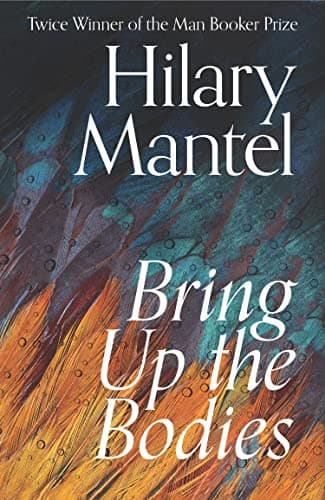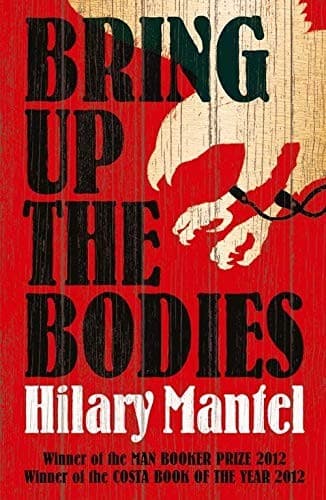
By 1535 Thomas Cromwell, the blacksmith's son, is far from his humble origins. Chief Minister to Henry VIII, his fortunes have risen with those of Anne Boleyn, Henry's second wife, for whose sake Henry has broken with Rome and created his own church. But Henry's actions have forced England into dangerous isolation, and Anne has failed to do what she promised: bear a son to secure the Tudor line. When Henry visits Wolf Hall, Cromwell watches as he falls in love with the silent, plain Jane Seymour. The minister sees what is at stake: not just the king's pleasure, but the safety of the nation. As he eases a way through the sexual politics of the court, its miasma of gossip, he must negotiate a 'truth' that will satisfy Henry and secure his own career. But neither minister nor king will emerge undamaged fro the bloody theater of Anne's final days.
In Bring Up the Bodies, sequel to the Man Booker Prize-winning Wolf Hall, Hilary Mantel explores one of the most mystifying and frightening episodes in English history: the destruction of Anne Boleyn. This new novel is a speaking picture, and audacious vision of Tudor England that sheds its light on the modern world. It is the work of one of our great writers at the height of her powers. --jacket flap
Add to your library to track progress and write reviews
Find Bring Up The Bodies Hilary Mantel in PDF, EPUB, ebook, audiobook, print, or library editions.
4 books in catalog
Historical fiction reached new narrative depths through an immersive reimagining of Tudor politics in Wolf Hall. Hilary Mantel brought detailed psychological perspective and immediate present-tense realism to the story of Thomas Cromwell, turning sixteenth-century royal administration into a subtle examination of power, loyalty, and self-preservation.
Born Hilary Mary Thompson on July 6, 1952, in Glossop, Derbyshire, she grew up in a working-class Roman Catholic family. She studied law at the London School of Economics and the University of Sheffield, graduating with a Bachelor of Jurisprudence in 1973. Before devoting herself fully to literature, she worked as a social worker and lived abroad in Botswana for five years and Saudi Arabia for four years. Her time in Saudi Arabia informed her 1988 novel Eight Months on Ghazzah Street, and she later served as film critic for The Spectator from 1987 to 1991. Her debut novel, Every Day Is Mother's Day, was published in 1985.
Across a career encompassing seventeen books—including twelve novels, short story collections, and the memoir Giving Up the Ghost: A Memoir—she received extensive critical recognition. Her accolades included the Hawthornden Prize, the National Book Critics Circle Award for Fiction, the Walter Scott Prize, and the Costa Book Award, along with Booker Prizes for both Wolf Hall and Bring Up The Bodies. In 2014, Mantel was appointed Dame Commander of the Order of the British Empire for services to literature. She died at age seventy in 2022 in Exeter, Devon.
Her writing is characterized by sharp wit, bleakly comic observation, and socially probing examinations of personal vulnerability. Across contemporary settings and historical historical contexts, her work explores how institutional pressures and private memories shape human behavior. Her historical technique avoids nostalgia, placing readers directly into the immediate sensory experience and moral complexity of her characters' lives.
Thomas Cromwell