SSansFiction
The libraryCollectionsJournalStatsFor authors
Sign inJoin now
Sansfiction,

A digital library for books. Made by readers, for readers.

v 2.0 · 2026
The library
  • Discover
  • Collections
  • Book tracker
  • Journal
  • Stats
For authors
  • SF Links
  • Analytics
  • How it works
  • FAQ
Elsewhere
  • X / @sansfiction
  • Privacy
  • Terms
  • Contact
© 2026 SansFiction · Digital · GlobalA quiet room for your reading life.
The libraryCollectionsJournalStatsFor authors
Sign inJoin now →
Navigation
Library
Bookshelf
Journal
Discover
Collections
Tierlists
Stats
Profile
Author Page
Link Builder
Account
Sign in
S
G
BooksadventureThe Little Prince
Cover of The Little Prince by Antoine de Saint-Exupéry

The Little Prince,

by Antoine de Saint-Exupéry, Rafael Arrais

Ask AI
Rating4.2/ 5
Ratings2,134
Pages136
Reading Hours3h
Published195
LanguageEnglish

§Synopsis

01

A pilot crashes in the Sahara Desert and encounters a strange young boy who calls himself the Little Prince. The Little Prince has traveled there from his home on a lonely, distant asteroid with a single rose. The story that follows is a beautiful and at times heartbreaking meditation on human nature.

The Little Prince is one of the best-selling and most translated books of all time, universally cherished by children and adults alike, and Richard Howard's translation of the beloved classic beautifully reflects Saint-Exupéry's unique and gifted style, bringing the English text as close as possible to the French in language, style, and spirit.

§Our take

The shortness is the whole trick. The surviving manuscript shows a draft of roughly 30,000 words cut by well over half, including a bleak epilogue on war. What's left is clear enough for a child and slippery enough for an adult to argue over.

Who it's for has never been settled. A 1943 New York Times reviewer doubted that its irony and paradox would hold eight-to-ten-year-olds. Common Sense Media says ten and up, though some younger kids engage, and older, patient readers may get more from the symbolic language. Treat it as a book to read slowly, not a quick bedtime story.

§Themes

Childhood versus adulthood
The prince's encounters with grown-ups show attention, responsibility and imagination as casualties of adult priorities.
Love as responsibility
The rose and the fox show that caring for something makes it unique to the person who gives it time.
Seeing beneath appearances
The famous claim that the essential is invisible to the eye pushes back on judging by looks.
Contested symbolism
War, biography and religious readings have all been proposed, but the text doesn't confirm any one of them.

§How it was received

The 1943 reception was mixed, with reviewers struggling to place it between children's and adult literature. It stayed on the New York Times bestseller list for about two weeks. In France it first drew less acclaim than Saint-Exupéry's earlier books, but by 2020 it was Gallimard's most successful title.

§Read it if

  • You want a short illustrated fable where plain language carries symbolic weight
  • You're reading with a patient child aged ten or older
  • You care about an edition that keeps the author's watercolours and a carefully chosen English translation

§Skip it if

  • You want a plot-driven story with suspense and fast action
  • You want one settled, easy interpretation. This book won't give you one.

§Before you start

Reading experience
moderate pace. moderate difficulty. The poetic language and philosophical ideas can outpace young or casual readers, so go slowly. Parents may want to preview the ambiguous ending, which can disturb some children.
Content notes
The pilot crashes in the desert and faces thirst; one character drinks to escape shame. Common Sense Media reports no sexual content or strong language; The ending is ambiguous and may be disturbing to some children; families may want to preview it first without discussing what happens.

§Common questions

What age is The Little Prince suitable for?
Common Sense Media recommends ten and up. Some eight-to-nine-year-olds engage with it, and older, patient readers may get more from the symbolic language.
How many languages has The Little Prince been translated into?
The Saint-Exupéry estate says it has appeared in more than 600 languages and dialects.
Did The Little Prince have a wartime origin?
Yes. Saint-Exupéry wrote and illustrated it in 1942 while in American exile, mainly at a rented house on Long Island.
Sources
  • en.wikipedia.org
  • commonsensemedia.org
  • fr.wikipedia.org
  • antoinedesaintexupery.org

Track this book

Add to your library to track progress and write reviews
§Genres
adventure1children1children's stories1classics1fantasy1general1juvenile fiction1
§Moods
adventurous1emotional1funny1hopeful1inspiring1lighthearted1mysterious1
§Tags
#adapted to film1#diverse characters1#fairy tales1#fiction1#loveable characters1#not diverse characters1#strong character development1

§About the Author

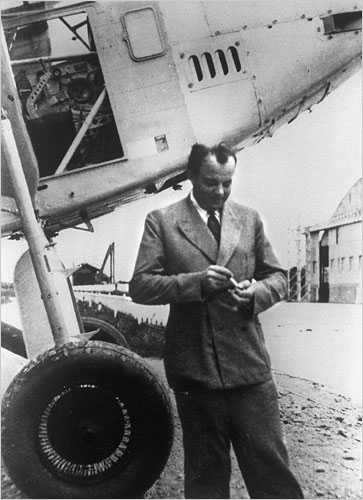
Antoine de Saint-Exupéry

2 books in catalog

Pioneering aviation literature through personal experience and philosophical reflection created a distinctive body of work that appeals to readers across generations. Antoine de Saint-Exupéry drew from his years as a commercial pilot and air force officer to craft poetic memoirs, philosophical essays, and timeless fables. His celebrated work The Little Prince remains one of the most widely read books in world literature.

Career & Background

Born into an aristocratic French family in Lyon in 1900, Antoine de Saint-Exupéry lost his father at a young age and was educated in Catholic schools. He developed a passion for aviation early in life, taking his first airplane ride at twelve years old. After failing the entrance examination for the naval academy, he learned to fly during his military service in 1921 and received his pilot's wings in 1922. In 1926, he became a commercial pilot, flying pioneer airmail routes across Europe, Africa, and South America alongside noted aviators such as Jean Mermoz and Henri Guillaumet. His literary career began with the publication of the short story The Aviator in 1926, followed by novels and memoirs inspired by his flight experiences. During World War II, he served as a pilot in the French Air Force. On July 31, 1944, his Lockheed P-38 Lightning airplane disappeared during a reconnaissance mission over France.

Writing Style & Themes

All of Antoine de Saint-Exupéry's literary endeavors were rooted in his personal adventures as a pilot, using aviation as a launching point for abstract discussions on wisdom and the meaning of life. His early novels featured a poetic evocation of the romance and discipline of flying, while his later memoirs and essays stressed a deeply humanistic philosophy. His writing combines a child's sense of wonder with a pilot's eye for danger and duty, blending action with quiet philosophical contemplation.

Major Works

  • The Little Prince — Written during World War II and published in 1943, this allegorical fable about a young prince visiting various planets explores themes of love, loneliness, friendship, and human nature.
  • Французский с Антуаном де Сент-Экзюпери. Ночной полет / Antoine de Saint-Exupery. Vol de nuit — An edition featuring his 1931 novel Night Flight (Vol de nuit), which draws on his experiences as an airmail pilot in South America to examine duty, heroism, and the sacrifices demanded by aviation.
  • Southern Mail — Published in 1929, his debut novel reflects his early experiences flying airmail routes across North Africa, combining romantic narrative with realistic depictions of pioneer aviation.
  • Wind, Sand and Stars — A 1939 memoir detailing his survival after a desert plane crash and his reflections on camaraderie, human courage, and the philosophical significance of flight.
  • Flight to Arras — A 1942 personal narrative recounting a dangerous reconnaissance mission during the Battle of France in World War II, emphasizing humanistic values amidst wartime destruction.

§Editions

Cover of O Pequeno Príncipe

O Pequeno Príncipe

engKindle Edition136 pgs
BORA YAYINCILIK - Bekir Orhan Dogan19439781909621565
§Genres
adventure1children1children's stories1classics1fantasy1general1juvenile fiction1
§Moods
adventurous1emotional1funny1hopeful1inspiring1lighthearted1mysterious1
§Tags
#adapted to film1#diverse characters1#fairy tales1#fiction1#loveable characters1#not diverse characters1#strong character development1

Metadata

ISBN-139781909621565
ISBN-101909621560

Editions and availability

Find The Little Prince Antoine de Saint-Exupéry in PDF, EPUB, ebook, audiobook, print, or library editions.

Bookshop.orgGoogle Play BooksBarnes & NobleOpen Library

Featured In Lists

Book cover from this collectionBook cover from this collectionBook cover from this collectionBook cover from this collection
Book cover from this collection

List 1001 Books Boxall

1000 books
Book cover from this collectionBook cover from this collectionBook cover from this collectionBook cover from this collection
Book cover from this collection

100 Greatest Books

98 books
Book cover from this collectionBook cover from this collectionBook cover from this collectionBook cover from this collection
Book cover from this collection

Emma Watson's Reading List: Fantasy, Dystopia and Feminist Fiction

12 books•@sansfictionbot